
Power outages can disrupt refrigeration, heating, networking, security, and essential medical equipment. The right battery system keeps critical circuits running while giving you a practical path toward greater energy independence.
We selected ten options spanning high-capacity LiFePO4 storage, solar generators, off-grid kits, and rack-mount UPS systems. Use the guide below to match battery capacity, inverter output, transfer design, and installation requirements to your home.
Best 10 Professional Whole Home Battery Backup Systems Picks for 2026
Best High-Capacity System
ECO-WORTHY 48V 30.7kWh Home Backup

- 30.7kWh-class battery bank with six LiFePO4 batteries
- 10,000W pure sine wave inverter with 120V/240V output
- Expandable system with app monitoring and rack storage
Best For: Large homes, off-grid use, and high storage demands
Best Portable Option
OSCAL PowerMax 6000 Solar Generator

- 3,600Wh LiFePO4 battery with 6,000W output
- Includes three 200W solar panels
- 120V/240V output and 5–8ms EPS switchover
Best For: Portable emergency power and selected home circuits
Best Premium Whole-Panel Backup
Anker SOLIX E10 Whole-Home Battery System
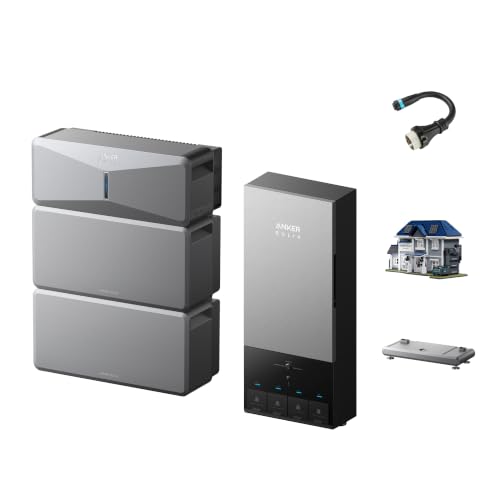
- 200A Power Dock coverage for the entire panel
- 7.6kW continuous and 10kW turbo output
- 12kWh expandable storage up to 90kWh
Best For: Whole-panel residential backup with modular expansion
Best Solar-Integrated System
ECO-WORTHY 32kWh Solar Backup Kit

- Six 590W panels with two 48V 314Ah batteries
- 10kW hybrid inverter supports 120V/240V output
- Wi-Fi, Bluetooth, and multi-protocol battery monitoring
Best For: Solar-plus-storage installations and extended off-grid backup
Best Portable Whole-Home Option
Jackery HomePower 2000 Plus v2

- 2,400W output with 2,048Wh starting capacity
- Expandable to 12kWh with priority energy routing
- LFP battery with 6,000-plus cycles and five-year warranty
Best For: Portable essential-circuit backup and flexible home outage coverage
Best Complete Solar System
ECO WORTHY 10kW Off-Grid Solar Kit

- 10,000W split-phase inverter with 20,000W peak output
- Includes 2,950W of solar panels and 16.076kWh storage
- Wi-Fi monitoring and scalable battery and inverter architecture
Best For: Large off-grid or solar-backed residential power installations
Best Expandable Battery Bank
AOUSK 48V 314Ah LiFePO4 Battery
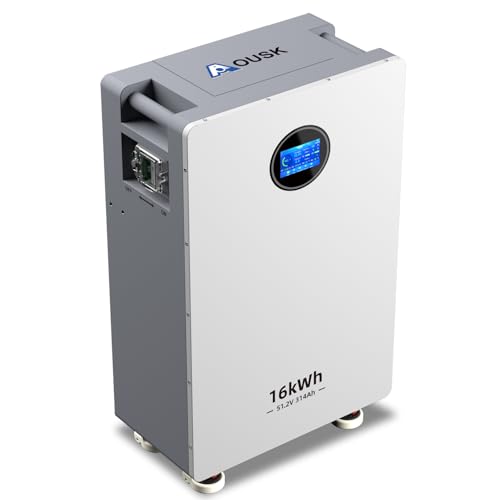
- Approximately 16.07kWh of storage per battery
- Parallel expansion up to 241kWh
- 200A BMS with display, app, RS485, and CAN connectivity
Best For: Large inverter-based solar storage and whole-home backup builds
Enterprise Rack UPS

- 5000W pure sine-wave output for sensitive electronics
- AVR, cloud monitoring, and expandable runtime
- Three-year warranty including batteries
Best For: Servers, networking gear, and managed home-office power protection
Expandable Solar Storage Kit

- 10,240Wh LiFePO4 storage with 5000W output
- Integrated inverter, MPPT controller, and charger
- Expandable battery and inverter architecture
Best For: Solar-ready home backup and off-grid power projects
Compact Lithium Rack UPS
Vertiv Liebert PSI5-3000SRT120LI

- 2700W pure sine-wave output in a compact chassis
- Long-life lithium-ion battery technology
- Five-year warranty with full battery coverage
Best For: Space-constrained racks, home labs, and networking equipment
Best High-Capacity System – ECO-WORTHY 48V 30.7kWh Home Backup
For shoppers comparing professional whole home battery backup systems, the ECO-WORTHY Cubix100 stands out for its large battery bank, 10,000W inverter, and split-phase support. Six 51.2V 100Ah LiFePO4 batteries provide substantial storage for outages, off-grid use, and high-demand appliances such as refrigerators and air conditioners.
Best For: Homeowners needing substantial storage capacity, 120V/240V output, and room to expand an off-grid or backup installation.
Pros:
- Includes six LiFePO4 batteries with approximately 30.7kWh of stated battery capacity.
- 10,000W pure sine wave inverter supports 120V/240V split-phase output and 20,000W peak power.
- Supports CAN/RS485 communication, Bluetooth, Wi-Fi monitoring, and expansion up to six inverters.
- Battery and inverter passed UL1973 and UL1741 testing, according to the supplied notes.
Cons:
- At 677.5 pounds, the complete system is not a portable backup solution.
- Large shipments are sent separately, so buyers should plan for delivery coordination and installation.
- The system is presented as an off-grid inverter package, so professional electrical integration may be needed for a home panel.
This is the strongest fit here for buyers prioritizing storage and expansion over portability. Its rack-mounted design, communications features, and high inverter output make it a serious whole-home platform, but its size and installation requirements call for careful planning.
Best Portable Option – OSCAL PowerMax 6000 Solar Generator
The OSCAL PowerMax 6000 offers a simpler route into professional whole home battery backup systems for buyers who want a movable, self-contained power station. Its 3,600Wh LiFePO4 battery, 6,000W output, 120V/240V capability, and included solar panels make it useful for emergency power, selected household loads, and outdoor work.
Best For: Buyers seeking a portable solar generator for emergency loads, camping, network equipment, or temporary residential backup.
Pros:
- Provides 6,000W output with 9,000W surge capacity and 120V/240V dual-voltage support.
- Includes three 200W solar panels and supports up to 2,400W solar input.
- LiFePO4 battery uses an eight-layer safety BMS and is rated for up to 3,500 cycles.
- EPS function switches to battery power within 5–8 milliseconds, according to the notes.
Cons:
- The 3,600Wh capacity is much smaller than the storage offered by the dedicated rack systems.
- Solar charging may be slower in poor weather or with limited sunlight.
- Its portable format is better suited to selected circuits and appliances than permanent whole-panel backup.
Choose the PowerMax 6000 when flexibility and quick deployment matter more than maximum runtime. It is easier to move and includes solar charging hardware, but households seeking extended whole-home autonomy may need a larger battery system.
Best Premium Whole-Panel Backup – Anker SOLIX E10 Whole-Home Battery System
The Anker SOLIX E10 is designed for homeowners who want a polished, expandable solution among professional whole home battery backup systems. Its Power Dock provides automatic 200A whole-home coverage, while the E10 delivers 7.6kW continuous output, 10kW turbo output, and 12kWh of included storage that can expand substantially.
Best For: Residential buyers wanting whole-panel coverage, fast automatic transfer, outdoor-rated equipment, and modular battery expansion.
Pros:
- Power Dock is designed to cover an entire 200A service panel rather than only limited circuits.
- Provides 7.6kW continuous output and 10kW turbo output, with higher output available through multiple units.
- Storage expands from 12kWh to as much as 90kWh, according to the supplied notes.
- NEMA 4 E10 and NEMA 3R Dock ratings support outdoor use, with a stated operating range of -4°F to 131°F.
Cons:
- The listed package includes two B6000 battery modules, so maximum storage requires additional expansion.
- Professional installation may still be appropriate despite the described simplified setup.
- The E10 carries a five-year warranty, shorter than the Dock’s stated ten-year warranty.
This is a compelling choice for buyers focused on seamless home integration rather than a conventional portable power station. Its whole-panel architecture and modular capacity are strong advantages, especially for households that may add solar or batteries later.
Best Solar-Integrated System – ECO-WORTHY 32kWh Solar Backup Kit
For homeowners comparing professional whole home battery backup systems with built-in solar generation, this ECO-WORTHY kit combines six 590W N-type panels, a 10kW hybrid inverter, and two 48V 314Ah LiFePO4 batteries. Its roughly 30kWh-plus usable-energy positioning makes it suited to extended backup, solar storage, and off-grid applications.
Best For: Buyers wanting a complete solar-plus-storage package with high battery capacity, hybrid inverter functionality, and detailed battery monitoring.
Pros:
- Includes six 590W solar panels, two 48V 314Ah batteries, a 10kW hybrid inverter, and cables.
- Supports 120V/240V output and claims 99.9% MPPT tracking efficiency for the inverter.
- Batteries include RS485, CAN, and RS232 communication plus Bluetooth and Wi-Fi monitoring.
- Active-balancing BMS, circuit breaker, aerosol fire suppression, and alarms add multiple protection features.
Cons:
- The palletized shipment is large and heavy, requiring delivery planning and suitable installation space.
- Two inverter versions may be shipped randomly based on inventory, although the notes state their performance is the same.
- Installing the solar array, batteries, and hybrid inverter is more involved than setting up a portable power station.
This kit is the most complete solar-oriented package in the group. It offers substantial storage and generation in one purchase, but buyers should confirm site layout, permitting, delivery access, and professional installation before ordering.
Best Portable Whole-Home Option – Jackery HomePower 2000 Plus v2
For shoppers comparing professional whole home battery backup systems, the Jackery HomePower 2000 Plus v2 is a compact, expandable electric option for essential residential loads. It provides 2,400W of output, 2,048Wh of starting capacity, and can expand to 12kWh.
Best For: Homeowners seeking portable backup power for essential circuits, devices, and outage preparedness.
Pros:
- Expandable from 2,048Wh to 12kWh.
- Priority Routing and smart energy management help keep essential circuits powered.
- LFP battery rated for 6,000-plus cycles and backed by a five-year warranty.
- Relatively lightweight at 40.6 pounds, with 140W USB-C output.
Cons:
- Its 2,400W output may not support larger whole-home loads simultaneously.
- Portable battery capacity is smaller than the storage offered by dedicated 48V systems.
The Jackery stands out when portability, simple installation, and expandable storage matter more than maximum power. Verify the wattage and circuits you need to support before choosing it as a whole-home solution.
Best Complete Solar System – ECO WORTHY 10kW Off-Grid Solar Kit
Among professional whole home battery backup systems, this ECO WORTHY kit is the most complete solar-focused package in the group. It combines a 10,000W split-phase inverter, 2,950W of solar panels, and a 16.076kWh LiFePO4 battery for off-grid or home power support.
Best For: Homeowners planning a substantial solar-backed, off-grid, or split-phase residential power system.
Pros:
- Supports 120V/240V single-phase split-phase output with 10,000W continuous and 20,000W peak power.
- Includes five 590W solar panels and a 16.076kWh battery.
- Battery supports monitoring through its display, Bluetooth, Wi-Fi, and PC connectivity.
- System can scale through battery parallel connections and supports up to six parallel inverters.
Cons:
- Professional installation is recommended; installation by novices is not advised.
- Large, heavy components ship by pallet and require a delivery address that can accommodate a truck.
- The listed 2,950W solar array may not continuously match the inverter’s full output.
This kit offers the strongest integrated power and solar-storage package here, but it requires careful planning, suitable installation expertise, and adequate delivery access. Confirm local electrical requirements before ordering.
Best Expandable Battery Bank – AOUSK 48V 314Ah LiFePO4 Battery
This AOUSK battery is a high-capacity building block for professional whole home battery backup systems. Its 51.2V, 314Ah LiFePO4 design stores about 16.07kWh and is intended to integrate with compatible inverters through RS485 and CAN communications.
Best For: Solar-storage and whole-home backup projects that already have, or still need, a compatible inverter.
Pros:
- Provides approximately 16.07kWh of storage in one battery.
- Supports up to 15 units in parallel for as much as 241kWh of combined capacity.
- Includes a 200A BMS, dual breakers, and Grade A cells rated for up to 6,000 cycles at 80% state of health.
- Offers display, Bluetooth, Wi-Fi, and RS232 monitoring options.
Cons:
- At 291 pounds, it is not a lightweight portable power station.
- It is a battery component rather than a complete backup system, so an inverter and other system equipment are required.
- Compatibility should be confirmed with the intended inverter and communications setup.
Choose this battery when substantial storage and future expansion are priorities. Its capacity and interfaces suit larger installations, but the total project cost and installation requirements will extend beyond the battery itself.
Enterprise Rack UPS – CyberPower PR5000RTXL2UC
For professional whole home battery backup systems centered on networking, servers, and other sensitive electronics, the CyberPower PR5000RTXL2UC is a powerful rack/tower UPS. Its 5000W pure sine-wave output, automatic voltage regulation, and cloud monitoring make it well suited to maintaining uptime for critical equipment, though it is designed more for IT loads than general household circuits.
Best For: Home offices, server rooms, networking equipment, and storage systems that need high-capacity, managed UPS protection.
Pros:
- Provides 5000VA/5000W pure sine-wave battery backup.
- Supports AVR, Active PFC, and conventional power supplies.
- Built-in cloud monitoring, a rotatable LCD, and optional extended battery modules support easier management.
- Includes a three-year warranty with battery coverage and a connected-equipment guarantee.
Cons:
- Its hardwire terminal-block input and specialized outlets may require professional installation.
- Optional RMCARD205 and extended battery modules are sold separately.
- At 104.2 pounds, it is not a portable backup solution.
The PR5000RTXL2UC is a strong choice when uptime, pure sine-wave power, and remote management matter more than simple plug-and-play household use. Confirm your electrical setup and outlet requirements before purchasing.
Expandable Solar Storage Kit – ECO-WORTHY 48V Home Backup
The ECO-WORTHY 48V kit is the closest fit here to a scalable professional whole home battery backup system. It combines two 51.2V 100Ah LiFePO4 batteries with a 5000W pure sine-wave inverter, MPPT solar controller, and battery charger, giving you 10,240Wh of storage and a path to substantially larger systems.
Best For: Homeowners seeking solar-ready, expandable backup storage for essential appliances and off-grid power applications.
Pros:
- Includes 10,240Wh of LiFePO4 battery capacity and 5000W output.
- Combines inverter, 100A MPPT controller, and battery charger in one system.
- Supports CAN/RS485 communication, Bluetooth, Wi-Fi, and app-based monitoring.
- Can expand to up to six parallel inverters and 32 parallel batteries, according to the supplied specifications.
Cons:
- The 236.9-pound kit is heavy and requires careful installation planning.
- Its off-grid inverter configuration may require additional system design for whole-home grid integration.
- Items ship separately, so the complete kit may not arrive at the same time.
With substantial storage, solar input, and expansion capability, this ECO-WORTHY package offers a flexible foundation for a larger backup installation. Verify compatibility with your home’s wiring, solar array, and any required transfer or safety equipment before installation.
Compact Lithium Rack UPS – Vertiv Liebert PSI5-3000SRT120LI
The Vertiv Liebert PSI5-3000SRT120LI is a compact option for professional whole home battery backup systems when the priority is protecting a focused group of electronics rather than powering an entire residence. Its 3000VA/2700W capacity, pure sine-wave output, lithium-ion battery, and rack/tower flexibility suit space-constrained network and IT installations.
Best For: Compact server racks, wall-mount racks, home labs, and networking setups that need long-life UPS protection.
Pros:
- Delivers 3000VA/2700W in a short-depth rack/tower design.
- Lithium-ion batteries can provide up to three times the life of traditional VRLA batteries, according to the supplied notes.
- Offers pure sine-wave output and multiple NEMA 5-15/20R outlets.
- Includes a five-year comprehensive warranty with full battery coverage.
Cons:
- Its listed runtime is seven minutes, so it is intended for orderly shutdowns or brief outages rather than extended household backup.
- At 2700W, it has less capacity than the CyberPower and ECO-WORTHY options here.
- It is a 120V UPS, not a whole-home high-voltage energy-storage system.
The PSI5-3000SRT120LI is an efficient choice for protecting critical equipment in a small footprint. Choose it for targeted IT continuity, and consider a larger energy-storage system if you need prolonged backup for household loads.
How We Picked the Best Professional Whole Home Battery Backup Systems
We compared the selected systems by usable energy capacity, continuous and surge output, battery chemistry, expansion potential, charging options, voltage support, portability, and intended installation environment. We also considered whether each product is best suited to essential-load backup, partial-home coverage, off-grid use, solar integration, or sensitive electronics.
Specifications vary by configuration, and advertised watt-hours are not always equal to usable energy after inverter losses and reserve limits. Confirm current manufacturer documentation, included components, local electrical requirements, and warranty terms before purchasing.
Quick Comparison
| System type | Best suited for | What to verify |
|---|---|---|
| Large LiFePO4 battery and inverter systems | Long outages and high-demand essential loads | Transfer equipment, installation, surge rating, and expansion |
| Solar generators | Flexible backup with simpler setup | 120V/240V operation, solar input, and circuit limitations |
| Off-grid solar kits | Remote power and energy independence | Panel count, charge-controller design, mounting, and permits |
| Rack-mount UPS systems | Networking, servers, control systems, and sensitive electronics | Runtime at your load, battery expansion, rack space, and transfer time |
Key Buying Factors for Professional Whole-Home Battery Backup Systems
Capacity and Runtime
Estimate the wattage and daily energy use of the circuits you actually need during an outage. Refrigerators, pumps, furnaces, routers, lighting, and medical equipment may require more energy over time than their startup labels suggest. More watt-hours extend runtime, but also increase cost, weight, and installation complexity.
Inverter Output and Voltage
Continuous output must cover simultaneous loads, while surge output must handle motor starts. If you need well pumps, central HVAC, electric ranges, or other larger appliances, verify true 240V support rather than assuming two 120V outlets provide whole-home operation.
Battery Chemistry, Safety, and Service
LiFePO4 batteries are widely favored for cycle life and thermal stability. Look for a documented battery-management system, protection features, operating-temperature limits, accessible service information, and a warranty appropriate for frequent cycling.
Integration and Installation
A portable unit may power selected appliances through outlets, while a whole-home design generally requires a transfer switch, load center, smart panel, or professionally installed interconnection. Check permits, utility rules, grounding, ventilation, indoor or outdoor ratings, and whether solar charging hardware is included.
Who Should Buy Which Professional Whole Home Battery Backup Systems?
Choose a large 48V battery-and-inverter package if you need extended backup for multiple essential circuits and have access to qualified installation. Choose a solar generator when portability, simpler setup, or occasional emergency use matters more than permanent whole-home integration. An off-grid kit is better for remote properties or buyers planning a complete solar-plus-storage system, but it demands more design work.
For offices, network closets, security equipment, and servers, a rack-mount lithium-ion UPS is usually the more appropriate choice because it emphasizes clean power and predictable transfer behavior. Before ordering, create a load list, decide whether backup is for essentials or the entire service, and confirm that the system’s voltage, output, runtime, and installation method match that plan.