
Premium whole-home battery backup systems can keep essential appliances, office equipment, heating and cooling controls, and critical circuits running when the grid fails. The right setup depends on more than battery capacity: inverter output, transfer equipment, expansion options, and installation requirements all matter.
We compare 10 high-capacity systems ranging from portable power stations to 48V modular battery-and-inverter packages, helping you match backup performance with your home’s electrical demands and budget.
Best 10 Premium Whole Home Battery Backup Systems Picks for 2026
Best Portable Whole-Home System
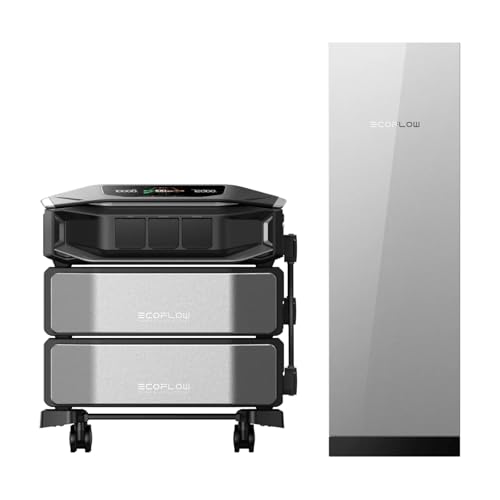
- 12,000W, 240V output with 12–180kWh expansion
- Under-20ms automatic backup response
- Portable system with solar and energy-management features
Best For: Flexible, expandable backup for larger homes
Best High-Capacity Three-Phase System

- 18kW three-phase inverter with 32.15kWh storage
- Up to 28.8kW solar input via dual MPPT
- Scales to a 108kW three-phase system
Best For: Large homes, workshops, ranches, and off-grid properties
Best Weather-Ready Whole-Panel Backup
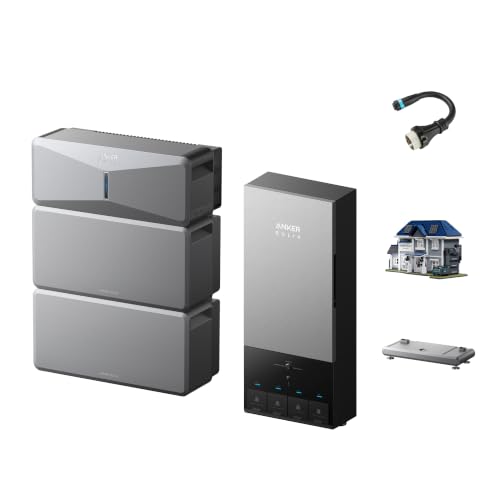
- 7.6kW continuous and 10kW turbo output
- 200A whole-panel coverage with ≤20ms transfer
- 12–90kWh expansion and outdoor-rated construction
Best For: Whole-home coverage with flexible outdoor installation
Best Expandable Rack-Mount System

- 10.24kWh LiFePO4 storage with 12kW output
- Up to 24kW solar input through dual MPPT
- Expandable to six inverters and 20 batteries
Best For: Solar-focused homeowners planning future expansion
Best Portable Whole-Home Option

- 3,584Wh capacity with 3,600W AC output
- Expandable storage and parallel 120/240V operation
- Plug-and-play design with four charging methods
Best For: Portable outage coverage for essential household loads
Best High-Capacity Off-Grid System

- 16.1kWh LiFePO₄ storage with 8,000W inverter
- Native 120/240V split-phase output
- Expandable system with solar MPPT and smart monitoring
Best For: Large homes, workshops, and off-grid solar installations
Best Plug-and-Play Expandable System
EcoFlow DELTA Pro 3 With 2 Extra Batteries

- 12kWh package with 4,000W output
- Expandable to 48kWh and supports 120/240V
- Quiet operation with 10ms transfer switching
Best For: Convenient, expandable backup for homes and sensitive electronics
Maximum-Capacity Whole-Home Choice

- 600Ah LiFePO4 storage with a 12,000W inverter
- Supports split-phase or three-phase output
- Expandable to 163.84kWh and 72kW AC output
Best For: Large homes, off-grid living, and high-demand backup
High-Output Backup Pick
ECO-WORTHY 10kW Home Backup System

- 10,240Wh storage paired with 10,000W output
- Parallel operation enables 120V/240V output
- Expandable to 163.84kWh and 60kW AC output
Best For: High-load household backup with future expansion
Balanced Essential-Load Option

- 10,240Wh LiFePO4 storage with a 5,000W inverter
- Includes MPPT solar charging and pure sine wave output
- Expandable to 163.84kWh and 30kW AC output
Best For: Essential loads and scalable solar backup
Best Portable Whole-Home System – DELTA Pro Ultra X
For shoppers comparing premium whole home battery backup systems, the EF ECOFLOW DELTA Pro Ultra X stands out for combining 12,000W output, 240V support, and expandable storage in a flexible solar-powered package. Its Smart Home Panel 3 is designed for automatic backup switching and circuit management, though professional installation is required.
Best For: Homeowners who want scalable whole-home backup with portable components, solar integration, and support for demanding loads such as air conditioning and EV charging.
Pros:
- 12–36kW output and expandable capacity from 12–180kWh.
- Automatic transfer in under 20 milliseconds for connected loads.
- Supports solar, battery, generator, and off-peak grid-power management.
- Portable design can move with you and allows plug-and-play expansion.
Cons:
- Smart Home Panel 3 requires professional installation.
- Components ship in separate packages.
- The complete system is a substantial investment for smaller homes.
The DELTA Pro Ultra X is a strong premium option when flexibility and long-term expandability matter. Its combination of high output, fast transfer, and intelligent energy management makes it particularly compelling for larger residences and backup plans that may grow over time.
Best High-Capacity Three-Phase System – ECO-WORTHY Powermega 314
The ECO-WORTHY Powermega 314 is a high-capacity choice among premium whole home battery backup systems, pairing an 18kW three-phase hybrid inverter with two 48V LiFePO4 batteries. With 32.15kWh of storage and substantial solar-input capacity, it is built for large homes, workshops, ranches, and off-grid properties.
Best For: Large or high-demand properties needing three-phase power, extensive solar integration, and a system that can scale to multiple inverters.
Pros:
- 18kW three-phase output with up to 36kW peak power for 10 seconds.
- 32.15kWh total LiFePO4 battery capacity.
- Supports up to 28.8kW of solar input through dual MPPT.
- Smart BMS features include active balancing, monitoring, alarms, and fire suppression.
Cons:
- At over 700 pounds, the system requires careful delivery and installation planning.
- Large batteries may arrive by pallet in multiple packages.
- Three-phase specifications may be more system than a typical residence needs.
With its large storage reserve and three-phase architecture, the Powermega 314 is aimed at serious energy users rather than casual backup buyers. Its parallel-inverter capability also gives it a clear path for future expansion, provided the property can accommodate the equipment.
Best Weather-Ready Whole-Panel Backup – Anker SOLIX E10
The Anker SOLIX E10 offers a streamlined approach to premium whole home battery backup systems, using a Power Dock for 200A panel coverage and automatic transfer in 20 milliseconds or less. It provides 7.6kW of continuous output, 10kW turbo output, and expandable storage from 12kWh to 90kWh.
Best For: Homeowners seeking broad electrical-panel coverage, weather-resistant equipment, straightforward battery expansion, and optional solar or generator integration.
Pros:
- 200A Power Dock is designed to back up the entire home panel.
- Up to 20ms automatic switchover helps protect household circuits.
- Storage expands from 12kWh to 90kWh, with up to 9kW solar input per unit.
- NEMA 4 and 3R ratings support outdoor installation in the specified temperature range.
Cons:
- Base continuous output is lower than some 12kW and 18kW systems.
- Whole-home installation may still benefit from professional support.
- The listed package includes two battery modules, so additional storage costs extra.
The E10 is attractive for buyers who value whole-panel coverage and a relatively simple expansion path. Its weather-resistant construction and generator compatibility add flexibility, while the lower continuous rating makes load planning important for homes with multiple high-demand appliances.
Best Expandable Rack-Mount System – WattCycle 12kW Split-Phase
The WattCycle dual-battery package is a practical contender among premium whole home battery backup systems, combining 10.24kWh of LiFePO4 storage with a 12kW split-phase inverter. Its 120/240V pure sine wave output, fast UPS transfer, and high solar-input rating make it suitable for larger residential and off-grid applications.
Best For: Buyers who want a rack-based system with strong solar capacity today and room to expand storage and inverter power later.
Pros:
- 12kW split-phase output supports 120V/240V household loads.
- Dual MPPT controllers accept up to 24kW of solar input.
- Under-10ms UPS transfer helps maintain power for critical appliances.
- Scales to six parallel inverters and up to 20 batteries.
Cons:
- The included 10.24kWh capacity is lower than several larger bundled systems.
- Rack-form batteries and inverter configuration may require dedicated installation space.
- Expansion and solar integration require compatible equipment and careful system planning.
The WattCycle system makes the most sense for technically minded homeowners who prioritize expandability and solar charging. It offers substantial inverter and PV capacity, but its rack-based format and modular design call for more planning than a simpler plug-and-play backup unit.
Best Portable Whole-Home Option – Jackery HomePower 3600 Plus
For shoppers comparing premium whole home battery backup systems, the Jackery HomePower 3600 Plus is a portable, plug-and-play choice with 3,584Wh of capacity and 3,600W of AC output. Its expandable storage, dual-voltage capability when used in parallel, and multiple charging options make it practical for outages without a complex installation.
Best For: Households wanting a relatively portable backup unit for essential appliances, pumps, heaters, and dryers.
Pros:
- 3,600W output, with up to 7,200W in parallel, supports demanding household loads.
- Expandable capacity reaches 21kWh per unit or 43kWh with multiple units.
- LFP battery cells are rated for 6,000 cycles and a 10-year lifespan.
- Supports hybrid AC+DC, AC, solar, and gas-generator charging.
Cons:
- Its 3,584Wh base capacity is smaller than the storage offered by the other systems here.
- 120/240V operation requires parallel use rather than a single-unit setup.
- At 77.2 pounds, it is portable but not lightweight for frequent carrying.
The HomePower 3600 Plus stands out when mobility and straightforward setup matter more than a permanently installed battery bank. Confirm the required transfer-switch arrangement and parallel configuration before relying on it for whole-home loads.
Best High-Capacity Off-Grid System – HumsiENK 16.1kWh Home Backup
Among premium whole home battery backup systems, the HumsiENK kit is the most substantial integrated option in this selection. It combines a 16.1kWh LiFePO₄ battery with an 8,000W hybrid split-phase inverter, providing native 120/240V output for extended outage coverage and off-grid solar use.
Best For: Larger homes, workshops, and off-grid installations needing substantial storage, split-phase output, and expansion potential.
Pros:
- 16.1kWh battery capacity can support refrigerators, central AC, well pumps, and workshop equipment.
- 8,000W inverter provides native 120/240V split-phase output with 10,000W surge capacity.
- Built-in 10,000W MPPT controller and 160A battery charger consolidate key system components.
- Supports expansion up to 241kWh with 15 batteries and 48kW with six inverters.
Cons:
- At 294 pounds, it requires careful placement despite its built-in wheels.
- Freight delivery on a pallet requires an address that can accommodate truck service.
- The larger inverter-and-battery configuration is more involved than a portable power station.
This HumsiENK system offers the strongest storage and inverter ratings in the group, along with monitoring and CAN/RS485/RS232 connectivity. It is best evaluated as a serious solar or backup installation rather than a casual grab-and-go power source.
Best Plug-and-Play Expandable System – EcoFlow DELTA Pro 3 With 2 Extra Batteries
The EcoFlow DELTA Pro 3 package is a convenient contender among premium whole home battery backup systems, combining a 4,096Wh power station with two extra batteries for 12kWh of total listed capacity. It supports 120/240V power, expandable storage, rapid transfer switching, and several charging methods without requiring installation or maintenance.
Best For: Homeowners who want expandable backup power with simple setup, app monitoring, and quiet operation.
Pros:
- 4000W output supports major appliances, with X-Boost and scalable configurations reaching higher output.
- 12kWh package can expand to 48kWh with extra batteries or smart generators.
- Supports AC, solar, generator, EV charging, and EcoFlow Smart Home Panel 2 charging options.
- 10ms switch-over and operation as quiet as 30dB suit sensitive electronics and indoor use.
Cons:
- The listed 4,000W output may be limiting for some simultaneous whole-home loads.
- The complete package weighs 260 pounds, making relocation difficult.
- Whole-home integration through the Smart Home Panel 2 is an additional system consideration.
With its included extra batteries, quiet performance, and broad charging support, the DELTA Pro 3 package balances convenience and meaningful storage. Consider the Smart Home Panel 2 path if you want a more integrated home backup arrangement.
Maximum-Capacity Whole-Home Choice – Cubix100 12kW Hybrid System
For shoppers comparing premium whole home battery backup systems, the ECO-WORTHY Cubix100 stands out for its substantial storage and high-output hybrid inverter. Six LiFePO4 batteries provide 600Ah at 51.2V, while the 12,000W inverter is designed to support demanding household appliances, including refrigerators and air conditioners.
Best For: Larger homes, off-grid applications, and buyers who want generous expansion capacity and split-phase or three-phase output options.
Pros:
- Includes six 51.2V 100Ah LiFePO4 batteries and a 12,000W pure sine wave inverter.
- Supports 120V/240V split-phase or 120V/208V three-phase output.
- Passed Intertek DC UL9540 and UL1741 testing, with CEC compliance noted.
- Can expand to 32 batteries or parallel up to six inverters for up to 72kW AC output.
Cons:
- Its large capacity and cabinet-based design may require substantial installation space.
- Items ship separately, so the complete kit may arrive in multiple shipments.
- Professional installation is a practical consideration despite the included installation-support service.
This is the most capable option in the group for high-load whole-home backup and future expansion. Its higher capacity and flexible output support come with a larger system footprint, making it best suited to buyers planning a serious home-energy installation.
High-Output Backup Pick – ECO-WORTHY 10kW Home Backup System
The ECO-WORTHY 10kW system is a strong contender among premium whole home battery backup systems for households that need substantial inverter output without starting with the largest battery package. It combines two 51.2V 100Ah LiFePO4 batteries with 10,240Wh of storage and a 10,000W MPPT hybrid inverter.
Best For: Homes needing high backup output for essential appliances, with the option to add storage or parallel additional inverters later.
Pros:
- Provides 10,240Wh of battery capacity and 10,000W of pure sine wave output.
- Supports 120V/240V output when two or more inverters are connected in parallel.
- Battery and inverter passed Intertek UL1973 and UL1741 testing, with CEC standards noted.
- Supports expansion to 32 batteries and up to six parallel inverters.
Cons:
- The base kit includes only two batteries, so its runtime depends on the connected load.
- 120V/240V operation requires two or more inverters in parallel.
- The listed system weight is 265.5 pounds, which can complicate handling and installation.
With its 10kW inverter, this model favors output power and expandability. It is a sensible middle ground for buyers who want strong whole-home backup potential but do not initially need the six-battery configuration of the larger Cubix100 system.
Balanced Essential-Load Option – ECO-WORTHY 5kW Backup System
For buyers evaluating premium whole home battery backup systems on a more moderate power budget, this ECO-WORTHY kit offers 10,240Wh of LiFePO4 storage with a 5,000W pure sine wave inverter. Its two-battery configuration is designed to keep basic household appliances running during outages while retaining room for expansion.
Best For: Households prioritizing essential-load backup, solar charging, and a lower-output starting point that can grow over time.
Pros:
- Combines two 51.2V 100Ah batteries for 10,240Wh of stated storage capacity.
- Includes a 5,000W inverter with a 10,000W peak output rating.
- Passed Intertek UL1973 and UL1741 testing, with CEC standards noted.
- Can expand to 32 batteries or parallel up to six inverters for up to 30kW AC output.
Cons:
- Its 5,000W rated output is lower than the 10kW and 12kW alternatives.
- The base inverter provides 120V output; 120V/208V/240V operation requires parallel units.
- The listed battery capacity is 200Ah, so demanding loads may reduce runtime quickly.
This model is the practical entry point in the lineup for buyers who want substantial battery storage but have more modest simultaneous power requirements. Choose it for essential circuits and scalable backup rather than the highest-demand whole-home loads.
How We Picked the Best Premium Whole Home Battery Backup Systems
We focused on systems with substantial storage, high continuous AC output, or a clear path to whole-home and essential-load backup. The selection includes portable power stations, expandable battery ecosystems, and 48V LiFePO₄ systems paired with split-phase hybrid inverters. We considered stated capacity, inverter rating, battery chemistry, expandability, safety certifications where listed, portability, and the practical complexity of installation.
Because specifications and included components can vary by configuration, confirm the exact battery count, inverter model, transfer equipment, warranty, and local code requirements before purchasing.
Quick Comparison
- Portable power stations: The Jackery HomePower 3600 Plus and EcoFlow DELTA series are generally easier to deploy and move, but may require compatible panels, transfer equipment, or additional batteries for true whole-home coverage.
- Expandable ecosystems: The Anker SOLIX E10 and EcoFlow DELTA Pro Ultra X are suited to buyers who want a scalable platform and coordinated home-energy accessories.
- 48V battery-and-inverter packages: ECO-WORTHY, WattCycle, and HumsiENK configurations can offer substantial capacity and split-phase output, but usually demand more careful system design and professional installation.
Key Buying Factors for Premium Whole-Home Battery Backup Systems
Usable Capacity and Load Planning
Capacity indicates how long a battery can run loads, while actual runtime depends on inverter losses and appliance demand. Estimate daily energy use and identify must-run circuits before paying for maximum storage. Refrigerators, pumps, medical equipment, networking gear, and HVAC systems can have significant startup demands.
Inverter Output and Electrical Compatibility
Continuous watts determine how much equipment can run simultaneously; surge capability helps start motors and compressors. For a typical U.S. home, verify whether the system supports 120/240V split-phase output and whether its transfer switch or smart panel is compatible with your service panel.
Expandability, Charging, and Solar Input
Expansion can be valuable during longer outages, but only if additional batteries, cables, and compatible modules remain available. Compare charging speed, solar-input limits, generator compatibility, and whether the system can recharge while powering loads.
Safety, Installation, and Support
LiFePO₄ chemistry is widely favored for stationary storage, but enclosure location, ventilation, temperature limits, grounding, disconnects, and code compliance still matter. High-voltage or split-phase installations should be evaluated by a qualified electrician. Check warranty terms, monitoring software, replacement-battery availability, and service responsiveness.
Who Should Buy Which Premium Whole Home Battery Backup Systems?
Choose a portable power station if you want simpler setup, occasional outage coverage, or a system that can serve multiple locations. Choose an expandable platform if you want a polished ecosystem that can grow with changing energy needs. Choose a 48V modular package if you need high capacity and split-phase output and are comfortable budgeting for professional design and installation. For frequent outages or critical medical and heating loads, prioritize dependable transfer equipment, adequate surge capacity, service support, and a clearly defined circuit plan over headline watt-hours alone.