
Shaky footage can make even a well-planned video feel unfinished. The best beginner-friendly camera gimbals simplify stabilization, framing, and camera movement so you can concentrate on your subject instead of fighting your gear.
This roundup compares phone gimbals, pocket cameras with built-in stabilization, compact camera gimbals, and entry-level mirrorless options. Look closely at payload, tracking features, controls, battery life, and portability before choosing.
Best 10 Beginner-Friendly Camera Gimbals Picks for 2026
Versatile Creator Pick

- Supports cameras, action cameras, and smartphones
- 18 m AI tracking with detachable remote handle
- Handles payloads up to 2 kg
Best For: Creators who want one gimbal for multiple camera types
Pocket Vlogging Pick

- Integrated 3-axis stabilization and 1-inch sensor
- 4K video at up to 120 fps
- Rotating 2-inch touchscreen with ActiveTrack 6.0
Best For: First-time vloggers seeking a compact all-in-one camera
Best Budget Phone Gimbal

- Foldable 0.79-lb smartphone design
- Detachable remote and AI tracking features
- Up to 11 hours of battery life
Best For: Phone users creating travel, vlog, and social content
Simple Vlogging Camera

- 4K video with 330-degree rotating lens
- Wi-Fi transfers and included starter accessories
- Compact design for travel and solo vlogging
Best For: First-time creators wanting a simple standalone vlogging kit
Best All-in-One Phone Pick

- 3-axis phone stabilization with 360° pan rotation
- Built-in tripod, extension rod, audio, and lighting support
- 10-hour battery with guided tutorials and one-tap editing
Best For: Phone vloggers, travelers, and solo creators
Best Multi-Camera Starter

- Works with phones, action cameras, and cameras up to 4.4 lb
- AI Tracking 4.0 supports hands-free shooting
- Combo includes mounts, cables, smartphone holder, and tripod
Best For: Beginners building a flexible multi-camera setup
Best Lightweight Phone Gimbal

- Lightweight 300-gram design with a comfortable grip
- ActiveTrack 7.0, ShotGuides, and one-tap editing
- Built-in tripod and up to 10 hours of operating time
Best For: Travelers, vloggers, and everyday phone filmmakers
Best Lightweight Pick
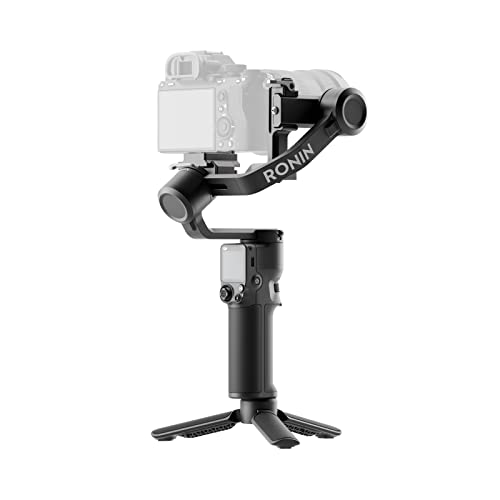
- 795g portable design
- Supports up to 2kg
- Native vertical shooting
Best For: Traveling creators with compatible mirrorless cameras
Best All-in-One Camera
Xtra Muse Pocket Gimbal Camera

- Integrated 3-axis stabilization
- 1-inch sensor with 4K/120fps
- Built-in Master Follow tracking
Best For: Beginners wanting a standalone pocket video camera
Most Versatile Kit

- Works with four device types
- Built-in AI face/object tracking
- Includes rod, tripod, light, and adapters
Best For: Multi-device creators seeking an adaptable starter gimbal
Versatile Creator Pick – FeiyuTech SCORP Mini 3 Pro
For creators who need one stabilizer for several types of cameras, the FeiyuTech SCORP Mini-3-Pro is a flexible choice among beginner-friendly camera gimbals. It supports mirrorless, compact, action cameras, and smartphones, while its modular design helps simplify horizontal and vertical shooting.
Best For: Solo creators who use multiple camera types and want AI tracking, remote operation, and support for setups up to 2 kg.
Pros:
- Supports mirrorless, compact, action cameras, and smartphones.
- AI tracking offers an 18-meter maximum distance and 360-degree follow capability.
- Detachable handle can function as a remote control.
- Supports up to 2 kg (4.4 lb) and includes a quick-release system.
Cons:
- At approximately 1 kg, it is less lightweight than a smartphone-only gimbal.
- It is not water resistant.
- Its broader compatibility may require more setup than a dedicated phone stabilizer.
The SCORP Mini-3-Pro is a strong option when versatility matters more than the smallest possible footprint. Its payload, tracking, and remote-control features give beginners room to grow into more advanced filming setups.
Pocket Vlogging Pick – DJI Osmo Pocket 3
The DJI Osmo Pocket 3 combines a camera and 3-axis gimbal in a compact body, making it an approachable option among beginner-friendly camera gimbals. Its rotating touchscreen, subject tracking, and pocket-sized design reduce the amount of gear first-time vloggers need to manage.
Best For: Beginners who want an all-in-one vlogging camera with 4K video, built-in stabilization, and easy horizontal or vertical framing.
Pros:
- 1-inch CMOS sensor records 4K video at up to 120 fps.
- 2-inch touchscreen rotates for landscape and portrait shooting.
- ActiveTrack 6.0 helps keep subjects centered.
- Compact 179-gram design has a stated 166-minute battery life.
Cons:
- It is an integrated camera rather than a gimbal for interchangeable cameras.
- It is not water resistant.
- Advanced D-Log M and 10-bit features may be more than casual users need.
For straightforward vlogging, the Osmo Pocket 3 keeps the setup simple without giving up useful creative controls. It is especially appealing if you want stabilized footage without balancing a separate phone or camera.
Best Budget Phone Gimbal – hohem iSteady X3 SE
The hohem iSteady X3 SE is a practical starting point for smartphone creators comparing beginner-friendly camera gimbals. Its foldable design, detachable remote, simple app controls, and 11-hour battery are aimed at casual vlogging, travel, and social content.
Best For: Phone users who want an affordable, portable stabilizer with AI tracking, gesture control, and easy portrait-to-landscape switching.
Pros:
- Three-axis stabilization supports smoother footage while walking, jogging, or jumping.
- Detachable magnetic remote works from up to 32.81 feet away.
- Folds to a pocket-sized form and weighs 0.79 lb.
- Offers up to 11 hours of operation on a two-hour charge.
Cons:
- Its 0.66-lb payload limits it to compatible smartphones.
- Some creative features depend on the Hohem Joy app.
- It is not designed for mirrorless or dedicated cameras.
The iSteady X3 SE focuses on convenience rather than a professional camera rig. For beginners filming with a phone, its remote, app features, portability, and long battery life make the learning curve manageable.
Simple Vlogging Camera – 4K Pocket Digital Camera
This pocket digital camera is designed for first-time creators who want simple recording rather than a separate stabilizer setup. It fits the beginner-friendly camera gimbals category only loosely, since its stabilization is digital, but its rotating lens, automatic-focused workflow, and included accessories make it easy to start vlogging.
Best For: Beginners who want a compact standalone camera for YouTube, TikTok, travel, and solo videos.
Pros:
- Records 4K video and captures listed 75MP still images.
- 330-degree rotating lens helps with solo framing.
- Built-in Wi-Fi supports wireless transfers to a smartphone.
- Includes a 16GB TF card, mini tripod, cable, wrist strap, and carrying bag.
Cons:
- Uses digital rather than mechanical image stabilization.
- Battery life is listed at approximately 1.5 hours.
- It is not water resistant and has no flash.
This camera is better viewed as an easy starter vlogging kit than as a true gimbal. Its rotating lens and included tripod can help solo creators begin recording quickly, while users prioritizing smooth motion may prefer a dedicated mechanical gimbal.
Best All-in-One Phone Pick – DJI Osmo Mobile 8
For shoppers seeking beginner-friendly camera gimbals, the DJI Osmo Mobile 8 is an approachable phone-focused option with 3-axis stabilization, guided tutorials, and one-tap editing. Its built-in extension rod, tripod, tracking, audio, and lighting features give new creators room to grow without immediately adding more equipment.
Best For: Phone vloggers, travelers, families, and solo creators who want tracking, low-angle shots, and hands-free filming.
Pros:
- 3-axis stabilization and 360° pan rotation help produce smooth, flexible footage.
- Native tracking works with integrated audio and lighting capabilities.
- Built-in extension rod and tripod support selfies, group shots, and low-angle filming.
- Up to 10 hours of battery life, with phone charging while filming.
Cons:
- Designed for cellphones rather than dedicated cameras.
- DJI Mimo is not available through Google Play and requires downloading from DJI’s website.
- At 370 g, it is slightly heavier than the Osmo Mobile 7.
The Osmo Mobile 8 is a strong beginner choice when convenience matters most. Its integrated creative tools reduce the need for separate accessories, while the app tutorials help shorten the learning curve.
Best Multi-Camera Starter – FeiyuTech SCORP Mini 3 Combo
The FeiyuTech SCORP Mini 3 Combo suits beginners who may move beyond phone video. It supports smartphones, action cameras, and mirrorless cameras up to 4.4 pounds, combining 3-axis stabilization with AI tracking and vertical shooting in a single kit.
Best For: New creators who want one gimbal for phones, action cameras, and compatible mirrorless cameras.
Pros:
- Supports multiple device types, including smartphones, action cameras, and mirrorless cameras.
- AI Tracking 4.0 enables hands-free framing for vlogging and live streaming.
- 3-axis stabilization smooths pan, tilt, and roll movement.
- Combo includes mounting hardware, cables, a smartphone holder with cooling fan, and a tripod.
Cons:
- Its broader compatibility and mounting hardware may create a steeper setup process than a phone-only gimbal.
- Camera support depends on the listed compatibility and the 4.4-pound weight limit.
- The supplied notes list a one-year warranty.
This is the most adaptable option of the three for beginners who expect their equipment needs to change. It costs less in convenience than buying separate gimbals later, though users should confirm camera and lens compatibility before purchasing.
Best Lightweight Phone Gimbal – DJI Osmo Mobile 7
The DJI Osmo Mobile 7 is a straightforward choice among beginner-friendly camera gimbals for iPhone and Android users. Its 300-gram design, built-in tripod, ActiveTrack 7.0, and DJI Mimo ShotGuides make it easy to start filming stable, edited clips with minimal setup.
Best For: Everyday phone filming, travel, live streaming, and creators who prioritize a light, portable design.
Pros:
- Lightweight 300-gram body with an ergonomic, anti-slip grip.
- 3-axis stabilization and ActiveTrack 7.0 support smooth moving shots and subject tracking.
- Foldable design and built-in tripod simplify storage and solo shooting.
- Up to 10 hours of use, plus USB-C phone charging.
Cons:
- It is intended for cellphones and has a 300-gram maximum weight recommendation.
- The DJI Mimo app must be downloaded from DJI’s website because it was removed from Google Play.
- The enhanced tracking kit is sold separately.
Choose the Osmo Mobile 7 if portability and a simple phone-first workflow are your priorities. It delivers the essential stabilization and tracking features beginners need while keeping the design light enough for extended handheld use.
Best Lightweight Pick – DJI RS 3 Mini
For creators seeking beginner-friendly camera gimbals, the DJI RS 3 Mini offers a relatively lightweight way to stabilize compatible mirrorless cameras. Its 795g design, touchscreen controls, and native vertical-shooting support make it practical for travel and social content.
Best For: Travelers and beginner creators using compatible mirrorless camera setups.
Pros:
- Lightweight 795g design is easier to carry and hold during extended shoots.
- Supports camera-and-lens combinations up to 2kg.
- Includes native vertical shooting and Bluetooth shutter control.
- 1.4-inch full-color touchscreen provides access to frequently used settings.
Cons:
- Requires the DJI Ronin app for activation and full functionality.
- The Ronin app is not currently available through Google Play and must be downloaded from DJI’s website.
- Not water resistant.
The RS 3 Mini is a strong entry point for users who want pro-level stabilization in a compact body, provided their camera is compatible and they are comfortable with the app setup.
Best All-in-One Camera – Xtra Muse Pocket Gimbal Camera
Among beginner-friendly camera gimbals, the Xtra Muse is an all-in-one option that combines a 1-inch CMOS sensor, built-in 3-axis stabilization, and a pocketable camera format. It is designed for users who want smooth video without pairing a separate camera and gimbal.
Best For: Beginners who want a compact standalone camera for stabilized 4K video and tracking.
Pros:
- Built-in 3-axis gimbal stabilizer helps produce smooth footage while moving.
- 1-inch CMOS sensor supports 4K video recording at up to 120fps.
- Master Follow can keep the user centered while moving.
- 2-inch touchscreen supports horizontal and vertical shooting.
Cons:
- Digital zoom is listed rather than optical zoom.
- Not water resistant.
- Uses Micro SD storage, which is not included in the supplied bundle details.
Because the camera and stabilizer are integrated, the Xtra Muse reduces setup complexity for new creators. Its 281g weight and included carrying accessories also suit handheld, on-the-go shooting.
Most Versatile Kit – FeiyuTech SCORP Mini 2
The FeiyuTech SCORP Mini 2 is one of the more beginner-friendly camera gimbals for creators who use different device types. It supports mirrorless cameras, smartphones, DSLRs, and action cameras, while its built-in AI tracker and included accessories simplify multi-purpose shooting.
Best For: Creators who want one stabilizer for cameras, phones, and action cameras.
Pros:
- Supports four device categories with a maximum payload of 1.2kg.
- Built-in AI tracking can follow faces or objects without connecting to the app.
- Includes a fill light, extension rod, tripod, smartphone clamp, and GoPro adapter.
- Five-way joystick and 1.3-inch touchscreen support easier operation and low-angle filming.
Cons:
- At 852g, it is heavier than the DJI RS 3 Mini.
- Its 1.2kg payload is lower than the DJI RS 3 Mini’s 2kg capacity.
- Manual exposure control is listed in the supplied specifications.
The SCORP Mini 2 Kit stands out for flexibility rather than maximum payload. Its broad compatibility and independent tracking make it a practical choice for beginners who switch between several recording devices.
How We Picked the Best Beginner-Friendly Camera Gimbals
We grouped these 10 picks by the cameras they support and the kind of creator they suit. The selection includes smartphone stabilizers, integrated pocket cameras, action-camera and compact-camera options, and mirrorless gimbals. We prioritized straightforward controls, useful automatic modes, reliable three-axis stabilization, practical portability, and features that help new users produce smoother footage quickly.
Compatibility matters just as much as headline specifications. A phone gimbal may be the easiest starting point, while a mirrorless model offers more creative control but requires attention to camera weight, lens balance, and setup. Integrated cameras can be especially convenient because the gimbal and camera are designed to work together.
Quick Comparison
- Best for phone creators: DJI Osmo Mobile 7, DJI Osmo Mobile 8, or hohem iSteady X3 SE.
- Best for a compact all-in-one setup: DJI Osmo Pocket 3 or a comparable pocket camera with built-in three-axis stabilization.
- Best for broader camera compatibility: FeiyuTech SCORP Mini models.
- Best for entry-level mirrorless users: DJI RS 3 Mini.
- Best for tracking-focused shooting: Models with integrated AI tracking, such as selected FeiyuTech and pocket-camera options.
Key Buying Factors for Beginner-Friendly Camera Gimbals
Camera and Payload Compatibility
Check whether the gimbal supports your phone, action camera, compact camera, or mirrorless body. For interchangeable-lens cameras, compare the complete payload—including the lens, battery, memory card, and accessories—with the manufacturer’s limit. A supported setup still needs to balance correctly on the arms.
Ease of Balancing and Control
Beginners benefit from quick-release plates, clear motor locks, automatic calibration, a comfortable grip, and controls that can start or stop recording without reaching for the camera. A built-in display or simple companion app can also reduce setup time.
Tracking and Shooting Modes
Face or object tracking is useful for solo presenters, tutorials, and moving subjects, but verify how tracking works and whether it requires an app, a phone, or an included module. Follow, pan-lock, tilt-lock, time-lapse, and portrait modes can be more valuable than a long list of advanced settings.
Size, Battery, and Accessories
Choose a foldable phone gimbal for travel, a pocket camera for the smallest all-in-one kit, or a larger camera gimbal when image quality and lens choice matter most. Consider operating time, charging method, extension rods, fill lights, tripods, and included tracking accessories.
Who Should Buy Which Beginner-Friendly Camera Gimbals?
Phone-first creators should start with DJI Osmo Mobile or hohem options for the simplest learning curve. Travel vloggers may prefer an integrated pocket camera that combines recording and stabilization in one compact device. Creators using action or compact cameras should consider a versatile FeiyuTech model. Mirrorless owners will get more control from the DJI RS 3 Mini or a compatible SCORP Mini kit, provided their camera-and-lens combination fits the payload requirements.