
Camera movement can make beginner video projects look far more polished, but the right equipment depends on your camera, payload, shooting space, and comfort with balancing a rig.
This roundup compares full-size jib arms, compact mini cranes, and handheld gimbals so you can choose a practical setup for cinematic reveals, smooth tracking, and controlled low-angle shots.
Best 10 Camera Cranes for Beginners Picks for 2026
Maximum-Reach Pick

- Supports rigs up to 8kg / 17.6lb
- Configures to 14ft or 10ft
- 270-degree tilt range and LCD mount
Best For: Long, elevated, and sweeping crane shots
Travel-Friendly Stabilizer
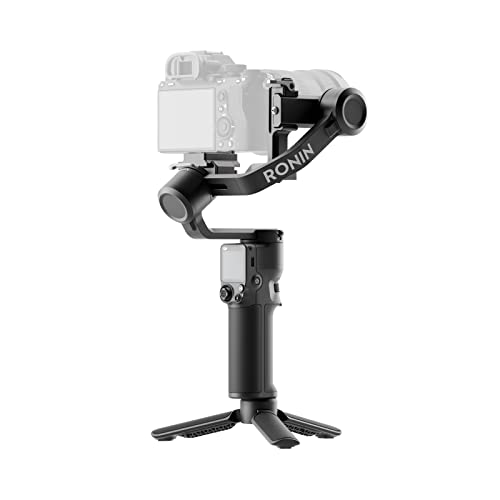
- Weighs 795g
- Supports up to 2kg
- Native vertical shooting and touchscreen
Best For: Portable handheld stabilization and social video
Balanced Jib Choice

- Supports setups up to 8kg
- Works with gimbals and camera heads
- Two-section arm with carry bag
Best For: Manageable jib moves and elevated perspectives
Higher-Payload Handheld Pick

- Supports up to 3kg / 6.6lb
- Native vertical shooting
- Up to 16 hours of battery life
Best For: Heavier handheld DSLR and mirrorless setups
Best Carbon-Fiber Mini Jib

- 33-pound maximum load
- 85-inch carbon-fiber reach
- Supports low-angle and upside-down mounting
Best For: Beginners learning full-size crane-style camera movements
Best Lightweight Gimbal

- Three-axis stabilization
- Supports cameras up to 6.6 pounds
- Native vertical shooting
Best For: Portable handheld shooting and vertical video
Best Feature-Rich Gimbal

- Native horizontal and vertical shooting
- Built-in shutter, aperture, and ISO controls
- Includes tripod and lens support
Best For: Beginners building a versatile handheld camera setup
Heavy-Duty Beginner Pick

- Supports setups up to 2,000 g
- Built-in 10W fill light
- Landscape and portrait shooting modes
Best For: Beginners using full-frame DSLR or compact cinema cameras
Best All-in-One Starter

- Supports cameras, phones, and action cameras
- Lightweight 705 g design
- Up to 7.5 hours of battery life
Best For: Beginners using multiple camera types
Lightest Run-and-Gun Option

- Lightweight 549 g body
- Built-in 1000-lumen fill light
- Quick-release plate with dual safety locks
Best For: Beginners with lightweight mirrorless cameras
Maximum-Reach Pick – Proaim 14ft Camera Crane Jib
For beginners shopping for camera cranes for beginners, the Proaim 14ft offers substantial reach and room to grow. Its modular design can be assembled at 14 or 10 feet, while the two-arm structure and thrust roller bearings are built to support smoother, more controlled movement.
Best For: Beginners who need long reach for elevated, overhead, crowd-clearing, or sweeping crane shots and have a suitably strong support setup.
Pros:
- Supports camera rigs up to 8kg / 17.6lb.
- Configurable 14ft or 10ft length for different shooting spaces.
- 270-degree platform tilt range, LCD mount, and included carry bags.
Cons:
- Its 16kg weight and extended dimensions make it less convenient for quick solo setups.
- A support stand, camera head, or gimbal is needed separately.
This is the most capable reach-focused option in the group, but its size and support requirements make it better for planned shoots than casual handheld-style filming.
Travel-Friendly Stabilizer – DJI RS 3 Mini Gimbal
The DJI RS 3 Mini is a practical starting point for beginners comparing camera cranes for beginners with more portable stabilization tools. At 795g, it is designed for extended handheld use and supports camera-and-lens combinations up to 2kg.
Best For: Beginners who prioritize portable three-axis stabilization, low-angle shooting, and vertical content over true elevated crane movement.
Pros:
- Lightweight 795g design is convenient for travel and longer shoots.
- Supports payloads up to 2kg and offers native vertical shooting.
- Includes a touchscreen, Bluetooth shutter control, and supplied tripod.
Cons:
- It is a handheld gimbal rather than a camera crane or jib.
- The DJI Ronin app is required for activation and full functionality, and it is not available through Google Play.
Choose this when portability and smooth walking or low-angle footage matter more than height and sweeping jib movement. It is the simplest stabilization-focused entry point here.
Balanced Jib Choice – Proaim 9ft Camera Crane
For beginners who want genuine crane movement without the reach of a full 14ft arm, the Proaim 9ft is a more manageable option. It supports up to 8kg, accepts compatible gimbals and heads, and separates into two sections for transport.
Best For: Beginners building a jib-based setup for reveals, elevated perspectives, sweeping moves, and controlled camera rises.
Pros:
- Supports DSLR, mirrorless, camcorder, and compact video-camera setups up to 8kg.
- Compatible with gimbals, motorized pan-tilt heads, and fluid heads.
- Includes auto/manual tilt control, LCD mounting, and a carrying bag.
Cons:
- It still requires a compatible camera head and suitable support equipment.
- The folded arm is approximately 7ft long, so transport space is still necessary.
The 9ft length offers a useful middle ground: more cinematic elevation than a handheld gimbal, with less reach and setup burden than the 14ft model.
Higher-Payload Handheld Pick – ZHIYUN Weebill 3E Gimbal
The ZHIYUN Weebill 3E is another compact alternative for beginners researching camera cranes for beginners but primarily needing handheld stabilization. Its 3kg tested payload accommodates many DSLR and mirrorless combinations, while the design includes native vertical shooting and up to 16 hours of battery life.
Best For: Beginners using heavier mirrorless or DSLR setups for stabilized handheld, low-angle, and vertical video.
Pros:
- Supports a tested payload of up to 3kg / 6.6lb.
- Compact 1.05kg design includes native vertical shooting.
- Offers Bluetooth shutter control and up to 16 hours of battery life.
Cons:
- It is a handheld gimbal, not a raised camera crane.
- The package includes only a Panasonic control cable; other camera brands may require additional cables.
- The sling grip and wrist rest are sold separately.
This is a strong choice for mobile creators who need more payload capacity than the RS 3 Mini. For actual crane height and sweeping arm movement, choose one of the Proaim jib systems instead.
Best Carbon-Fiber Mini Jib – 85-Inch IFOOTAGE M1 III
For beginners comparing camera cranes for beginners, the IFOOTAGE M1 III is a compact mini jib with an 85-inch reach and a carbon-fiber square-tube design. Its 33-pound maximum load, adjustable tilt, and included water bag give new users a stable platform for learning smooth camera movements.
Best For: Beginners who want a versatile mini jib for horizontal, vertical, low-angle, and upside-down shots.
Pros:
- Supports cameras and accessories up to 33 pounds.
- Reaches 85 inches and offers adjustable tilt up to 25 degrees.
- Includes quick-release plates and connection options for fluid heads and accessories.
- Supports low-angle shots and upside-down mounting with the included adapter options.
Cons:
- The product is described as mint condition with a creased box, so packaging may show wear.
- It is a mini jib rather than a handheld stabilizer, so setup and support equipment are part of the workflow.
- It is not water resistant.
The M1 III stands out when a beginner wants genuine crane-style movement and generous payload capacity rather than only handheld stabilization. Its many mounting threads and camera-platform adjustments also leave room to expand as shooting skills develop.
Best Lightweight Gimbal – ZHIYUN WEEBILL 3E
Although it is not a traditional jib, the ZHIYUN WEEBILL 3E is a practical alternative for beginners researching camera cranes for beginners and wanting portable stabilization. This 1.05-kilogram, three-axis gimbal supports cameras up to 6.6 pounds and offers native vertical shooting for quick changes between formats.
Best For: Beginners who prioritize handheld mobility, vertical video, and reduced fatigue over extended crane reach.
Pros:
- Three-axis image stabilization supports smoother handheld footage.
- Native vertical shooting converts without extra accessories or disassembly.
- Bluetooth shutter control reduces cable clutter and can trigger recording or photos.
- Built-in 2600mAh batteries support up to 16 hours of average battery life.
Cons:
- Its 6.6-pound payload is substantially lower than a dedicated heavy-duty jib.
- The wrist-rest and telescopic sling-grip kit are not included.
- It does not provide the elevated or sweeping reach of a camera crane.
The WEEBILL 3E makes sense for a beginner whose idea of camera movement is primarily walking, panning, and reframing rather than raising a camera above a scene. Its compact size and vertical-shooting support make it especially approachable for social video.
Best Feature-Rich Gimbal – ZHIYUN Crane 4E
The ZHIYUN Crane 4E is another handheld alternative for beginners comparing camera cranes for beginners, particularly those using interchangeable-lens cameras. It combines three-axis stabilization, native horizontal and vertical shooting, camera-control wheels, and a supplied tripod for a more flexible shooting setup.
Best For: Beginners who want advanced camera controls and support for a broad range of Canon, Nikon, Sony, Fujifilm, Panasonic, and other compatible cameras.
Pros:
- Switches between horizontal and vertical shooting without additional accessories.
- Built-in controls provide quick access to shutter, aperture, and ISO adjustments.
- Supports Bluetooth shutter control and up to two servo focusers.
- Includes a tripod, quick-release plates, lens support, and mounting hardware.
Cons:
- At 1.33 kilograms, it is heavier than the WEEBILL 3E.
- Its handheld gimbal design does not offer the elevated reach of a jib crane.
- Battery life is listed at up to 12 hours, and the unit is not water resistant.
The Crane 4E is a strong choice for beginners who want to grow into more controlled camera operation without buying a separate stabilizer immediately. Choose it for handheld versatility and camera-accessory integration, not for overhead crane shots.
Heavy-Duty Beginner Pick – ZHIYUN Crane 4 Combo
For beginners using larger camera bodies, the ZHIYUN Crane 4 is one of the more capable camera cranes for beginners—or, more accurately, a full-size handheld gimbal option. Its stronger motors, longer arm, and support for cameras up to 2,000 g make it suited to DSLR and compact cinema setups while still offering beginner-friendly controls.
Best For: Beginners using full-frame DSLR or compact cinema cameras who want room to grow.
Pros:
- Supports compatible camera setups up to 2,000 g.
- Switches between landscape and portrait shooting modes with its quick-release system.
- Includes a built-in 10W fill light with 3200 lux maximum illuminance and CRI 95+.
- Offers Bluetooth shutter control and a 1.22-inch color touchscreen.
Cons:
- At 2,000 g, it is substantially heavier than the smaller models in this roundup.
- Its larger design may be more than beginners need for compact cameras.
- It is not water resistant.
The Crane 4 is a strong choice when camera compatibility matters more than minimal weight. Beginners should confirm their camera and lens combination stays within the 2,000 g recommendation and plan to spend time learning balance and controls.
Best All-in-One Starter – Zhiyun Crane M3S
The Zhiyun Crane M3S is a versatile entry point for people comparing camera cranes for beginners across cameras, phones, and action cameras. At 705 g, it balances portability with support for compatible cameras up to 2 pounds, and its quick-release design, Bluetooth controls, and built-in screen simplify everyday shooting.
Best For: Beginners who use multiple camera types and want one lightweight stabilizer.
Pros:
- Works with compatible cameras, smartphones, and action cameras.
- Weighs 705 g and supports up to 2 pounds.
- Provides Bluetooth shutter and zoom control without cable connections.
- Offers up to 7.5 hours of battery life with PD fast charging and charging during use.
Cons:
- Its 2-pound maximum is less suitable for heavier camera-and-lens combinations.
- It is not water resistant.
- Users may still need to check compatibility for specific camera models and functions.
The M3S is the most flexible choice here for a beginner building a mixed-camera kit. Its lighter body and accessible controls make it easier to carry and learn, while the battery and charging features help during longer shoots.
Lightest Run-and-Gun Option – Zhiyun Crane M2S
The Zhiyun Crane M2S is a compact option for beginners shopping for camera cranes for beginners and lightweight handheld stabilization. Its 549 g body is designed for lightweight mirrorless cameras, phones, and action cameras, while the integrated fill light and quick-release plate add useful features for run-and-gun filming.
Best For: Beginners with lightweight mirrorless cameras who prioritize portability.
Pros:
- Lightweight 549 g body is easy to carry for run-and-gun filming.
- Supports compatible phones, action cameras, and lightweight mirrorless cameras.
- Includes a 1000-lumen integrated fill light with five brightness levels and four color filters.
- Uses a quick-release plate with V-shape design and dual safety locks.
Cons:
- It is not designed for heavy cameras or lenses.
- Proper balancing is required before powering on for best performance.
- The built-in display is smaller at 0.66 inches.
The Crane M2S makes the most sense when low weight is the priority. It can be approachable for a first stabilizer, but beginners should verify their complete camera-and-lens weight and follow the balancing guidance before use.
How We Picked the Best Camera Cranes for Beginners
We evaluated these Camera Cranes for Beginners by looking at payload capacity, portability, setup complexity, compatibility with DSLR and mirrorless cameras, and the types of shots each design supports. The selection includes traditional jib arms for elevated or sweeping movements, compact carbon-fiber cranes for smaller productions, and three-axis gimbals for handheld stabilization.
Because a gimbal is not technically the same as a crane, we separated their strengths rather than treating them as interchangeable. A jib provides physical camera elevation and controlled arcs, while a gimbal is better for walking shots, pans, tilts, and fast repositioning.
Quick Comparison
| Setup type | Best for | Main advantage | What to watch |
|---|---|---|---|
| Full-size jib arm | Studio and event video | High, sweeping camera moves | Needs a sturdy tripod, counterweights, and space |
| Mini jib crane | Small sets and tabletop work | More portable than a full jib | Shorter reach and careful balancing required |
| Handheld gimbal | Walking and tracking shots | Fast, versatile stabilization | Requires accurate camera balancing and battery management |
| Gimbal with tripod | Hybrid handheld and locked-off shooting | Flexible support options | May be heavier and more expensive |
Key Buying Factors for Camera Cranes for Beginners
Payload and Camera Compatibility
Confirm the maximum payload before buying. Include the camera body, lens, cage, microphone, monitor, follow-focus motor, and any other accessories. A rig that is technically within the limit may still feel difficult to balance if it is close to maximum capacity. Also check mounting hardware, plate style, and compatibility with your camera brand and lens configuration.
Reach, Counterbalance, and Support
Longer jib arms create more dramatic movement but require more room and a stronger support system. A crane arm should be mounted on a stable tripod or dedicated base, and many setups need counterweights to prevent tipping. Never assume the arm itself includes every support component shown in a product image.
Portability and Setup Time
Choose a compact jib or gimbal if you regularly travel, film in tight interiors, or work alone. Full-size cranes are better when you can leave equipment assembled and control the shot from a fixed position.
Controls and Stabilization
For gimbals, consider motor strength, control-wheel access, follow modes, battery life, and whether the handle can support low-angle or underslung shooting. A gimbal stabilizes unwanted movement; it does not replace careful walking technique or a crane’s vertical reach.
Who Should Buy Which Camera Cranes for Beginners?
Choose a full-size jib arm if you want elevated reveals, smooth arcs, or sweeping establishing shots for studio, event, wedding, or narrative work. The 14-foot option suits larger spaces, while a 9-foot arm is easier to manage in smaller locations.
Choose a mini jib if portability and a smaller footprint matter most. It can be a useful middle ground for creators who want crane-style movement without transporting a full-size production rig.
Choose a lightweight gimbal if your priority is walking footage, social content, travel video, or fast handheld repositioning. Compact models are generally easier for beginners to balance and carry.
Choose a higher-capacity gimbal or combo kit if you use heavier mirrorless or DSLR setups and want room for accessories. Before ordering, verify the exact payload, included tripod or handle, battery specifications, and current camera compatibility.