
The best camera gimbals make handheld footage smoother, steadier, and easier to control. This lineup includes compact models for mirrorless cameras, high-payload options for heavier rigs, and versatile stabilizers with AI tracking.
Use the guide below to compare payload capacity, camera compatibility, controls, battery considerations, and portability before choosing the right stabilizer for your setup.
Best 10 Camera Gimbals Picks for 2026
Smart Tracking Pick

- Built-in AI tracking with gesture control
- 2.5 kg payload and native vertical shooting
- Touchscreen, control knob, and app support
Best For: Solo creators who want integrated tracking and flexible DSLR or mirrorless control
Fast-Setup Choice

- Auto axis locks for quicker setup
- Included intelligent tracking module
- 2 kg payload with fast vertical switching
Best For: Solo videographers who need quick transitions and tracking
Heavy-Payload Pick

- Supports up to 7.72 lb
- Built-in AI tracking without app pairing
- 14-hour runtime and native vertical shooting
Best For: Heavier DSLR or mirrorless setups and extended shoots
Lightweight Travel Pick
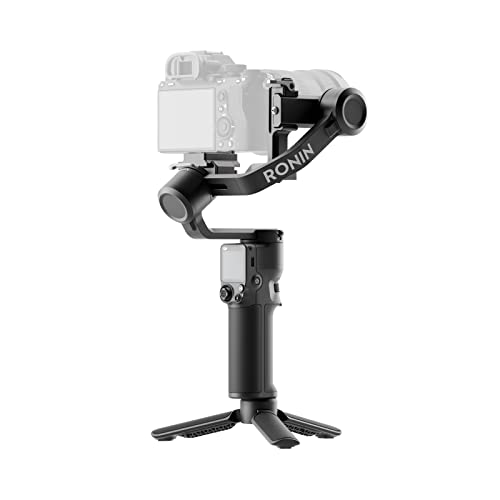
- Lightweight 795 g design
- 2 kg payload for compatible setups
- Native vertical shooting and Bluetooth shutter control
Best For: Travel creators and mirrorless users prioritizing portability
Best Compact Kit

- Supports cameras, phones, DSLRs, and action cameras
- Built-in AI tracking and wireless fill light
- Includes case, extension rod, tripod, and adapters
Best For: Mixed-device creators seeking a versatile, portable kit
Best Pro Payload

- Supports camera rigs up to 3 kg
- Native vertical shooting and multiple gimbal modes
- Teflon-coated arms and RSA accessory port
Best For: Heavier mirrorless and DSLR setups
Best Lightweight Camera Rig

- 3 kg payload in a roughly 990 g body
- Native vertical shooting and Bluetooth shutter control
- Up to 16 hours of battery life
Best For: Long shoots with larger mirrorless or DSLR setups
Best Professional Camera Gimbal
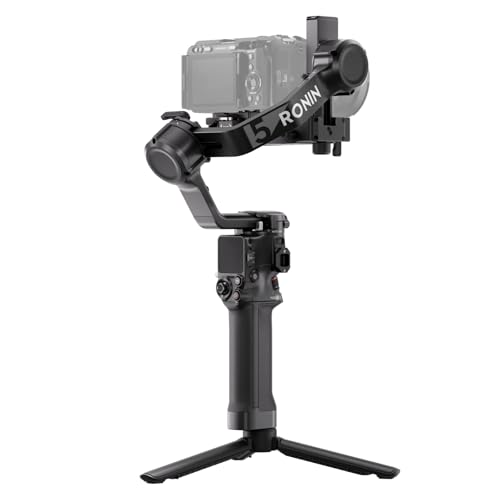
- 3 kg tested payload for heavier setups
- Built-in subject tracking and axis locks
- 14-hour standby with one-hour charging
Best For: Filmmakers using heavier mirrorless or professional camera rigs
Best Versatile Camera Gimbal

- Works with cameras, phones, and action cameras
- 18-meter AI tracking with detachable handle
- 2 kg payload and vertical shooting support
Best For: Solo creators using multiple camera types
Best Lightweight Camera Gimbal
- Lightweight 795 g design for travel
- 2 kg payload for mirrorless setups
- Bluetooth control and native vertical shooting
Best For: Travelers and social creators with lightweight mirrorless kits
Smart Tracking Pick – FeiyuTech SCORP 2
The FeiyuTech SCORP 2 is a versatile choice among camera gimbals for DSLR and mirrorless users who want built-in subject tracking and quick vertical shooting. Its 2.5 kg payload, touchscreen, and wired or Bluetooth camera control make it suited to creators who want hands-on control without adding a separate tracking accessory.
Best For: Solo creators and camera users who want integrated AI tracking, portrait shooting, and detailed control.
Pros:
- Built-in AI tracking can be activated with gestures and requires no extra tracking module.
- Supports up to 2.5 kg and includes a quick setup for vertical shooting.
- 1.3-inch touchscreen and multifunction control knob simplify adjustments.
- Supports wired or Bluetooth camera control and connects to the Feiyu SCORP app.
Cons:
- At 1,070 g, it is not the lightest option for extended handheld use.
- It is not water resistant.
The SCORP 2 stands out when integrated tracking and flexible camera control matter more than minimum weight. Check camera, lens, and control-cable compatibility before buying.
Fast-Setup Choice – DJI RS 4 Mini Combo
The DJI RS 4 Mini Combo is one of the more automation-focused camera gimbals for creators who value quick setup and intelligent framing. Auto axis locks, Teflon-enhanced balancing, fast vertical switching, and the included tracking module are designed for dynamic shoots with cameras or smartphones.
Best For: Videographers and solo shooters who need fast transitions, subject tracking, and a flexible accessory bundle.
Pros:
- Auto axis locks help speed up setup and storage.
- Included RS Intelligent Tracking Module helps keep subjects framed.
- Switches from horizontal to vertical shooting in about 10 seconds.
- Supports cameras and smartphones up to a 2 kg payload.
Cons:
- The DJI Ronin app must be downloaded from DJI’s website rather than Google Play.
- It is not water resistant.
Choose the RS 4 Mini Combo if rapid balancing and intelligent follow-filming are priorities. Its included briefcase handle also adds flexibility for low-angle shots, while the 2 kg payload keeps it aimed at lighter camera setups.
Heavy-Payload Pick – FeiyuTech SCORP-C2
The FeiyuTech SCORP-C2 is a heavy-duty option among camera gimbals, supporting up to 3,500 g for compatible DSLR and mirrorless combinations. Built-in AI tracking, native vertical mounting, an underslung handle, and a rated 14-hour runtime make it especially practical for extended or more demanding shoots.
Best For: DSLR and mirrorless users with heavier camera-and-lens setups, including compatible Sony, Canon, and Nikon systems.
Pros:
- High 7.72 lb payload supports compatible heavier camera and lens combinations.
- Built-in AI 4.0 tracking supports face and body tracking without an app or Bluetooth pairing.
- Native vertical shooting and an integrated underslung handle support varied content styles.
- Up to 14 hours of runtime and 18W USB-C fast charging suit longer sessions.
Cons:
- The high payload capacity may come with more bulk than lighter gimbals.
- Actual compatibility depends on the camera, lens, total payload, and charging requirements.
- It is not water resistant.
The SCORP-C2 is the strongest fit here for creators who need substantial payload capacity and long battery life. Verify the complete camera-and-lens setup against FeiyuTech’s compatibility information before purchasing.
Lightweight Travel Pick – DJI RS 3 Mini
The DJI RS 3 Mini is a compact choice among camera gimbals for travel and everyday shooting. At 795 g, it is designed to be easier to hold for longer periods while still supporting up to 2 kg, with native vertical shooting, Bluetooth shutter control, and a full-color touchscreen.
Best For: Travel creators and mirrorless users who want a lightweight stabilizer for social and handheld video.
Pros:
- Lightweight 795 g design is convenient for travel and extended holding.
- Supports up to 2 kg for a range of camera and lens combinations.
- Native vertical shooting simplifies portrait-oriented social content.
- Bluetooth shutter control and a 1.4-inch touchscreen improve operation.
Cons:
- The DJI Ronin app is required for activation and full functionality and is not available through Google Play.
- It is not water resistant.
The RS 3 Mini makes the most sense when portability is a priority without giving up a 2 kg payload. Its compact format is appealing for travel, though users should confirm camera compatibility and plan for the required app download.
Best Compact Kit – FeiyuTech SCORP Mini 2
For shoppers comparing camera gimbals that can handle more than one device, the FeiyuTech SCORP Mini 2 Kit is a versatile option. It supports mirrorless cameras, smartphones, DSLRs, and action cameras up to 1.2 kg, while its 852 g body remains relatively portable. The built-in AI tracker, fill light, extension rod, and included case make it a practical all-in-one kit.
Best For: Creators who want one lightweight gimbal kit for cameras, phones, and action cameras.
Pros:
- Supports four device types with a payload up to 1.2 kg.
- Built-in AI tracking works without connecting to an app.
- Includes a wireless fill light, extension rod, tripod, case, and adapters.
- Five-way joystick and 1.3-inch touchscreen simplify operation, including low-angle filming.
Cons:
- Its 1.2 kg payload is lower than the 3 kg capacity of the larger camera-focused models here.
- At 852 g, it is portable but not an ultra-light smartphone-only stabilizer.
The SCORP Mini 2 stands out when flexibility and included accessories matter more than maximum payload. It is a strong choice for mixed-device shooting and solo creators who want tracking and lighting built into the kit.
Best Pro Payload – DJI RS 4
The DJI RS 4 is a camera gimbal designed for heavier mirrorless and DSLR setups. Its 3 kg payload, extended tilt axis, and Teflon-coated arms support precise balancing, while native vertical shooting helps streamline social-media production. The included battery grip, quick-release plate, and extended grip/tripod provide a capable starting setup.
Best For: Camera operators using mainstream mirrorless or DSLR bodies with larger lenses and demanding shooting setups.
Pros:
- Handles up to 3 kg, accommodating many camera-and-lens combinations.
- Switches to native vertical shooting without an additional accessory.
- Teflon-coated axis arms are designed for smoother, more precise balancing.
- Supports PF, PTF, FPV, 3D Roll 360, and custom shooting modes.
Cons:
- At 1.55 kg, it is heavier than the other listed gimbals.
- The BG70 high-capacity battery grip is sold separately.
- It is not water resistant, and the DJI Ronin app must be downloaded from DJI rather than Google Play.
Choose the RS 4 if payload capacity, balancing room, and accessory expansion are priorities. Its extra weight makes it less travel-oriented, but the design is better suited to larger camera rigs and professional-style workflows.
Best Lightweight Camera Rig – ZHIYUN Weebill 3E
The ZHIYUN Weebill 3E combines a 3 kg payload with a relatively light 990 g body, making it a compelling middle ground among camera gimbals. It supports native vertical shooting, Bluetooth shutter control, and up to 16 hours of battery life. Its wide-axis arm is designed for larger camera-and-lens combinations, while the ergonomic handle helps reduce fatigue during extended use.
Best For: Mirrorless and DSLR shooters who want high payload capacity without moving to the heaviest gimbal body.
Pros:
- Supports tested payloads up to 3 kg while weighing about 990 g.
- Native vertical shooting requires mounting the quick-release plate to the vertical arm.
- Offers up to 16 hours of battery life and 14 W PD fast charging.
- Bluetooth shutter control can start or stop recording and trigger photos.
Cons:
- The package includes a Panasonic control cable; Canon, Sony, and other users may need to buy additional cables.
- The sling grip and wrist rest for Sling Mode 2.5 are sold separately.
- It is not water resistant.
The Weebill 3E is a strong option for long shooting days and larger camera setups when keeping weight down matters. Check camera compatibility and cable requirements before buying, especially if you use a brand other than Panasonic.
Best Professional Camera Gimbal – DJI RS 5
The DJI RS 5 is a full-featured choice for camera gimbals when you need strong payload support, fast setup, and advanced subject tracking. Its 3 kg tested payload, automated axis locks, fine-tuning knobs, and 14-hour standby time suit demanding mirrorless and professional camera setups.
Best For: Filmmakers and experienced creators using heavier camera-and-lens combinations.
Pros:
- Supports up to 3 kg (6.6 lbs) and offers fine-tuning knobs for precise balancing.
- Enhanced Intelligent Tracking can follow people, vehicles, or pets from the touchscreen.
- Includes automated axis locks, a quick-open tripod, and a Z-Axis Indicator.
- Fully charges in one hour and provides up to 14 hours of standby time.
Cons:
- At 1.62 kg, it is less portable than lighter gimbals.
- It is not water resistant.
- The DJI Ronin app must be downloaded from DJI’s website rather than Google Play.
The RS 5 is the most capable option here for larger setups and controlled production work. Choose it if balancing precision, tracking, and workflow speed matter more than minimizing size and weight.
Best Versatile Camera Gimbal – FeiyuTech SCORP Mini 3 Pro
The FeiyuTech SCORP Mini 3 Pro stands out among camera gimbals for its four-in-one compatibility with mirrorless cameras, compact cameras, smartphones, and action cameras. Its detachable handle, 2 kg payload, and AI tracking make it a flexible option for solo creators and mixed-device shooting.
Best For: Content creators who switch between cameras, phones, and action cameras.
Pros:
- Supports mirrorless, compact, smartphone, and action cameras in one design.
- AI Tracking 4.0 offers tracking up to 18 meters with a stated 0.003-second response time.
- Detachable handle can provide ergonomic filming or serve as a remote control.
- Supports horizontal-to-vertical switching and payloads up to 2 kg (4.4 lbs).
Cons:
- Its 2 kg payload is lower than the DJI RS 5’s capacity.
- It is not water resistant.
- The broad modular design may require more setup than a simpler smartphone-only stabilizer.
The SCORP Mini 3 Pro is a practical middle ground for creators who want one stabilizer for several device types. Its tracking and detachable remote handle are especially useful when filming alone or from a distance.
Best Lightweight Camera Gimbal – DJI RS 3 Mini
The renewed DJI RS 3 Mini is a compact camera gimbal for travel, lightweight mirrorless kits, and social-first video. Weighing 795 g and supporting up to 2 kg, it combines three-axis stabilization with Bluetooth shutter control and native vertical shooting.
Best For: Travelers and social-media creators who want a lightweight mirrorless-camera stabilizer.
Pros:
- Weighs 795 g (1.75 lbs), making it easier to carry and hold for extended shoots.
- Supports camera-and-lens combinations up to 2 kg (4.4 lbs).
- Offers Bluetooth shutter control for photo capture and video recording.
- Native vertical shooting is convenient for social-media content.
Cons:
- As a renewed product, it has a 90-day limited warranty.
- Its 2 kg payload is not intended for the heaviest professional setups.
- It is not water resistant.
The RS 3 Mini is the easiest pick when portability is the priority. It delivers useful camera control and vertical shooting features without the weight of a larger gimbal, though buyers should account for its renewed status and shorter warranty.
How We Picked These Camera Gimbals
We selected models across several real-world filming needs, including lightweight mirrorless kits, larger DSLR configurations, travel video, event work, and creator-focused shooting. The lineup includes DJI, FeiyuTech, and ZHIYUN options with different payload ratings, form factors, tracking features, and price positions.
Our comparison emphasizes practical specifications: tested payload, camera compatibility, stabilization design, controls, tracking support, battery practicality, and the amount of setup required. A gimbal is only useful when it balances your camera reliably and remains comfortable enough to carry during a full shoot.
Quick Comparison
| Best For | Look For | Models In This Roundup |
|---|---|---|
| Compact mirrorless kits | Low weight, simple balancing, smaller grip | DJI RS 4 Mini, DJI RS 3 Mini, FeiyuTech SCORP Mini 2 |
| Heavier camera rigs | Higher payload and stronger motors | DJI RS 5, DJI RS 4, FeiyuTech SCORP-C2 |
| AI-assisted tracking | Built-in or compatible subject tracking | FeiyuTech SCORP 2, SCORP-C2, SCORP Mini-3-Pro |
| Travel and everyday shooting | Lightweight construction and quick controls | DJI RS 4 Mini, DJI RS 3 Mini, ZHIYUN CINEPEER Weebill 3E |
Key Buying Factors for Camera Gimbals
Payload and Camera Compatibility
Check the combined weight of your camera, lens, battery, memory card, cage, microphone, and any accessories. Choose a gimbal with comfortable headroom above that total rather than relying on the maximum rating. Also confirm that your camera model supports the gimbal’s cable controls, app features, and mounting system.
Size, Balance, and Ergonomics
A smaller gimbal is easier to carry, but larger models may provide more motor strength, control options, and expansion room. Look for adjustable arms, quick-release plates, comfortable grips, and a design that lets you access camera controls without awkward hand positions.
Tracking and Shooting Features
AI tracking can help solo creators, presenters, and event shooters keep a subject in frame. It is not essential for every operator, however, and should not outweigh reliable stabilization or camera compatibility. Consider vertical shooting, panorama modes, time-lapse tools, remote controls, and fill lights only if they match your workflow.
Battery and Setup
Review rated runtime, charging method, balancing procedure, and whether the gimbal can power or control your camera. A stabilizer that balances quickly and starts without complicated calibration is often more valuable than one with a longer feature list.
Who Should Buy Which Camera Gimbals?
Choose a compact DJI RS 4 Mini or RS 3 Mini if you use a lightweight mirrorless body and want straightforward stabilization for travel, social content, or everyday video.
Choose a higher-capacity DJI RS 4, RS 5, or FeiyuTech SCORP-C2 for heavier lenses, cages, microphones, or more demanding production rigs. Leave payload headroom for future accessories.
Choose a FeiyuTech model with AI tracking if you frequently film yourself, presentations, demonstrations, or moving subjects without a camera operator.
Choose the ZHIYUN CINEPEER Weebill 3E if you want a lightweight DSLR or mirrorless option with a compact shooting profile. Before buying, verify the exact camera-and-lens combination against the manufacturer’s compatibility list.