
The right gimbal can turn handheld camera work into smooth, professional-looking footage, but matching the stabilizer to your camera, lens, and shooting style matters. This roundup compares 10 premium camera gimbals across DJI’s RS lineup and versatile Hohem alternatives.
Whether you need a high-payload rig for cinema cameras, a compact stabilizer for travel, or built-in AI tracking for solo shooting, use the guide below to narrow your options quickly.
Best 10 Premium Camera Gimbals Picks for 2026
Professional Powerhouse
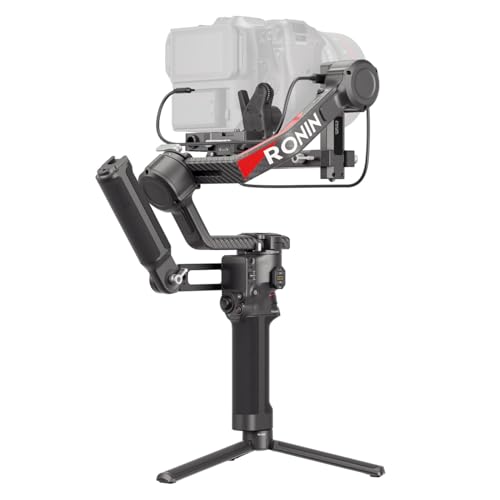
- 4.5 kg payload with higher motor torque
- Includes transmitter and Focus Pro Motor
- LiDAR focusing and native vertical shooting
Best For: Professional creators with heavier camera setups
Balanced Pro Choice

- 3 kg payload for mirrorless setups
- Teflon-coated arms aid precise balancing
- Native vertical shooting without extra accessories
Best For: Mirrorless creators seeking professional control
Versatile Tracking Pick

- AI tracking for people, pets, and vehicles
- Works with four device categories
- Detachable touchscreen remote and 20-hour battery
Best For: Solo creators and travel-focused multi-device users
Compact Intelligent Option

- Auto axis locks enable rapid setup
- Includes intelligent subject tracking
- Supports cameras and phones up to 2 kg
Best For: Solo shooters and social-content creators
Pro Workhorse
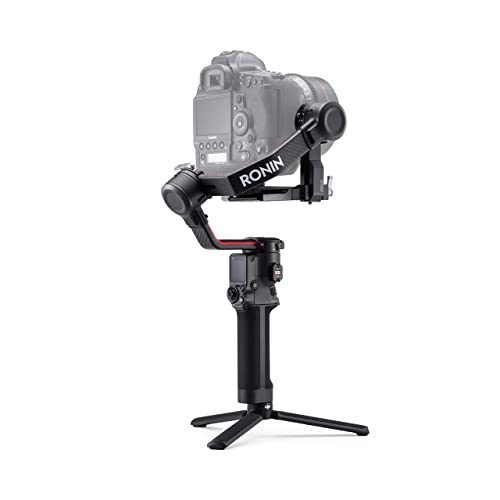
- 10 lb tested payload for larger camera rigs
- Carbon-fiber construction with SuperSmooth mode
- 1.4-inch full-color touchscreen
Best For: DSLR and mirrorless filmmakers using heavier camera setups
Feature-Rich Flagship

- Enhanced tracking for people, vehicles, and pets
- Automated axis locks and fine-tuning knobs
- Includes briefcase handle, tripod, battery grip, and case
Best For: Creators wanting advanced tracking and a complete production bundle
Versatile Creator Kit

- 4-in-1 support for cameras, phones, and action cameras
- Built-in AI tracking with no app required
- RGB/CCT fill light and up to 20-hour battery
Best For: Hybrid creators making mobile, short-form, and multi-device content
Best Lightweight Pick
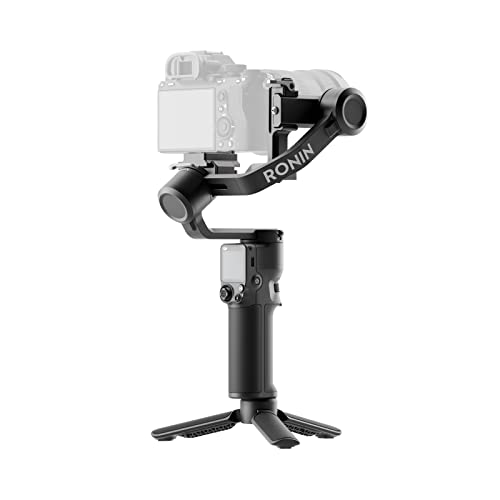
- 795g travel-friendly design
- Supports payloads up to 2kg
- Native vertical shooting
Best For: Travel and lightweight mirrorless setups
Best for Professional Rigs

- 4.5kg tested payload
- Automated axis locks
- Includes transmission and focus accessories
Best For: Cinema cameras and demanding production rigs
Best Foldable Value
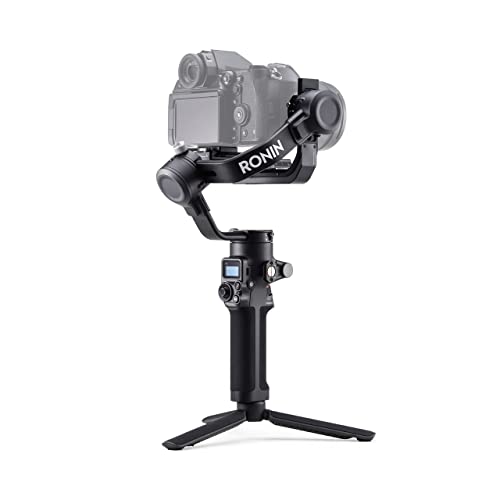
- Foldable, travel-friendly design
- Up to 14-hour battery life
- SuperSmooth stabilization mode
Best For: DSLR and mirrorless creators needing portability
Professional Powerhouse – DJI RS 4 Pro Combo
The DJI RS 4 Pro Combo is a premium camera gimbal for larger mirrorless and cinema-camera setups. Its 4.5 kg payload, expanded focus controls, native vertical shooting, and included Ronin Image Transmitter make it suited to demanding productions and solo cinematography.
Best For: Professional creators using heavier camera and lens combinations who need advanced focusing, monitoring, and control options.
Pros:
- Supports up to 4.5 kg and offers a 20% increase in motor torque.
- Includes a Ronin Image Transmitter and Focus Pro Motor for expanded production control.
- Native vertical shooting simplifies switching to social-content formats.
- LiDAR focusing provides 76,800 ranging points within 20 meters.
Cons:
- At 1.84 kg, it is relatively substantial for extended handheld use.
- The BG70 battery grip required for the stated 29-hour runtime is sold separately.
- It is not water resistant, and the DJI Ronin app must be downloaded from DJI rather than Google Play.
Choose the RS 4 Pro when payload capacity and production features matter more than minimizing weight. The Combo’s included accessories make it a particularly complete option for professional camera workflows.
Balanced Pro Choice – DJI RS 4 Camera Gimbal
The DJI RS 4 is a premium camera gimbal built for mainstream mirrorless camera and lens combinations. It combines a 3 kg payload with smoother Teflon-coated balancing, native vertical shooting, and a configurable joystick for efficient solo operation.
Best For: Mirrorless-camera creators who want professional balancing and control without moving up to the RS 4 Pro’s larger payload class.
Pros:
- Supports camera and lens setups up to 3 kg.
- Native vertical shooting works without additional accessories.
- Teflon-coated axis arms support smoother, more precise balancing.
- RSA communication port allows connection to additional control accessories.
Cons:
- The BG70 grip for up to 29.5 hours of runtime is sold separately.
- It is not water resistant.
- The DJI Ronin app is not available through Google Play.
The RS 4 is a practical middle ground in DJI’s premium camera gimbal lineup. Its 3 kg capacity covers many mirrorless combinations while retaining useful vertical-shooting and accessory-expansion features.
Versatile Tracking Pick – hohem iSteady MT3 Pro
The hohem iSteady MT3 Pro is a versatile premium camera gimbal alternative for creators who move between mirrorless cameras, compact cameras, phones, and action cameras. Its built-in AI tracking, detachable touchscreen remote, fill light, and 2.5 kg payload support flexible solo shooting.
Best For: Travel vloggers, livestreamers, and solo creators who want subject tracking across multiple device types.
Pros:
- Built-in 2MP AI camera tracks people, pets, and vehicles.
- Supports mirrorless cameras, compact cameras, smartphones, and action cameras.
- Detachable 1.4-inch touchscreen remote offers wireless control up to 10 meters.
- Weighs 1,070 g and provides up to 20 hours of battery life.
Cons:
- Its 2.5 kg payload is lower than the DJI RS 4 and RS 4 Pro.
- It is not water resistant.
- Camera-control functions may depend on the supported camera and included cable.
The MT3 Pro stands out for convenience rather than maximum payload. Its AI tracking and four-device compatibility make it especially appealing when one gimbal needs to cover varied creator setups.
Compact Intelligent Option – DJI RS 4 Mini Combo
The DJI RS 4 Mini Combo is a compact premium camera gimbal for lighter mirrorless cameras, vlog cameras, and smartphones. Auto axis locks, fast vertical switching, responsive follow mode, and the included Intelligent Tracking Module are designed to reduce setup time for mobile creators.
Best For: Solo shooters and social creators who prioritize portability, quick setup, and intelligent subject framing.
Pros:
- Auto axis locks help make the gimbal ready in about one second.
- Supports up to 2 kg and works with cameras and smartphones.
- Included Intelligent Tracking Module helps keep subjects framed.
- Fast vertical switching and responsive follow mode suit dynamic social content.
Cons:
- The 2 kg payload limits compatibility with larger camera and lens combinations.
- It is not water resistant.
- The DJI Ronin app must be obtained from DJI rather than Google Play.
For creators who value speed and portability, the RS 4 Mini Combo offers a more approachable route into DJI’s premium camera gimbal ecosystem. Its lower payload is the main trade-off for the lighter 1.03 kg design.
Pro Workhorse – DJI RS 2
The DJI RS 2 is a capable choice for filmmakers seeking premium camera gimbals for DSLR and mirrorless setups. Its 10 lb tested payload, carbon-fiber construction, 1.4-inch color touchscreen, and SuperSmooth mode suit demanding camera rigs and controlled production work.
Best For: DSLR and mirrorless filmmakers using heavier professional camera setups.
Pros:
- Supports a tested payload of up to 10 lb.
- Carbon-fiber construction helps balance capability with a listed 1.3 kg body weight.
- 1.4-inch full-color touchscreen and SuperSmooth stabilization provide useful shooting control.
Cons:
- Not water resistant.
- Its larger, heavier design may be less convenient for lightweight travel rigs.
- The supplied notes identify the model as RS 2 while also listing RS 4 Mini accessories, so buyers should verify the package contents.
Choose the RS 2 when payload capacity and professional camera compatibility matter more than compact portability. It is a strong premium option for creators building a substantial DSLR or mirrorless rig.
Feature-Rich Flagship – DJI RS 5 Combo
The DJI RS 5 Combo is aimed at creators who want premium camera gimbals with advanced tracking and workflow features. Its enhanced intelligent tracking module, automated axis locks, fine-tuning knobs, and included electronic briefcase handle make it well suited to fast-moving production setups.
Best For: Professional creators who want integrated tracking, precise balancing, and a complete accessory bundle.
Pros:
- Tracks people, vehicles, or pets directly from the gimbal touchscreen.
- Second-generation automated axis locks speed up storage and setup.
- Fine-tuning knobs and Teflon interlayers support precise balancing.
- Includes an electronic briefcase handle, tracking module, tripod, battery grip, and carrying case.
Cons:
- At 1.62 kg, it is heavier than some compact gimbal options.
- The advanced feature set may be more than casual users need.
- The supplied notes do not specify a maximum payload.
The RS 5 Combo is a compelling premium choice for users who value automation and included accessories. Its tracking, balancing controls, and feedback features are especially useful when speed and repeatable results are priorities.
Versatile Creator Kit – Hohem iSteady MT3 Pro
The Hohem iSteady MT3 Pro brings premium camera gimbal features to a flexible 4-in-1 platform. It supports mirrorless cameras, compact cameras, smartphones, and action cameras while adding built-in AI tracking, a detachable touchscreen remote, RGB/CCT lighting, and up to 20 hours of battery life.
Best For: Hybrid creators who switch between cameras, phones, and action cameras for short-form or mobile content.
Pros:
- Built-in AI tracking works without an external app or Bluetooth connection.
- Supports mirrorless, compact, smartphone, and action-camera setups.
- Detachable touchscreen remote works from up to 32.8 feet away.
- Includes CCT and RGB fill-light modes plus a 20-hour battery.
Cons:
- The 2.5 kg payload is lower than the DJI RS 2’s tested 10 lb capacity.
- Its broad compatibility may require checking camera-control cable support for a specific setup.
- The supplied notes list a 1.4-inch screen but do not specify its resolution.
The MT3 Pro stands out among premium camera gimbals for versatility rather than maximum payload. It is a practical all-in-one option for creators who need tracking, lighting, remote control, and multi-device support in one kit.
Best Lightweight Pick – DJI RS 3 Mini
For creators seeking premium camera gimbals without a bulky setup, the DJI RS 3 Mini offers a travel-friendly balance of payload capacity and portability. At 795g, it can support camera-and-lens combinations up to 2kg while adding native vertical shooting and Bluetooth shutter control.
Best For: Travel filmmakers, social media creators, and photographers using lighter mirrorless camera setups.
Pros:
- Lightweight 795g design is comfortable to carry and use for extended shoots.
- Supports up to 2kg and offers three-axis stabilization with DJI’s 3rd-generation RS algorithm.
- Native vertical shooting, Bluetooth shutter control, and a 1.4-inch full-color touchscreen add convenience.
Cons:
- Its 2kg payload is lower than the capacity of the larger DJI models.
- It is not water resistant.
- DJI Ronin app activation and full functionality require downloading the app from DJI’s website rather than Google Play.
The RS 3 Mini is a strong choice when portability matters more than maximum rig capacity. Verify camera and lens compatibility before purchase, especially if you plan to use heavier professional glass.
Best for Professional Rigs – DJI RS 3 Pro
The DJI RS 3 Pro is built for demanding production setups and stands out among premium camera gimbals with a tested 4.5kg payload. Automated axis locks, extended carbon-fiber arms, LiDAR-focused workflows, and included transmission and focus accessories make it suited to more elaborate camera rigs.
Best For: Professional filmmakers using larger cameras, cinema lenses, and accessory-heavy configurations.
Pros:
- 4.5kg tested payload accommodates professional combinations such as Sony FX6 or Canon C70 with a 24–70mm f/2.8 lens.
- Automated axis locks simplify transitions, storage, and setup.
- Supports long-range O3 Pro video and audio transmission up to 6km/20,000ft with compatible equipment.
- Extended carbon-fiber axis arms and broad accessory compatibility support advanced production workflows.
Cons:
- At 1.5kg for the gimbal, battery handle, and quick-release plates, it is less portable than the lighter options.
- Its professional feature set may be excessive for small mirrorless cameras.
- It is not water resistant.
Choose the RS 3 Pro when payload headroom and expandability are priorities. Its larger form and professional accessory ecosystem make it better suited to planned production work than casual travel shooting.
Best Foldable Value – DJI RSC 2
The DJI RSC 2 remains a practical option for shoppers comparing premium camera gimbals, combining a foldable design with a 6.6lb tested payload and a long-lasting battery. Its SuperSmooth mode, vertical shooting capability, and multiple shooting configurations make it versatile for DSLR and mirrorless users.
Best For: DSLR and mirrorless shooters who want a foldable gimbal with extended battery life and flexible shooting modes.
Pros:
- Foldable design makes transport and storage easier while enabling multiple shooting configurations.
- SuperSmooth mode helps compensate for micromovements and supports stabilization with 100mm zoom lenses.
- Battery provides up to 14 hours of runtime and supports fast charging.
- Quick switching to vertical shooting supports portrait-oriented social media content.
Cons:
- The supplied specifications list a maximum weight recommendation of 3kg, so heavier professional rigs may be unsuitable.
- The 1-inch OLED screen is smaller than the RS 3 Mini’s listed display.
- Compatibility should be checked on DJI’s official website before purchase.
The RSC 2 is a sensible middle ground for creators who value portability and battery endurance. It offers more payload capacity than the RS 3 Mini on paper while retaining a foldable design, though buyers should confirm compatibility with their specific camera.
How We Picked These Premium Camera Gimbals
We selected models based on the features that most affect real-world shooting: tested payload, camera compatibility, stabilization design, balancing and setup controls, battery practicality, portability, and creative functionality. The lineup includes full-size professional gimbals, lighter mirrorless options, older models that remain capable, and hybrid stabilizers designed for cameras, phones, action cameras, or solo creators.
Compatibility should always be confirmed before buying. A gimbal’s maximum payload is only part of the equation; the combined weight, dimensions, center of gravity, and electronic compatibility of your camera and lens determine how well it will perform.
Quick Comparison
- Highest-capacity professional choices: DJI RS 4 Pro, DJI RS 3 Pro, and DJI RS 2 are suited to heavier camera and lens combinations.
- Best all-around RS options: DJI RS 5 and DJI RS 4 offer current features and broad compatibility for many mirrorless and DSLR setups.
- Portable camera gimbals: DJI RS 4 Mini, RS 3 Mini, and RSC 2 favor lower weight and easier transport.
- Flexible creator-focused alternatives: Hohem iSteady MT3 Pro models support multiple device types and AI tracking.
Key Buying Factors for Premium Camera Gimbals
Payload and Camera Balance
Choose a gimbal with comfortable headroom above your fully assembled setup, including the lens, battery, memory card, cage, microphone, and other accessories. More capacity generally provides better motor authority, but it also increases the stabilizer’s size and carrying weight.
Camera Compatibility and Controls
Check whether the gimbal supports your camera’s brand and the functions you need, such as recording, focus control, zoom, shutter settings, or electronic follow focus. Compatibility can vary by camera model and connection type, so consult the manufacturer’s current support list.
Size, Ergonomics, and Battery Life
Full-size models are usually better for demanding productions, while mini and foldable designs are easier for travel, events, and long handheld sessions. Consider grip comfort, axis locks, charging time, mounting options, and whether the battery can last through a typical shoot.
Tracking and Workflow Features
AI tracking, automated axis locks, touchscreen controls, portrait orientation, and multiple operating modes can speed up solo production. These extras are valuable when they match your workflow, but they should not outweigh insufficient payload capacity or poor camera compatibility.
Who Should Buy Which Premium Camera Gimbals?
Choose a high-capacity professional model if you use a cinema camera, heavy zoom, cage, or production accessories. Choose a standard DJI RS model for a balanced combination of stabilization, control, and upgrade potential with a typical mirrorless or DSLR setup.
Choose an RS Mini or RSC 2 if portability is more important than maximum payload. Choose a Hohem iSteady MT3 Pro if you want one stabilizer for several device types or rely on AI tracking for solo content. Before ordering, verify the exact camera-lens combination, accessory weight, and supported control features.