
Compact thermal imaging cameras make it easier to spot heat loss, moisture issues, electrical hotspots, and hidden problems without guesswork.
Below, we’ve rounded up 10 strong picks for buyers who want portability, practical image quality, and the right phone or standalone setup for the job.
Best 10 Compact Thermal Imaging Cameras Picks for 2026
Phone-Powered Portability
TOPDON TC001 Thermal Imaging Camera for Android

- 256x192 thermal imaging enhanced to 512x384 with TISR
- Very low 0.35W power draw for long phone-powered use
- Compact 30 g body with point, line, and surface modes
Best For: Android users needing a lightweight thermal camera for everyday checks
Report-Ready Handheld
FLIR C5 Compact Thermal Imaging Camera

- 160x120 true thermal imaging with MSX enhancement
- WiFi and FLIR Ignite cloud support for sharing
- Measures from -20 to 400°C with a handheld design
Best For: Technicians who need simple fault-finding and easy reporting
Universal USB-C Pick
TOPDON TC002C Duo Thermal Imaging Camera

- Works with USB-C iPhone, iPad, Android, and Windows devices
- 256x192 thermal imaging enhanced to 512x384 with TISR
- 25Hz refresh and 40mK sensitivity for smooth live tracking
Best For: People who want one portable thermal camera for multiple USB-C devices
Pro-Grade Pocket Tool
TT27D Dual-Lens WiFi Thermal Camera

- AI-upscaled thermal imaging to 640x480 with a 2MP visual camera
- Five modes including Visual, Thermal, Fusion, PIP, and Blending
- Wi-Fi app control with file management and report tools
Best For: Professionals needing a pocket-sized camera with advanced analysis
Precision Field Inspector
FOXWELL RT280 Thermal Imaging Camera

- 320×240 LCD with TISR-enhanced thermal detail
- 8GB eMMC stores 20,000+ images and videos
- IP54-rated, drop-resistant body for field work
Best For: Technicians and DIY users needing a rugged, detail-focused compact imager
Smart Scene Scanner
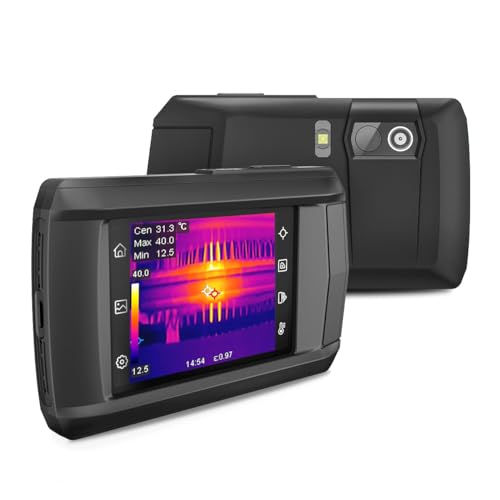
- IntellFault scene detection for leaks and insulation gaps
- 3.5-inch touchscreen with five imaging modes
- Live Super Resolution boosts detail to 240×240
Best For: Users who want an easy-to-use touchscreen imager with scene recognition
Long-Run Portable Checker
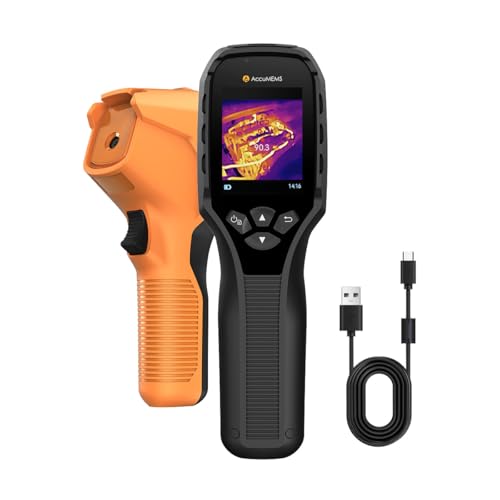
- 240g compact design with non-slip grip
- Up to 14 hours of continuous operation
- Thermometer mode plus thermal spot-check tools
Best For: Inspectors needing a lightweight imager with extended battery life
Field-Ready Large-Display Pick
TOPDON TC004 3.5" Thermal Imaging Camera

- 3.5-inch display for easier inspection viewing
- 256×192 IR with TISR up to 512×384
- 64GB storage plus Wi‑Fi for reporting
Best For: Technicians and homeowners who want a bigger screen and simple reporting.
Portable Super-Resolution Pick
Thermal Camera, 240 x 240 TISR Resolution

- 240×240 super-resolution with 25Hz refresh
- Temperature alarm and highest/lowest/center readings
- IP54 protection with 6.6-foot drop resistance
Best For: Buyers who want a portable thermal camera for basic inspections.
Phone-Powered Portability – TOPDON TC001 Thermal Imaging Camera for Android
If you want a compact thermal imaging camera that stays light in the hand and leans on your Android device for power, the TOPDON TC001 is a practical pick. It starts at 256×192 thermal imaging and uses TISR to enhance detail up to 512×384, while keeping power draw very low for longer sessions in the field.
Best For: Android users who want a portable, phone-powered thermal camera for routine inspections and temperature checks.
Pros:
- Enhanced thermal detail up to 512×384 with TISR.
- Very low 0.35W power consumption for extended use.
- Compact 2.8 x 1.65 x 0.55 in. body weighs about 30 g.
- Supports point, line, and surface measurement modes in the app.
Cons:
- Android-only compatibility; not for iPhone 15.
- TISR support should be confirmed before buying.
For buyers focused on convenience, the TC001 balances portability with strong thermal detail and useful temperature-analysis tools. It makes the most sense when you already have a compatible Android phone and want an affordable, easy-to-carry inspection companion.
Report-Ready Handheld – FLIR C5 Compact Thermal Imaging Camera
The FLIR C5 is a compact thermal imaging camera built for quick fault-finding and straightforward documentation. Its 160×120 true thermal image and MSX enhancement help make scenes easier to interpret, while WiFi and FLIR Ignite support simplify sharing images and creating reports.
Best For: Technicians who want a small handheld thermal camera with easy image sharing and report creation.
Pros:
- 160×120 true thermal imaging with MSX detail overlay.
- Measures temperatures from -20 to 400°C (-4 to 752°F).
- WiFi and FLIR Ignite cloud connectivity for uploads and reports.
- Backed by FLIR’s 2-10 thermal camera warranty coverage.
Cons:
- Lower thermal resolution than higher-end models.
- Less focused on advanced phone-based workflows.
For users who value documentation as much as detection, the C5 is a well-rounded option. It suits service work where you need a compact tool that can capture thermal issues and move those images into a professional report workflow quickly.
Universal USB-C Pick – TOPDON TC002C Duo Thermal Imaging Camera
The TOPDON TC002C Duo is a compact thermal imaging camera aimed at users who want one USB-C tool for multiple devices. It combines 256×192 thermal imaging with TISR upscaling to 512×384, plus a 25Hz refresh rate and 40mK sensitivity for smooth real-time heat tracking.
Best For: Users who need a portable USB-C thermal camera for iPhone, iPad, Android, or Windows devices.
Pros:
- Universal USB-C compatibility across iOS, Android, and Windows devices.
- TISR enhancement lifts 256×192 images to 512×384.
- 25Hz refresh rate and 40mK sensitivity for live heat tracking.
- Compact 2.8 x 1.7 x 0.55 in. design weighs about 30 g.
Cons:
- Not currently compatible with Mac devices or Android 16.
- Depends on the TopInfrared app for control and viewing.
If you want one of the more flexible compact thermal imaging cameras for modern USB-C devices, this model stands out. It is a practical fit for home inspections, HVAC work, and electrical checks when portability and device compatibility matter most.
Pro-Grade Pocket Tool – TT27D Dual-Lens WiFi Thermal Camera
The TT27D is a more advanced compact thermal imaging camera for users who want stronger resolution, more analysis modes, and built-in workflow tools. It uses AI upscaling to 640×480, pairs thermal and 2MP visual views, and adds multiple display modes to help uncover issues faster.
Best For: Professionals who want a pocket-sized thermal camera with higher resolution and deeper analysis features.
Pros:
- AI-upscaled thermal resolution to 640×480 with dual-lens imaging.
- Five viewing modes: Visual, Thermal, Fusion, PIP, and Blending.
- Wi-Fi app connectivity plus file organization and report-friendly tools.
- 25Hz frame rate, 9 color palettes, and a built-in LED light.
Cons:
- More feature-rich than a basic handheld, so it may be more than casual users need.
- Its advanced workflow tools are geared more toward inspection use than simple spot checks.
For buyers comparing compact thermal imaging cameras for professional use, the TT27D offers the deepest feature set in this group. It is especially compelling when you want high-resolution imaging, flexible analysis modes, and mobile reporting support in one pocketable device.
Precision Field Inspector – FOXWELL RT280 Thermal Imaging Camera
If you want a compact thermal imaging camera that balances image detail, storage, and ruggedness, the FOXWELL RT280 is built for practical field inspections. Its 320×240 LCD, TISR-enhanced resolution, and 25Hz frame rate help you spot small temperature differences in homes, electrical panels, HVAC equipment, and engine diagnostics.
Best For: Technicians and DIY users who need a durable, compact imager with stronger thermal clarity and PC-based report analysis.
Pros:
- 320×240 display with TISR technology for improved thermal detail
- 50° x 38° field of view and 25Hz refresh for smoother scanning
- Built-in 8GB eMMC storage for over 20,000 images
- Windows PC software supports point, line, area analysis and report generation
Cons:
- PC analysis is not compatible with Mac
- Accuracy is listed at ±3.6°F / ±2%, which may be less precise than some higher-end units
- Screen is compact at 2.8 inches, even though the device is designed for field use
The RT280 stands out as a practical option when you want compact thermal imaging cameras that still offer solid image enhancement and workflow-friendly storage. It’s especially appealing if you value rugged build quality and post-inspection analysis on a Windows PC.
Smart Scene Scanner – HP96 Thermal Imaging Camera
The HP96 is a compact thermal imaging camera aimed at faster, more intuitive inspections. Its touchscreen interface, IntellFault scene detection, and dual-camera modes make it easier to identify leaks, insulation gaps, and overheating areas without a steep learning curve.
Best For: Users who want a touchscreen thermal imager with scene recognition and flexible viewing modes.
Pros:
- IntellFault scene detection helps identify leaks and insulation gaps automatically
- 3.5-inch touchscreen with phone-style controls for simple operation
- Five imaging modes and eight color palettes for flexible inspection views
- Live Super Resolution boosts thermal viewing from 96×96 to 240×240
Cons:
- No moisture readings are included
- Built-in battery lasts up to 4 hours, which may be limiting for longer workdays
- Base infrared resolution is modest before super-resolution enhancement
For buyers comparing compact thermal imaging cameras, the HP96 is a strong pick if ease of use matters as much as detection capability. Its touchscreen controls and automated scene recognition make it especially practical for quick diagnostic work.
Long-Run Portable Checker – GT14S Thermal Imaging Camera
The GT14S is a compact thermal imaging camera designed for straightforward, long-duration inspections. With dual inspection modes, thermometer mode, and a lightweight 240g body, it fits well in mobile workflows where quick readings and all-day battery life matter.
Best For: Inspectors who want a lightweight thermal camera with long battery life and quick point-and-shoot measurements.
Pros:
- Thermal imaging plus thermometer mode for fast spot checks
- Weighs just 240g with a non-slip grip for comfortable handling
- Up to 14 hours of battery life supports full-day use
- 50° field of view and custom alarms help speed up anomaly detection
Cons:
- Does not list advanced PC analysis or report-generation tools
- 7 color palettes are useful, but fewer than some competing models
- Feature set is more focused on practical inspection than advanced imaging workflows
The GT14S is a sensible choice if you want compact thermal imaging cameras built for portability and endurance. It emphasizes simple operation, long runtime, and dependable temperature checks rather than extra software features.
Field-Ready Large-Display Pick – TOPDON TC004 3.5" Thermal Imaging Camera
If you want one of the more practical compact thermal imaging cameras for day-to-day inspections, the TOPDON TC004 stands out for its larger 3.5-inch display, sharp thermal detail, and straightforward field use. It is built for quick spotting of hot areas, with Wi-Fi transfer and plenty of onboard storage to keep the workflow moving.
Best For: Technicians and homeowners who want a compact thermal camera with a bigger screen, solid image detail, and easy report sharing.
Pros:
- 3.5-inch screen makes it easier to review hot spots and temperature differences.
- 256×192 infrared resolution with TISR enhancement up to 512×384 for sharper imaging.
- 64GB built-in storage supports lots of images and videos without constant offloading.
- Wi-Fi connectivity helps transfer files quickly to the mobile app for reporting.
Cons:
- Bulkier than the smallest handheld thermal imaging cameras.
- Best suited to inspection work rather than ultra-pocket portability.
The TC004 is a strong pick if display size and documentation features matter more than minimal size. Its rugged build, laser pointer, and integrated light make it especially useful for real-world inspection tasks.
AI-Assisted Inspection Pick – HF96 Thermal Camera with AI Scene Detection
The HF96 is a smart choice if you want compact thermal imaging cameras that do more than show heat patterns. Its AI scene recognition is designed to help identify water leaks and insulation gaps faster, while the built-in thermometer, thermal view, and laser pointer keep it useful for everyday scanning.
Best For: Users who want guided thermal inspections for home energy, leak detection, and general troubleshooting.
Pros:
- AI scene detection can automatically identify water leaks and insulation gaps.
- Live super-resolution boosts thermal images to 240×240 clarity.
- 50° field of view and automatic hot/cold spot tracking help speed up scans.
- Long battery life, IP54 protection, and 4GB storage support extended field use.
Cons:
- AI scene features require firmware updates and menu setup.
- No moisture readings, even though it can help spot leak-related issues.
This model is best when you want help interpreting what you see, not just recording heat. The combination of automated scene detection, decent sensitivity, and durable construction makes it a flexible inspection tool.
Portable Super-Resolution Pick – Thermal Camera, 240 x 240 TISR Resolution
This Flagfront YXI96 model fits well in a compact thermal imaging cameras roundup because it balances portability with higher-detail imaging. It offers 240×240 super-resolution, a 25Hz refresh rate, and simple temperature tracking features that make it practical for home, car, and circuit checks.
Best For: Buyers who want a portable thermal camera for basic inspections with sharper image output.
Pros:
- 240×240 super-resolution helps reveal more detail during inspections.
- 25Hz refresh rate supports smooth viewing while scanning.
- Temperature alarm plus highest/lowest/center readings improve quick checks.
- 6.6-foot drop resistance and IP54 protection support tougher use.
Cons:
- Fewer advanced automation features than AI-assisted models.
- Designed more for practical inspection use than premium analysis workflows.
For users who want a straightforward handheld thermal imager, this one covers the essentials without much learning curve. Its combination of portability, durability, and adjustable measurement settings makes it a sensible everyday option.
How We Picked These Compact Thermal Imaging Cameras
We focused on models that balance portability, image clarity, and everyday usefulness. The best Compact Thermal Imaging Cameras should be easy to carry, simple to use, and accurate enough for common tasks like home inspection, HVAC checks, auto diagnostics, and electrical troubleshooting.
We also considered display quality, temperature range, phone compatibility, Wi-Fi or app support, and whether the camera works as a plug-in accessory or a self-contained device.
Quick Comparison
If you want the simplest setup, phone-connected models are convenient and usually lighter. If you prefer a dedicated tool with its own screen, standalone units offer a more self-sufficient experience. Higher-resolution sensors generally produce clearer thermal detail, which can matter when you’re trying to distinguish small temperature differences.
Best for Portability
Ultra-compact phone attachments are ideal for users who want to keep gear light and travel-friendly.
Best for Clearer Detail
Models with higher thermal resolution or dual-lens imaging are better suited to more demanding inspection work.
Key Buying Factors for Compact Thermal Imaging Cameras
Resolution: Higher resolution usually means more detail and easier identification of problem areas. For home inspection or electrical work, this can be a major advantage.
Compatibility: Make sure the camera works with your phone or tablet type, especially if you’re choosing a USB-C or Android-specific model.
Temperature range: A wider range helps if you plan to use the camera in HVAC, mechanical, or outdoor environments.
Screen and controls: Touch screens, physical buttons, and readable displays can make the tool much easier to use on-site.
Software features: MSX-style overlays, scene detection, edge enhancement, and measurement tools can improve usability, but they should support the sensor rather than replace good thermal performance.
Who Should Buy Which Compact Thermal Imaging Cameras?
Homeowners and DIY users: Look for an easy-to-use model with solid image quality and a simple interface for spotting insulation gaps, leaks, and drafts.
Electricians and technicians: Prioritize better resolution, temperature measurement, and fast access to thermal detail for pinpointing hotspots.
HVAC and mechanical users: Choose a model with a wider temperature range and dependable thermal clarity for equipment diagnostics.
Frequent travelers or occasional users: A lightweight phone-connected option is often the best fit when convenience matters most.
In the end, the best choice depends on whether you value portability, standalone convenience, or the sharpest possible thermal image. For most buyers, Compact Thermal Imaging Cameras are about finding the right balance between size, compatibility, and diagnostic confidence.