
Premium thermal imaging cameras help you spot heat loss, electrical faults, moisture concerns, and mechanical problems before they turn into bigger repairs.
In this roundup, we focus on models that offer better resolution, smarter image processing, and practical features for professionals and serious DIY users.
Best 10 Premium Thermal Imaging Cameras Picks for 2026
Ultra-High-Resolution Pro Pick
Thermal Master Thor002 Handheld Thermal Camera

- 512 × 384 X³ resolution with 25Hz thermal imaging
- Measures six points with emissivity customization
- Up to 10.5 hours battery life and IP54 protection
Best For: Professional inspections that need high detail and long runtime
Smart Scene Detection Value
GT16D Dual-Spectrum Thermal Camera

- Scene presets for moisture, insulation, electrics, and more
- Dual-spectrum thermal and visible imaging
- Up to 11 hours runtime with 25Hz output
Best For: Quick home and building checks with guided detection
Cloud-Connected Inspector Favorite
Flir E5 Pro Thermal Imaging Camera

- 160 × 120 thermal resolution with MSX enhancement
- FLIR Ignite Cloud for storing and sharing images
- Wide -20°C to 400°C temperature range
Best For: Users who value FLIR cloud tools and simple troubleshooting
Touchscreen Scene Recognition Pick
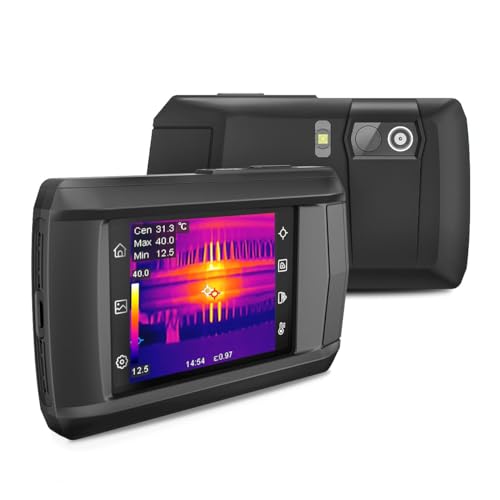
- IntellFault scene recognition for common inspection tasks
- 3.5" touchscreen with thermal, visual, fusion, PIP, and blending modes
- Live super resolution improves 96 × 96 output to 240 × 240
Best For: Easy handheld inspections with touchscreen controls and automation
Professional Handheld Thermal Spotter
Flir TG165-X Thermal Imaging Camera with Bullseye Laser

- 4,800-pixel IR sensor with MSX enhancement
- Measures -25°C to 300°C (-13°F to 572°F)
- IP54-rated, drop-tested rugged build
Best For: Fast spot-checks in tough work environments
Portable High-Detail Mini Imager
TOPDON TC004 Mini Thermal Imaging Camera

- 128x128 thermal imaging enhanced to 240x240
- 40° x 30° FOV with 25Hz refresh rate
- 15-hour runtime with IP54 and 2m drop resistance
Best For: Portable inspections with clearer thermal detail
Phone-Connected Pro Imager
Flir One Pro Thermal Camera for iPhone USB-C
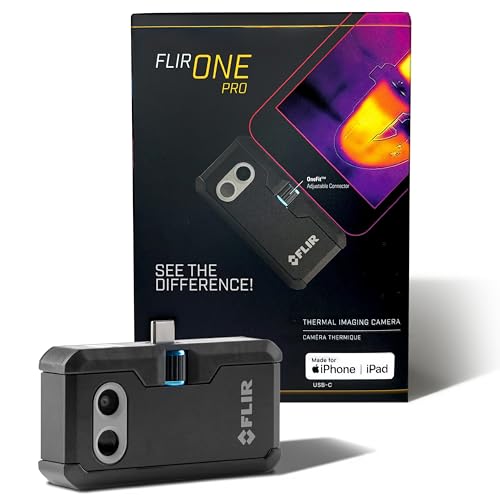
- Works with iPhone 15 and newer via USB-C
- Upscales 160x120 IR to 480x360 with Vivid IR
- MSX and app guides support easier inspections
Best For: Phone-based troubleshooting with guided inspections
Precision Inspection Pick
FOXWELL RT280 Thermal Imaging Camera

- 320 x 240 LCD with TISR enhancement
- Windows PC analysis with 2D/3D tools
- 8GB storage and IP54 rugged design
Best For: Inspectors needing detailed visuals and report-ready analysis
Long-Run Inspection Pick
GT14S Thermal Imaging Camera with Thermometer Mode
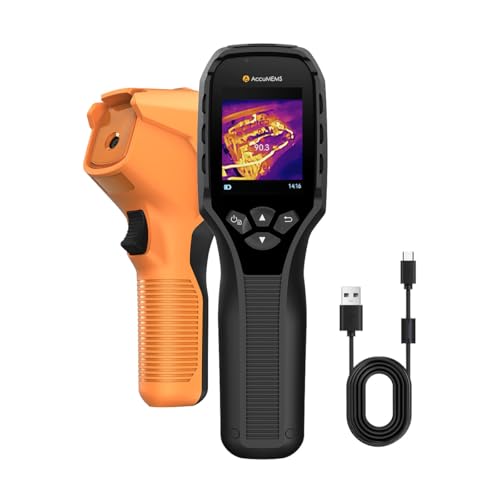
- Thermal imaging plus thermometer mode
- 0.05°C sensitivity with 50° FOV
- Up to 14 hours of battery life
Best For: All-day inspections and fast anomaly detection
Ultra-High-Resolution Pro Pick – Thermal Master Thor002 Handheld Thermal Camera
If you want one of the more capable premium thermal imaging cameras for field inspections, the Thermal Master Thor002 stands out for its boosted 512 × 384 X³ IR resolution, 25Hz refresh rate, and 40mK sensitivity. It’s built for professionals who need clearer thermal detail, strong temperature tools, and flexible sharing options on site.
Best For: Electrical, HVAC, mechanical, and building inspectors who want high-resolution handheld imaging with long battery life.
Pros:
- 512 × 384 X³ thermal resolution with a 3.5″ 640 × 480 IPS display for clearer viewing
- Wide temperature range from -4℉ to 1022℉ with ±3.6℉ accuracy and emissivity adjustment
- Measures six points at once, including center, hottest, coldest, and three user-defined spots
- 5000mAh battery lasts up to 10.5 hours and supports 18W fast charging
Cons:
- Bulkier than compact pocket-style thermal cameras
- Higher-end feature set may be more than casual users need
- Advanced workflow features may take some setup time
The Thor002 is a strong choice if image detail, measurement flexibility, and on-site productivity matter more than keeping things ultra-simple. Its mix of resolution, battery life, and rugged protection makes it especially practical for professional troubleshooting.
Smart Scene Detection Value – GT16D Dual-Spectrum Thermal Camera
The GT16D is a smart option in premium thermal imaging cameras if you want guided detection for common inspection tasks like moisture, insulation, floor heating, electrics, and solar panels. Its dual-spectrum design combines thermal and visible imaging, while the UIRA-IR algorithm boosts the native detector for clearer real-time viewing.
Best For: Home inspectors and technicians who want scene-based detection and dual-mode imaging.
Pros:
- Scene presets for moisture, insulation, floor heating, electrics, and solar panels
- Dual-spectrum imaging combines thermal and visible light for easier identification
- UIRA-IR enhances native 128 × 128 hardware to 240 × 240 thermal output
- 25Hz frame rate, < 50mK NETD, and up to 11 hours of battery life
Cons:
- Lower native detector size than some higher-resolution premium models
- 4GB memory is useful, but not as large as some competitors
- Best features depend on using the scene presets as intended
For users who want a practical, guided thermal camera rather than a purely manual tool, the GT16D offers a balanced feature set. It’s especially appealing for finding leaks and insulation issues quickly without a steep learning curve.
Cloud-Connected Inspector Favorite – Flir E5 Pro Thermal Imaging Camera
The FLIR E5 Pro is a practical choice among premium thermal imaging cameras for users who want simple operation, cloud sharing, and FLIR’s MSX image enhancement. It covers a broad temperature range and is designed to help speed up troubleshooting with clearer thermal-to-visual context.
Best For: Inspectors who want a straightforward FLIR camera with cloud storage and easy image sharing.
Pros:
- 160 × 120 thermal resolution with MSX technology for sharper image detail
- FLIR Ignite Cloud support for automatic storing, editing, and sharing
- Measures from -20°C to 400°C (-4°F to 752°F)
- Includes OTA updates and a 2-year camera warranty with 10-year detector coverage
Cons:
- Lower thermal resolution than newer high-resolution competitors
- No mention of touchscreen or advanced scene automation
- Battery runtime and onboard storage are not detailed in the supplied notes
If you want a dependable brand-name thermal imager with easy cloud workflows, the E5 Pro makes a lot of sense. It focuses on image clarity, sharing convenience, and trusted FLIR support rather than packing in every advanced feature.
Touchscreen Scene Recognition Pick – HP96 Thermal Imaging Camera
The HP96 is a strong fit for buyers comparing premium thermal imaging cameras that emphasize ease of use and automated detection. Its 3.5″ touchscreen, IntellFault scene recognition, and dual-camera layout make it a versatile tool for locating leaks, insulation gaps, and overheating issues.
Best For: Users who want an easy-to-operate thermal camera with touchscreen controls and scene recognition.
Pros:
- IntellFault scene recognition helps identify water leaks and insulation gaps automatically
- 3.5″ touchscreen with simple swipe-and-tap controls
- Dual cameras include a 96 × 96 IR sensor and 640 × 480 visible light camera
- Live super resolution boosts viewing and photo capture from 96 × 96 to 240 × 240
Cons:
- Notes do not include moisture readings
- Built-in battery life is listed at about 4 hours, which is shorter than some rivals
- Native infrared resolution is modest before super-resolution processing
The HP96 is appealing if you want a compact camera that feels more like a modern touchscreen device than a traditional thermal tool. It balances guided detection, multiple viewing modes, and practical temperature measurement for everyday inspections.
Professional Handheld Thermal Spotter – Flir TG165-X Thermal Imaging Camera with Bullseye Laser
If you’re comparing premium thermal imaging cameras for quick on-the-spot checks, the FLIR TG165-X is built for practical field use. It combines a 4,800-pixel IR sensor with FLIR’s MSX image enhancement so hot spots and visual details are easier to interpret during inspections.
Best For: Fast spot-checking of temperatures, leaks, and problem areas in rugged jobsite conditions.
Pros:
- Measures from -25°C to 300°C (-13°F to 572°F) for a broad range of inspection tasks.
- MSX technology overlays visual detail on thermal images for clearer interpretation.
- Bullseye laser pointer helps indicate the measurement area.
- Rugged IP54 enclosure and drop-tested design suit dirty, dusty, or oily environments.
Cons:
- Best suited to spot measurements rather than detailed thermal mapping.
- Lower pixel count than higher-resolution thermal cameras in this roundup.
This is a solid choice if you want a durable thermal camera focused on quick troubleshooting rather than advanced imaging workflows. The long detector warranty also adds confidence for buyers who plan to use it regularly on the job.
Portable High-Detail Mini Imager – TOPDON TC004 Mini Thermal Imaging Camera
The TOPDON TC004 Mini is a compact option among premium thermal imaging cameras, with a strong focus on clarity and convenience. It starts at 128×128 thermal imaging and uses TISR technology to enhance resolution to 240×240, while the 40° x 30° field of view and 25Hz refresh rate help keep inspections smooth and readable.
Best For: Portable home, electrical, and machinery inspections where clearer thermal detail matters.
Pros:
- TISR-enhanced resolution reaches 240×240 for improved thermal detail.
- Measures from -4°F to 842°F (-20°C to 450°C) with automatic hot, cold, and center spot detection.
- Built-in alerts and automatic photo capture help streamline troubleshooting.
- Long 15-hour runtime, IP54 protection, and 2-meter drop resistance support daily use.
Cons:
- Charging head is not included with the cable.
- 500MB? No, built-in storage is 512MB eMMC, which is useful but not expansive for heavy image archiving.
If you want a pocket-friendly thermal camera with strong everyday practicality, this model is easy to recommend. It balances portability, smart alerts, and decent resolution well for users who need a dependable inspection tool without a bulky setup.
Phone-Connected Pro Imager – Flir One Pro Thermal Camera for iPhone USB-C
For buyers who want premium thermal imaging cameras without carrying a standalone device, the FLIR One Pro turns an iPhone 15 or newer with USB-C into a capable inspection tool. It uses 160×120 native infrared imaging, then upsales? No, upscales to 480×360 with Vivid IR, and FLIR MSX merges thermal and visual data to make faults easier to spot.
Best For: Smartphone-based inspections for home, automotive, and light commercial troubleshooting.
Pros:
- Connects directly to iPhone 15 and newer via USB-C.
- Vivid IR upscales to 480×360 from 160×120 native IR.
- MSX technology blends thermal and visual images for better detail.
- App-based inspection guides help with common faults like air leaks and moisture buildup.
Cons:
- Compatibility is limited to USB-C iPhones, specifically iPhone 15 and newer.
- Accuracy is specified within a defined temperature range, so it is best used in the stated conditions.
This is a strong pick if you value convenience and guided inspections over a standalone handheld format. Its jobsite-tough design and compact size make it especially appealing for users who want a thermal imager that travels in a pocket with their phone.
Precision Inspection Pick – FOXWELL RT280 Thermal Imaging Camera
The FOXWELL RT280 is a strong fit for buyers comparing premium thermal imaging cameras for general inspection work. Its 320 x 240 LCD display, TISR-enhanced thermal output, and 25Hz refresh rate are aimed at giving you clearer temperature detail for electrical, HVAC, automotive, and home use.
Best For: Inspectors who want detailed thermal visuals, PC analysis tools, and rugged everyday portability.
Pros:
- 320 x 240 LCD with TISR enhancement for finer thermal detail
- Windows PC software supports 2D/3D analysis, point/line/area measurement, and report generation
- 8GB eMMC storage holds more than 20,000 images and videos
- IP54 resistance and 6.6-foot drop protection improve field durability
Cons:
- PC analysis software is not compatible with Mac
- Screen size is compact at 2.8 inches for live viewing
- Best suited to inspection tasks rather than specialized industrial imaging
Overall, the RT280 balances image detail, storage, and analysis features in a practical handheld format. It makes sense if you want a durable thermal imager that can document findings and turn them into usable reports.
Long-Run Inspection Pick – GT14S Thermal Imaging Camera with Thermometer Mode
The GT14S is a practical choice in premium thermal imaging cameras if you want long battery life and simple dual-mode operation. It combines thermal imaging with thermometer mode, plus hot, cold, and center spot tracking for faster on-the-job checks.
Best For: Users who need a lightweight thermal camera for extended inspections and quick anomaly spotting.
Pros:
- Dual-mode design combines thermal imaging and thermometer readings
- High-sensitivity sensor detects subtle temperature differences down to 0.05°C
- 50° field of view helps scan larger surfaces quickly
- Up to 14 hours of battery life supports all-day use
Cons:
- No advanced PC analysis or report-generation features are listed
- Compact controls may feel basic for users wanting more workflow customization
- Best value depends on whether battery life matters more than software features
For buyers prioritizing endurance and straightforward inspection tools, the GT14S is easy to work with. It focuses on speed, portability, and reliable anomaly detection rather than software-heavy extras.
AI Fault-Spotting Pick – HF96 Thermal Camera with AI Scene Detection
The HF96 stands out among premium thermal imaging cameras for its AI-assisted scene recognition and live super resolution. It is built to make leak and insulation inspections easier, while still offering the manual tools you would expect from a capable thermal imager.
Best For: Buyers who want AI scene detection, wide coverage, and strong PC analysis support.
Pros:
- IntellFault scene recognition helps identify water leaks and insulation gaps
- Live super resolution boosts thermal images to 240 x 240 clarity
- Windows PC software supports image analysis, screen projection, real-time monitoring, and 3D plotting
- 4GB storage, IP54 protection, and 6.6-foot drop testing improve practical durability
Cons:
- Moisture readings are not included, despite the leak-focused AI detection
- AI scene features require firmware updates before use
- Storage is smaller than some competing models at 4GB
If you want a camera that helps narrow down faults quickly, the HF96 offers a useful mix of automation and manual control. Its AI scene detection and software tools make it especially appealing for home and building diagnostics.
How We Picked These Premium Thermal Imaging Cameras
We focused on image quality, temperature range, display usability, connectivity, and how well each camera supports real-world inspections. For Premium Thermal Imaging Cameras, resolution alone is not enough; better contrast tools, scene enhancement, and dependable thermal sensitivity can make a major difference when you are trying to identify small anomalies.
Quick Comparison: What Matters Most
Higher-resolution sensors generally reveal more detail, which is useful for electrical panels, HVAC diagnostics, and building envelope checks. A wider temperature span helps if you need one tool for both low-level comfort inspections and hotter industrial surfaces. If you work fast, features like Wi-Fi, cloud storage, touchscreen controls, or smartphone compatibility can speed up documentation and sharing.
Key Buying Factors for Premium Thermal Imaging Cameras
Resolution and Image Clarity
Look for enough native thermal resolution to distinguish small components, not just large hot spots. Software enhancements can improve visibility, but they should support a strong sensor rather than replace it.
Temperature Range and Accuracy
Choose a range that matches your use case. Building inspections, automotive work, and electrical troubleshooting may require different upper and lower limits. Accuracy matters when you need repeatable readings, not just a visual heat map.
Display, Ergonomics, and Workflow
A bright screen, simple controls, and a comfortable grip help during long inspections. Touchscreens and compact bodies are useful if you move between tight spaces or document findings frequently.
Software and Smart Features
AI scene detection, edge enhancement, MSX-style overlays, and cloud support can save time and improve interpretation. These extras are especially valuable in Premium Thermal Imaging Cameras used for professional reporting.
Who Should Buy Which Premium Thermal Imaging Cameras?
Contractors and technicians should prioritize resolution, temperature range, and reporting-friendly features. Home inspectors and HVAC users may prefer balanced models with easy viewing and strong scene enhancement. DIY buyers usually get the best value from compact, intuitive cameras that are simple to carry and quick to use. If you already rely on a phone for field work, a smartphone-compatible model may be the most practical choice.
In short, the best option depends on how often you inspect, how much detail you need, and whether portability or advanced features matters more for your workflow.