
In 2025, choosing the right gimbal for your DSLR camera can make all the difference in achieving that smooth, professional look. With so many options available, from lightweight models for quick setups to heavy-duty stabilizers for larger rigs, it’s crucial to know what suits your needs best. Let’s explore the top gimbals you should consider and the key factors that can influence your decision.
DJI RS 3 Mini 3-Axis Gimbal Stabilizer for Cameras
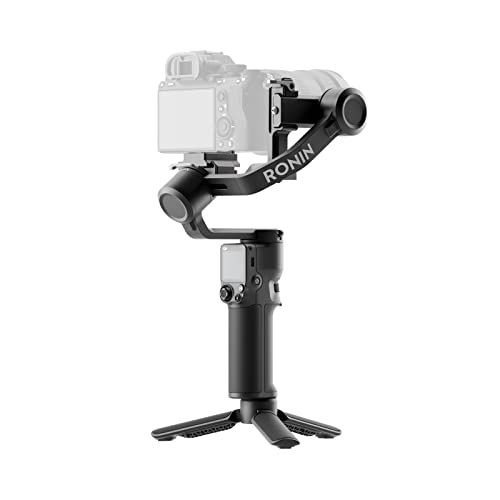
If you’re a photographer or videographer on the go, the DJI RS 3 Mini 3-Axis Gimbal Stabilizer is an excellent choice for you. Weighing only 795g, this ultra-compact gimbal offers impressive portability without sacrificing performance. It supports up to 2 kg of camera gear, making it compatible with popular brands like Canon, Sony, and Nikon. The 3rd-Gen RS Stabilization Algorithm guarantees smooth shots, while Bluetooth shutter control simplifies capturing images. Plus, the quick-release plate makes vertical shooting effortless, perfect for your social media content. With positive user feedback, it’s clear this gimbal is a reliable companion for your creative endeavors.
Best For: Photographers and videographers seeking a lightweight and portable gimbal for smooth stabilization on the go.
Pros:
- Ultra-compact design makes it easy to travel with and suitable for extended shooting sessions.
- Bluetooth shutter control allows for seamless connection to cameras for effortless photo and video capture.
- The quick-release plate enables hassle-free vertical shooting, ideal for social media content.
Cons:
- Limited payload capacity of 2 kg may not support heavier camera setups or additional accessories.
- Some users have reported challenges with balancing heavier setups, requiring careful weight management.
- Battery life, while sufficient for typical sessions, may need frequent recharging during extended shoots.
DJI RS 4 Pro Combo Gimbal Stabilizer for Cameras
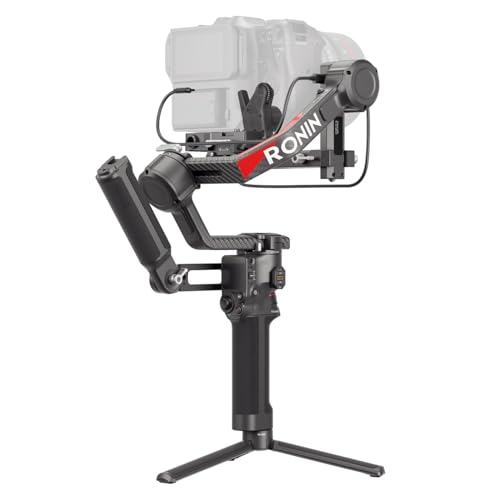
The DJI RS 4 Pro Combo Gimbal Stabilizer is an ideal choice for serious videographers and content creators who demand stability and versatility in their shoots. With a robust 4.5kg payload capacity and carbon fiber construction, it accommodates various DSLR and cinema cameras. You’ll appreciate the native vertical shooting capability, perfect for creating engaging content. The Remote Dual Focus and Zoom Motor Control enhance your creative control, while the LiDAR Focusing system guarantees precise autofocus. Plus, with a runtime of up to 29 hours when using the optional BG70 Battery Grip, you can shoot for longer without interruptions.
Best For: Serious videographers and content creators seeking a stable and versatile gimbal for DSLR and cinema cameras.
Pros:
- High payload capacity of 4.5kg (10lbs) accommodates a range of camera setups.
- Native vertical shooting capability allows for effortless creation of vertical content.
- Extended runtime of up to 29 hours with the optional BG70 Battery Grip, enabling longer shooting sessions.
Cons:
- Optional accessories like the BG70 Battery Grip are sold separately, increasing overall cost.
- No longer available on Google Play, requiring users to download the DJI Ronin app from the official website for updates.
- Learning curve may be required for users unfamiliar with gimbal operation and features.
DJI RS 4 Combo 3-Axis Gimbal Stabilizer for Cameras

For photographers and videographers looking to elevate their craft, the DJI RS 4 Combo 3-Axis Gimbal Stabilizer is an outstanding choice. It supports a payload of up to 3kg and features a new horizontal plate for seamless vertical shooting. You can quickly switch modes with the joystick, offering options like PF, PTF, and FPV. The gimbal’s Teflon-coated arms guarantee ultra-precise balancing. With the BG70 High-Capacity Battery Grip, you’ll enjoy extended runtime up to 29.5 hours. Plus, the included accessories enhance functionality for various shooting scenarios. Just remember to download the DJI Ronin app for activation.
Best For: Photographers and videographers seeking a versatile and high-performance gimbal stabilizer for DSLR and mirrorless cameras.
Pros:
- Supports a payload of up to 3kg, making it suitable for a variety of camera setups.
- User-friendly joystick mode switch allows for quick transitions between different shooting modes.
- Extended battery life of up to 29.5 hours with the optional BG70 High-Capacity Battery Grip.
Cons:
- Some users have reported issues with the gimbal entering sleep mode, which can affect performance.
- The DJI Ronin app is necessary for activation but has compatibility issues and was removed from Google Play.
- Potential recurring issues experienced by some users, despite overall positive feedback.
DJI RS 4 Mini Gimbal Stabilizer for Cameras

Looking for a reliable gimbal that can keep up with your dynamic shooting style? The DJI RS 4 Mini Gimbal Stabilizer is your perfect match. Weighing just 2.27 pounds, it supports up to 2kg of gear, making it ideal for a variety of cameras. With features like auto axis locks and intelligent tracking, setup is a breeze, letting you focus on capturing smooth, professional footage. Its compact design guarantees portability for on-the-go filmmakers. Plus, the responsive follow mode reacts instantly to your movements, assuring you never miss a moment. Experience stability and ease with this highly-rated stabilizer.
Best For: The DJI RS 4 Mini Gimbal Stabilizer is best for both beginners and experienced videographers seeking a lightweight, high-performance solution for smooth filming.
Pros:
- Lightweight and portable design makes it easy to carry for on-the-go filming.
- Auto axis locks allow for quick setup, saving time during shoots.
- Responsive follow mode provides instant reactions to movements, ensuring dynamic and fluid shots.
Cons:
- Some users report issues with the detachable battery, affecting convenience.
- Universal handle compatibility may not meet all users’ expectations.
- Limited payload capacity of 2kg might restrict the use of heavier camera setups.
FeiyuTech SCORP 2 Gimbal Stabilizer for DSLR and Mirrorless Cameras

Whether you’re a professional filmmaker or an enthusiastic hobbyist, the FeiyuTech SCORP 2 Gimbal Stabilizer stands out with its impressive AI tracking feature, making it an ideal choice for capturing smooth, dynamic shots. With a payload capacity of 2.5 kg, it supports DSLR and mirrorless cameras from brands like Sony and Canon. The 1.3-inch touchscreen simplifies navigation, while the quick-installation system allows for seamless vertical filming. Its sturdy design, combined with innovative “scorpion” legs, guarantees stability without a tripod. With 13 hours of battery life, it’s perfect for extended shooting sessions. You won’t be disappointed!
Best For: Filmmakers and photography enthusiasts seeking a reliable gimbal stabilizer for smooth and dynamic shots with DSLR and mirrorless cameras.
Pros:
- AI tracking feature provides reliable and accurate subject tracking.
- Quick-installation system and sturdy design allow for seamless vertical filming and stability.
- Long battery life of up to 13 hours supports extended shooting sessions.
Cons:
- May require time to master all features for new users.
- Limited to a maximum payload capacity of 2.5 kg, which may restrict heavier camera setups.
- The compact size may not be comfortable for extended use without additional grip support.
FeiyuTech SCORP-C2 Gimbal Stabilizer for DSLR and Mirrorless Cameras

The FeiyuTech SCORP-C2 Gimbal Stabilizer stands out as an excellent choice for content creators who need a reliable solution for both DSLR and mirrorless cameras. With a payload capacity of 3.5kg, it supports popular brands like Canon, Sony, and Nikon. Its ergonomic grip and lightweight design make it easy to handle during shoots. The built-in AI tracking module enhances your filming experience, allowing for impressive stability even on unpaved paths. Plus, its native vertical shooting capability and intuitive controls simplify changes. If you’re looking for versatility and performance, the SCORP-C2 is definitely worth considering.
Best For: Content creators and videographers seeking a lightweight, versatile gimbal with high payload capacity and integrated AI tracking.
Pros:
- Excellent stabilization performance, even on challenging terrain.
- Intuitive controls and ergonomic design for ease of use during shoots.
- Native vertical shooting capability, allowing for flexible filming options.
Cons:
- Current SCORP-C owners may not find significant improvements worth the upgrade.
- Users looking for premium build quality or advanced joystick control might prefer other options.
- Basic LCD screen lacks some features compared to touchscreen alternatives found in competitors.
3-Shoe Camera Stabilizer Expansion Cage Mount for Vlogging
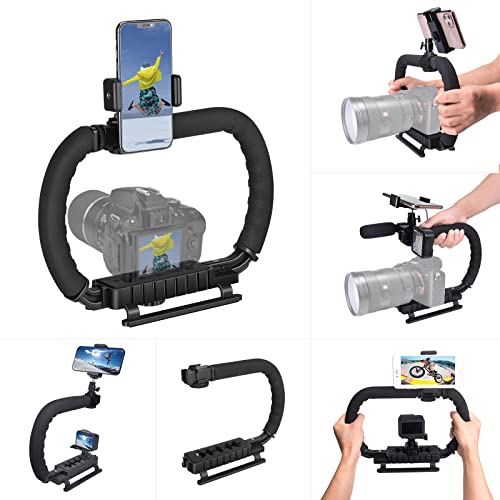
For vloggers seeking to elevate their filming game, the 3-Shoe Camera Stabilizer Expansion Cage Mount is an invaluable tool. This versatile rig is compatible with a wide range of devices, including GoPro, Canon, Nikon, and smartphones. Crafted from durable ABS material, it’s lightweight yet robust, featuring an ergonomic design that minimizes lumbar strain during long shoots. The detachable ball head phone clip improves video recording efficiency, while the 3-shoe extension kit allows easy attachment of microphones and fill lights. Whether you’re a photography enthusiast or a professional filmmaker, this mount enhances your video quality and stability for every shot.
Best For: Photography enthusiasts, professional photographers, and filmmakers seeking enhanced video quality and stability in their shooting experiences.
Pros:
- Lightweight and durable ABS material makes it easy to handle during long shoots.
- Ergonomic design reduces lumbar strain, enabling comfort during extended filming sessions.
- Versatile 3-shoe extension kit allows for effortless attachment of external devices like microphones and lights.
Cons:
- May require additional accessories for optimal use with certain camera models.
- Detachable parts could be prone to misplacement if not stored properly.
- Compatibility with some older camera models may be limited.
FeiyuTech SCORP 3 KIT Gimbal Stabilizer for DSLR and Mirrorless Cameras

Designed with both DSLR and mirrorless camera users in mind, the FeiyuTech SCORP 3 KIT Gimbal Stabilizer stands out for its impressive payload capacity of 7.721 lbs (3.5 kg). It features extended axis arms and a quick-release plate, giving you flexibility with various camera setups. The detachable remote control handle guarantees comfort while providing easy access to gimbal settings. With advanced AI tracking, you can shoot without external gear, enhancing precision in complex shots. The 10th-Gen stabilization algorithm assures smooth footage, while the 1.3-inch touchscreen makes adjustments a breeze. Enjoy seamless connectivity with the Bluetooth shutter for effortless control.
Best For: Filmmakers and content creators looking for a versatile gimbal stabilizer that supports both DSLR and mirrorless cameras with advanced stabilization features.
Pros:
- Supports a maximum payload of 7.721 lbs (3.5 kg), accommodating heavier professional gear.
- Advanced AI tracking and a 10th-Gen stabilization algorithm ensure smooth and precise shots.
- User-friendly 1.3-inch HD touchscreen and Bluetooth shutter facilitate quick adjustments and control.
Cons:
- The advanced features may have a learning curve for beginners.
- The detachable remote handle could be easy to misplace if not carefully managed.
- Relatively higher price point compared to entry-level gimbal stabilizers.
FeiyuTech SCORP 2 KIT Gimbal Stabilizer for DSLR and Mirrorless Cameras

Equipped with built-in AI tracking, the FeiyuTech SCORP 2 KIT Gimbal Stabilizer stands out as an ideal choice for solo filmmakers and content creators looking to enhance their shooting experience. Weighing just 4.56 pounds with a max load capacity of 5.51 lbs, it’s compatible with popular DSLR and mirrorless cameras. The quick-release design and ergonomic gun handle make setup and operation a breeze. You’ll love the intuitive touchscreen interface for quick adjustments. While some users report issues with portrait mode tracking, overall, its exceptional stability and durability make it a fantastic option for capturing professional-grade footage.
Best For: Solo filmmakers and content creators seeking a reliable gimbal stabilizer with advanced tracking features for enhanced shooting experiences.
Pros:
- Excellent stability and 3-axis stabilization for smooth footage.
- Built-in AI tracking feature simplifies solo shooting and enhances usability.
- Ergonomic design and quick-release features make it user-friendly for both beginners and professionals.
Cons:
- Some users experience issues with AI tracking in portrait mode and camera locking.
- Initial setup can be tricky, requiring instructional videos for guidance.
- Not all features may work seamlessly with every camera model, leading to potential compatibility issues.
FeiyuTech SCORP-C Gimbal Stabilizer for DSLR & Mirrorless Cameras

The FeiyuTech SCORP-C Gimbal Stabilizer stands out as an ideal choice for videographers and photographers using DSLR and mirrorless cameras, thanks to its impressive payload capacity of 5.51 lbs. Weighing just 2.64 pounds and measuring 11.02 x 10.63 x 2.76 inches, it’s easy to handle. You’ll appreciate the integrated handle grip and multi-functional knob ring, giving you control over focus and gimbal axis. With modes like FPV and tilt, switching to portrait orientation is effortless. While balancing may take practice, the app integration enhances your shooting experience, ensuring you capture stunning footage every time.
Best For: Videographers and photographers using DSLR and mirrorless cameras who seek a versatile and easy-to-handle stabilizer.
Pros:
- Excellent payload capacity of 5.51 lbs, accommodating a variety of camera setups.
- Integrated handle grip and multi-functional knob ring for improved control and ease of use.
- Multiple shooting modes and app integration for enhanced flexibility and creative options.
Cons:
- Initial balancing can be challenging and may require practice.
- Battery life averages 2-3 hours in practical use, which is less than advertised.
- Some users report issues with the on/off button and battery degradation over time.
Factors to Consider When Choosing a Gimbal for DSLR Cameras
When you’re choosing a gimbal for your DSLR, it’s essential to take into account several key factors. Think about the payload capacity to guarantee it can handle your camera, along with compatibility and stabilization features that meet your needs. Also, don’t forget to factor in battery life and how portable the gimbal is for your shooting style.
Payload Capacity Requirements
Choosing the right gimbal for your DSLR camera means paying close attention to payload capacity. You’ll want a model that exceeds the combined weight of your camera, lenses, and any accessories like microphones or lights. Typically, gimbals range from 2 kg (4.4 lbs) to over 4.5 kg (10 lbs), accommodating various setups, including heavier cinema cameras. If you exceed the gimbal’s payload capacity, you risk performance issues, affecting balance and stability. Models designed for higher payloads often feature stronger motors and advanced stabilization algorithms. Always consult the manufacturer’s specifications to guarantee you stay within the recommended limits. This way, you’ll protect your gear and maintain the quality of your footage, ensuring smooth stabilization for every shot.
Compatible Camera Models
Finding a gimbal that suits your DSLR camera goes beyond just payload capacity; compatibility is key. Make certain the gimbal fits your camera brand—many support popular models from Canon, Sony, Nikon, Panasonic, and Fujifilm. Additionally, check the gimbal’s payload capacity to guarantee it can handle your camera and any accessories, typically ranging from 2 kg (4.4 lbs) to 4.5 kg (10 lbs) or more. Look for gimbals with an open mounting platform for flexible camera positioning. Also, consider how well the gimbal can handle different shooting modes, especially vertical shooting for social media content. Finally, verify the availability of control options like Bluetooth connectivity for seamless operation, which is particularly helpful for solo creators.
Stabilization Technology Features
To achieve smooth and professional-looking footage, it’s essential to pay attention to the stabilization technology features of a gimbal. Look for models that utilize advanced algorithms like 3rd-Gen RS Stabilization or 10th-Gen stabilization technology, which adapt instantly to shakes and vibrations. Built-in AI tracking capabilities are a game-changer, allowing the gimbal to intelligently follow subjects, enhancing your dynamic shots. Native vertical shooting features let you switch between horizontal and vertical orientations effortlessly, perfect for social media content. Don’t forget to evaluate the payload capacity; gimbals supporting weights up to 4.5 kg (10 lbs) can handle heavier camera setups without sacrificing stability. Finally, user-friendly controls like touchscreens or joysticks make switching modes and adjusting settings a breeze.
Battery Life Considerations
While stabilization technology features play an essential role in achieving smooth footage, battery life is another key factor to contemplate when selecting a gimbal for your DSLR camera. The battery life can vary greatly; some gimbals offer up to 29 hours of use with high-capacity grips, while others might only provide around 13 hours. Think about the type of battery too—some require single-use batteries, while others utilize rechargeable lithium-ion options. Quick charging capabilities are a bonus, letting you recharge in just 20-30 minutes. Also, consider your shooting style—heavier setups drain batteries faster, so efficient power management is vital. Remember, additional accessories like focusing motors can also impact battery performance during operation.
Weight and Portability
When choosing a gimbal for your DSLR camera, weight and portability are essential factors that can greatly affect your shooting experience. Lighter gimbals, typically around 795g (1.75 lbs), make travel and extended shooting sessions much easier. A compact design, like dimensions of 6.3 x 7.09 x 11.81 inches, enhances portability, allowing for seamless handling and storage in your camera bag. Look for gimbals that support a payload of up to 2 kg (4.4 lbs), giving you flexibility with various camera setups while maintaining stability. A lightweight gimbal reduces fatigue during long shoots, making it more comfortable as you move around. Ultimately, balancing weight with features is vital; heavier gimbals may offer better stabilization but can be cumbersome for on-the-go filmmakers.