
Dust control is one of the biggest upgrades you can make in a woodworking shop. A good woodworking dust collector helps keep your workspace cleaner, protects tools from buildup, and improves air quality while you work.
Below, we’ve narrowed the field to 10 standout options for different shop sizes, budgets, and collection needs so you can choose with confidence.
Best 10 Woodworking Dust Collector Picks for 2026
Best for High-Airflow Shops
WEN DC1300 1,300 CFM Dust Collector

- 1,300 CFM airflow for fast dust removal
- Dual 4-inch inlets support two tools
- 50-gallon bag and mobile base add convenience
Best For: Woodworkers who need high airflow and dual-tool dust collection in a garage or workshop.
Best Value
Shop Fox W1666 2 HP Dust Collector
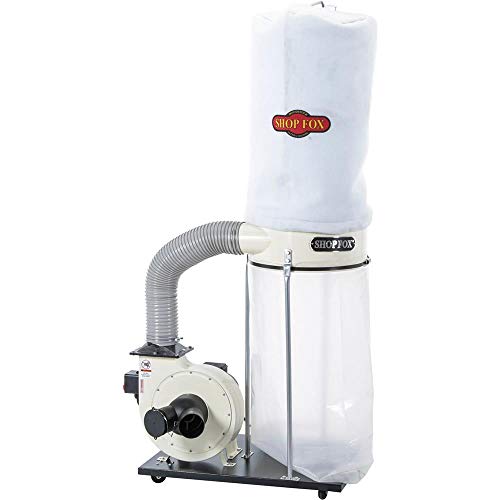
- 1,550 CFM airflow from a 2 HP motor
- Heavy-duty 12-inch impeller
- Strong value for the performance
Best For: Woodworkers who need strong airflow for a small to mid-size shop.
Best for Clog-Free Filtration
JET Vortex Cone Dust Collector

- Vortex Cone helps improve chip separation
- 2-micron canister filter for finer dust capture
- Four casters for easier shop mobility
Best For: Woodworkers who want stronger filtration maintenance and easy movement between tools.
Best for Auto-Start
BUCKTOOL 1.2 HP Auto Start Dust Collector

- Auto-start outlet reduces plug swapping at the tool
- 750 CFM airflow with 1.2 HP motor
- Includes hose, reducers, and three bag options
Best For: Woodworkers who want a compact dust collector with auto-start convenience and flexible accessories.
Best Portable Shop Pick
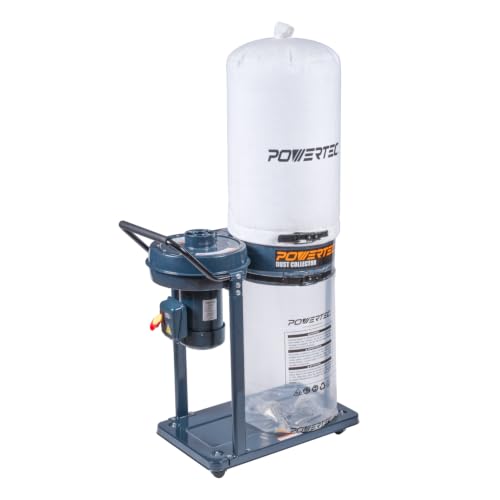
- 800 CFM airflow for common woodworking machines
- 1-micron bag filtration for finer dust capture
- Mobile base with casters for easy shop movement
Best For: Woodworkers who want a portable, no-fuss dust collector for a garage or small shop.
Best for Mobile or Wall-Mount Use

- Up to 600 CFM airflow with induction-motor operation
- Rolls on swivel casters or mounts to the wall
- 15-gallon 5-micron zippered bag for shop cleanup
Best For: Woodworkers who need a flexible dust collector for both mobile and wall-mounted use.
Best For Small Shops
POWERTEC 1 HP Wall Mount Dust Collector

- Wall-mounted design saves valuable floor space
- 560 CFM with 1 HP motor for solid small-shop pickup
- Reusable 1-micron bag helps trap fine dust
Best For: Hobbyists and small-shop woodworkers who want a compact wall-mounted dust collector.
Best with Extra Features
WEN 12-Gallon Rolling Dust Collector
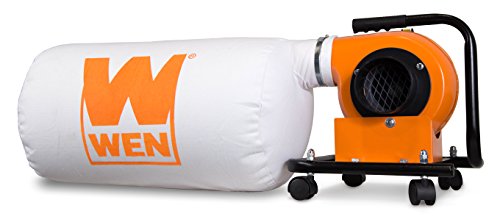
- 660 CFM airflow from a 5.7-amp motor
- Lockable casters plus optional wall mount
- 12-gallon bag with 4-inch dust port
Best For: Hobbyists and small-shop woodworkers who need a portable, space-saving dust collector.
Best for High Airflow
VEVOR 1100 CFM Vortex Dust Collector

- 1100 CFM suction for fast dust removal
- 2.5-micron filtration for finer particle capture
- 42-gallon bag reduces emptying frequency
Best For: Woodworkers who need strong airflow and larger dust capacity for regular shop cleanup.
Best for Wall-Mounted Shops
VEVOR 1HP Wall Mount Dust Collector

- 560 CFM suction for everyday woodworking cleanup
- 2.5-micron filtration helps capture fine dust
- 21-gallon bag with zipper-empty design for easier maintenance
Best For: Small to medium workshops that want a wall-mounted dust collector with strong airflow and easy cleanup.
Best for High-Airflow Shops – WEN DC1300 1,300 CFM Dust Collector
If you want a woodworking dust collector that can keep up with a busy shop, the WEN DC1300 stands out for its strong airflow, dual-tool hookup, and large-capacity bag. It’s built to move a lot of dust quickly, making it a practical choice for general cleanup around saws, sanders, and other stationary tools.
Best For: Woodworkers who need high airflow and the ability to connect to two tools in a garage or workshop.
Pros:
- Up to 1,300 CFM for strong dust collection performance
- Dual 4-inch inlets let you connect two tools at once
- 50-gallon collection bag reduces how often you need to empty it
- Mobile base with swivel casters makes it easier to move around the shop
Cons:
- 5-micron filtration is solid, but not as fine as higher-end collectors
- Large footprint may be awkward in smaller shops
- Designed for stationary use, so it’s not a compact portable unit
Overall, the WEN DC1300 is a capable woodworking dust collector for shop owners who care more about airflow and capacity than compact size. It offers a strong mix of power, convenience, and mobility for day-to-day dust control.
Best Value – Shop Fox W1666 2 HP Dust Collector
If you want a woodworking dust collector that prioritizes raw airflow and dependable value, the Shop Fox W1666 is an easy model to consider. Its 2 HP motor and 12-inch impeller are built to move serious volume for a single-machine setup or a small to mid-size shop.
Best For: Woodworkers who want strong suction and simple, no-frills performance at a fair price.
Pros:
- Moves up to 1,550 CFM for solid dust pickup
- 2 HP motor suits many general shop cleanup tasks
- Heavy-duty impeller supports strong performance and value
Cons:
- 220V power requirement may limit some garages
- 80 dB sound level is not especially quiet
For buyers focused on airflow over extras, this woodworking dust collector delivers a strong mix of capacity and affordability. It makes the most sense in shops that can support 220V power and want a straightforward collector rather than a feature-heavy system.
Best for Clog-Free Filtration – JET Vortex Cone Dust Collector
If you want a woodworking dust collector that balances strong airflow with cleaner filtration, the JET DC-1100VX-CK is built for exactly that job. Its Vortex Cone design helps separate chips before they reach the filter, which can mean less clogging, steadier performance, and better overall dust handling in a busy shop.
Best For: Woodworkers who want a reliable single-stage collector with a 2-micron canister filter and easy mobility around the shop.
Pros:
- Vortex Cone improves chip separation and helps reduce premature filter clogging.
- 2-micron canister filter supports finer dust capture and better air quality.
- 1-1/2 HP motor with 115/230V flexibility suits many shop setups.
- Four casters make it easier to move between machines.
Cons:
- Single-stage design is less advanced than a true cyclone system.
- 80 dB noise level may be noticeable in smaller shops.
For the woodworker who wants a practical woodworking dust collector with proven filtration improvements and solid shop mobility, this JET model is a strong mid-to-high-end choice. It is especially appealing if you value easier maintenance and consistent collection over chasing the quietest or most compact machine.
Best for Auto-Start – BUCKTOOL 1.2 HP Auto Start Dust Collector
If you want a practical woodworking dust collector that saves time at the power tool, BUCKTOOL’s 1.2 HP unit is built around convenience and solid shop cleanup. The 750 CFM rating, 2-micron upper bag, and included reducers make it a flexible fit for small to mid-size shops.
Best For: Woodworkers who want an easy-to-use dust collector with auto-start convenience and compact footprint.
Pros:
- Auto-start outlet helps sync the collector with your tool for less hassle
- 750 CFM and 1.2 HP motor offer strong pickup for a compact system
- Includes multiple reducers, hose, and three bag options for setup flexibility
- Portable base with caster wheels works well in tight shop layouts
Cons:
- Only supports connected machines up to 7A max
- Single-stage bag collector, so very fine filtration setups may want an upgrade
For buyers who prioritize convenience over industrial-scale capacity, this woodworking dust collector strikes a good balance of mobility, accessories, and everyday utility. It is especially appealing if you want a straightforward shop upgrade without overcomplicating installation.
Best Portable Shop Pick – POWERTEC 1 HP Dust Collector
If you need a practical woodworking dust collector for a small to mid-size shop, this POWERTEC 1 HP unit delivers strong airflow, 1-micron filtration, and easy mobility. It’s built to handle everyday sawdust and woodchips from common machines while keeping your workspace cleaner and easier to breathe in.
Best For: Woodworkers who want a portable dust collector with solid 800 CFM performance and simple roll-around convenience for stationary or mobile setups.
Pros:
- 800 CFM suction helps capture dust from saws, planers, and other shop tools
- 1-micron bag filtration improves fine-dust collection for a cleaner shop
- Mobile base with casters makes it easy to move around a garage or workshop
- Quick-release bag clamps simplify maintenance and bag changes
Cons:
- Single-bag design is less advanced than larger multi-stage systems
- Best suited to smaller shops rather than heavy-duty production use
- Requires enough space for the rolling base and bag clearance
Overall, this woodworking dust collector is a smart pick if portability and straightforward performance matter more than a high-end cyclone setup. It offers a balanced mix of power, filtration, and mobility for everyday shop cleanup.
Best for Mobile or Wall-Mount Use – WEN 15-Gallon Dust Collector
If you want a practical woodworking dust collector that can move from wall-mounted shop duty to rolling machine cleanup, the WEN DC3474 is a flexible pick. Its 7.4-amp induction motor and 9-inch impeller deliver up to 600 CFM, giving it enough airflow for a small to mid-size shop setup.
Best For: Woodworkers who want a compact dust collector that can either roll between tools or stay mounted on the wall for a more permanent setup.
Pros:
- Up to 600 CFM from a 7.4-amp induction motor and 9-inch impeller
- Mobile base with swivel casters plus an onboard carrying handle
- Optional wall mount adds flexibility for tighter shop layouts
- 15-gallon 5-micron zippered bag and 4-inch dust port
Cons:
- Best suited to smaller shop dust collection needs, not heavy industrial use
- Requires space for either rolling clearance or wall installation
Overall, this woodworking dust collector stands out for shoppers who value flexibility more than raw capacity. It’s a smart fit if you want one unit that can adapt as your shop layout changes.
Best For Small Shops – POWERTEC 1 HP Wall Mount Dust Collector
If you need a practical woodworking dust collector for a garage or compact shop, the POWERTEC DC5371 is built to save floor space while capturing chips and fine dust at the source. Its 1 HP motor, 560 CFM airflow, and wall-mount design make it a strong fit for smaller setups that still need solid dust collection performance.
Best For: Hobbyists and small-shop woodworkers who want a wall-mounted dust collector with good airflow, a 1-micron bag, and an easy way to keep the work area clear.
Pros:
- Wall-mounted design helps free up valuable floor space
- 1-micron reusable bag captures fine dust and includes a viewing window
- 560 CFM airflow and vortex base improve dust removal efficiency
- Dual-voltage 120V/240V motor adds flexibility for different shops
Cons:
- 4-inch inlet is best for direct machine connections, not larger duct runs
- Port area needs occasional cleaning to maintain performance
- May be more than you need for very light-duty use
Overall, this POWERTEC woodworking dust collector is a smart space-saving pick for shops that want dependable pickup without moving to a larger central system. It balances convenience, filtration, and airflow well for everyday small-shop dust control.
Best with Extra Features – WEN 12-Gallon Rolling Dust Collector
If you need a practical woodworking dust collector for a compact shop, the WEN DC3401 offers solid airflow, easy mobility, and a space-saving design. Its 5.7-amp motor and 6-inch impeller move up to 660 CFM, while the 12-gallon bag helps keep routine cleanup under control.
Best For: Hobbyists and small-shop woodworkers who want an affordable, portable collector that can roll between tools or mount on the wall.
Pros:
- Moves up to 660 CFM for a strong entry-level dust collection setup
- Compact 17-pound design with lockable swivel casters for easy mobility
- Optional wall mount helps save floor space in tighter shops
- 12-gallon zippered bag and 4-inch port fit common woodworking tools
Cons:
- Single-speed design offers less control than variable-speed models
- 5-micron bag is decent for collection, but not a substitute for fine filtration upgrades
- Best suited to small-shop use rather than heavy production dust loads
This woodworking dust collector stands out more for convenience and versatility than brute force, making it a smart fit for garages, hobby shops, and lighter-duty dust collection needs.
Best for High Airflow – VEVOR 1100 CFM Vortex Dust Collector
If you need a woodworking dust collector that prioritizes strong suction and steady chip removal, this VEVOR unit is built for busy small to medium shop use. Its 1100 CFM airflow, 2.5-micron filtration, and 1.5HP motor make it a practical fit for tools that generate a lot of sawdust.
Best For: Woodworkers who want strong airflow, a larger bag capacity, and straightforward dust management for regular shop use.
Pros:
- 1100 CFM suction helps clear coarse sawdust and fine debris quickly
- 2.5-micron filtration captures finer dust for cleaner exhaust air
- 42-gallon filter bag supports longer sessions with fewer emptying breaks
- Clip-style bag access makes maintenance faster and less disruptive
Cons:
- Large footprint may be awkward in compact workshops
- At nearly 90 dB, it may still be loud for some users
- Only one dust collector is included, so setup accessories may be needed
Overall, this woodworking dust collector is a strong choice if you care most about airflow and capacity rather than a compact design. It suits a shop that runs frequently and needs dependable dust capture without constant bag changes.
Best for Wall-Mounted Shops – VEVOR 1HP Wall Mount Dust Collector
If you want a compact woodworking dust collector that still moves serious air, this VEVOR wall-mount unit is a practical shop upgrade. It pairs 560 CFM of suction with 2.5-micron filtration, so it can handle everyday sawdust and finer sanding debris without taking up floor space.
Best For: Small to medium workshops that need a wall-mounted dust collector with strong airflow, easy bag emptying, and simple maintenance.
Pros:
- 560 CFM airflow provides strong pickup for common woodworking tasks
- 2.5-micron filtration helps reduce fine dust in the shop air
- 21-gallon bag offers solid capacity for smaller and mid-size projects
- Bottom zipper makes debris cleanup quick and tool-free
Cons:
- Wall-mounted design is less flexible than a portable unit
- At 90 dB, it is not the quietest option for long sessions
Overall, this woodworking dust collector makes the most sense if you want a space-saving system with dependable suction and straightforward cleanup. It is a strong fit for hobbyist and light professional shops that care more about efficiency than premium features.
How We Picked These Woodworking Dust Collector Models
We focused on practical specs that matter in real shops: airflow rating, filter quality, bag or canister capacity, mobility, wall-mount vs. floor-standing design, and overall value. We also considered whether each Woodworking Dust Collector is better suited to a small garage setup, a mid-size home shop, or a larger multi-tool workspace.
Quick Comparison: What Matters Most
Airflow, usually measured in CFM, helps determine how well a unit can move chips and dust from your tools. Filtration matters just as much: finer filters capture smaller particles and help reduce lingering airborne dust. Capacity affects how often you empty the collector, while mobility and mounting options affect how easy it is to position the unit where you need it.
Key Buying Factors for a Woodworking Dust Collector
Airflow and Tool Match
Match the collector’s CFM to the kind of tools you use. Larger machines and longer duct runs generally benefit from higher airflow, while smaller benchtop tools can work well with compact units. If you plan to connect multiple tools, favor stronger airflow and better duct planning.
Filtration Level
For Woodworking Dust Collector buyers, filtration is a major health and cleanup factor. A 1-micron or 2-micron system is usually preferable if you want better fine-dust capture. Lower-rated filters may still handle chips and heavier debris, but they are less effective for the smallest particles.
Bag, Canister, and Collection Capacity
Larger collection bags reduce how often you stop to empty them, which is useful in busy shops. Canister filters can improve surface area and maintain performance longer between cleanings. Consider whether you value easier disposal, less downtime, or better fine filtration.
Shop Layout and Mounting
If floor space is tight, a wall-mount model can be a smart fit. If you move between machines or reorganize your shop often, a mobile base is worth prioritizing. The best choice depends on whether your dust collector needs to stay fixed or travel with your workflow.
Who Should Buy Which Woodworking Dust Collector?
Choose a high-airflow floor model if you run larger stationary tools, want more capacity, or expect to expand your dust collection system later. Choose a compact or wall-mounted Woodworking Dust Collector if you have a smaller shop, limited floor space, or mostly work with single machines at a time. If portability matters, look for a mobile base and straightforward setup. If air quality is your priority, lean toward finer filtration and a canister-style design where available.
In short, the best unit is the one that matches your tools, space, and cleanup habits—not just the highest number on the spec sheet.