
Choosing a 3D scanner for jewelry comes down to fine detail, stable small-object capture, and accuracy you can trust for design, repairs, or replica work.
In this roundup, we focus on scanners that are better suited to rings, pendants, settings, and other compact pieces where surface texture and dimensional precision matter most.
Best 10 3d Scanner for Jewelry Picks for 2026
Best for Tiny Detail Work
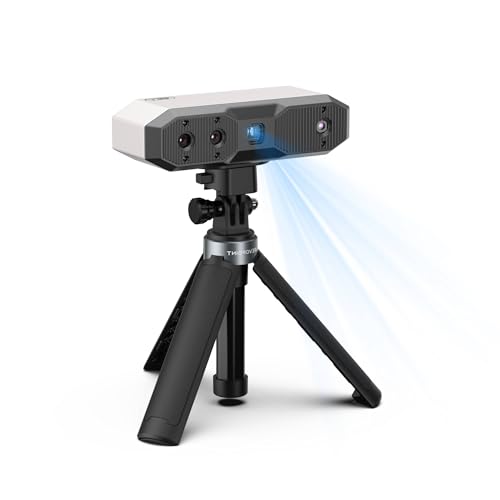
- 0.02 mm precision for fine jewelry details
- Blue-light scanning improves small-object capture
- USB and Wi-Fi 6 support flexible workflows
Best For: Jewelry makers and small-object users who need high-detail scans for printing or CAD work.
Best for Fine Detail
Matter and Form THREE 3D Scanner

- 33-micron accuracy for small-object detail
- Autofocus 13MP cameras keep jewelry sharp
- No tracking dots and broad OS support
Best For: Jewelers and makers who need precise scans of rings, pendants, and other small objects.
Best for Fine Detail Scans
3DMakerpro Moose Lite 3D Scanner

- 0.05mm accuracy for fine-detail capture
- AI tracking with JMStudio workflow
- Portable, quiet handheld design
Best For: Jewelers and makers who need detailed scans of small objects and mixed-size items.
Best for High-Detail Jewelry Scans
Revopoint MetroY Pro 3D Scanner

- Up to 0.01 mm precision for fine detail
- Blue laser modes work on shiny surfaces
- Auto turntable and marker-free scanning simplify setup
Best For: Jewelers and makers needing precise scans of small, reflective pieces.
Best for Easy Setup
3DMakerpro Seal Lite 3D Scanner

- 0.02mm claimed accuracy for small, detailed scans
- Anti-shake stabilization for smoother handheld capture
- Lightweight 190g body with OBJ/STL/PLY export
Best For: Jewelers and makers who need a portable scanner for compact, detail-sensitive objects.
Best for High-Detail Work
Revopoint MetroX Pro 3D Scanner

- 0.01 mm single-frame precision for fine detail
- Blue laser modes handle shiny and dark surfaces
- Auto turntable and tracking modes streamline scanning
Best For: Jewelers, makers, and technicians needing a precision scanner for detailed parts and reflective surfaces.
Best for Fine Jewelry Detail
3DMakerpro Seal Lite 3D Scanner
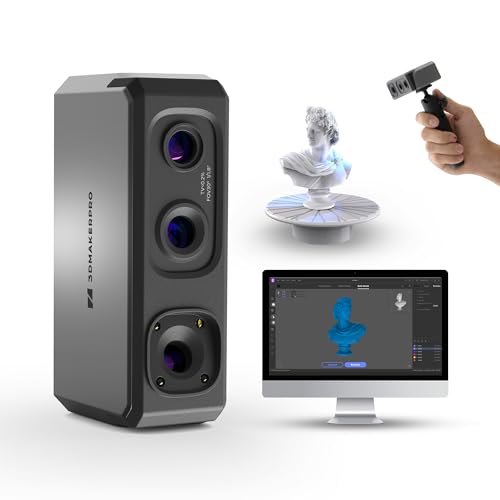
- 0.02mm claimed accuracy for fine detail
- Anti-shake stabilization for smoother handheld scans
- Lightweight 225g design with desktop software support
Best For: Jewelers and small studios scanning rings, pendants, and other intricate items.
Best for Portable Precision
Revopoint POP3 Plus 3D Scanner
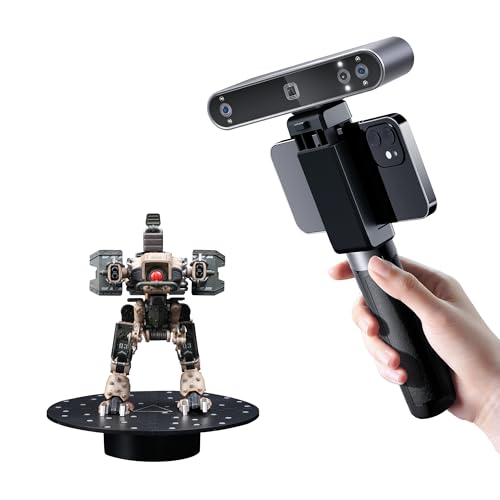
- 20-micron claimed accuracy with better point-cloud detail
- Lightweight handheld design with Wi‑Fi 6 and USB-C
- Color scanning plus export formats for CAD and 3D printing
Best For: Makers and small studios needing a portable scanner for jewelry and medium-object workflows.
Best Heavy-Duty Pick
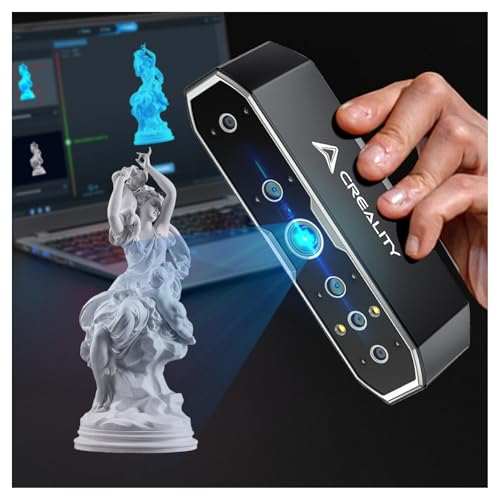
- 0.02 mm accuracy for sharp small-object detail
- 4-lens system covers jewelry and larger items
- Scans black/metal surfaces without spray
Best For: Jewelers and designers who need detailed scans of small, reflective objects.
Best for Portable Color Scans
Revopoint INSPIRE 2 3D Scanner

- Up to 0.03 mm precision for detailed models
- Wireless Wi-Fi 6 scanning with mobile support
- Full-color capture for textured, visual detail
Best For: Jewelers and small studios needing a portable scanner with color capture and flexible scanning modes.
Best for Tiny Detail Work – Revopoint MINI 2 3D Scanner
If you need a 3d scanner for jewelry, the Revopoint MINI 2 is built around the kind of precision and close-range capture that small rings, pendants, and other detailed pieces demand. Its blue-light system, 0.02 mm stated precision, and compact scan range make it a strong fit for fine surface detail, though reflective metals may still benefit from scanning spray.
Best For: Jewelry makers, designers, and small-object users who want high-detail scans for 3D printing, modeling, or reverse engineering.
Pros:
- Up to 0.02 mm precision for capturing fine details on small objects
- Blue light and flash LEDs help with texture, tracking, and marker recognition
- Lightweight 175 g design with USB and Wi-Fi 6 connectivity
- Supports common export formats for 3D printing and CAD workflows
Cons:
- Reflective or dark jewelry surfaces may need scanning spray
- Not ideal for very large objects or ultra-tiny items outside its range
- Revo Design CAD software is sold separately and Windows-only
For buyers shopping for a 3d scanner for jewelry, the MINI 2 stands out as a practical detail-first option rather than a general-purpose scanner. It’s best when accuracy, close-range capture, and manageable size matter more than scanning bigger objects.
Best for Fine Detail – Matter and Form THREE 3D Scanner
If you need a practical 3d scanner for jewelry, the Matter and Form THREE stands out for its autofocus 13MP cameras, true-color capture, and 0.033 mm accuracy. It’s designed to handle small objects with enough precision for inspection, prototyping, and presentation, while still scaling up to larger parts when needed.
Best For: Jewelers, makers, and small shops that need detailed scans of rings, pendants, coins, and other compact items without dealing with tracking dots.
Pros:
- 33-micron accuracy is strong for fine surface detail and small-object scanning
- Autofocus 13MP cameras help keep tiny jewelry pieces sharp
- No tracking dots needed, so setup is cleaner and faster
- Works across Windows, Mac, Linux, iOS, Android, and Chromebooks
Cons:
- More of a precision tool than a casual plug-and-play consumer scanner
- Larger footprint and weight make it less portable than compact handheld options
- Its strength is detail, so very high-volume workflows may want a faster specialized setup
For buyers comparing a 3d scanner for jewelry, this model is compelling if accuracy and clean workflow matter more than low cost or portability. It’s a versatile pick for users who also want one scanner that can move beyond jewelry into broader engineering and product work.
Best for Fine Detail Scans – 3DMakerpro Moose Lite 3D Scanner
If you need a practical 3d scanner for jewelry, the 3DMakerpro Moose Lite is a strong pick for capturing small details with 0.05mm accuracy and 0.1mm resolution. Its blue light system, AI visual tracking, and smart point-cloud processing make it a capable option for rings, pendants, and other small models that need crisp geometry before printing or display.
Best For: Jewelers, makers, and 3D printing users who want high-detail scans of small objects and mixed-size items.
Pros:
- 0.05mm accuracy and 0.1mm resolution help preserve fine surface detail.
- AI tracking and JMStudio software streamline scanning, editing, and optimization.
- 15mm to 1500mm scan range adds flexibility for both small and medium objects.
- Lightweight, quiet handheld design is easier to use for longer sessions.
Cons:
- Not a dedicated jewelry-only tool, so tiny reflective pieces may still need prep.
- Best results depend on learning the software and scanning technique.
For buyers comparing a 3d scanner for jewelry, the Moose Lite stands out for its fine-detail specs and ease of use rather than raw industrial power. It’s a smart middle-ground choice if you want accurate scans for jewelry prototyping without jumping to a much more expensive setup.
Best for High-Detail Jewelry Scans – Revopoint MetroY Pro 3D Scanner
If you need a 3d scanner for jewelry that can capture fine edges, reflective finishes, and small surface features, the Revopoint MetroY Pro is built for that kind of work. Its blue laser system, marker-free options, and auto turntable mode make it a strong fit for precise reverse engineering and 3D printing workflows.
Best For: Jewelers, designers, and makers who want high-detail scans of rings, pendants, and other small objects with minimal setup.
Pros:
- Up to 0.01 mm precision for very fine jewelry detail capture
- Blue laser modes handle shiny and dark surfaces without scanning spray
- Auto turntable and marker-free full-field scanning simplify small-object workflows
- Wi-Fi 6 and live preview make setup and monitoring more flexible
Cons:
- High system requirements may limit older PCs and laptops
- Some advanced software tools are sold separately
- Best results likely require a careful workflow for tiny jewelry pieces
For buyers prioritizing detail over simplicity, the MetroY Pro is a compelling 3d scanner for jewelry because it combines precision-focused hardware with practical scanning modes for small, reflective parts. It is a better match for serious hobbyists and professionals than casual users who just want quick scans.
Best for Easy Setup – 3DMakerpro Seal Lite 3D Scanner
If you need a practical 3d scanner for jewelry, the 3DMakerpro Seal Lite is built around detail capture rather than speed-first convenience. Its 0.02mm claimed precision, blue-light structured scanning, and anti-shake stabilization make it a strong fit for small objects where crisp edges and surface texture matter.
Best For: Jewelers, makers, and small-shop users who want high-detail scans for rings, pendants, and other compact items without moving up to a pricier pro rig.
Pros:
- Claimed 0.02mm accuracy with a 0.07mm minimum point spacing for fine detail
- Anti-shake lenses and optical stabilization help produce smoother handheld scans
- Lightweight 190g body and quiet operation make it easy to use on the bench
- Works with JMStudio and exports OBJ, STL, PLY, and ASC files
Cons:
- Smart Grip for phone scanning is sold separately
- Best results depend on controlled lighting and stable handling
- Primarily suited to Windows and Mac rather than broad plug-and-play mobile workflows
Overall, the Seal Lite is a sensible pick if your priority in a 3d scanner for jewelry is capturing small, detailed shapes with a portable handheld setup. It is not the most turnkey option, but the feature set is well aligned with precise model making and bench-side scanning.
Best for High-Detail Work – Revopoint MetroX Pro 3D Scanner
If you need a 3d scanner for jewelry-style detail capture, the Revopoint MetroX Pro stands out for its industrial-grade blue laser modes, strong precision, and flexible workflows. It is built more for accurate modeling, inspection, and reverse engineering than casual handheld scanning, so it makes the most sense for users who need fine surface detail and dependable measurements.
Best For: Jewelers, makers, and technicians who want a precision-focused scanner for small, detailed parts and shiny surfaces.
Pros:
- Up to 0.01 mm single-frame precision for highly detailed captures
- Blue laser modes help scan shiny, dark, and reflective surfaces without spray
- Multiple tracking and scanning modes adapt well to complex objects
- Auto turntable and software tools support efficient repeatable workflows
Cons:
- More specialized than a beginner-friendly consumer scanner
- Paid software extras may be needed for advanced design and measurement tasks
- Heavy emphasis on industrial use may be overkill for simple hobby projects
For buyers comparing a 3d scanner for jewelry, the MetroX Pro is appealing if precision and surface handling matter more than portability or simplicity. Its strong laser modes and measurement-oriented software make it a serious option for detailed parts, though the learning curve and price tier are better suited to professional workflows.
Best for Fine Jewelry Detail – 3DMakerpro Seal Lite 3D Scanner
If you need a 3d scanner for jewelry with sharp surface detail and reliable handheld capture, the 3DMakerpro Seal Lite is built around precision. Its 0.02mm claimed accuracy, blue-light structured scanning, and anti-shake stabilization make it a strong fit for small, intricate objects where fine edges and texture matter.
Best For: Jewelers, makers, and small studios that want high-detail scans of rings, pendants, and other compact objects without jumping to a full industrial setup.
Pros:
- 0.02mm claimed accuracy with very fine point spacing for detailed capture
- Anti-shake lenses and optical stabilization help keep handheld scans smooth
- Lightweight 225g body makes it easy to move around small items and workspaces
- JMStudio support with OBJ, STL, PLY, and ASC export options
Cons:
- Smart Grip for phone scanning is optional and sold separately
- Requires compatible Windows or Mac software setup to use
- Not a replacement for metrology-grade systems in advanced production workflows
For buyers comparing a 3d scanner for jewelry, the Seal Lite stands out more for detail and portability than for raw industrial throughput. It’s a practical choice if you want compact-object scanning with strong precision, but still want something easy to carry and use in a studio or on location.
Best for Portable Precision – Revopoint POP3 Plus 3D Scanner
If you need a practical 3d scanner for jewelry, the Revopoint POP3 Plus is a strong fit for detailed capture of small-to-medium objects, quick workflow setup, and flexible use across Windows, macOS, iOS, Android, and USB/Wi‑Fi connections. Its claimed 20-micron accuracy and optical zoom help it capture finer surface detail than many general-purpose handheld scanners.
Best For: Makers, designers, and small studios that want a portable scanner for jewelry prototypes, medium object scanning, and scan-to-CAD workflows.
Pros:
- 20-micron claimed accuracy with improved point-cloud detail for more refined models
- Lightweight 190g body with Wi‑Fi 6 and USB-C for easy handheld use
- Full-color scanning and broad export support for CAD and 3D printing workflows
- Free Revo Scan software plus Revo Design for scan-to-CAD conversion
Cons:
- Best results depend on stable scanning technique and careful setup
- Revo Scan is limited to x86_64 systems, which may narrow some workflows
- Like most handheld scanners, very reflective jewelry may still need prep or markers
Overall, the POP3 Plus is a versatile option if you want a 3d scanner for jewelry that balances portability, color capture, and finer detail without moving into a much higher-priced pro system. It’s especially appealing if you also need the same scanner for reverse engineering or medium-object scanning.
Best Heavy-Duty Pick – Creality Otter 3D Scanner
If you need a 3d scanner for jewelry that can also handle small, reflective parts, the Creality Otter is built around high accuracy, dual-lens scanning, and strong handheld tracking. It’s a good fit when you want detailed captures of rings, pendants, settings, and other compact items without relying on spray in every case.
Best For: Jewelers, makers, and product designers who want high-detail scans of small objects and mixed-material pieces.
Pros:
- Up to 0.02 mm accuracy for capturing fine surface detail
- 4-lens design helps with both tiny jewelry and larger objects
- Can scan black and metal surfaces without spraying
- 24-bit full-color capture adds texture and visual reference
Cons:
- Requires a fairly capable Windows or macOS computer
- Handheld workflow may take practice for very small jewelry pieces
- Software and setup are less plug-and-play than simpler consumer scanners
For buyers prioritizing a 3d scanner for jewelry, the Otter stands out for precision, surface adaptability, and its ability to handle both delicate details and tricky materials. It’s a serious option if you want cleaner scan data for design, replication, or CAD work.
Best for Portable Color Scans – Revopoint INSPIRE 2 3D Scanner
If you need a 3d scanner for jewelry that can also handle small product models, the Revopoint INSPIRE 2 is a flexible choice. Its dual scanning modes, wireless operation, and full-color capture make it useful for detailed pieces where texture, shine, and portability all matter.
Best For: Jewelers, makers, and small studios that want a lightweight scanner for color-rich scans and mixed-material objects.
Pros:
- Up to 0.03 mm precision for detailed scan data and 3D printing workflows
- Wi-Fi 6 and mobile support make handheld scanning more flexible
- Infrared laser lines help capture reflective or darker surfaces without spray
- RGB color capture adds texture and visual detail to finished models
Cons:
- Revo Design CAD software is sold separately and Windows-only
- Best results depend on a capable device and proper calibration
- Smaller jewelry pieces may still require careful setup and lighting control
For buyers comparing a 3d scanner for jewelry, the INSPIRE 2 stands out for its portability and surface-handling flexibility rather than being a pure studio-only system. It is a strong fit if you want accurate scans, color capture, and the option to work indoors or outdoors.
How We Picked the Best 3d Scanner for Jewelry
We prioritized small-object performance, advertised precision, scan stability, and usefulness for jewelry workflows. That means favoring models with strong detail resolution, good close-range capture, reliable alignment, and support for color or texture when it adds value. We also considered ease of setup, portability, and whether the scanner is practical for bench work, CAD prep, or shop use.
Quick Comparison
For the most demanding fine-detail work, industrial laser scanners with very high precision are the strongest fit. For mixed use, handheld models with good macro performance can be more flexible. If you need color capture for presentation, documentation, or matching finishes, choose a model with true-color output rather than focusing on geometry alone.
Key Buying Factors for a 3d Scanner for Jewelry
Accuracy and Detail
Jewelry has tiny prongs, shallow engravings, and polished curves that can be hard to capture. Look for sub-0.05mm precision if you want dependable digital models for design refinement or reproduction.
Scanning Small, Reflective Objects
Metal and gemstones can challenge optical scanners. A good 3d Scanner for Jewelry should handle reflective surfaces as well as possible, ideally with blue-light or laser technology, stable tracking, and strong close-focus capability. Matte spray may still be helpful in some cases.
Color Vs. Geometry
True-color scanning is useful for documentation, sales images, and visual reference, but geometry should be the priority for fabrication and CAD. If your goal is production, choose precision first and color second.
Software and Export Options
Check that the scanner supports common file formats used in CAD and 3D printing workflows. Good software can save time with alignment, mesh cleanup, and hole filling, which matters a lot on small objects.
Who Should Buy Which 3d Scanner for Jewelry?
Bench jewelers and CAD designers should lean toward the highest-precision scanners for ring sizing, stone settings, and detailed reverse engineering.
Small workshops and makers may prefer a balanced handheld model that offers strong detail without a steep learning curve.
Retailers and appraisers can benefit from color scanning for documentation and client presentation, even if absolute precision is not the only priority.
Beginners should choose a scanner with simple software, stable tracking, and forgiving small-object performance, even if it is not the most advanced option in the lineup.