
Choosing a 3d scanner for miniatures comes down to more than raw resolution. For tiny figures, you need reliable edge capture, stable tracking, and enough detail to preserve fine textures, weapons, faces, and bases.
This roundup focuses on models that are practical for hobbyists, makers, and small studios looking to scan miniatures for 3D printing, digital archiving, or asset creation.
Best 10 3d Scanner for Miniatures Picks for 2026
Best for Tiny Detail Capture
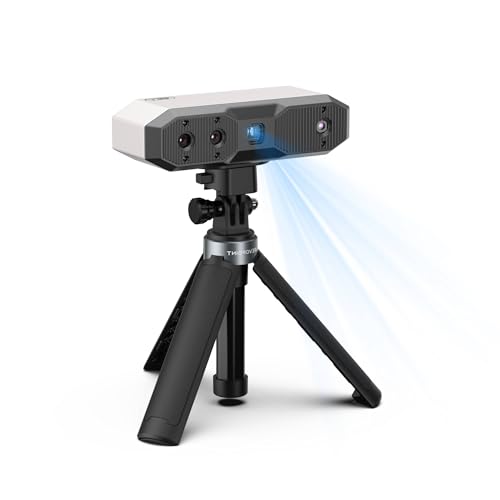
- Up to 0.02 mm precision for small models
- Blue light scanning improves fine-detail capture
- Lightweight, portable, and cross-platform compatible
Best For: Hobbyists and makers scanning miniatures, resin prints, and small parts.
Best Entry-Level Pick

- 0.07mm claimed accuracy for compact objects
- Markerless tracking with anti-shake assistance
- Works with JMStudio export and editing tools
Best For: Hobbyists and beginners scanning miniatures, small parts, and desktop prototypes.
Best for High-Detail Miniatures
Revopoint MetroY Pro 3D Scanner

- Up to 0.01 mm precision for fine miniature detail
- Multiple modes for lasers, turntable, and structured light
- No spray needed for shiny or dark surfaces
Best For: Hobbyists and pros scanning miniatures and other small objects that need very fine detail.
Best for Fine Detail
3DMakerpro Moose Lite 3D Scanner

- 0.05mm accuracy with blue-light capture
- AI tracking plus JMStudio workflow
- Cross-platform support for phone and desktop
Best For: Miniature makers and 3D printing users who want detailed, print-ready scans.
Best Wireless Pick
Creality CR-Scan Ferret Pro 3D Scanner

- 0.1mm accuracy and 30FPS capture fine details fast
- WiFi 6 bridge enables wireless scanning on mobile devices
- Anti-shake tracking helps keep scans stable for beginners
Best For: Hobbyists who want a wireless handheld scanner for miniatures and small printable parts.
Best for High-Detail Scans
3DMakerpro Moose Standard 3D Scanner

- 0.03mm accuracy for fine miniature details
- AI tracking for smoother marker-free scanning
- Windows/Mac support with common export formats
Best For: Hobbyists and makers scanning miniatures, figurines, and print-ready small models.
Best for Comfort
Creality CR-Scan Ferret 3D Scanner

- Up to 0.1mm precision for miniature-level detail
- Full-color RGB capture for realistic textures
- Fast handheld scanning with ASIC acceleration
Best For: Hobbyists who need portable, high-detail scanning for miniatures and small 3D prints.
Best with Extra Features
3DMakerpro Moose Lite 3D Scanner
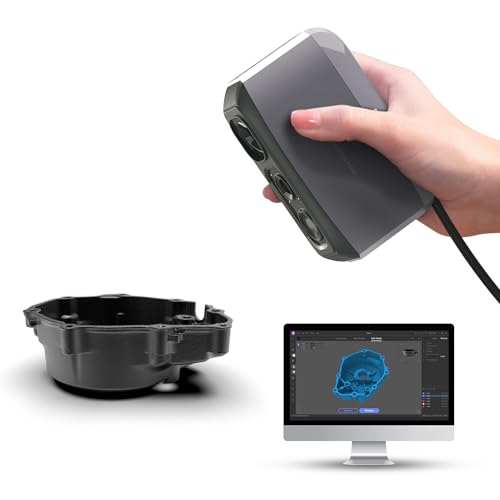
- 0.05mm claimed accuracy for tiny details
- Blue light scanning with AI tracking support
- Lightweight handheld design for desktop use
Best For: Hobbyists scanning miniatures, figurines, and small models for printing or display.
Best for Detailed Miniatures
Revopoint INSPIRE 2 3D Scanner

- Dual structured light and laser modes for versatile scanning
- Up to 0.03 mm precision for fine miniature detail
- Wireless WiFi 6 and full-color capture add convenience
Best For: Hobbyists and makers scanning miniatures, small models, and detailed parts.
Best Simple Pick
Revopoint MetroY Ultra Laser 3D Scanner

- 0.01 mm single-frame precision
- Multiple laser and structured-light scan modes
- Works on dark, shiny, and metallic surfaces
Best For: Makers and modelers who need high-detail scans of miniatures and precision parts.
Best for Tiny Detail Capture – Revopoint MINI 2 3D Scanner
If you want a 3d scanner for miniatures, the Revopoint MINI 2 is built for the kind of close-up detail that matters on small figures, collectibles, and prototype parts. Its blue light system, fast capture rate, and compact scanning range make it a practical option for users who care more about fine surface detail than large-object coverage.
Best For: Hobbyists and makers scanning miniatures, resin prints, and other small objects for 3D printing or CAD workflows.
Pros:
- Up to 0.02 mm precision for capturing fine miniature details
- Blue light and IMU tracking help improve stability and reduce shaky-frame errors
- Works across Windows, Android, iOS, and macOS for flexible scanning setups
- Lightweight 175 g design with included Revo Scan software and multiple export formats
Cons:
- Blue light performance can vary by material, color, and surface finish
- Often benefits from scanning spray to improve results on difficult objects
- Not ideal for very large models or extremely tiny parts outside its scan range
For shoppers comparing a 3d scanner for miniatures, the MINI 2 stands out when detail and usability matter more than broad, all-purpose scanning. It is a strong fit for small-model workflows, though users should expect the best results on appropriately sized objects with some surface prep.
Best Entry-Level Pick – 3DMakerpro Fox 3D Scanner
The 3DMakerpro Fox is a practical 3d scanner for miniatures if you want to move beyond basic photo-based modeling and into real 3D capture without jumping to a pro-priced system. Its 0.07mm claimed accuracy, markerless tracking, and small-object range make it a sensible fit for desktop figures, prototypes, and other compact items, but it does reward patience and some workflow know-how.
Best For: Hobbyists, students, and DIY makers who want an affordable scanner for miniatures, small parts, and entry-level 3D printing workflows.
Pros:
- Markerless tracking and anti-shake support simplify the scanning process
- Up to 0.07mm accuracy helps preserve fine detail on miniatures and small parts
- NIR scanning is eye-safe and can handle faces, bodies, and small objects
- JMStudio includes scanning, editing, fusion, and common export formats
Cons:
- Results depend on practice, patience, and basic CAD or mesh-editing skills
- Needs a capable PC, ideally with a dedicated GPU, for smooth performance
- Best for small-to-medium objects rather than very tiny, ultra-detailed parts
Overall, the Fox is a good value-first 3d scanner for miniatures if you’re willing to learn the workflow and fine-tune scans before printing. It’s more about accessible entry into 3D digitization than plug-and-play perfection.
Best for High-Detail Miniatures – Revopoint MetroY Pro 3D Scanner
If you need a 3d scanner for miniatures that prioritizes fine surface detail, the Revopoint MetroY Pro is built more like a precision tool than a casual hobby scanner. Its blue-laser and structured-light modes give you flexibility for tiny parts, textured models, and shiny or dark surfaces, while the high-resolution capture modes help preserve crisp edges and small features for 3D printing and editing.
Best For: Hobbyists and pros scanning miniatures, figurines, and other small objects that need high-detail capture and flexible scan modes.
Pros:
- Up to 0.01 mm precision for very fine detail on small models
- Multiple scan modes, including laser and 62-line full-field structured light
- No spray needed for shiny or dark surfaces in laser mode
- Wi-Fi 6 and real-time preview make scanning easier to monitor
Cons:
- Requires a fairly powerful computer for best performance
- Revo Measure and Revo Design are sold separately
- Overkill if you only need quick, casual scans
For buyers comparing a 3d scanner for miniatures, this one stands out when precision and surface capture matter more than simplicity or price. It is a strong fit if you want a scanner that can handle both delicate tabletop models and more demanding reverse-engineering work.
Best for Fine Detail – 3DMakerpro Moose Lite 3D Scanner
If you need a 3d scanner for miniatures that can capture crisp surface detail without a lot of guesswork, the 3DMakerpro Moose Lite is a strong contender. Its blue-light system, AI visual tracking, and 0.05mm accuracy make it better suited to small parts, display models, and print-ready scans than basic hobby scanners.
Best For: Miniature makers and 3D printing users who want high-detail scans for small models, figurines, and complex surfaces.
Pros:
- 0.05mm accuracy and 0.1mm resolution help preserve fine miniature details
- AI tracking and JMStudio software streamline scanning, editing, and optimization
- Works across Android, iOS, Windows, and macOS for flexible setup
- Lightweight handheld design is easy to move around detailed objects
Cons:
- Best results will still depend on stable lighting and careful scanning technique
- More advanced than entry-level scanners, so the learning curve may be higher
- Primarily aimed at medium objects, so very tiny minis may take extra patience
For buyers comparing a 3d scanner for miniatures, the Moose Lite stands out for accuracy and software support rather than sheer simplicity. It is a good fit if you care more about detail retention and print-ready results than a bare-bones beginner experience.
Best Wireless Pick – Creality CR-Scan Ferret Pro 3D Scanner
If you want a flexible 3d scanner for miniatures that can also handle small props and hobby parts, the Creality CR-Scan Ferret Pro stands out for its wireless workflow, fast capture, and solid reported 0.1mm accuracy. It’s a practical option for makers who want detailed scans without being tied to a desktop setup.
Best For: Hobbyists and creators who want a wireless handheld scanner for miniatures, tabletop figures, and small 3D-printable objects.
Pros:
- Up to 0.1mm accuracy and 30FPS scanning help capture fine detail quickly.
- WiFi 6 bridge support makes handheld scanning more flexible on Android and iPhone.
- Anti-shake tracking improves scan stability for beginners and moving hands.
- Exports OBJ, STL, and PLY for easy 3D printing and editing workflows.
Cons:
- Not ideal for highly reflective, transparent, or very dark surfaces.
- Wireless use depends on compatible mobile devices and bridge setup.
- As with most handheld scanners, tiny miniatures may still need cleanup in software.
For buyers comparing a 3d scanner for miniatures, the Ferret Pro is appealing because it balances mobility, speed, and detail better than many entry-level handheld options. If you value scanning away from a PC and want a smoother learning curve, it’s an easy model to shortlist.
Best for High-Detail Scans – 3DMakerpro Moose Standard 3D Scanner
If you want a 3d scanner for miniatures that leans more toward fine detail than basic object capture, the 3DMakerpro Moose Standard is a strong pick. Its blue light system, AI visual tracking, and 0.07mm resolution make it well suited to small models, display pieces, and other precision-focused scanning jobs.
Best For: Hobbyists and makers who need a handheld scanner with strong detail capture for miniatures, figurines, and print-ready models.
Pros:
- 0.03mm accuracy and 0.07mm resolution help preserve tiny surface details.
- AI visual tracking supports smoother, marker-free scanning.
- JMStudio combines scanning, editing, and optimization in one workflow.
- Works with Windows and MacOS, with OBJ/STL/PLY/ASC export support.
Cons:
- Not the cheapest option for casual users.
- Best results will depend on steady handheld technique and setup.
For buyers shopping for a 3d scanner for miniatures, the Moose Standard stands out when precision matters more than speed or simplicity. It is a capable step-up choice if you want cleaner geometry and better detail retention for tabletop figures, small parts, and 3D printing workflows.
Best for Comfort – Creality CR-Scan Ferret 3D Scanner
If you want a compact 3d scanner for miniatures, the Creality CR-Scan Ferret is built for small-object capture with high-accuracy mode, full-color texture scanning, and a fast handheld workflow. Its updated firmware and ASIC processing help with smoother tracking, which matters when you’re trying to hold detail on tiny figures, terrain pieces, or hobby parts.
Best For: Hobbyists who want a portable scanner for miniatures, small props, and detailed 3D printing projects.
Pros:
- High-accuracy mode reaches up to 0.1mm precision for fine details
- Built-in RGB camera captures realistic full-color textures
- Fast handheld scanning with ASIC-powered processing and 30 FPS capture
- Works with Android mobile scanning for flexible on-the-go use
Cons:
- Requires compatible hardware and software, especially for Windows and Android
- Mobile scanning is Android-only for this model
- Smaller-object performance depends on careful setup and steady handling
For makers who need a 3d scanner for miniatures, this Creality model is appealing because it balances portability with better-than-entry-level detail capture. It’s not the simplest plug-and-play option, but it offers enough precision and color fidelity to be a serious tool for tabletop figures and small printable parts.
Best with Extra Features – 3DMakerpro Moose Lite 3D Scanner
If you need a 3d scanner for miniatures that prioritizes fine surface detail over speed, the 3DMakerpro Moose Lite is a strong fit. Its claimed 0.05mm accuracy, blue light scanning, and 0.1mm resolution are aimed at capturing tiny textures and crisp edges for tabletop figures, display pieces, and 3D printing workflows.
Best For: Hobbyists and makers who want a compact handheld scanner for miniatures, figurines, and other small objects with visible surface detail.
Pros:
- High-detail capture with up to 0.05mm accuracy and 0.1mm resolution
- AI tracking and point-cloud processing help simplify scanning
- Lightweight, quiet design that’s easy to move around a workspace
- JMStudio software supports scanning, editing, and file export in common formats
Cons:
- Best results will still depend on steady handling and good scan technique
- Optional smartphone grip is sold separately
- Windows/Mac desktop workflow may be less convenient than a fully mobile setup
Overall, the Moose Lite is appealing if your top priority in a 3d scanner for miniatures is detail preservation for printing or display, rather than the fastest or most plug-and-play experience.
Best for Detailed Miniatures – Revopoint INSPIRE 2 3D Scanner
If you want a 3d scanner for miniatures that can capture fine surface detail without a complicated setup, the Revopoint INSPIRE 2 is a strong fit. Its structured light and multi-line laser modes help it handle small parts, dark materials, and reflective finishes better than many entry-level scanners.
Best For: Hobbyists and makers scanning miniatures, small models, and detailed parts for 3D printing or CAD work.
Pros:
- Dual scanning modes improve versatility across different miniature materials and finishes.
- Up to 0.03 mm precision and 0.05 mm accuracy support detailed, print-ready captures.
- Wireless WiFi 6 scanning and mobile support make it easier to scan on the move.
- Full-color capture adds texture and paint detail for display or archiving.
Cons:
- Revo Design CAD workflow requires separate paid software on Windows.
- Best results depend on a compatible computer or mobile device with solid specs.
- Miniature scanning still benefits from careful setup and calibration.
As a 3d scanner for miniatures, the INSPIRE 2 stands out for detail capture, portability, and flexibility rather than pure plug-and-play simplicity. It is a good match if you want one scanner that can also grow into larger objects, color scans, and reverse-engineering tasks.
Best Simple Pick – Revopoint MetroY Ultra Laser 3D Scanner
If you need a 3d scanner for miniatures that can also handle precision parts, the Revopoint MetroY Ultra is built for detail-first work. Its blue laser modes, high single-frame precision, and marker-free structured light give it the flexibility to capture small figures, textured surfaces, and tight features with far less fuss than general-purpose scanners.
Best For: Makers, modelers, and inspection-focused buyers who want high-detail scans of miniatures, small mechanical parts, and hard-to-capture surfaces.
Pros:
- Up to 0.01 mm single-frame precision for fine surface detail
- Multiple scan modes, including cross-line, parallel-line, single-line, and turntable workflows
- Handles black, shiny, and metallic surfaces without spray in many cases
- Wireless scanning and battery grip make it easier to work away from a desk
Cons:
- More scanner than most hobbyists need if you only scan simple tabletop minis
- Performance depends on a fairly powerful computer setup
- Higher cost than entry-level consumer scanners
For buyers who want a 3d scanner for miniatures but also need industrial-style accuracy, this model stands out for its flexible scan modes and strong surface handling. It is a serious tool, so it makes the most sense if you value capture quality over simplicity or low price.
How We Picked the Best 3d Scanner for Miniatures
We prioritized scanners that can capture small objects with usable surface detail, consistent tracking, and manageable workflows. For miniature work, the most important traits are precision, close-range performance, data stability, and software that helps reduce cleanup time.
We also considered whether each scanner is realistic for desktop use, tabletop scanning, and post-processing on hobbyist or prosumer setups.
Quick Comparison
In general, higher-precision laser models are best for extremely small parts and sharp mechanical detail, while structured-light and hybrid scanners often offer easier setup and better all-around usability. If you want the most forgiving experience, look for strong anti-shake tracking and wireless or mobile support. If you want the finest captured detail, prioritize precision and close-range performance over raw speed.
Key Buying Factors for a 3d Scanner for Miniatures
Precision and Detail
Miniatures demand tight accuracy because small errors become obvious fast. Look for sub-0.05 mm precision if your goal is gaming figures, collector pieces, or highly detailed printed parts. Higher precision helps preserve facial features, armor panels, and texture transitions.
Minimum Scan Size and Close-Range Performance
Not every scanner handles tiny objects well. Check the recommended object size and working distance. A scanner that performs well on medium objects may still struggle with 28 mm figures, jewelry-sized parts, or thin weapon bits.
Tracking Stability
Small models can be difficult to track because there is less surface area to lock onto. Anti-shake systems, turntable-friendly workflows, and good alignment software matter a lot when scanning a 3d Scanner for Miniatures setup.
Color Capture and Texture Support
If you want to archive painted miniatures or create reference assets, color scanning is useful. If your main goal is model reconstruction for printing, geometry quality matters more than color.
Software and Cleanup
Miniature scans often need holes filled, noise reduced, and mesh edges refined. A scanner with strong pre- and post-processing tools can save a lot of time, especially for repeated hobby use.
Who Should Buy Which 3d Scanner for Miniatures?
Buy a high-precision laser scanner if you want the cleanest possible geometry from very small objects and do not mind a steeper learning curve. Choose a structured-light or hybrid model if you want easier setup, broader object support, and a more flexible workflow.
If you are scanning miniatures mainly for 3D printing, prioritize detail and tracking over color. If you are scanning collectibles, painted figures, or display pieces, choose a model with solid full-color capture and smoother software support.
For most buyers, the best 3d Scanner for Miniatures is the one that balances close-range detail, stable capture, and cleanup time rather than chasing the highest spec on paper.


