
Choosing a 3D scanner for small objects is mostly about precision, stability, and how much post-processing you can tolerate. Tiny parts, miniatures, jewelry, and mechanical components all reveal scanner weaknesses fast.
Below, we focus on models that balance fine detail, reliable tracking, and practical scanning speeds so you can choose the right fit for 3D printing, reverse engineering, or digital archiving.
Best 10 3d Scanner for Small Objects Picks for 2026
Best for Tiny Detail Capture
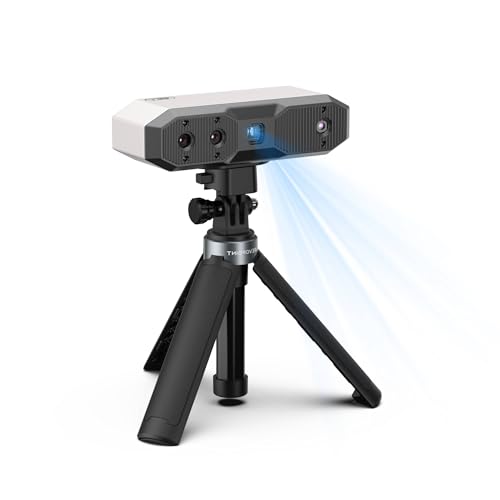
- Up to 0.02 mm precision for miniature details
- Blue light, IMU, and flash LEDs improve tracking
- USB and Wi‑Fi 6 support for flexible scanning
Best For: Makers and designers scanning small parts, miniatures, and prototypes for 3D printing.
Best Entry-Level Pick
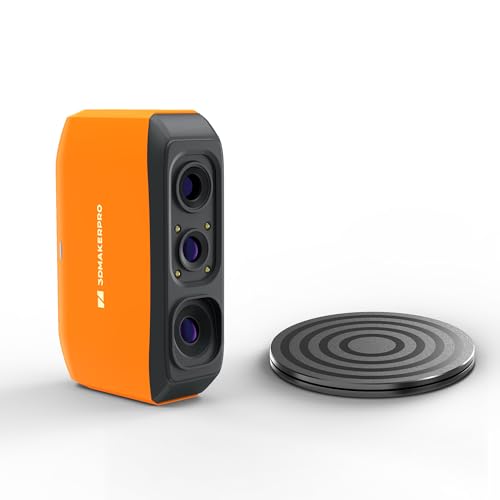
- 0.07mm claimed accuracy for fine detail
- Markerless tracking with anti-shake support
- Works well for miniatures, parts, and prototypes
Best For: Beginners and makers who want an affordable scanner for small-to-medium objects.
Best for Accuracy
Revopoint POP3 Plus 3D Scanner
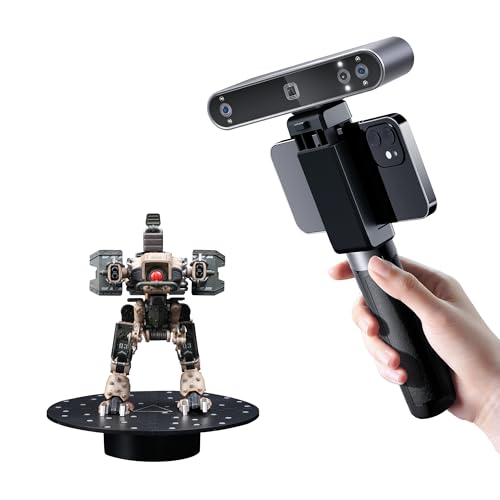
- 20-micron accuracy and improved calibration for finer detail
- Optical zoom helps capture small features with more point-cloud data
- Portable handheld scanner with Wi-Fi 6, USB-C, and full-color output
Best For: Makers and designers who need a portable scanner with strong detail for small-to-medium objects.
Best for Precision Small Parts
Creality Raptor 0.02mm 3D Scanner

- 0.02mm accuracy for tiny, detailed scans
- Blue laser + NIR modes for flexible workflows
- Handles objects from 5mm up to 2m
Best For: Precision-focused users scanning minis, small parts, and reverse-engineering targets.
Best for Small-Object Detail
3DMakerpro Moose Lite 3D Scanner

- 0.05mm claimed accuracy for fine detail
- AI tracking with JMStudio workflow support
- Lightweight 250g design for portable use
Best For: Makers and 3D printing users who want a detail-focused scanner for small-to-medium objects.
Best for Precision Detail
Revopoint MetroY Pro 3D Scanner

- Up to 0.01 mm precision for fine details
- Multiple scan modes for small parts and deep areas
- Works without spray on shiny or dark surfaces
Best For: Makers and engineers scanning small objects, mini parts, and reflective details.
Best for Beginners

- Wireless WiFi 6 scanning across phone, PC, Mac, Android, and iOS
- 0.1mm accuracy with full-color 24-bit capture
- Portable 105g design with helpful starter accessories
Best For: New users who want a portable, easy-to-learn scanner for general 3D capture.
Best with Extra Features
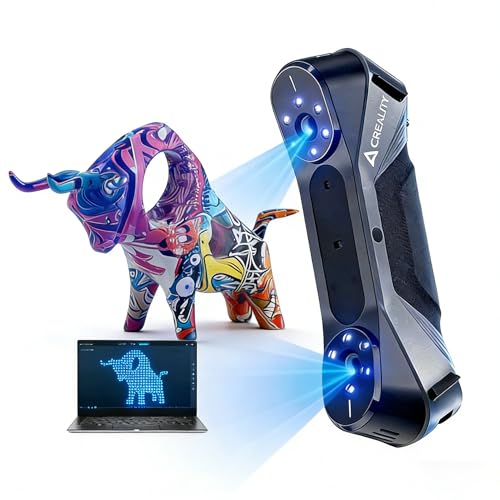
- 0.02mm claimed precision for tiny, detailed objects
- 7-line blue laser improves edge sharpness and geometry capture
- 24-bit color and broad material support add versatility
Best For: Makers and engineers scanning small parts, mixed-size objects, and color-rich surfaces.
Best Wireless Small-Object Scanner

- 0.1mm accuracy with 30FPS scanning for detailed small-object capture
- WiFi 6 wireless bridge improves speed and workflow flexibility
- Anti-shake tracking helps beginners scan compact items more reliably
Best For: People who want a wireless handheld scanner for small parts and 3D printing prep.
Best for Detail on Tiny Parts
Revopoint INSPIRE 2 3D Scanner

- Up to 0.03 mm precision for fine detail
- Dual laser and structured-light scanning
- Wireless, mobile-friendly workflow
Best For: Makers and small studios scanning miniatures, small parts, and detailed prototypes.
Best for Tiny Detail Capture – Revopoint MINI 2 3D Scanner
If you need a 3d scanner for small objects, the Revopoint MINI 2 is built around precision first, with blue-light scanning, fast capture speeds, and helpful tracking features for detailed parts like miniatures, jewelry, prototypes, and replacement pieces. It is best suited to objects that fit within its stated scan range, and using scanning spray can improve results on difficult surfaces.
Best For: Makers, hobbyists, and product designers who want high-detail scans of small parts for 3D printing, reverse engineering, or model cleanup.
Pros:
- Up to 0.02 mm single-frame precision for fine detail work
- Industrial blue light and IMU help with accuracy and smoother tracking
- RGB camera and 6 flash LEDs improve texture, color, and marker recognition
- Lightweight 175 g design with USB or Wi‑Fi 6 connection options
Cons:
- Surface type and color can affect scan quality, especially on reflective or dark objects
- Scanning spray may be needed for the best results on tricky materials
- Not ideal for very large items or extremely tiny objects outside the supported range
Overall, the MINI 2 is a strong pick if your priority is detailed capture over speed or all-purpose versatility. For anyone shopping specifically for a 3d scanner for small objects, it offers a focused feature set that fits miniature scanning and 3D-printing workflows well.
Best Entry-Level Pick – 3DMakerpro Fox 3D Scanner
If you want a capable 3d scanner for small objects without jumping straight into pro-level pricing, the 3DMakerpro Fox is a practical starting point. It uses NIR scanning with up to 0.07mm accuracy, markerless tracking, and a scan range that works well for miniatures, parts, and other small-to-medium items—though you should expect a learning curve and a decent PC to get the best results.
Best For: Beginners, DIY makers, and STEM users who want an affordable scanner for miniatures, prototypes, and small parts.
Pros:
- 0.07mm claimed accuracy with NIR light for detailed scans
- Markerless tracking and anti-shake help simplify setup
- Good size range for desktop miniatures and other small-to-medium objects
- JMStudio supports scanning, editing, fusion, and common export formats
Cons:
- Not plug-and-play; results improve with practice and CAD experience
- Needs a capable PC, with a dedicated GPU strongly recommended
- Less ideal if you want fast, effortless scanning right out of the box
Overall, the Fox makes sense if you want a budget-friendly 3d scanner for small objects and are willing to learn the workflow. It offers useful accuracy and convenient markerless scanning, but it performs best for patient users who are comfortable refining meshes and prepping files for 3D printing.
Best for Accuracy – Revopoint POP3 Plus 3D Scanner
If you need a 3d scanner for small objects that can still handle medium-size parts, the Revopoint POP3 Plus is a strong pick. It focuses on sharper detail, stable handheld scanning, and full-color capture, making it practical for 3D printing, reverse engineering, and detailed product work.
Best For: Makers, designers, and hobbyists who want a portable scanner with better precision for small-to-medium objects.
Pros:
- Up to 20-micron accuracy with improved calibration for more detailed scans
- Optical zoom and higher point-cloud detail help capture small features more clearly
- Lightweight handheld design with Wi-Fi 6, USB-C, and multi-device support
- Full-color scanning and Revo Scan software make it easier to go from scan to file
Cons:
- Software is limited to x86_64 systems, which may exclude some Macs
- Less ideal for absolute beginners who want the simplest possible workflow
For buyers comparing a 3d scanner for small objects, the POP3 Plus stands out for balancing portability, color capture, and fine-detail performance. It is a smart middle-ground choice if you want more precision than entry-level scanners without moving into a much larger pro setup.
Best for Precision Small Parts – Creality Raptor 0.02mm 3D Scanner
If you need a 3d scanner for small objects, the Creality Raptor stands out for its metrology-grade precision, fast blue-laser capture, and ability to handle parts as small as 5mm. It’s built for users who want sharp geometry, stable handheld scanning, and enough flexibility to move from tiny components to larger prototypes without changing tools.
Best For: Makers, reverse engineers, and 3D printing users scanning tiny parts, minis, and detailed mechanical components.
Pros:
- Up to 0.02mm accuracy and 0.1mm fine-detail resolution for small, detailed objects
- Blue laser and NIR modes cover both high-precision parts and marker-free scans
- Scans objects from 5mm to 2000mm, making it unusually versatile
- 24-bit color capture and beginner-friendly software help with clean model output
Cons:
- Best results will still depend on learning proper scan setup and workflow
- More advanced than a casual hobby scanner, so it may feel overbuilt for simple use
- Requires a compatible Windows or macOS system and USB 3.0 connection
For buyers comparing a 3d scanner for small objects, the Raptor is a strong choice when precision matters more than price or simplicity. Its mix of laser detail, stable tracking, and broad object-size support makes it especially compelling for miniature parts and technical scans.
Best for Small-Object Detail – 3DMakerpro Moose Lite 3D Scanner
If you need a 3d scanner for small objects that prioritizes fine detail over speed, the 3DMakerpro Moose Lite is a strong fit. Its blue light system, AI visual tracking, and 0.05mm claimed accuracy are aimed at capturing crisp geometry on miniatures, parts, and display pieces without forcing a complicated workflow.
Best For: Makers, 3D printing users, and hobbyists who want a portable scanner for detailed small-to-medium objects.
Pros:
- 0.05mm claimed accuracy and 0.1mm resolution for fine surface detail
- AI tracking and JMStudio software help streamline capture, editing, and optimization
- Supports Android, iOS, Windows, and macOS for flexible setup
- Lightweight 250g body is easy to move around a workbench or studio
Cons:
- Best results may take practice when scanning reflective or highly complex surfaces
- More of a detail-first scanner than a high-speed option for larger objects
Overall, the Moose Lite makes sense if your priority is a compact, portable 3d scanner for small objects with strong detail capture and software support. It is less about bulk scanning and more about producing clean models for printing or display work.
Best for Precision Detail – Revopoint MetroY Pro 3D Scanner
If you need a 3d scanner for small objects that can capture fine edges, reflective surfaces, and tight details, the Revopoint MetroY Pro is built for serious tabletop scanning. Its blue-laser and structured-light modes give you flexibility for jewelry, mini parts, figurines, and reverse-engineering tasks, while the one-click turntable workflow helps simplify repeatable scans.
Best For: Makers, engineers, and 3D printing users who want high-detail scans of small parts without relying on scanning spray.
Pros:
- Up to 0.01 mm precision for highly detailed small-object scans
- Multiple scan modes, including deep-hole, fast laser, and auto turntable options
- Handles shiny and dark surfaces without scanning spray in laser mode
- Wi-Fi 6 support and live preview make it easier to monitor scans
Cons:
- Windows software and full feature set may require a strong PC
- Paid Revo Design and Revo Measure tools are sold separately
- More specialized than entry-level scanners, so setup may feel technical
For buyers comparing a 3d scanner for small objects, the MetroY Pro stands out when detail matters more than simplicity. It is a strong fit for precision-focused workflows, but you’ll get the best results if you already have the hardware and software needed to support it.
Best for Beginners – Creality CR-Scan Ferret Pro
If you want a 3d scanner for small objects that is easy to learn and flexible across devices, the Creality CR-Scan Ferret Pro is a practical entry point. It offers wireless WiFi 6 scanning, 24-bit color capture, and up to 0.1mm accuracy, but it performs best on objects in the 50mm to 2000mm range rather than tiny precision items.
Best For: Beginners, DIY creators, and 3D printing users who want a portable scanner for general-purpose object capture across phone, tablet, and PC.
Pros:
- Simple enough for first-time users with a quick-start workflow
- Wireless scanning works with Windows, macOS, Android, and iOS
- Lightweight 105g body makes it easy to carry and scan on the go
- Includes useful accessories like a tripod, phone holder, and carrying case
Cons:
- Not ideal for very small or highly detailed objects like jewelry
- Reflective, transparent, and very dark surfaces can be difficult to scan
For shoppers comparing a 3d scanner for small objects, the Ferret Pro is a strong beginner-friendly option as long as your items are not ultra-fine precision parts. It shines more as a portable all-rounder than a macro-detail specialist.
Best with Extra Features – Creality Raptor 3D Scanner
If you need a 3d scanner for small objects, the Creality Raptor stands out for its metrology-grade 0.02mm accuracy and fast 60fps capture. It’s a strong fit for coins, bolts, jewelry-sized parts, and other detailed items where edge clarity and repeatable measurement matter more than casual scanning convenience.
Best For: Makers, engineers, and hobbyists scanning tiny parts or mixed-size objects who want high detail without giving up color capture.
Pros:
- 0.02mm claimed precision is excellent for small, detailed parts
- 7-line blue laser mode helps capture sharper edges and fine geometry
- 24-bit color and low powder dependence make it more versatile on dark or metal surfaces
- Works with Windows and macOS, with guided software for easier workflows
Cons:
- Requires a fairly capable computer to run at its best
- More advanced than entry-level scanners, so beginners may need time to learn it
- Small-object performance is strong, but very reflective surfaces can still be challenging
Overall, the Raptor is a compelling 3d scanner for small objects when accuracy and speed are the priority. It’s especially appealing if you want crisp scans of compact parts and also need enough flexibility to handle larger items later on.
Best Wireless Small-Object Scanner – Creality CR-Scan Ferret Pro
If you need a 3d scanner for small objects that balances portability with strong detail capture, the Creality CR-Scan Ferret Pro is a practical midrange option. It pairs 0.1mm accuracy with fast 30FPS scanning, WiFi 6 wireless transfer, and anti-shake tracking, which makes it easier to scan compact parts, figurines, and other handheld items without constant rework.
Best For: Creators who want a wireless handheld scanner for small parts, hobby prints, and quick 3D printing workflows.
Pros:
- Up to 0.1mm accuracy and 0.16mm resolution for fine detail on small objects
- WiFi 6 bridge support makes wireless scanning faster and more stable
- Anti-shake tracking helps keep scans smooth for beginners and moving hands
- Exports OBJ, STL, and PLY for easy use in 3D printing and reverse engineering
Cons:
- Not ideal for highly reflective, transparent, or very dark surfaces
- Needs compatible devices and enough system memory for best performance
- Wireless use is more convenient than some rivals, but still depends on setup quality
For shoppers comparing a 3d scanner for small objects, the Ferret Pro stands out for its mix of accuracy, speed, and mobile-friendly wireless use. It is especially appealing if you want a scanner that can handle everyday small-item capture without being tied strictly to a desktop workflow.
Best for Detail on Tiny Parts – Revopoint INSPIRE 2 3D Scanner
If you need a 3d scanner for small objects that can capture fine geometry without making the workflow complicated, the Revopoint INSPIRE 2 is a strong fit. It combines multi-line laser and structured light scanning, wireless operation, and full-color capture, so it handles tabletop parts, intricate surfaces, and quick scan-to-print jobs with less setup friction.
Best For: Makers, hobbyists, and small studios scanning detailed parts, figurines, miniatures, and prototype components for 3D printing or CAD work.
Pros:
- Up to 0.03 mm precision helps preserve fine edges and small surface details.
- Dual scan modes make it easier to adapt to different materials and object sizes.
- Wi‑Fi 6 and mobile support add flexibility for portable scanning workflows.
- Laser lines and outdoor-capable scanning improve results on tricky or mixed surfaces.
Cons:
- Revo Design is sold separately and only works on Windows.
- Best performance depends on a capable computer or supported mobile device.
- Like most scanners, very small parts still benefit from careful setup and calibration.
For buyers who want a capable 3d scanner for small objects with portable scanning, strong detail capture, and color texture support, the INSPIRE 2 is especially appealing. It leans more toward flexible, practical scanning than pure plug-and-play simplicity, but the spec mix is excellent for detailed everyday work.
How We Picked the Best 3d Scanner for Small Objects
We prioritized scanners with strong fine-detail performance, stable handheld tracking, and enough versatility for small parts as well as slightly larger objects. Accuracy claims matter, but so do light handling, scan speed, software workflow, and whether the scanner can cope with reflective or textured surfaces.
For a 3d Scanner for Small Objects, the best picks are the ones that consistently capture edges, shallow relief, and surface features without requiring excessive retakes.
Quick Comparison
In general, the highest-precision laser models are best for the smallest parts and technical items, while structured-light and hybrid scanners are often easier for beginners and more flexible for mixed-size scanning. Wireless options can improve convenience, but wired or bridge-connected setups may still offer more dependable data transfer and control.
Key Buying Factors for 3d Scanner for Small Objects
Accuracy and Minimum Detail Size
Look for sub-0.05 mm accuracy if you need crisp edges, engraved text, threads, or miniature features. The lower the claimed error and point spacing, the better the scanner is likely to preserve fine geometry.
Tracking and Stability
Small objects can be hard to keep in frame, so anti-shake tracking, marker support, and good frame rate all help. If you scan handheld, smooth tracking is just as important as raw precision.
Surface Handling
Reflective, dark, or translucent surfaces can confuse many scanners. If your parts are glossy resin prints, metal components, or polished models, choose a scanner with stronger laser performance or expect to use scanning spray.
Software and Workflow
Easy alignment, hole filling, mesh cleanup, and export options save time. Beginners should value software simplicity, while advanced users may prefer more control over scan settings and editing tools.
Portability and Lighting
Wireless operation, outdoor support, and compact hardware are useful if you move between workspaces. For bench-top object scanning, a stable setup and controlled lighting often matter more than portability.
Who Should Buy Which 3d Scanner for Small Objects?
If you need the highest detail for miniature parts, precision components, or reverse engineering, choose a high-accuracy laser scanner. If you want a smoother learning curve and plan to scan a mix of small and medium objects, a structured-light or hybrid model is usually the safer pick.
For hobbyists and 3D printing users, ease of use may matter more than absolute top-end specs. For technical work, prioritize accuracy, tracking reliability, and mesh quality over convenience features.