
Finding the right 3D scanner for beginners is mostly about reducing frustration: stable tracking, simple software, and scans that are good enough for 3D printing or hobby projects.
In this roundup, we focused on models that make setup easier while still offering useful accuracy, speed, and versatility for first-time users.
Best 10 3d Scanner for Beginners Picks for 2026
Best for Easy Wireless Scanning

- 0.1mm accuracy and 30FPS capture
- WiFi 6 bridge for faster wireless scans
- Anti-shake tracking helps beginners
Best For: Beginners who want a wireless handheld scanner for 3D printing and phone/PC use.
Best for Learning 3D Scanning

- Markerless tracking reduces setup complexity
- 0.07mm accuracy with safe NIR scanning
- Good fit for small-to-medium objects and prototypes
Best For: Beginners, STEM users, and DIY makers who want an entry-level scanner and don’t mind a learning curve.
Best for Precision Beginners
Revopoint MetroY Pro 3D Scanner

- Up to 0.01 mm precision for detailed scans
- Multiple modes for turntable, laser, and structured-light scanning
- Wi-Fi 6 and real-time preview simplify workflow
Best For: Beginners who want high accuracy and advanced scanning modes in one device.
Best for Easy Handheld Scanning
Creality CR-Ferret SE 3D Scanner
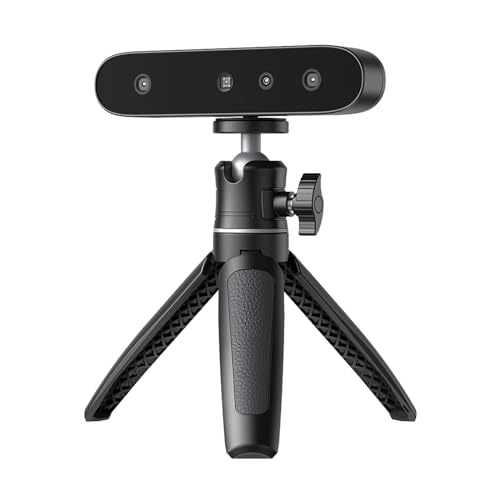
- Anti-shake tracking improves scan stability for new users
- Handles black and metal objects without spraying
- Lightweight 105g body is easy to carry and learn with
Best For: Beginners who want a simple handheld scanner for everyday objects and color capture.
Best for Beginner-Friendly Precision
3DMakerpro Moose Lite 3D Scanner

- 0.05mm accuracy for detailed beginner-friendly scans
- AI tracking and JMStudio simplify workflow
- Works with Android, iOS, Windows, and Mac
Best For: Beginners who want a handheld 3D scanner with accurate results and guided software.
Best for Easy Scanning
Creality CR-Ferret SE 3D Scanner

- Anti-shake tracking reduces beginner scan errors
- 0.1mm accuracy with 30FPS scanning speed
- Works on black and metal objects without spray
Best For: New users who want a forgiving handheld scanner for color and object scanning.
Best for Detailed Beginner Scans
Revopoint INSPIRE 2 3D Scanner

- Dual-mode scanning for more object types
- Wireless Wi‑Fi 6 setup with mobile streaming
- High-precision capture for 3D printing and color scans
Best For: Beginners who want a portable, upgrade-friendly scanner for printing, design, and color capture.
Best with Extra Features
Revopoint MetroX Pro 3D Scanner

- Industrial-grade blue laser scanning with claimed 0.01 mm precision
- Multiple modes for shiny, dark, flat, and detailed objects
- Auto turntable and real-time streaming improve workflow
Best For: Beginners who want advanced scan quality for 3D printing, reverse engineering, and inspection.
Best for Wireless Scanning

- WiFi 6 wireless scanning for easier beginner setup
- 0.1mm accuracy with full-color 24-bit capture
- Lightweight 105g design with wide device support
Best For: First-time users who want a portable, wireless scanner for phones, PCs, and hobby 3D projects.
Best for Industrial Detail
Revopoint MetroY Ultra Laser 3D Scanner

- 0.01 mm precision for detailed part capture
- Five scanning modes for different object sizes and depths
- Wireless, battery-powered scanning with outdoor support
Best For: Beginners and makers who need precision scanning for parts, prototypes, and inspection.
Best for Easy Wireless Scanning – Creality CR-Scan Ferret Pro
The Creality CR-Scan Ferret Pro is a strong 3d scanner for beginners who want easier handheld scanning without giving up useful detail. With WiFi 6 transfer, anti-shake tracking, and up to 0.1mm accuracy, it aims to make the first few scans smoother and less frustrating for 3D printing projects.
Best For: New users who want a wireless handheld scanner for 3D printing, simple model capture, and flexible use with phones or PCs.
Pros:
- Up to 0.1mm accuracy and 30FPS scanning for detailed captures
- WiFi 6 bridge support makes wireless scanning more practical and stable
- Anti-shake tracking helps beginners keep scans on target
- Works with iPhone, Android, and PC for broader device compatibility
Cons:
- Not ideal for highly reflective, transparent, or very dark surfaces
- Requires compatible devices and app/software versions to get the best results
- Wireless convenience adds complexity compared with a basic USB-only scanner
For a 3d scanner for beginners, the Ferret Pro stands out because it balances accuracy with features that reduce common first-time scanning problems. If you want a portable option that can grow with your workflow, this is a smart pick for entry-level 3D printing and reverse-engineering tasks.
Best for Learning 3D Scanning – 3DMakerpro Fox 3D Scanner
The 3DMakerpro Fox is a practical 3d scanner for beginners who want to learn the basics of object digitization without moving straight to pro-level pricing. It uses NIR scanning, markerless tracking, and anti-shake support, but expect a learning curve if you want clean results for printing or editing.
Best For: Beginners, STEM learners, and DIY makers who want an approachable scanner for small-to-medium objects and are willing to practice with the workflow.
Pros:
- Markerless scanning keeps setup simpler and faster than dot-based systems.
- 0.07mm accuracy and NIR technology help capture useful surface detail.
- Works on a wide size range, from small parts up to larger prototypes.
- JMStudio includes scanning, editing, fusion, and export tools in one place.
Cons:
- Not a true plug-and-play option; results improve with practice and patience.
- Best performance depends on a capable PC with a dedicated GPU.
- Mesh cleanup and slicing knowledge still matter for 3D printing success.
For a 3d scanner for beginners, the Fox stands out because it lowers the setup barrier while still offering enough detail for real projects. Just be ready to invest time in learning the software and refining scans before expecting consistently polished prints.
Best for Precision Beginners – Revopoint MetroY Pro 3D Scanner
If you want a 3d scanner for beginners that still leans into pro-level accuracy, the Revopoint MetroY Pro is a strong fit. It combines multiple blue-laser and structured-light modes, real-time preview, and wireless workflow tools, so you can start with simpler scans and grow into more advanced projects like reverse engineering and 3D printing.
Best For: Beginners who want a highly accurate scanner with room to grow into more technical scanning tasks.
Pros:
- Up to 0.01 mm precision for detailed printing and metrology work
- Multiple scan modes, including auto turntable and full-field structured light
- Wi-Fi 6 and real-time streaming make setup and monitoring easier
- Works on shiny and dark surfaces without scanning spray in laser mode
Cons:
- Minimum PC requirements are fairly demanding
- Revo Design and Revo Measure are paid extras
- Better suited to careful users than true plug-and-play casual scanning
For a 3d scanner for beginners who values accuracy over simplicity alone, the MetroY Pro is appealing, but it makes the most sense if you have a capable computer and are willing to learn the software workflow. It’s a smart pick for ambitious first-time buyers who want a scanner they won’t outgrow quickly.
Best for Easy Handheld Scanning – Creality CR-Ferret SE 3D Scanner
If you want a practical 3d scanner for beginners, the Creality CR-Ferret SE is appealing because it focuses on stability and simplicity. Its anti-shake tracking helps smooth out hand movement, while the compact 105g design makes it easier to learn on smaller projects without a steep setup burden.
Best For: Beginners who want a lightweight scanner for simple handheld scanning of everyday objects, especially when color capture and dark-object scanning matter.
Pros:
- Anti-shake tracking helps reduce failed scans from unsteady hands
- Scans black and metal objects without spray, which is handy for real-world parts
- 24-bit full-color capture adds more detail to beginner-friendly scans
- Lightweight, portable design is easy to carry and learn with
Cons:
- PC scanning only, so it is less flexible than wireless options
- No battery handle included
- May feel limiting for users who want mobile Android, iOS, or wireless workflows
The Ferret SE is a solid 3d scanner for beginners if you value ease of use over advanced mobility features. It offers a straightforward path into scanning, but buyers who want the most versatile ecosystem may want to step up to the higher Ferret models.
Best for Beginner-Friendly Precision – 3DMakerpro Moose Lite 3D Scanner
If you want a 3d scanner for beginners that still delivers serious detail, the 3DMakerpro Moose Lite is a strong place to start. Its AI visual tracking, blue-light scanning, and JMStudio software help reduce the usual trial-and-error, while the 0.05mm accuracy and 0.1mm resolution give you clean results for printing, display, or simple reverse-engineering projects.
Best For: Beginners who want a handheld scanner with guided software, solid accuracy, and support for Android, iOS, Windows, and Mac.
Pros:
- 0.05mm accuracy and 0.1mm resolution for detailed scans
- AI tracking and JMStudio make capture and cleanup easier
- Wide compatibility across mobile and desktop platforms
- Lightweight design is easier to handle during longer sessions
Cons:
- Better suited to small and medium objects than very large items
- Advanced features may still take practice to use well
For a 3d scanner for beginners, this model stands out because it balances accuracy with software that helps simplify the workflow. If you want a capable starter scanner that can grow with your skills, the Moose Lite is a practical choice.
Best for Easy Scanning – Creality CR-Ferret SE 3D Scanner
If you want a 3d scanner for beginners that feels forgiving right away, the Creality CR-Ferret SE is built around speed, tracking stability, and simple capture. Its 0.1mm accuracy, 30FPS scanning, and anti-shake one-shot imaging make it easier to get usable scans without a steep learning curve.
Best For: New users who want a handheld scanner that can handle shaky movement, textured color capture, and a mix of small to large objects.
Pros:
- Anti-shake tracking helps reduce failed scans for first-time users
- Fast 30FPS capture with up to 0.1mm accuracy for detailed models
- Scans black and metal objects without needing spray
- Built-in color camera captures textured, full-color models
Cons:
- Best results still depend on learning scan distance and object prep
- Less ideal for very tiny objects than dedicated macro-focused scanners
- Handheld scanning may still take practice for clean alignment
This is a strong pick if you want a practical 3d scanner for beginners that prioritizes easy tracking over advanced tuning. It offers a helpful balance of speed, color capture, and object flexibility for hobbyists getting started with 3D scanning.
Best for Detailed Beginner Scans – Revopoint INSPIRE 2 3D Scanner
If you want a 3d scanner for beginners that still leaves room to grow, the Revopoint INSPIRE 2 is a strong middle ground. It combines handheld flexibility, Wi‑Fi scanning, and dual capture modes so you can start simple and move into more advanced projects without swapping hardware.
Best For: Beginners who want a portable scanner for 3D printing, reverse engineering, and colorful object capture with room to learn advanced workflows.
Pros:
- Dual scanning modes help you handle different object sizes and surface types.
- Wireless scanning and mobile streaming make setup more flexible for new users.
- Strong precision and calibration support detailed models for 3D printing.
- Full-color capture adds value for display, archiving, and design work.
Cons:
- Software features may feel more complex than true entry-level scanners.
- Revo Design requires separate purchase and is Windows-only.
- Best results may take some practice when scanning tricky objects.
For a 3d scanner for beginners that balances ease of use with genuinely capable output, the INSPIRE 2 stands out. It is not the cheapest option, but the wireless workflow, outdoor support, and sharper capture tools make it a smart pick if you plan to keep scanning beyond basic hobby use.
Best with Extra Features – Revopoint MetroX Pro 3D Scanner
If you want a 3d scanner for beginners that can still grow into serious projects, the Revopoint MetroX Pro is a strong but specialized pick. It combines high-resolution blue laser scanning with multiple tracking modes, making it practical for users who want detailed scans for 3D printing, reverse engineering, or inspection work.
Best For: Beginners who want an advanced scanner with industrial-level detail and room to handle more demanding projects.
Pros:
- Very high claimed precision and accuracy for detailed models and measurements
- Multiple scan modes help with shiny, dark, flat, and feature-rich objects
- Auto turntable and real-time streaming make scanning easier to follow
- Color scanning adds realism for presentation and design work
Cons:
- Likely more complex than a true plug-and-play beginner scanner
- Some software features require paid add-ons
- Price and capability may be overkill for casual hobby use
For a 3d scanner for beginners who care more about accuracy than simplicity, the MetroX Pro stands out as a capable upgrade path. It is best suited to users willing to learn a more technical workflow in exchange for much better scan quality and flexibility.
Best for Wireless Scanning – Creality CR-Scan Ferret Pro
If you want a practical 3d scanner for beginners, the Creality CR-Scan Ferret Pro is appealing because it keeps the learning curve manageable while adding features that make scanning less frustrating. The wireless design, anti-shake tracking, and full-color capture help new users get usable results faster, especially on medium to large objects.
Best For: DIY creators, 3D printing hobbyists, and first-time scanner buyers who want portable wireless scanning across phone, PC, Android, and iOS.
Pros:
- Wireless WiFi 6 scanning makes setup and movement easier for newcomers.
- Up to 0.1mm accuracy with 24-bit color capture for detailed models.
- Lightweight 105g body and included accessories improve portability.
- Works across Windows, macOS, Android, and iOS for flexible use.
Cons:
- Not ideal for very small or highly detailed items like jewelry.
- Best results still take some practice and scan-friendly surfaces.
- Requires compatible hardware and enough RAM for smooth performance.
As a 3d scanner for beginners, this model stands out more for convenience and versatility than raw pro-level precision on tiny parts. If you want an accessible starter scanner that can grow with your workflow, the Ferret Pro is a strong pick.
Best for Industrial Detail – Revopoint MetroY Ultra Laser 3D Scanner
If you need a 3d scanner for beginners that still delivers pro-level capture, the Revopoint MetroY Ultra is a strong fit for learning serious scanning workflows. It combines high accuracy, multiple laser modes, and wireless operation, so you can start with simple objects and grow into more demanding reverse-engineering or inspection tasks.
Best For: Beginners who want a capable scanner for precision parts, product prototyping, and mixed indoor/outdoor scanning.
Pros:
- Up to 0.01 mm single-frame precision for fine geometric detail
- Five scanning modes, including cross-line, parallel-line, single-line, and turntable workflows
- Handles dark or shiny surfaces without spray and can scan outdoors in bright light
- Wi‑Fi 6 and battery grip add flexibility for mobile scanning
Cons:
- High system requirements may limit older PCs and laptops
- More advanced than a basic plug-and-scan starter model
- Best results will take some setup and calibration practice
For a 3d scanner for beginners who want room to learn without quickly outgrowing the hardware, the MetroY Ultra stands out for precision and versatility. It is less about casual hobby scanning and more about giving new users a serious tool that can scale with their skills.
How We Picked the Best 3d Scanner for Beginners
We prioritized scanners that are easier to learn, reliable for common home and maker workflows, and flexible enough for small-to-medium projects. For a 3d Scanner for Beginners, usability matters as much as raw precision, so we looked for features like anti-shake tracking, wireless options, straightforward calibration, and scan modes that support different object sizes.
Quick Comparison: What Matters Most
Not every beginner needs the same scanner. Entry-level users usually benefit most from a balance of accuracy, speed, and forgiving tracking. If you plan to scan tabletop objects, models, figurines, or parts for 3D printing, mid-range accuracy and easy handheld operation are often the sweet spot. If you want highly detailed small-part scans, laser-based models can be worth the learning curve.
Key Buying Factors for a 3d Scanner for Beginners
Ease of Use
Look for a scanner with simple software, clear setup steps, and strong auto-tracking. Beginners should spend more time scanning and less time troubleshooting.
Accuracy and Detail
Accuracy determines how closely the scan matches the original object. For hobby use and most print-ready models, you usually do not need industrial-level precision, but tighter accuracy helps when you want cleaner meshes and less cleanup.
Tracking Stability
Anti-shake features and reliable tracking are especially helpful if you are scanning by hand. Poor tracking can cause missing geometry and extra editing time.
Object Size and Scan Range
Choose a scanner that matches the objects you plan to scan most often. Some models are better for small parts and miniatures, while others handle larger objects or a wider range of sizes more comfortably.
Connectivity and Workflow
Wireless scanning can make setup less cluttered, but wired connections may be simpler and more dependable in some cases. Think about where you will scan and how portable you need the system to be.
Who Should Buy Which 3d Scanner for Beginners?
If you want the easiest possible start, choose a model known for beginner-friendly software and stable handheld tracking. If you care most about detail for small parts, a higher-precision laser scanner may be the better choice, even if it takes more practice. If you want a versatile all-around 3d Scanner for Beginners, look for a scanner that balances accuracy, color capture, and scan speed without adding unnecessary complexity.
In short, the best pick is the one that fits your objects, your workspace, and how much time you want to spend learning the workflow. A scanner that is slightly less advanced on paper can still be the better buy if it helps you get clean scans faster.