
Choosing a professional 3D scanner is less about finding the highest spec sheet number and more about matching the scanner to your workflow. A great device for reverse engineering, 3D printing, or asset capture should balance precision, speed, object size, and ease of use.
This roundup focuses on scanners that offer genuinely useful performance for serious makers, designers, and small studios. Whether you need handheld flexibility, outdoor support, or high-detail capture for engineering work, the right pick depends on how and where you scan.
Best 10 Professional 3d Scanner Picks for 2026
Best for Deep-Hole Detail
Creality Sermoon S1 3D Scanner
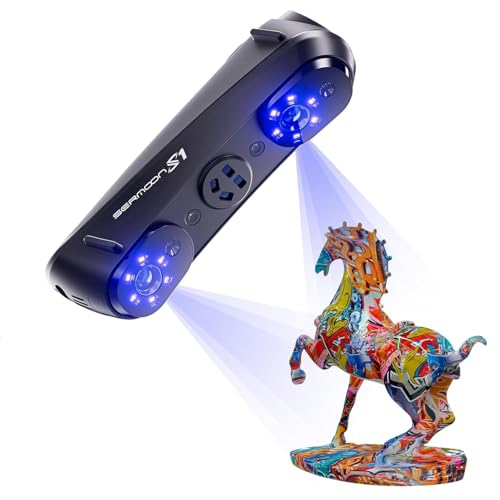
- Triple laser modes handle detail, speed, and deep holes.
- 0.02 mm accuracy suits inspection and reverse engineering.
- 5 mm to 4 m range covers tiny parts through large objects.
Best For: Engineers and makers who need one scanner for precise small parts and big projects.
Best for Portable All-in-One Scanning

- Dual VCSEL and MEMS scanning for mixed object sizes
- Wireless, PC-free workflow with onboard storage
- Outdoor-friendly infrared scanning and 2K AMOLED display
Best For: Creators and small studios needing a portable scanner for indoor and outdoor object capture.
Best for Industrial Precision
Revopoint MetroY Pro 3D Scanner

- Up to 0.01 mm precision for detailed capture
- Multiple scan modes for varied object types
- Wi-Fi 6 and turntable support improve workflow
Best For: Engineers and makers who need a precision-focused scanner for reverse engineering and 3D printing.
Best for Large-Scale Scanning
Matterport Pro3 Performance Kit

- Full accessory kit with two batteries, tripod, mounts, and cases
- Up to 100 m extended range for warehouses and outdoor sites
- Fast lidar scans with Matterport software support
Best For: Contractors and facility teams scanning large indoor or outdoor spaces.
Best for Photogrammetry
Revopoint MIRACO Plus 3D Scanner

- Integrated photogrammetric metrology for larger-object accuracy
- 0.04 mm single-point cloud accuracy with Near/Far scanning modes
- 32GB RAM, full-color capture, and portable handheld design
Best For: Users who need photogrammetry-assisted scanning for accurate measurements on small-to-large objects.
Best for Mixed-Material Scanning

- 17-line blue laser for fine detail and fast scans
- Infrared mode handles larger objects and darker surfaces
- Wireless battery design supports portable scanning
Best For: Users who need a versatile scanner for small parts, larger objects, and mixed surfaces.
Best for Wireless Scanning
Revopoint INSPIRE 2 3D Scanner

- Wi‑Fi 6 wireless scanning with live streaming
- Dual infrared structured light and laser modes
- Up to 0.03 mm precision for detailed models
Best For: Makers, engineers, and creators who need a portable scanner for 3D printing, reverse engineering, and color work.
Best for Industrial Detail
Revopoint MetroY Ultra Laser 3D Scanner

- 0.01 mm single-frame precision for fine details
- Five scan modes for parts, holes, and turntable work
- Wireless scanning and no-spray capture for tough surfaces
Best For: Engineers and inspectors who need high-detail scans of small to medium parts.
Best for High-Detail Scanning

- 0.02mm accuracy with 60fps capture
- Works on black, metallic, and glass-like surfaces
- Scans tiny parts, large objects, and even bodies
Best For: Designers and engineers who need a fast, precise scanner for mixed-size projects and difficult materials.
Best for Industrial-Grade Precision
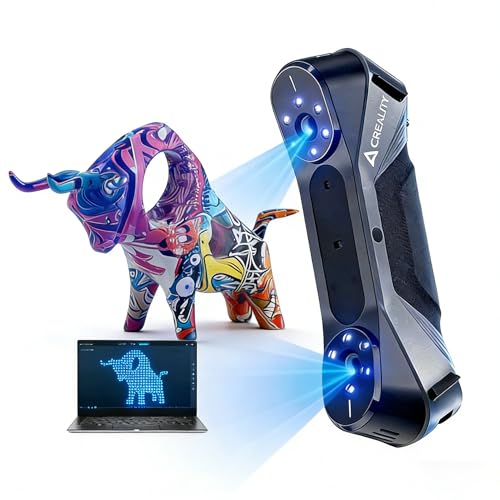
- 0.02mm precision for detailed measurements
- Blue laser and infrared modes for versatile scanning
- 24-bit color capture with 60fps handheld speed
Best For: Makers and professionals who need precise scans for parts, models, and color-rich objects.
Best for Deep-Hole Detail – Creality Sermoon S1 3D Scanner
If you need a professional 3d scanner that can handle everything from small parts to full-size objects, the Creality Sermoon S1 is built for versatility. Its triple blue-laser system, fast 90 FPS capture, and broad 5 mm to 4 m scan range make it a strong fit for engineering, inspection, and reverse-engineering workflows.
Best For: Engineers, makers, and production teams that need one scanner for both fine detail and large-object capture.
Pros:
- Triple laser modes cover large surfaces, fine detail, and deep holes.
- Up to 0.02 mm accuracy supports inspection and CAD-ready scans.
- Wide 5 mm to 4 m range reduces the need for multiple scanners.
- AI-assisted software helps speed up alignment and cleanup.
Cons:
- Requires a capable PC or Mac for smooth performance.
- More advanced than casual users may need for simple hobby scans.
For buyers comparing a professional 3d scanner for engineering-grade work, the Sermoon S1 stands out for its mix of speed, accuracy, and scan flexibility. It is especially appealing if your projects regularly move between tiny features, complex geometry, and large parts.
Best for Portable All-in-One Scanning – EINSTAR Vega 3D Scanner
The EINSTAR Vega is a strong fit if you want a professional 3d scanner that can move between studio, workshop, and on-site jobs without needing a tethered PC. Its all-in-one design, dual scanning modes, and wireless workflow make it practical for mixed-size objects, while the built-in screen and storage help keep setup simple.
Best For: Creators and small studios that need a portable, wireless scanner for both detailed close-range work and larger objects.
Pros:
- Dual VCSEL and MEMS scanning covers both medium/large and small/detail-focused jobs
- Wireless operation, onboard computing, and internal storage reduce cable clutter
- Outdoor-capable infrared scanning helps when working beyond a controlled indoor setup
- 2K AMOLED touchscreen and one-click workflow are friendly for newer users
Cons:
- More specialized and costly than entry-level scanners
- Best results will still depend on object surface, lighting, and scan planning
- Advanced features may be more than casual hobbyists need
Overall, the Vega stands out as a versatile professional 3d scanner for users who value mobility and an integrated workflow over a desktop-only setup. If you need one scanner that can handle different object sizes and locations, it is an easy model to shortlist.
Best for Industrial Precision – Revopoint MetroY Pro 3D Scanner
The Revopoint MetroY Pro is a compelling professional 3d scanner for users who care more about precision and versatility than plug-and-play simplicity. Its blue-laser and structured-light modes are built for detailed capture, reverse engineering, and 3D printing workflows, with strong accuracy claims and flexible scan options for different object types.
Best For: Engineers, product designers, and makers who need high-detail scans of mixed surfaces, including shiny parts, small features, and complex geometry.
Pros:
- Up to 0.01 mm precision and multiple laser modes for detailed capture
- Handles shiny and dark surfaces without scanning spray in laser modes
- Built-in Wi-Fi 6 and real-time preview make scanning more flexible
- Auto turntable mode and professional software support streamline workflows
Cons:
- Windows-only software tools and higher system requirements
- Advanced features may be more than casual users need
- Paid add-on software can increase total cost
For buyers comparing a professional 3d scanner for metrology-adjacent work, the MetroY Pro stands out for its mode variety and accuracy-focused design. It’s a strong fit if you want a scanner that can move between quick capture, fine detail, and complex part inspection with minimal fuss.
Best for Large-Scale Scanning – Matterport Pro3 Performance Kit
If you need a professional 3d scanner for expansive interiors, construction sites, or outdoor assets, the Matterport Pro3 Performance Kit is built for fast, accurate capture with a full accessory bundle. It combines lidar-based scanning, long-range coverage, and portable power so teams can keep moving on large jobs without constant setup friction.
Best For: Contractors, engineers, and property teams that need efficient documentation of large spaces, mixed indoor/outdoor environments, and repeat site visits.
Pros:
- Includes two batteries, tripod, mounts, cases, and a backpack for field-ready use
- Up to 100 m extended range and sub-20-second sweeps speed up large projects
- High-precision lidar captures detailed scans for construction and facility workflows
- Works with Matterport’s software for 4K photos, measurements, and collaboration tools
Cons:
- Requires a Matterport Professional or Business subscription to unlock key features
- Extended range is available in e57 files only
- More expensive than entry-level scanning options
As a professional 3d scanner, the Pro3 stands out most when speed, range, and job-site readiness matter more than keeping the kit minimal. If your work involves large-scale documentation and you want a complete package out of the box, it’s a strong fit.
Best for Photogrammetry – Revopoint MIRACO Plus 3D Scanner
If you need a professional 3d scanner that can handle both detailed small parts and larger objects, the Revopoint MIRACO Plus stands out for its integrated photogrammetric metrology workflow. It combines high-resolution capture, full-color scanning, and portable hardware in a package aimed at serious design, reverse-engineering, and 3D printing work.
Best For: Users who need photogrammetry-assisted scanning for accurate measurements on small-to-large objects, especially in product design and reverse engineering.
Pros:
- Integrated photogrammetric kit improves length accuracy for large-object measurement
- Quad depth cameras, Near/Far modes, and 0.04 mm single-point cloud accuracy boost versatility
- 48MP color camera and infrared zoom help produce cleaner, more lifelike scans
- Portable handheld design with 32GB RAM, Wi‑Fi 6, and multiple export formats
Cons:
- Revo Design CAD software is sold separately
- Workflow may be more advanced than casual hobby users need
- Photogrammetry features add complexity compared with simpler scanners
For buyers comparing a professional 3d scanner, the MIRACO Plus is compelling because it blends precision scanning with photogrammetry in a truly mobile package. It is especially attractive if you need one system that can move from fine-detail capture to larger metrology-focused projects without switching tools.
Best for Mixed-Material Scanning – EINSTAR 2 Wireless 3D Scanner
The EINSTAR 2 is a practical pick if you need a professional 3d scanner that can move between small parts, larger objects, and tougher surfaces without slowing your workflow. Its blue laser and infrared modes give it flexibility for detail capture, outdoor use, and scanning black or reflective materials with less prep.
Best For: Users who want one scanner that can handle small-to-large objects, mixed materials, and mobile scanning sessions.
Pros:
- 17-line blue laser mode targets fine detail and supports faster scans up to 90 fps
- VCSEL infrared mode is useful for larger objects, black surfaces, and outdoor work
- Wireless design with a swappable battery supports up to 3 hours of untethered scanning
- Works across bright environments and can scan reflective surfaces without spray in many cases
Cons:
- Software and workflow may still feel advanced for first-time users
- Best results on very large jobs will depend on lighting, surface type, and setup discipline
- It is heavier than compact handheld options
For buyers comparing a professional 3d scanner for versatility rather than a single specialized task, the EINSTAR 2 stands out for its dual scanning modes and cable-free operation. It looks especially strong if you need field-ready capture with fewer surface-prep compromises.
Best for Wireless Scanning – Revopoint INSPIRE 2 3D Scanner
If you want a professional 3d scanner that can move from desk to jobsite without much setup, the Revopoint INSPIRE 2 is built for flexibility. It combines Wi‑Fi 6 wireless scanning, infrared structured light, and multi-line laser modes to handle a range of object sizes, materials, and lighting conditions while staying portable.
Best For: Makers, engineers, and content creators who need a portable scanner for 3D printing, reverse engineering, and color capture.
Pros:
- Wireless Wi‑Fi 6 scanning and PC-to-mobile streaming make remote workflows easier
- Dual scanning modules help with different object types and challenging surfaces
- Up to 0.03 mm precision and 0.05 mm accuracy support detailed modeling
- Lightweight 190 g body with outdoor scanning support improves portability
Cons:
- Revo Design is paid and limited to Windows
- Full system requirements are fairly demanding for best results
- Advanced features may take time to learn for first-time users
Overall, the INSPIRE 2 stands out as a professional 3d scanner for buyers who value wireless freedom, mixed-surface performance, and a scan-to-CAD workflow. It is especially appealing if you need detailed color scans and a lightweight unit you can take beyond the studio.
Best for Industrial Detail – Revopoint MetroY Ultra Laser 3D Scanner
If you need a professional 3d scanner for tight-tolerance parts, inspection, or reverse engineering, the Revopoint MetroY Ultra is built around accuracy and flexibility. Its blue laser modes, fast capture speed, and wireless operation make it a strong fit for shop-floor work and mobile scanning, especially when you want detailed results without heavy prep.
Best For: Engineers, makers, and inspectors who need high-detail scans of small to medium parts with minimal setup.
Pros:
- Up to 0.01 mm single-frame precision for fine geometric detail
- Five scan modes, including cross-line, parallel-line, single-line, and turntable workflows
- Scans dark, shiny, and metallic surfaces without spray
- Wi‑Fi 6 and battery grip support more flexible field scanning
Cons:
- Requires a powerful PC or compatible Mac for best performance
- Advanced features may be more than casual users need
- Best results depend on learning the software and scan workflow
Overall, the MetroY Ultra stands out as a professional 3d scanner for users who care more about precision and industrial workflow support than simple point-and-shoot convenience. It is especially appealing if you scan real-world parts in varied lighting and surface conditions.
Best for High-Detail Scanning – Creality CR-Scan Raptor Pro
If you need a professional 3d scanner for demanding reverse-engineering, product design, or full-color capture, the Creality CR-Scan Raptor Pro is built for speed and precision. Its laser plus NIR setup is aimed at users who want fine detail on everything from tiny parts to larger objects without constant spray powder or extra setup.
Best For: Designers, engineers, and creators who need fast, high-accuracy scans across a wide object range, including tricky materials and full-body work.
Pros:
- Up to 0.02mm accuracy with high-speed 60fps laser scanning
- Handles black, metallic, and semi-transparent surfaces without powder
- Scans objects from 5mm to 4000mm, plus body and face capture
- 24-bit color support and compatibility with pro 3D software
Cons:
- Higher-end hardware requirements, especially for Windows and Mac workflows
- More scanner than casual users need for simple hobby projects
For buyers comparing a professional 3d scanner, the Raptor Pro stands out for its combination of precision, material flexibility, and large scanning range. It is a strong fit when detail and workflow reliability matter more than keeping things simple or inexpensive.
Best for Industrial-Grade Precision – Creality Raptor 3D Scanner
If you need a professional 3d scanner that leans toward accuracy and speed, the Creality Raptor is built for detailed parts, color capture, and flexible scanning modes. It combines blue laser lines and infrared structured light, making it a practical pick for objects ranging from small hardware to larger components.
Best For: Makers, engineers, and small studios that want metrology-style precision with full-color scanning and support for both Windows and macOS.
Pros:
- Up to 0.02mm accuracy for fine detail and small-part work
- 7-line blue laser plus infrared modes for versatile object scanning
- 24-bit color capture with strong texture and outdoor support
- 60fps scanning and anti-shake performance for smoother handheld use
Cons:
- Requires a fairly capable computer to run well
- More advanced than casual entry-level scanners
- Customer review volume is still limited
The Creality Raptor makes sense if your priority is a professional 3d scanner with serious measurement capability rather than a simple hobby tool. It offers a strong mix of precision, speed, and color output for users who want dependable results across different scan types.
How We Picked These Professional 3d Scanner Options
We prioritized scanners that are relevant to real-world professional use: repeatable accuracy, practical scanning range, workable speed, and software or hardware features that reduce setup friction. We also looked for models suited to different use cases, from compact object capture to larger industrial and mixed-environment scanning.
To keep the list useful, we favored systems that offer a clear advantage in one or more areas such as laser precision, wireless operation, full-color capture, outdoor usability, or broad object-size flexibility.
Quick Comparison
In general, blue laser handheld scanners are the best fit for high-detail parts and reverse engineering. Structured light and hybrid systems can be easier for broader object capture, while wireless all-in-one designs are more convenient for mobile workflows. If you work with interiors, spaces, or real estate, a lidar-based option may make more sense than a traditional close-range scanner.
Key Buying Factors for a Professional 3d Scanner
Accuracy and Repeatability
Check whether the scanner’s stated precision matches your project needs. For mechanical parts, fit-critical components, and product design, small differences matter more than raw scan speed.
Object Size and Working Distance
Some scanners are optimized for small parts, while others can handle larger items or even room-scale environments. Make sure the scanner’s capture range fits the biggest objects you plan to scan, not just the most common ones.
Lighting and Environment
If you need to scan outdoors or in variable light, look for hardware that supports those conditions. A Professional 3d Scanner with strong tracking and robust illumination will be easier to use outside a controlled studio.
Speed and Workflow
Fast frame rates, anti-shake features, and wireless operation can save time, especially when scanning complex geometry or multiple parts in a day. For production use, ease of setup is often as important as peak precision.
Color Capture and Software
Full-color capture matters for visual presentation, heritage work, and digital archiving. Also pay close attention to the software ecosystem: export options, alignment tools, mesh cleanup, and compatibility with CAD or 3D printing workflows can make or break the experience.
Who Should Buy Which Professional 3d Scanner?
Choose a precision-focused handheld laser model if your main goal is engineering, inspection, or reverse engineering. Pick a wireless or all-in-one scanner if you value portability and quick deployment. If your work involves rooms, spaces, or tours, a lidar-based scanner is the better match. For creators who want one tool to handle many object types, a hybrid scanner with both laser and structured-light capabilities offers the broadest flexibility.
In short, the best Professional 3d Scanner is the one that fits your objects, environment, and downstream workflow—not just the one with the highest accuracy claim.