
A dependable generator can keep essential appliances, heating and cooling systems, sump pumps, and home electronics running when the utility grid fails. The best choice depends on your electrical load, fuel availability, installation plans, and budget.
We compare 10 home backup options, including permanently installed standby systems and transfer-switch-ready portable generators, so you can match capacity and convenience to your outage-preparedness needs.
Best 10 Home Standby Generators Picks for 2026
Best Tri-Fuel Flexibility
Westinghouse 14,500W Tri-Fuel Generator
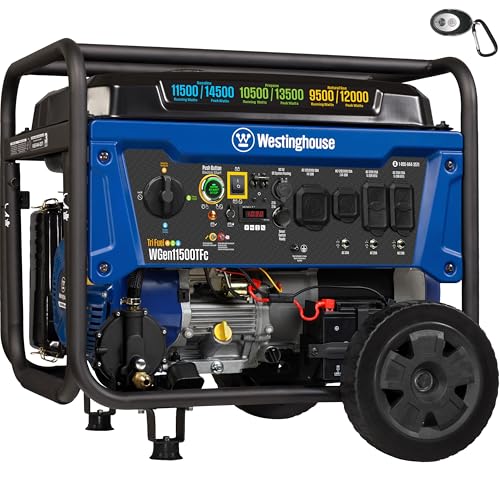
- Up to 11,500 running watts on gasoline
- Runs on gasoline, propane, or natural gas
- Low THD and transfer-switch ready
Best For: Large-home backup with flexible fuel options
Best Permanent Standby Package

- 20kW on propane and 18kW on natural gas
- Includes a 200-amp automatic transfer switch
- PowerBoost supports large starting loads
Best For: Permanent whole-home standby installations
Best Dual-Fuel Portable Backup
Westinghouse 14,500W Dual-Fuel Generator

- Up to 11,500 running watts on gasoline
- Uses gasoline or propane
- Remote electric start and transfer-switch ready
Best For: High-output portable residential backup
Best Connected Whole-Home Protection
Generac 22kW Home Standby Generator

- 22kW whole-house backup output
- Built-in cellular monitoring and control
- Fully enclosed, weather-activated design
Best For: Connected automatic backup for the entire home
Best Portable Power Pick
DuroStar DS13000MX Dual-Fuel Generator

- 13,000-watt peak output with 10,500 running watts
- Gasoline or propane operation
- Electric start, CO shutdown, and transfer-switch-ready 50A outlet
Best For: Portable home, job-site, and RV backup power
Best Connected Standby Value
Generac 14kW Whole Home Generator

- Automatic outage detection and whole-home backup
- Built-in cellular monitoring through Mobile Link
- Oil sensing and cold-start support for readiness
Best For: Connected residential standby protection
Best High-Capacity Standby System
Generac 22kW with Transfer Switch

- 22,000 watts for broad whole-home coverage
- Includes an automatic 200-amp transfer switch
- Cellular monitoring and five-year limited warranty
Best For: Large homes needing high-capacity automatic backup
Maximum-Capacity Choice
Generac 28kW Whole Home Generator
- 28,000 watts for extensive whole-home coverage
- Cellular Mobile Link monitoring and control
- Five-year limited warranty
Best For: Large homes with substantial backup-power demands
Complete Midrange Package
Generac 14kW Generator with Transfer Switch
- 14,000 watts of residential backup power
- Includes a 200-amp automatic transfer switch
- Supports cellular monitoring and energy-ecosystem integration
Best For: Homeowners seeking a convenient mid-capacity package
Balanced Power Pick
Generac 18kW Whole Home Generator
- 18,000 watts for whole-home backup
- Natural gas or propane ready
- Cellular monitoring with energy-ecosystem compatibility
Best For: Homes needing a balanced step up from 14kW
Best Tri-Fuel Flexibility – Westinghouse 14,500W Tri-Fuel Generator
For shoppers comparing home standby generators, this Westinghouse model offers substantial portable backup capacity with three fuel options. It produces up to 11,500 running watts on gasoline, 10,500 on propane, or 9,500 on natural gas, making it a flexible choice for larger homes.
Best For: Homeowners who want high-output backup power with gasoline, propane, and natural gas flexibility.
Pros:
- High output supports larger household loads and portable power needs.
- Tri-fuel operation provides added fuel flexibility during outages.
- Low THD, automatic voltage regulation, and durable copper windings help support sensitive electronics.
- Runs up to 19 hours on its 9.5-gallon gasoline tank.
Cons:
- At 230 pounds, it is a substantial portable generator.
- Open-frame construction is less enclosed than a traditional whole-home standby unit.
- Natural gas output is lower than gasoline and propane output.
This is a strong option when fuel versatility and high wattage matter more than a fully enclosed, permanently installed design. Its electric start, remote key fob, transfer-switch readiness, and three-year limited warranty add practical convenience.
Best Permanent Standby Package – Kohler 20kW Standby Generator
This Kohler is designed for shoppers seeking a permanent home standby generator rather than a portable unit. It delivers 20kW on liquid propane or 18kW on natural gas and includes a 200-amp service-entrance-rated automatic transfer switch for automatic outage response.
Best For: Homeowners who want an installed standby system with automatic transfer and strong whole-home capacity.
Pros:
- Automatically restores power in about 10 seconds.
- Includes a 200-amp outdoor-rated automatic transfer switch.
- PowerBoost technology helps start large loads such as central air conditioners.
- Five-year limited warranty and a commercial-grade Kohler Command PRO engine.
Cons:
- Heavy 485-pound design may require professional installation planning.
- Natural gas output is rated at 18kW, below its 20kW propane rating.
- The supplied specifications list no runtime figure.
With its included transfer switch, fast automatic response, and large-load starting support, this Kohler package is suited to a planned permanent installation. Its dual-fuel design also allows switching between natural gas and liquid propane in the field.
Best Dual-Fuel Portable Backup – Westinghouse 14,500W Dual-Fuel Generator
This Westinghouse gives home backup shoppers a high-output portable alternative to traditional home standby generators. It supplies up to 11,500 running watts on gasoline and 10,500 on propane, with remote electric start and transfer-switch readiness for residential backup use.
Best For: Homeowners who need powerful portable backup with a choice between gasoline and propane.
Pros:
- High 11,500-watt gasoline running output supports substantial household loads.
- Dual-fuel operation offers gasoline or propane flexibility.
- Low THD is designed to support sensitive electronics.
- Up to 19 hours of gasoline runtime and a built-in fuel gauge.
Cons:
- Its 230-pound weight makes relocation more demanding.
- It is an open-frame portable generator rather than a fully enclosed standby system.
- Propane output and runtime are lower than the gasoline figures.
This model makes sense when you want standby-level output without committing to a permanently installed generator. Remote starting, automatic voltage regulation, a CO sensor, and a three-year limited warranty round out its practical feature set.
Best Connected Whole-Home Protection – Generac 22kW Home Standby Generator
For homeowners prioritizing automatic whole-home coverage and remote oversight, this Generac delivers 22kW of backup power in a weather-activated standby design. Built-in cellular connectivity works with the Mobile Link app for performance monitoring, control, updates, and maintenance alerts.
Best For: Homeowners who want automatic whole-house backup with cellular monitoring and a fully enclosed design.
Pros:
- 22kW output is intended for whole-house backup coverage.
- Automatically detects outages and supplies backup power.
- Built-in cellular connectivity enables remote monitoring and control through Mobile Link.
- Oil-level sensing, low-oil shutdown, and a five-year limited warranty support readiness.
Cons:
- Mobile Link premium features require a subscription.
- At 451 pounds, it is a substantial permanent installation.
- The supplied specifications do not state a runtime figure or exact fuel-output ratings.
This Generac is a strong fit for buyers who value convenience beyond automatic startup. Its enclosed aluminum-and-steel design, cold-start support, and cellular alerts are especially useful when you want to check generator status while away from home.
Best Portable Power Pick – DuroStar DS13000MX Dual-Fuel Generator
For shoppers comparing home standby generators, the DuroStar DS13000MX is a flexible portable alternative for outage backup, job sites, and RV use. Its dual-fuel design, 13,000-watt peak output, electric start, and transfer-switch-ready 50-amp outlet make it practical when you want substantial power without a permanently installed system.
Best For: Homeowners who want portable whole-home backup capability and the option to run on gasoline or propane.
Pros:
- Produces up to 13,000 watts, with 10,500 watts of running power.
- Runs on gasoline or propane for added fuel flexibility.
- Includes remote electric start, CO detection with automatic shutdown, and a 50-amp outlet for transfer-switch connection.
- Rugged all-metal construction and an included wheel and handle kit support transport and durability.
Cons:
- At 220 pounds, it is substantially heavier than many smaller portable generators.
- It requires manual setup and transfer-switch connection rather than providing automatic standby operation.
- Its 8.3-gallon tank and fuel-powered design require fuel storage and routine attention.
The DS13000MX is a strong fit when portability and fuel choice matter more than fully automatic operation. Buyers should plan for its considerable weight and have a qualified professional handle any transfer-switch installation.
Best Connected Standby Value – Generac 14kW Whole Home Generator
Among home standby generators, the Generac 14kW model emphasizes automatic whole-home protection and connected monitoring. It is designed to detect an outage, provide 14,000 watts of backup power, and let you monitor performance through built-in cellular connectivity and the Mobile Link app.
Best For: Homeowners seeking automatic backup power with remote status updates and maintenance alerts.
Pros:
- Automatically detects outages and provides whole-house backup power.
- Built-in cellular connectivity supports remote monitoring and control through Mobile Link.
- Electronic fuel and ignition control is designed to optimize fuel use and emissions.
- Oil-level sensing, cold-start support, and a weather-conscious enclosure promote readiness.
Cons:
- Mobile Link premium features require a subscription.
- At 391 pounds, it is a substantial permanent-installation appliance.
- Installation and fuel-system requirements are more involved than those of a portable generator.
The 14kW Generac is a practical middle-ground choice for buyers who want automatic residential coverage and remote visibility without stepping up to the larger 22kW model. Confirm available fuel, installation requirements, and desired load coverage before purchasing.
Best High-Capacity Standby System – Generac 22kW with Transfer Switch
For larger electrical demands, the Generac 22kW is one of the more capable home standby generators in this lineup. It combines 22,000 watts of output with an automatic 200-amp transfer switch, whole-home outage protection, and cellular monitoring for a more complete permanently installed backup system.
Best For: Homeowners who need high-capacity whole-home coverage and want the transfer switch included.
Pros:
- Provides 22,000 watts of whole-home backup power.
- Includes an automatic 200-amp transfer switch.
- Built-in cellular capability supports remote monitoring, control, and maintenance alerts through Mobile Link.
- Fully enclosed construction, low-oil shutdown, and a five-year limited warranty support long-term ownership.
Cons:
- At 451 pounds, it requires a substantial installation location and professional handling.
- Mobile Link premium features require a subscription.
- The higher-capacity system may be more than smaller homes or lighter electrical loads require.
The 22kW Generac is the strongest choice here for buyers prioritizing capacity and an included automatic transfer switch. Its size and installation complexity make it best suited to planned residential installation rather than occasional portable use.
Maximum-Capacity Choice – Generac 28kW Whole Home Generator
For homeowners seeking high-output home standby generators, the Generac 28kW model is designed to provide whole-home backup power during an outage. Its 28,000-watt output, automatic operation, and natural gas or propane compatibility make it suited to homes with substantial power demands.
Best For: Large homes that need robust whole-house coverage and remote generator monitoring.
Pros:
- High 28kW output for broad whole-home coverage
- Built-in cellular connectivity supports Mobile Link monitoring and control
- Oil-level sensing and cold-start improvements support readiness
- Includes a five-year limited warranty and 24/7/365 customer support
Cons:
- Heavy 524-pound design may require substantial installation planning
- Mobile Link premium features require a subscription
- Its higher output may be more capacity than smaller homes need
The 28kW Generac is the strongest-capacity option in this group. Choose it when maintaining many household loads is a priority, but confirm fuel, installation, and site requirements before purchasing.
Complete Midrange Package – Generac 14kW Generator with Transfer Switch
The Generac 14kW is a practical option for shoppers comparing home standby generators and wanting an automatic transfer switch included. It delivers 14,000 watts of residential backup power, supports outdoor gas or propane use, and adds cellular monitoring for status updates and maintenance alerts.
Best For: Homeowners who want a streamlined mid-capacity package with a 200-amp automatic transfer switch.
Pros:
- Includes an automatic 200-amp transfer switch
- 14kW output provides whole-home backup capability
- Built-in cellular connectivity enables remote monitoring and control
- Compatible with ecobee by Generac thermostats and PWRcell battery systems
Cons:
- Lower output than the 18kW and 28kW alternatives
- Mobile Link premium features require a subscription
- At 391 pounds, it still requires careful installation planning
This package stands out for including the transfer switch, which can simplify the buying process. Its 14kW rating is best matched to homes whose essential loads fit comfortably within that capacity.
Balanced Power Pick – Generac 18kW Whole Home Generator
The Generac 18kW offers a middle ground for shoppers evaluating home standby generators. Its 18,000-watt output is intended for whole-home backup, while automatic operation, dual-fuel capability, and cellular monitoring add convenience during extended outages.
Best For: Homes needing more capacity than a 14kW unit without stepping up to the largest 28kW model.
Pros:
- 18kW output balances capacity and size within this lineup
- Natural gas or propane readiness provides fuel flexibility
- Cellular connectivity supports remote status checks and control
- Compatible with ecobee by Generac thermostats and PWRcell systems
Cons:
- Heavier and more demanding to install than the 14kW model
- Mobile Link premium features require a subscription
- Does not include a transfer switch in the supplied product details
The 18kW model is a sensible capacity step-up for households that may outgrow a 14kW generator. Compare the home’s expected loads and confirm transfer-switch requirements before ordering.
How We Picked These Home Standby Generators
We selected models across the main categories homeowners consider: permanently installed whole-home generators and high-output portable units designed for transfer-switch connection. Our comparison focuses on rated and peak output, fuel flexibility, starting method, transfer-switch compatibility, monitoring features, and the practical scope of backup coverage.
Because generator performance depends on installation, wiring, fuel supply, and load management, the highest wattage is not automatically the best choice. A properly sized system with appropriate professional installation can be safer and more useful than an oversized unit that is difficult or expensive to operate.
Quick Comparison
| Generator type | Best suited for | Main advantage | Important consideration |
|---|---|---|---|
| Portable dual-fuel | Essential circuits and flexible backup | Lower upfront cost and fuel choice | Manual setup, outdoor placement, and refueling |
| Portable tri-fuel | Homes with natural gas, propane, or gasoline access | Broad fuel flexibility | Usually requires a compatible transfer setup |
| 14–18kW standby | Smaller or moderately equipped homes | Automatic backup with lower operating demands | May require load prioritization |
| 20–28kW standby | Larger homes or broader whole-home coverage | More capacity for major appliances | Higher purchase, installation, and fuel costs |
Key Buying Factors for Home Standby Generators
Capacity and Load Requirements
List the appliances and systems you want to run simultaneously, including refrigerators, well pumps, furnaces, air conditioners, electric water heaters, and sump pumps. Account for startup surges from motors and compressors. An electrician or generator installer can calculate the required running and starting wattage and determine whether load management is needed.
Fuel Type and Runtime
Permanent standby units commonly use natural gas or liquid propane, while portable models may add gasoline. Natural gas is convenient where service remains available, but propane can be more dependable during some emergencies. Dual- and tri-fuel designs offer flexibility, although every fuel type has different output and runtime characteristics.
Automatic Transfer and Monitoring
An automatic transfer switch can detect an outage, start the generator, and restore selected circuits without manual intervention. Cellular or app-based monitoring is useful for checking status, maintenance alerts, and fault notifications when you are away from home. Confirm whether the transfer switch is included or sold separately.
Installation, Noise, and Maintenance
Standby generators require code-compliant placement, gas or propane work, electrical connections, and routine service. Portable generators still need safe outdoor operation, weather protection, grounding, and secure storage. Never run any gasoline- or propane-powered generator indoors, in a garage, or near doors and windows.
Who Should Buy Which Home Standby Generators?
- Choose a portable dual-fuel model if you want a comparatively affordable backup system and can connect it safely to selected circuits.
- Choose a tri-fuel portable model if access to natural gas, propane, and gasoline gives you valuable fuel redundancy.
- Choose a 14–18kW standby generator for automatic coverage of essential systems or a moderately sized home with sensible load management.
- Choose a 20–28kW standby generator if you want broader whole-home coverage, have substantial electrical demand, or need more capacity for large appliances and HVAC equipment.
Before buying, verify local permitting requirements, available fuel service, transfer-switch compatibility, warranty terms, and installer availability. Those details often matter as much as the generator’s headline wattage.