
Choosing your first 360-degree camera can be confusing: resolution, stabilization, waterproofing, app support, and editing workflows all affect how easy it is to get good results.
We compared 10 beginner-friendly 360-degree cameras, from established models such as the Insta360 X3 and X4 Air to compact wearable cameras and motorcycle-focused bundles, so you can match features to your shooting style and budget.
Best 10 Beginner-Friendly 360-Degree Cameras Picks for 2026
Best All-Around Pick

- 5.7K 360 video with easy reframing
- FlowState Stabilization and Horizon Lock
- Waterproof body with touchscreen
Best For: Beginners seeking a versatile action and 360 camera
Best Simple Budget Option

- 4K 360 video and 15MP photos
- Lightweight 4.6-ounce compact design
- App preview, editing, and sharing
Best For: Casual users with compatible older phones
Best Wearable Alternative

- 35 g wearable magnetic design
- 4K/30FPS video with 6-axis EIS
- Built-in screen and included mounts
Best For: Hands-free POV recording rather than true 360 capture
Best Lightweight High-Resolution Pick
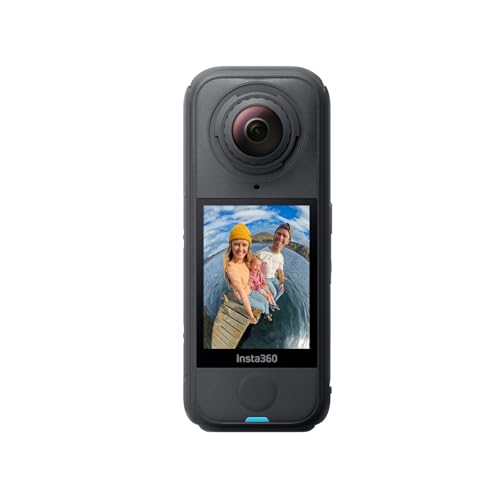
- 165 g body with 8K30fps 360 video
- Shoot first, frame later with AI editing
- Replaceable lenses and Horizon Lock
Best For: Beginners wanting portable, high-resolution 360 footage
Best Compact POV Pick
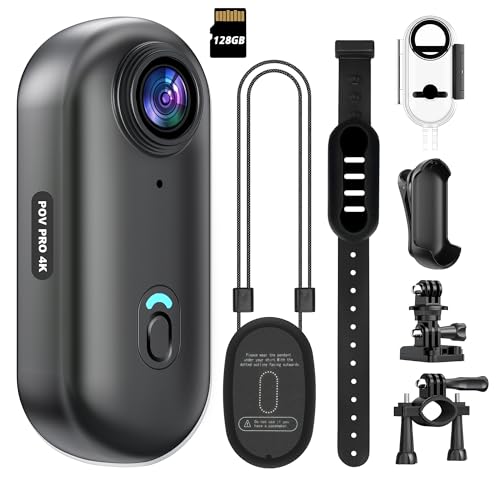
- 4K/30fps wide-angle recording
- Thumb-sized, multi-mount design
- Waterproof case and 128GB card included
Best For: Beginners wanting lightweight wearable POV footage
Best Premium 360 Option

- 8K/30fps 360-degree video
- 1-inch imaging and 120MP photos
- 105GB storage and invisible selfie stick
Best For: Travel and action creators wanting high-resolution 360 capture
Best Simple Wearable Pick

- Lightweight 26-gram wearable design
- 120-degree lens with swivel clip
- Records while charging for up to 120 minutes
Best For: Casual hands-free POV recording without wireless setup
Best All-Around Value
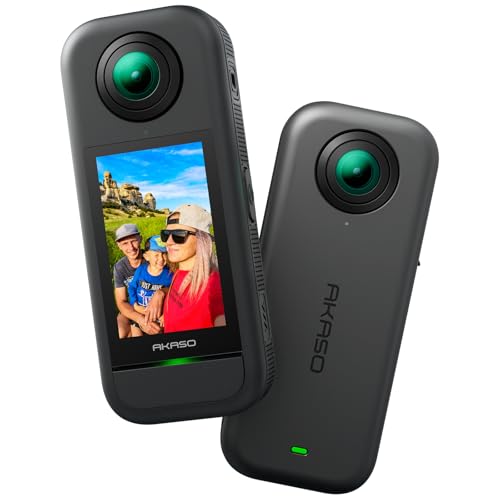
- 5.7K 360-degree video and 72MP photos
- SuperSmooth stabilization with Horizon Steady
- AI tracking and shoot-first, frame-later workflow
Best For: Beginners wanting versatile 360-degree action footage
Best Wearable Option
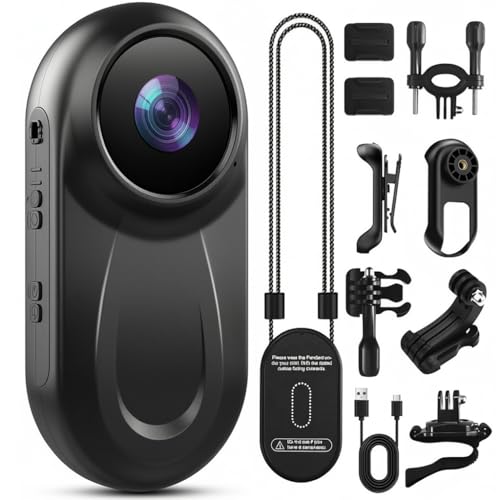
- 26-gram wearable design
- 360-degree rotatable mount with 120-degree lens
- Records while charging and supports up to 512GB
Best For: Compact hands-free POV recording
Best for Motorcycle Use
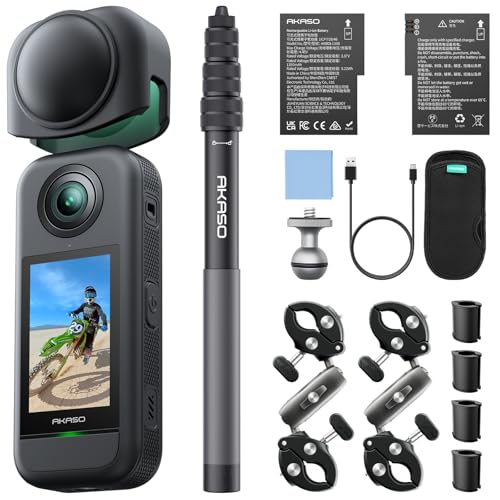
- 5.7K 360-degree video with dual 48MP sensors
- Horizon Steady and SuperSmooth stabilization
- Includes an invisible selfie stick
Best For: Beginner riders filming stabilized 360-degree action
Best All-Around Pick – Insta360 X3
For beginners who want a versatile entry into beginner-friendly 360-degree cameras, the Insta360 X3 combines straightforward reframing tools with strong action-camera features. Its 5.7K 360 capture, touchscreen, stabilization, and waterproof design make it practical for travel, sports, and vlogging.
Best For: Beginners who want one camera for 360 video, wide-angle footage, action sports, and easy mobile editing.
Pros:
- 5.7K 360 video supports choosing the viewing angle after recording.
- AI-powered app offers easy reframing and editing.
- FlowState Stabilization and Horizon Lock help keep footage smooth and level.
- Waterproof design and a 2.29-inch touchscreen suit outdoor use.
Cons:
- The camera weighs 200 g, making it less lightweight than some compact options.
- A MicroSD card is required for recording.
The X3 is a well-rounded starting point when you value simple editing and dependable stabilization alongside 360 capture. Its additional 4K single-lens mode also gives beginners a conventional shooting option as they learn.
Best Simple Budget Option – Samsung Gear 360 (2017)
The Samsung Gear 360 is a compact choice for beginners exploring beginner-friendly 360-degree cameras without needing advanced controls. It records 4K video and 15MP photos, while its companion app supports previewing, editing, and sharing.
Best For: Casual travelers, families, and Galaxy or compatible iPhone users who want a lightweight camera for everyday 360 photos and video.
Pros:
- Dual 180-degree lenses capture 360-degree video in 4K.
- Compact 4.6-ounce body is easy to carry and hold.
- App-based preview, editing, and social sharing can simplify the workflow.
- IP53 water-resistant rating adds protection for light exposure to moisture.
Cons:
- Compatibility is centered on listed older Galaxy phones, select iPhones, and Windows or Mac software.
- Its 4K resolution is lower than newer 5.7K and 8K 360 cameras.
- IP53 water resistance is not the same as waterproofing.
The Gear 360 remains appealing for uncomplicated, casual 360 capture, especially if you already use a supported device. Check compatibility before buying, since the supplied list focuses on older phones and operating systems.
Best Wearable Alternative – 4K Mini Body Camera
Although it is a wide-angle POV camera rather than a true 360-degree model, this mini body camera may suit beginners comparing beginner-friendly 360-degree cameras for hands-free recording. Its tiny magnetic design, built-in screen, 4K video, and included mounting accessories make setup approachable.
Best For: Beginners who prioritize wearable first-person footage for cycling, skiing, cooking, hiking, and social video rather than spherical 360 capture.
Pros:
- Ultra-light 35 g design supports comfortable wearable use.
- 4K/30FPS recording and 6-axis EIS help produce clear, steadier POV footage.
- Built-in 1.5-inch screen enables preview, playback, and selfie framing.
- Wi-Fi, Bluetooth, and multiple mounts support quick sharing and flexible placement.
Cons:
- It is a wide-angle body camera, not a 360-degree camera.
- The supplied notes do not specify a brand name beyond the acgiewo model listing.
- Stabilization is electronic rather than optical.
This is best treated as a lightweight alternative for straightforward POV clips, not as a substitute for reframable spherical footage. Its screen and accessories make it particularly approachable for hands-free beginners.
Best Lightweight High-Resolution Pick – Insta360 X4 Air
The Insta360 X4 Air is a strong option for beginners who want a modern, beginner-friendly 360-degree camera with plenty of room to grow. It pairs 8K recording and shoot-first, frame-later flexibility with automatic stabilization, replaceable lenses, and AI-assisted editing.
Best For: Beginners who want lightweight 8K 360 footage, creative reframing, and a camera that is easier to maintain over time.
Pros:
- 165 g body is notably lightweight for a 360 camera.
- 8K30fps 360 video provides high-resolution footage for reframing.
- FlowState Stabilization and 360-degree Horizon Lock support smooth, level video.
- Replaceable lenses can reduce the impact of lens damage.
Cons:
- It is not water resistant according to the supplied specifications.
- The invisible selfie-stick effect requires a selfie stick sold separately.
- Advanced 8K files and AI editing may require more storage and processing resources.
The X4 Air is compelling when portability and resolution matter more than waterproofing. Its shoot-first workflow is especially useful for beginners who prefer to record freely and select the best perspective later.
Best Compact POV Pick – TO 3S 4K Mini Action Camera
For shoppers seeking beginner-friendly 360-degree cameras, the TO 3S is a compact alternative for straightforward wide-angle POV recording rather than true 360-degree capture. Its thumb-sized body, Wi-Fi transfer, included 128GB card, and waterproof case make it approachable for cycling, vlogging, and outdoor use.
Best For: Beginners who want a lightweight, wearable action camera for hands-free wide-angle footage.
Pros:
- Records 4K video at 30fps with a wide 120-degree viewing angle.
- Compact 1.27-ounce design supports magnetic and multiple mounting options.
- IPX7 waterproof case is rated for underwater use up to 100 feet.
- Includes a 128GB memory card and offers Wi-Fi or cable file transfers.
Cons:
- It captures wide-angle footage, not full 360-degree video.
- Battery life is listed at up to 90 minutes with Wi-Fi off.
- Digital stabilization and a small 1-inch screen may limit in-camera control.
The TO 3S is easy to position and carry, making it a practical entry point for simple POV content. Choose it if portability and waterproofing matter more than reframing a full spherical view.
Best Premium 360 Option – DJI Osmo 360 Essential Combo
For beginners comparing beginner-friendly 360-degree cameras, the DJI Osmo 360 offers the most complete feature set here. It combines 8K 360-degree video, a 1-inch imaging system, built-in storage, stabilization, and an invisible selfie stick with app tools designed to simplify editing.
Best For: New 360 creators who want high-resolution travel and action footage with flexible reframing options.
Pros:
- Captures 8K/30fps 360-degree video and 120MP 360-degree photos.
- 1-inch imaging is designed to improve detail in low-light scenes.
- Includes 105GB built-in storage and up to 190 minutes of recording.
- Invisible selfie stick, magnetic mounting, and DJI Mimo editing tools support easy content creation.
Cons:
- The DJI Mimo app must be downloaded from DJI’s website rather than Google Play.
- Its advanced feature set may be more than casual users need.
- MicroSD storage is listed, while some recording features rely on the built-in memory.
The Osmo 360 is the clearest fit for buyers who specifically want true 360-degree capture and room to grow. Its guided app workflow and included accessories reduce setup friction, while the high-resolution output supports cropping and reframing after recording.
Best Simple Wearable Pick – Mini 1080P Body Camera
For shoppers browsing beginner-friendly 360-degree cameras, this mini body camera is best understood as a simple wearable wide-angle recorder, not a true 360-degree camera. Its 26-gram body, rotatable clip, built-in screen, and one-button-style wired workflow make it easy to use for everyday POV recording.
Best For: Beginners who want an inexpensive, lightweight camera for cycling, pets, hiking, or daily clip-on recording.
Pros:
- Small 26-gram body is designed for comfortable all-day wear.
- 120-degree lens and 360-degree swivel clip help capture adjustable POV angles.
- Records 1080P video and supports up to 120 minutes of recording.
- Can record while charging and accepts memory cards up to 512GB.
Cons:
- It does not record true 360-degree video; the clip rotates instead.
- No Wi-Fi or Bluetooth connection and no companion app are included.
- MicroSD storage is required but not included, and the camera is not water resistant.
This model keeps operation simple with USB-C transfers, a small status screen, and flexible mounting. It suits casual hands-free recording, but buyers needing waterproofing, wireless transfers, or immersive spherical footage should look elsewhere.
Best All-Around Value – AKASO 360 Standard Combo
For shoppers seeking beginner-friendly 360-degree cameras, the AKASO 360 Standard Combo offers high-resolution capture, automatic reframing, and stabilization features designed to simplify action footage. Its 5.7K video, AI subject tracking, and horizon leveling make it easier to record first and choose the best angles later.
Best For: Beginners who want versatile 360-degree action footage and editing flexibility.
Pros:
- Records 5.7K 360-degree video and 72MP 360-degree photos.
- 360° SuperSmooth stabilization and Horizon Steady help reduce shaky, tilted footage.
- AI subject tracking and shoot-first, frame-later tools simplify composition.
- Includes DNG8 RAW photo mode and access to AKASO 360 Studio.
Cons:
- Does not support HDR functionality.
- Video quality may be limited in low-light conditions.
- The invisible selfie stick effect is supported, but the selfie stick is not included.
This is a strong entry point for beginners who want a feature-rich 360 camera without immediately adding a gimbal. Keep in mind that a microSD card and selfie stick may require separate purchases.
Best Wearable Option – Mini 1080P Body Camera
While it is not a true 360-degree camera, this mini body camera may appeal to shoppers comparing beginner-friendly 360-degree cameras for hands-free recording. Its 360-degree rotatable mount, 120-degree wide-angle lens, and lightweight design make positioning straightforward for travel, biking, pets, and daily vlogging.
Best For: Beginners who prioritize compact, wearable POV recording over full 360-degree image capture.
Pros:
- Small 26-gram body is easy to clip onto clothing, bags, or gear.
- 360-degree swivel mount supports flexible positioning on helmets, handlebars, or magnetic surfaces.
- Records 1080p video with a 120-degree wide-angle lens.
- Supports recording while charging and up to 512GB microSD cards.
Cons:
- Captures wide-angle footage rather than full 360-degree video.
- A microSD card is required and is not included.
- Its 1080p resolution is lower than the 5.7K options in this roundup.
This camera is best viewed as a simple wearable alternative, not a substitute for immersive 360-degree capture. Choose it when low weight, quick mounting, and hands-free recording matter most.
Best for Motorcycle Use – AKASO 360 Motorcycle Combo
The AKASO 360 Motorcycle Combo is a practical choice among beginner-friendly 360-degree cameras for riders who want stabilized, immersive footage without needing advanced camera operation. It combines 5.7K recording, Horizon Steady, AI tracking, and an included invisible selfie stick for flexible motorcycle and action filming.
Best For: Beginner riders and action users who want a ready-to-mount 360-degree setup.
Pros:
- Captures 5.7K 360-degree video with dual 1/2-inch 48MP sensors.
- 360° SuperSmooth stabilization and Horizon Steady help keep footage smooth and level.
- Includes an invisible selfie stick for third-person perspectives.
- AI subject tracking and shoot-first, frame-later recording reduce the need to plan shots.
Cons:
- Does not include a microSD card.
- Its motorcycle-focused bundle may be more equipment than casual users need.
- Advanced editing features may require using the AKASO 360 Studio software.
For new 360-camera users who ride or regularly film action, this bundle offers useful stabilization and perspective tools in one package. The included selfie stick adds convenience, while the missing microSD card should be budgeted for separately.
How We Picked the Best Beginner-Friendly 360-Degree Cameras
We focused on the features that matter most when learning 360-degree video: straightforward controls, useful stabilization, dependable image quality, practical mounting options, and an editing workflow that does not demand advanced camera skills. We also considered whether each model is suited to travel, action sports, hands-free recording, or casual experimentation.
The selection includes true 360-degree cameras alongside compact body-camera-style products marketed for POV recording. These categories are not interchangeable: a 360 camera captures the surrounding scene for reframing later, while a wearable action camera generally records a forward-facing view.
Quick Comparison
| Best For | What to Prioritize | Models to Consider |
|---|---|---|
| General 360 shooting | High resolution, stabilization, app editing | Insta360 X3, Insta360 X4 Air, DJI Osmo 360 |
| Adventure and motorcycle use | Rugged design, waterproofing, secure mounts | AKASO 360 Motorcycle Combo, DJI Osmo 360 |
| Budget experimentation | Basic 360 capture and simple controls | Samsung Gear 360, AKASO 360 Standard Combo |
| Hands-free POV recording | Small size, clip or magnetic mounting, storage | Mini body-camera models |
Key Buying Factors for Beginner-Friendly 360-Degree Cameras
Resolution and Reframing Quality
360 footage spreads pixels across a spherical image, so higher resolution usually produces a sharper reframed result. A 5.7K camera can be a strong starting point, while 8K models offer more flexibility for cropping and exporting. For simple forward-facing clips, a compact 4K or 1080p camera may be sufficient.
Stabilization and Editing
Electronic stabilization helps smooth walking, cycling, and action footage. Look for a companion app with automatic reframing, horizon correction, and easy exports. These tools often matter more to beginners than advanced manual controls.
Durability, Battery, and Mounting
Check the exact waterproof rating and whether protection requires a case. Replaceable lenses, included mounts, clip systems, and magnetic attachments can significantly affect real-world convenience. Also confirm battery life, charging options, and microSD-card requirements before buying.
Compatibility and Storage
Verify that the camera’s app supports your phone and that your computer can handle large 360 files. High-resolution video consumes storage quickly, so budget for a fast, compatible memory card and enough phone or cloud space for edited exports.
Who Should Buy Which Beginner-Friendly 360-Degree Cameras?
Choose the Insta360 X3 if you want a well-rounded entry point with 5.7K 360 capture, strong stabilization, and a familiar action-camera format. The Insta360 X4 Air is better suited to buyers prioritizing a lightweight design and higher-resolution reframing potential.
Consider the DJI Osmo 360 or an AKASO 360 bundle when action use, mounting accessories, or outdoor recording is central to your plans. The Samsung Gear 360 may appeal to shoppers seeking a simpler or older-generation option, but check current phone and software compatibility carefully.
Finally, choose one of the mini body cameras only if you mainly want discreet, hands-free, forward-facing POV recording. They can be easier to wear, but they do not provide the same shoot-first, reframe-later flexibility as a genuine 360-degree camera.