
The best 360-degree cameras for home studios make it easier to capture a room, follow a speaker, or create immersive video without constantly repositioning a traditional camera. This roundup includes dedicated conference cameras, all-in-one meeting systems, and high-resolution 360 action cameras.
Use the buying guide below to match image quality, microphone performance, tracking, connectivity, and workflow compatibility to the way you record, stream, teach, or meet from home.
Best 10 360-Degree Cameras for Home Studios Picks for 2026
Best Meeting Webcam
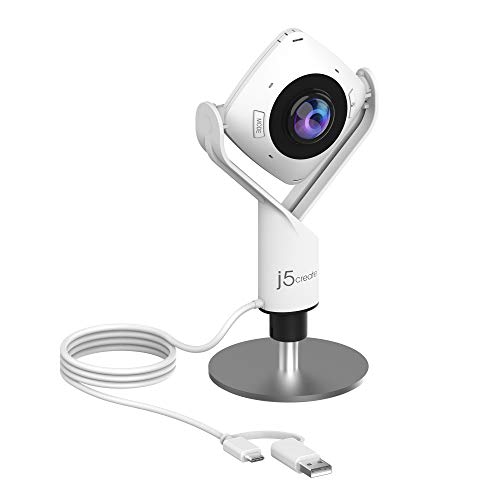
- 1080p video at 30 Hz
- Six flexible display modes
- Built-in omnidirectional microphone
Best For: Home-studio meetings and online classes
Best High-Resolution Camera

- Native 8K50fps 360 video
- Dual 1/1.1-inch sensors
- 10-bit color and AI editing
Best For: Immersive content and advanced studio capture
Best Security Coverage

- Six stitched 4K camera views
- Panorama Control and Hyperfocus
- Color Night Vision support
Best For: Panoramic monitoring of studios and business spaces
Best All-in-One Conference Unit
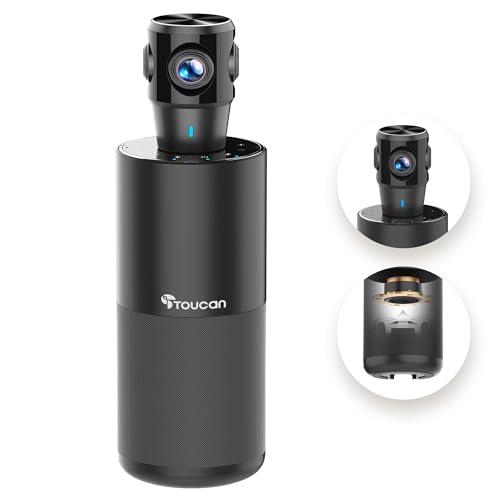
- 360° 1080p video
- Four noise-reduction microphones
- Built-in speaker and AI tracking
Best For: Small group calls in home studios
Best High-Resolution Pick

- 8K30fps capture with dual 1/1.28-inch sensors
- Stabilization, Horizon Lock, and AI reframing
- Replaceable lenses and up to 185-minute battery
Best For: Creators needing premium 360-degree quality for studio and outdoor work
Best All-in-One Studio Setup
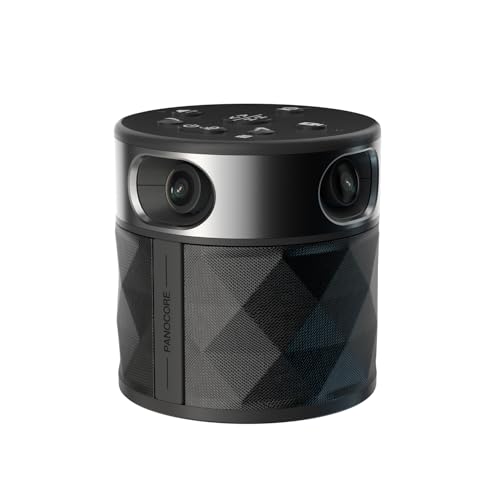
- Integrated 360-degree cameras, speaker, and microphones
- Auto-speaker focus with 360-degree and dual 180-degree modes
- Plug-and-play support plus local MicroSD recording
Best For: Home studios focused on meetings, interviews, and collaboration
Best Value Action-Camera Option

- 5.7K 360 Active HDR and 4K single-lens video
- AI reframing with FlowState Stabilization and Horizon Lock
- Waterproof, compact, and equipped with a touchscreen
Best For: Creators seeking a flexible 360-degree camera for studio and mobile content
Best for Hybrid Meetings

- 1080p 360-degree video with 18-foot audio pickup
- Automatically tracks and frames speakers
- Plug-and-play support for major meeting platforms
Best For: Hybrid meetings and collaborative home-studio sessions
Best for High-Resolution Capture

- 60-megapixel 360-degree stills and 5.7K video
- RAW capture supports professional editing
- Touchscreen, GPS, replaceable battery, and external memory
Best For: High-detail studio content and virtual tours
Best for Low-Light Studio Content

- Dual 1-inch sensors with 23-megapixel photos and 4K video
- RAW, manual exposure, and low-light shooting modes
- 51GB storage and four-channel spatial audio
Best For: Premium immersive content and controlled studio shooting
Best Meeting Webcam – j5create 360° All Around
For shoppers comparing 360-degree cameras for home studios, the j5create JVCU360 is a focused video-conferencing option with 1080p video, a built-in omnidirectional microphone, and six display modes. Its USB UVC/UAC plug-and-play design makes it practical for meetings, classes, and collaborative calls.
Best For: Home-studio meetings, online classes, and group video calls where flexible viewing modes matter.
Pros:
- Offers six shooting and display modes, including full view, dual host, single view, and wide angle.
- Captures Full HD 1080p video at 30 Hz.
- Includes a high-fidelity omnidirectional microphone and USB-C connectivity.
- Works with popular apps such as Zoom, Teams, Meet, Skype, and Slack.
Cons:
- Firmware updates or app permissions may be required for optimal operation.
- Fixed focus and no image stabilization limit camera flexibility.
- It is designed primarily for conferencing rather than cinematic studio recording.
The JVCU360 is a sensible plug-and-play choice when your home studio doubles as a meeting space. Its 1080p ceiling and conferencing-first controls are less suited to creators seeking high-resolution production footage.
Best High-Resolution Camera – Insta360 X6
The Insta360 X6 is the most production-oriented option here for shoppers seeking 360-degree cameras for home studios. It combines dual 1/1.1-inch sensors, native 8K50fps 360 video, 10-bit color, stabilization, and AI-assisted editing for detailed immersive footage.
Best For: Creators who want high-resolution 360 footage, reframing flexibility, and a portable camera for studio or on-location work.
Pros:
- Records native 8K50fps 360 video using dual 1/1.1-inch sensors.
- Supports 10-bit color with selectable profiles and filters.
- AI Director and Auto Edit 2.0 can simplify editing workflows.
- Provides up to 140 minutes of runtime when recording at 8K30fps.
Cons:
- Its action-camera design may be more than needed for straightforward video calls.
- MicroSD storage is required for recording.
- The included warranty is listed as one year.
Choose the X6 when image quality and creative flexibility take priority over simple webcam convenience. Its 8K capture, 10-bit color, and reframing tools give home-studio creators substantially more room to edit and repurpose footage.
Best Security Coverage – Ring Elite 360 4K
The Ring Elite 360 4K is a security-focused alternative among 360-degree cameras for home studios. Its six stitched 4K cameras provide a panoramic view, while Panorama Control and Hyperfocus help users inspect broad scenes and zoom in on important details.
Best For: Business or studio owners who need continuous panoramic monitoring rather than creator-focused recording.
Pros:
- Uses six 4K cameras to create a 360° panoramic view.
- Panorama Control lets you explore different areas of the scene.
- Hyperfocus adds clarity and detail when zooming in.
- Supports color Night Vision and automatic black-and-white viewing in total darkness.
Cons:
- It is built for security monitoring, not general-purpose studio content creation.
- Some intelligent detection features require a separately sold subscription.
- Viewing resolution can vary with connectivity, device, and viewing format.
The Ring Elite 360 4K makes sense when coverage and monitoring are the main goals. For filming presentations or creative projects, a dedicated camera such as the Insta360 X6 is likely a better fit, while Ring is stronger for property awareness.
Best All-in-One Conference Unit – TOUCAN SC360
The TOUCAN SC360 combines a 360° webcam with four noise-reduction microphones and a speaker, making it a practical pick for home studios used for group calls. It offers 1080p video, plug-and-play USB operation, AI tracking, and compatibility with major conferencing platforms.
Best For: Small home-studio meetings where integrated video, microphones, and speaker hardware reduce setup clutter.
Pros:
- Captures a 360° view at up to 1080p resolution.
- Includes four microphones with noise reduction and a built-in speaker.
- Supports plug-and-play use with USB and includes a Type-C-to-USB-A adapter.
- Works with Zoom, Microsoft Teams, Google Voice, and other conferencing software.
Cons:
- It does not offer the 8K resolution or advanced color features of a dedicated creator camera.
- Its 1.28 kg weight makes it less portable than compact handheld models.
- Some listed specifications are broad, so real-world results may depend on the connected device and app.
The SC360 is appealing if you want one compact conference unit instead of separate camera, microphone, and speaker components. It is best treated as a meeting solution, with 1080p capture suited to calls rather than high-end studio production.
Best High-Resolution Pick – Insta360 X5 Motorcycle Bundle
The Insta360 X5 is a strong choice among 360-degree cameras for home studios when you want high-resolution footage, flexible reframing, and reliable performance beyond the studio. Its 8K capture, low-light processing, stabilization, and built-in audio features make it useful for recording demonstrations, tutorials, and immersive content.
Best For: Creators who want premium 360-degree video quality and may also use the camera for action, travel, or outdoor shooting.
Pros:
- Records 8K30fps 360-degree video with dual 1/1.28-inch sensors.
- FlowState Stabilization and 360-degree Horizon Lock help keep footage smooth and level.
- Includes an invisible selfie stick effect, AI-assisted reframing, and InstaFrame mode.
- Offers replaceable lenses, waterproofing to 49 feet, and up to 185 minutes of battery life.
Cons:
- Its action-camera design and Motorcycle Bundle may include features beyond a typical home-studio setup.
- A MicroSD card is sold separately.
The X5 is the most capable option here for creators who prioritize image quality and versatility. It is especially appealing if your studio work occasionally expands into vlogging, travel, or action footage.
Best All-in-One Studio Setup – PANOCORE360 Meeting Camera
The PANOCORE360 is a practical option among 360-degree cameras for home studios, particularly for video calls, interviews, and collaborative content. It combines four cameras with a speaker and three-microphone array, while USB plug-and-play operation keeps the setup simple.
Best For: Home studios used for remote meetings, presentations, interviews, and small-group recordings.
Pros:
- Combines 360-degree video, a speaker, and a three-microphone array in one compact unit.
- Provides auto-speaker focus, full-room context, and dual 180-degree widescreen modes.
- Offers AI voice processing with a stated pickup range of up to 10 feet.
- Supports driver-free use with Zoom, Teams, Webex, and Google Meet, plus local MicroSD recording.
Cons:
- Outputs 1080p video, despite capturing and processing a 4K 360-degree view internally.
- Designed for small to medium meeting rooms rather than specialized cinematic production.
- It is not water resistant.
Choose the PANOCORE360 if convenience and integrated audio matter more than maximum video resolution. Its meeting-focused design can reduce the number of devices and cables needed in a home studio.
Best Value Action-Camera Option – Insta360 X3
The Insta360 X3 offers a balanced entry point for 360-degree cameras for home studios, combining 5.7K 360-degree recording with a conventional 4K single-lens mode. Its touchscreen, waterproof construction, stabilization, and AI-powered reframing make it flexible for tutorials, vlogs, and studio content that may also be filmed on location.
Best For: Creators who want one compact camera for 360-degree studio experiments, vlogging, travel, and action footage.
Pros:
- Records 5.7K 360 Active HDR video and supports reframing in the Insta360 app.
- Includes 4K30fps wide-angle capture and a 2.7K60fps 170-degree MaxView mode.
- FlowState Stabilization and Horizon Lock help produce smooth, level footage.
- Waterproof design, a 2.29-inch touchscreen, and a compact 200-gram body support portable use.
Cons:
- Its 5.7K 360-degree resolution is lower than the X5’s 8K output.
- The supplied package includes the camera and basic accessories but no listed selfie stick.
The X3 is a versatile middle-ground choice for creators who want 360-degree capability without committing to the newest high-resolution model. Its single-lens mode also makes it useful when a conventional wide-angle shot is preferable.
Best for Hybrid Meetings – Meeting Owl 3
For home studios used for remote meetings, the Owl Labs Meeting Owl 3 is a practical choice among 360-degree cameras for home studios. It combines 1080p 360-degree video with 360-degree audio pickup up to 18 feet and automatically focuses on the active speaker.
Best For: Hybrid meetings, teaching, interviews, and collaborative home-studio sessions where automatic speaker framing matters.
Pros:
- Captures 360-degree 1080p video and audio pickup up to 18 feet.
- AI-driven speaker tracking automatically highlights in-room participants.
- Plug-and-play USB setup works with Teams, Zoom, Google Meet, Webex, and other web-based platforms.
- Can be paired with additional Owl Labs devices for larger spaces.
Cons:
- Its 1080p video resolution is lower than the dedicated Ricoh cameras in this roundup.
- Designed primarily for conferencing rather than high-resolution creative capture.
- Requires a laptop or compatible host device for use.
The Meeting Owl 3 is the most meeting-focused option here. Choose it when hands-free speaker tracking, room coverage, and simple conferencing setup are more important than maximum image detail.
Best for High-Resolution Capture – Ricoh Theta X
The Ricoh Theta X is a strong option for creators comparing 360-degree cameras for home studios and wanting detailed stills as well as immersive video. It records 60-megapixel 360-degree photos, 5.7K video, and supports RAW workflows for more extensive editing.
Best For: Studio creators, virtual-tour makers, and photographers who need high-resolution 360-degree images and flexible capture controls.
Pros:
- Captures 60-megapixel 360-degree still images and 5.7K video at 30 fps.
- Supports HDR-DNG RAW recording for professional editing.
- Built-in GPS can embed location data in photos and support mapping applications.
- Interchangeable battery, expandable memory, and a 2.25-inch color touchscreen support extended standalone shooting.
Cons:
- Some 4K recording modes have restrictions when wireless LAN is enabled or when using certain power configurations.
- Its professional feature set may be more than needed for basic video calls.
- No compatible mounting is listed in the supplied specifications.
The Theta X offers the strongest resolution and most direct camera controls of these three products. It is the better fit when your home studio doubles as a production space for virtual tours, photography, or edited 360-degree video.
Best for Low-Light Studio Content – Ricoh Theta Z1
For creators prioritizing image quality and immersive production, the Ricoh Theta Z1 is a refined choice among 360-degree cameras for home studios. Its dual 1-inch CMOS sensors, 4K video, RAW support, spatial audio, and 51GB of internal storage make it suited to controlled studio work.
Best For: Premium immersive content, virtual tours, low-light shooting, and creators who want built-in storage and manual control.
Pros:
- Dual 1-inch CMOS sensors support 23-megapixel photos, 4K video, and noise reduction.
- Offers RAW capture, manual exposure control, and multiple shooting modes including low light and night.
- Includes 51GB of internal storage and a four-channel microphone for spatial audio capture.
- Bundle includes a lens cap that also functions as a tabletop stand, plus a soft case and cleaning cloth.
Cons:
- 4K video resolution is lower than the Theta X’s listed 5.7K video mode.
- The 0.93-inch display is small for previewing and adjusting settings.
- It is not water resistant and uses fixed focus.
The Theta Z1 is the premium-oriented choice for a home studio, particularly when sensor size, low-light modes, RAW files, and audio quality matter. Its included tabletop stand accessory also makes simple stationary setups easier.
How We Picked the Best 360-Degree Cameras for Home Studios
We grouped these cameras by their most useful studio roles rather than treating every 360-degree model as interchangeable. Meeting cameras were evaluated for speaker tracking, microphone pickup, speaker quality, video-conferencing compatibility, and setup simplicity. Capture-focused cameras were considered for resolution, stabilization, low-light potential, battery life, waterproofing, storage, and the flexibility to reframe footage later.
We also looked at connection methods and practical workflow details. A USB conference camera may be ideal for Zoom or Google Meet, while an action or professional 360 camera may require a phone or desktop app for editing and exporting. The right choice depends as much on your production habits as on headline resolution.
Quick Comparison
- Best for simple video meetings: Choose a dedicated all-in-one conference camera with built-in microphones, speakers, and automatic speaker focus.
- Best for content creation: Consider an Insta360, Ricoh Theta X, or Ricoh Theta Z1 model when reframing and immersive video quality matter most.
- Best for active or outdoor studio content: A rugged, waterproof action camera with stabilization and replaceable lenses offers more flexibility.
- Best for business installations: A PoE-compatible system can provide cleaner cable management and more dependable permanent operation.
Key Buying Factors for 360-Degree Cameras for Home Studios
Resolution and Reframing
Higher capture resolution preserves detail when you crop a 360-degree scene into a conventional horizontal or vertical video. If you mainly use the camera for calls, 1080p output may be sufficient; creators who reframe frequently should prioritize 5.7K, 8K, or higher capture modes.
Microphones, Tracking, and Room Coverage
For meetings, microphone pickup and voice tracking often matter more than maximum video resolution. Look for noise reduction, beamforming or multi-microphone arrays, automatic speaker focus, and coverage suited to your room size. Check whether tracking is genuinely automatic or depends on compatible software.
Connectivity and Software
Confirm support for your computer, operating system, and preferred apps before buying. USB plug-and-play models are easiest for home studios, while wireless or mobile-first cameras may offer more creative control but add setup steps. HDMI, USB, Wi-Fi, Bluetooth, and PoE each serve different workflows.
Power, Storage, and Physical Design
Consider whether you need continuous AC power, a replaceable battery, internal storage, a memory card, or a compact desktop footprint. A waterproof or rugged body is useful for mobile production, but a conference camera may be better optimized for permanent placement near a monitor.
Who Should Buy Which 360-Degree Cameras for Home Studios?
Remote professionals and small teams should favor an all-in-one meeting camera with reliable audio, automatic framing, and broad conferencing support. Teachers, presenters, and streamers may prefer AI tracking and a wide field of view that keeps them visible while they move around a room. Video creators and virtual-tour makers should prioritize high-resolution 360 capture, stabilization, lens quality, and strong reframing software. Traveling or action-focused creators will benefit from waterproofing, durable construction, replaceable lenses, and long battery life. Finally, business users building a fixed studio or conference installation should weigh PoE support, mounting options, security, and dependable long-term operation ahead of portability.