
The right wide-angle lens can fit more of a landscape, room, city street, or night sky into one frame without forcing you to step backward. This roundup covers options for Canon and Sony cameras, full-frame and APS-C systems, plus smartphone kits.
Use the comparison and buying advice below to match focal length, aperture, autofocus, mount, and portability with the way you shoot.
Best 10 Wide-Angle Camera Lenses Picks for 2026
Best for Canon DSLR Landscapes

- 10-22mm ultra-wide zoom range
- Fast USM AF with manual override
- Focuses as close as 9.5 inches
Best For: Canon EOS DSLR landscapes, interiors, and architecture
Best Value Canon Ultra-Wide

- 10-18mm ultra-wide zoom range
- Optical image stabilization
- Quiet STM autofocus for video
Best For: Canon EOS landscapes, interiors, travel, and video
Best for Smartphone Travel Photos

- 0.45x wide-angle phone attachment
- Includes 15x macro lens and LED light
- Universal clip with travel case
Best For: Phone travel photos, landscapes, selfies, and close-ups
Best Mirrorless Pick
Canon RF-S10-18mm F4.5-6.3 IS STM

- Ultra-wide 10-18mm zoom for Canon RF-S APS-C
- Optical stabilization and STM autofocus
- Compact design for vlogging and travel
Best For: Canon EOS APS-C mirrorless users
Best Phone Accessory Kit
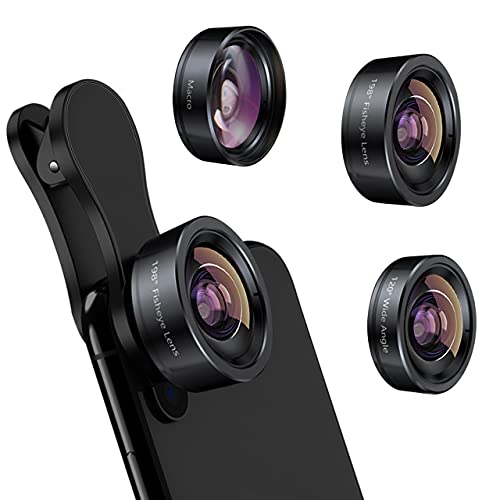
- 120° wide-angle, 198° fisheye, and 20X macro lenses
- Universal clip for many smartphones
- Portable kit with storage bag
Best For: Casual smartphone photography and creative effects
Best DSLR Value
Sigma 10-20mm f/4-5.6 EX DC HSM

- 16-32mm equivalent range on Canon APS-C
- Ultrasonic autofocus with full-time manual focus
- 77mm filter thread and included lens hood
Best For: Canon APS-C DSLR landscape and interior photography
Full-Frame Ultrawide Pick

- 14mm full-frame prime with an 83.6° viewing angle
- Autofocus with f/2.8 maximum aperture
- Canon EF mount with pouch and one-year warranty
Best For: Canon EF photographers needing an autofocus ultrawide prime
Accessory Bundle Pick

- Includes a 0.43x wide-angle attachment
- Adds telephoto, filters, close-up lenses, and hoods
- Designed for compatible 58mm Canon DSLR lenses
Best For: Beginners wanting a versatile Canon accessory bundle
Creative Fisheye Pick
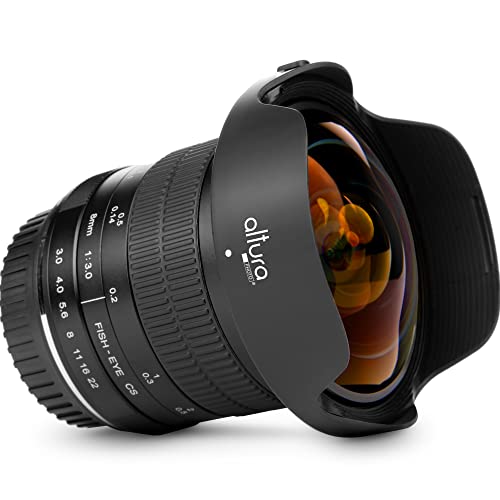
- 8mm fisheye lens with a 180° viewing angle
- Manual focus and no image stabilization
- Includes removable hood and protective case
Best For: Canon APS-C DSLR users seeking dramatic fisheye views
Best for Canon DSLR Landscapes – Canon EF-S 10-22mm USM
The Canon EF-S 10-22mm f/3.5-4.5 USM is a flexible choice among wide-angle camera lenses for Canon EOS digital SLR users. Its 10-22mm zoom range suits landscapes, architecture, and other scenes where a broad perspective is useful, while USM autofocus and full-time manual focus support practical everyday shooting.
Best For: Canon EOS DSLR photographers who need a versatile ultra-wide zoom for landscapes, interiors, and close subjects.
Pros:
- 10-22mm zoom range provides a broad 107.5-degree angle of view.
- USM autofocus offers fast AF with full-time manual-focus override.
- Focuses as close as 9.5 inches for dramatic foreground compositions.
- Circular aperture design helps produce natural-looking highlights.
Cons:
- Maximum aperture varies from f/3.5 to f/4.5 rather than remaining constant.
- It is not water resistant.
- Designed for Canon EF-S-compatible DSLR use rather than a universal mount.
This lens is a strong fit when you want zoom flexibility without giving up an especially wide starting point. Its close-focusing ability adds creative options, though photographers needing stronger low-light performance may prefer a faster lens.
Best for APS-C Vlogging – Sony E 11mm F1.8
The Sony E 11mm F1.8 is a compact prime among wide-angle camera lenses, made for Sony APS-C and Super35 E-mount cameras. Its 11mm perspective helps fit more into the frame at arm’s length, while the bright f/1.8 aperture and quiet autofocus make it particularly appealing for creators who shoot both stills and video.
Best For: Sony APS-C users creating vlogs, handheld video, travel content, and wide environmental portraits.
Pros:
- Bright f/1.8 aperture supports low-light shooting and background separation.
- Compact 10.56-ounce design pairs well with smaller APS-C cameras.
- Fast, precise, quiet autofocus is suited to stills and movies.
- Internal focusing keeps the lens length constant and helps reduce focus breathing.
Cons:
- Prime design provides no zoom flexibility.
- Compatible with Sony E-mount APS-C cameras rather than a broad range of systems.
- It is not water resistant.
Choose this lens when a wide view, bright aperture, and creator-friendly handling matter more than zoom range. It is especially well matched to handheld video and vlogging, where quiet tracking and a constant lens length are useful.
Best Value Canon Ultra-Wide – Canon EF-S 10-18mm STM
The Canon EF-S 10-18mm f/4.5-5.6 IS STM offers an accessible way to add wide-angle camera lenses to a Canon EOS kit. Its 10-18mm zoom range covers wide landscape and interior views, while optical image stabilization and a stepping motor help with handheld photography and quieter video autofocus.
Best For: Canon EOS photographers seeking an affordable wide zoom for landscapes, interiors, travel, and video.
Pros:
- 10-18mm range gives a useful ultra-wide perspective.
- Optical image stabilization supports steadier handheld shooting.
- STM autofocus is designed for quiet video operation.
- Focuses as close as 0.72 feet.
Cons:
- Maximum aperture is a relatively modest f/4.5-5.6.
- Shorter 18mm telephoto end offers less reach than a 10-22mm zoom.
- It is not water resistant.
This lens makes sense for buyers who prioritize a broad view, stabilization, and quiet focusing in a lightweight Canon setup. Its slower aperture is a tradeoff, but the combination remains practical for daylight landscapes, interiors, and video.
Best for Smartphone Travel Photos – Xenvo Pro Lens Kit
The Xenvo Pro Lens Kit is a portable alternative to interchangeable wide-angle camera lenses for smartphone, tablet, and laptop users. It combines a 0.45x wide-angle attachment with a 15x macro lens, clip, rechargeable LED light, case, and lanyard, making it useful for travel, casual landscapes, selfies, and close-up subjects.
Best For: Smartphone photographers who want a convenient wide-angle attachment plus macro and supplemental lighting accessories.
Pros:
- 0.45x TruView lens is designed to capture 45% more of the scene.
- Universal clip works with smartphones, tablets, and laptops, including iPhone, Samsung Galaxy, and Google Pixel models.
- 15x macro lens adds close-up shooting capability.
- Rechargeable LED light offers three brightness settings.
Cons:
- Clip-on optics are less integrated than a dedicated camera lens.
- The macro lens is intended for subjects about one-half inch away, not distant zooming.
- Compatibility and framing can depend on the device camera and clip alignment.
This kit is best viewed as an accessory set for expanding a phone’s shooting options rather than a replacement for a dedicated interchangeable lens. The travel case, lanyard, macro attachment, and light make it a practical grab-and-go option.
Best Mirrorless Pick – Canon RF-S10-18mm F4.5-6.3 IS STM
For Canon EOS APS-C mirrorless users seeking wide-angle camera lenses, the Canon RF-S10-18mm offers an ultra-wide 16-29mm-equivalent range in a compact zoom. Its broad view is practical for vlogging, travel, landscapes, and tight interiors.
Best For: Canon RF-S APS-C users who prioritize handheld video, selfies, and versatile ultra-wide framing.
Pros:
- 10-18mm range provides a 16-29mm equivalent field of view on APS-C cameras.
- Optical image stabilization supports handheld shooting.
- STM autofocus and manual-focus magnification options suit video and close-up work.
- Compact 5.28-ounce design with a 49mm filter size.
Cons:
- F4.5-6.3 maximum aperture is not especially bright.
- Designed for Canon RF-mount mirrorless cameras, limiting compatibility.
- Not water resistant.
This is a strong choice when a lightweight Canon APS-C setup needs an expansive view without carrying a long selfie stick. Its variable aperture makes it less suited to low-light shooting than brighter lenses.
Best Phone Accessory Kit – KEYWING 3-in-1 Lens Kit
Among wide-angle camera lenses for smartphones, the KEYWING kit is a low-commitment way to experiment with broader compositions. It combines a 120° wide-angle lens with fisheye and macro lenses, attaching through a universal clip.
Best For: Smartphone users who want interchangeable wide, fisheye, and close-up effects in one portable kit.
Pros:
- Includes 120° wide-angle, 198° fisheye, and 20X macro lenses.
- Universal 3.6cm clip fits many iPhone, Samsung, and other smartphones.
- Lanthanide optical glass and aluminum shells are designed to reduce reflection and protect the lenses.
- Includes a storage bag and user manual.
Cons:
- Works best without a phone case.
- Phone zoom should not be used with the attached lens.
- Clip-on positioning may vary by smartphone model.
The KEYWING is most useful for casual creative shooting rather than precision optical work. Its interchangeable effects and broad compatibility make it convenient, but users should expect some setup adjustments between phones.
Best DSLR Value – Sigma 10-20mm f/4-5.6 EX DC HSM
The Sigma 10-20mm is one of the more traditional wide-angle camera lenses for Canon APS-C DSLRs. Its 15-30mm-equivalent range provides flexible coverage for landscapes, architecture, interiors, and other scenes where a broad perspective matters.
Best For: Canon APS-C DSLR photographers who want an established ultra-wide zoom with ring-type ultrasonic autofocus.
Pros:
- 10-20mm range delivers a 16-32mm equivalent view on Canon APS-C cameras.
- Ring-type ultrasonic AF motor supports autofocus with full-time manual focusing.
- 0.24m minimum focus distance helps with dramatic near-subject compositions.
- Accepts widely available 77mm filters and includes front and rear caps plus a lens hood.
Cons:
- F4-5.6 aperture is relatively slow for low-light shooting.
- Vignetting occurs on sensors larger than APS-C or 35mm SLR cameras.
- At 470g, it is less lightweight than compact mirrorless alternatives.
This Sigma makes sense for photographers using a compatible Canon APS-C DSLR who want broad coverage and conventional handling. Confirm the mount and sensor format before buying, especially if your camera is full frame.
Full-Frame Ultrawide Pick – Rokinon 14mm F2.8 AF
For photographers seeking wide-angle camera lenses for Canon full-frame DSLRs, the Rokinon 14mm F2.8 AF is a straightforward prime option. Its 14mm focal length, 83.6-degree angle of view, f/2.8 maximum aperture, and autofocus support suit expansive compositions while keeping operation flexible.
Best For: Canon EF shooters who want an autofocus 14mm prime for landscapes, architecture, and other broad scenes.
Pros:
- 14mm prime design provides a very wide perspective.
- Autofocus is paired with automatic and manual exposure control.
- f/2.8 maximum aperture and Ultra Multi-Coating support versatile shooting.
- Includes lens caps, pouch, instruction manual, and a one-year Rokinon warranty.
Cons:
- Designed for Canon EF DSLRs rather than Canon mirrorless mounts.
- Fixed 14mm focal length offers no zoom flexibility.
- At 1.1 pounds, it adds noticeable weight to a camera bag.
This is a practical choice when an expansive field of view and autofocus matter more than zoom range. Its fixed focal length makes it best suited to photographers comfortable composing around a single ultrawide perspective.
Accessory Bundle Pick – Big Mike's 58mm Lens Kit
For shoppers who want wide-angle camera lenses plus accessories in one package, this Big Mike’s kit combines a 0.43x wide-angle attachment with a 2.2x telephoto lens, filters, close-up filters, hoods, and caps. It is built around compatible 58mm-thread lenses, including the Canon EF-S 18-55mm lens listed in the product details.
Best For: Canon DSLR owners seeking an affordable multi-accessory kit for experimenting with wider, closer, and more distant shots.
Pros:
- Includes a 0.43x wide-angle lens for adding breadth and dimension.
- Bundles a 2.2x telephoto lens, filter set, close-up filters, and lens hoods.
- Compatible with a broad selection of listed Canon DSLR models and 58mm lenses.
- Multi-coated glass and a UV filter offer practical protection and glare reduction.
Cons:
- The wide-angle and telephoto components are attachments rather than standalone prime lenses.
- Compatibility depends on a 58mm filter thread and the listed lens models.
- The kit is not water resistant.
This bundle makes sense for beginners who value variety and included accessories over dedicated optical performance. Confirm your lens has the required 58mm compatibility before buying.
Creative Fisheye Pick – Altura Photo 8mm F3.0
The Altura Photo 8mm F3.0 is one of the more specialized wide-angle camera lenses in this roundup. Its manual-focus fisheye design delivers a 180-degree view on compatible Canon DSLR cameras, making it suited to dramatic, highly distorted perspectives rather than conventional wide-angle rendering.
Best For: Canon APS-C DSLR users creating creative fisheye, immersive, and exceptionally broad-angle images.
Pros:
- 180-degree angle of view creates an expansive fisheye perspective.
- Metal construction, an aspherical element, and multi-layer coating support the design.
- Compatible with Canon EF and EF-S DSLR mounts.
- Includes a removable hood and custom protective lens case.
Cons:
- Manual focus requires more hands-on operation.
- Full-frame cameras may show a circular image with black vignette borders.
- Not compatible with Canon mirrorless R or M cameras.
Choose this lens for its distinctive fisheye effect, not for natural-looking wide-angle lines. APS-C Canon DSLR users get the clearest fit, while full-frame owners should expect the stated circular-image behavior.
How We Picked These Wide-Angle Camera Lenses
We selected lenses across several common shooting needs rather than treating one specification as universally best. The lineup includes ultra-wide zooms for Canon DSLR and mirrorless systems, fast APS-C primes, full-frame autofocus options, fisheye lenses, and smartphone accessories. We considered focal-length coverage, maximum aperture, focusing system, sensor compatibility, portability, and the type of photographer each lens serves.
Compatibility is especially important: an EF, EF-S, RF-S, Sony E, or phone-specific accessory is not interchangeable without the appropriate camera body or adapter. Verify your mount and sensor format before ordering.
Quick Comparison
| Best For | Look For | Products In This Roundup |
|---|---|---|
| Canon APS-C DSLR landscapes and interiors | 10–22mm or 10–18mm zoom | Canon EF-S 10-22mm, Canon EF-S 10-18mm, Sigma 10-20mm |
| Canon APS-C mirrorless travel | Compact RF-S ultra-wide zoom | Canon RF-S 10-18mm |
| Sony APS-C low-light and video | 11mm focal length and wide f/1.8 aperture | Sony E 11mm F1.8 |
| Full-frame Canon EF photography | 14mm coverage with autofocus | Rokinon 14mm F2.8 AF |
| Creative distortion | Fisheye design | Altura Photo 8mm, KEYWING phone kit |
| Smartphone versatility | Clip-on wide, macro, and light accessories | Xenvo Pro, KEYWING 3-in-1 |
Key Buying Factors for Wide-Angle Camera Lenses
Mount and Sensor Format
Start with the mount. Canon EF-S lenses are designed primarily for Canon APS-C DSLRs, while RF-S lenses fit Canon’s RF-mount APS-C mirrorless cameras. Sony E lenses in this list target APS-C Sony bodies. Full-frame lenses can often work on crop-sensor cameras, but the effective field of view becomes narrower.
Focal Length and Perspective
A 10mm lens captures substantially more than an 18mm lens, which is useful for architecture, interiors, and expansive landscapes. Wider focal lengths also exaggerate foreground size and can stretch subjects near the edges. Fisheye lenses produce a deliberately curved, distorted look rather than a corrected ultra-wide perspective.
Aperture and Stabilization
A wider maximum aperture, such as f/1.8 or f/2.8, helps with night scenes, indoor photography, and subject separation. Slower zooms can still perform well in daylight and may be smaller or less expensive. For handheld video and low-light work, also check whether the lens or camera provides optical or in-body stabilization.
Autofocus, Filters, and Portability
Quiet autofocus is valuable for video, while manual focus can be sufficient for landscapes. Check filter compatibility before buying because some ultra-wide or fisheye designs have prominent front elements that do not accept standard screw-in filters. Weight and minimum focusing distance matter for travel and close foreground compositions.
Who Should Buy Which Wide-Angle Camera Lenses?
Choose a Canon EF-S zoom if you use an APS-C Canon DSLR and want flexible coverage for landscapes, rooms, travel, or real estate. The Canon and Sigma zooms are the most natural starting points for that system.
Choose the Sony 11mm F1.8 if you shoot with a Sony APS-C camera and prioritize a bright aperture, compact prime design, or wide video framing. Choose the Canon RF-S 10-18mm for a compact ultra-wide option on Canon APS-C mirrorless bodies.
Choose the Rokinon 14mm for full-frame Canon EF users who want a very wide autofocus prime. Choose a fisheye when curved lines and dramatic distortion are part of the intended style, not when you need naturally rendered architecture.
Choose Xenvo or KEYWING for casual smartphone photography, travel, macro experiments, and inexpensive creative effects. These clip-on kits are convenient, but alignment, phone-case thickness, image quality, and compatibility can vary more than with dedicated camera lenses.