
The right wide-angle lens can make tight interiors feel spacious, preserve dramatic foregrounds, and give landscapes the scale they deserve. This roundup covers 10 options across Sony E, Canon EF and EF-S, Nikon F, and compatible APS-C systems.
Compare focal length, aperture, autofocus, sensor compatibility, and handling before choosing the lens that best matches your camera and shooting style.
Best 10 Professional Wide-Angle Camera Lenses Picks for 2026
Ultra-Wide Full-Frame Zoom

- 12-24mm range with up to a 122° angle of view
- G Lens optics with ED and aspherical elements
- Constant f/4 aperture and quiet DDSSM autofocus
Best For: Sony full-frame landscapes, architecture, and video
Bright Ultra-Wide Prime
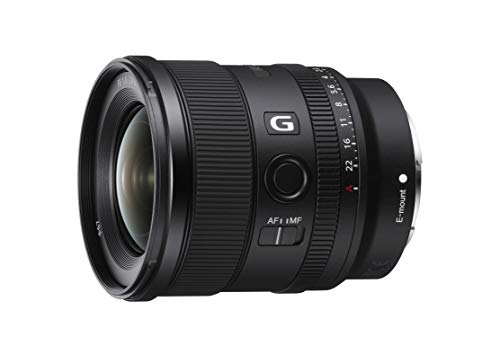
- Bright f/1.8 aperture for exposure and depth control
- Compact design for full-frame and APS-C Sony cameras
- Fast autofocus from two XD linear motors
Best For: Sony stills and video in low light
Fast Nikon APS-C Zoom

- Constant f/2.8 aperture across the zoom range
- APS-C coverage for several Nikon DSLR models
- Aspherical and super-low-dispersion elements
Best For: Nikon APS-C landscapes and interiors
Prime Perspective

- 14mm fixed wide-angle perspective
- Bright f/2.8 maximum aperture
- Autofocus for Canon EF cameras
Best For: Canon DSLR landscape and architecture photography
Flexible Framing

- Versatile 10-22mm zoom range
- 107.5-degree real angle of view
- Full-time manual focus capability
Best For: Canon EOS DSLR landscapes, interiors, and close compositions
Steady Wide Zoom

- 10-18mm ultra-wide zoom range
- Optical image stabilization
- STM focusing for quiet video shooting
Best For: Canon EOS handheld photography and video
Best for DX Landscapes
Nikon 10-24mm DX Wide-Angle Zoom

- 10-24mm range with a 109° maximum angle of view
- Quiet, fast SWM autofocus
- ED and aspherical elements aid correction
Best For: Nikon DX landscape, architecture, and interior photography
Best for Maximum Coverage

- Exceptionally wide 8mm starting focal length
- 114.5° angle of view at the wide end
- Quiet, high-speed HSM focusing
Best For: Canon APS-C ultra-wide landscapes, architecture, and interiors
Best for Full-Frame Canon Users
Canon EF 17-40mm f/4L Wide Zoom

- 17-40mm full-frame wide-angle range
- Fast, silent ring-type USM autofocus
- Weather- and dust-resistant construction
Best For: Canon SLR landscape, nature, wedding, and outdoor photography
Ultra-Wide Full-Frame Zoom – Sony FE 12-24mm F4 G
The Sony FE 12-24mm F4 G is a versatile choice for photographers seeking professional wide-angle camera lenses for landscapes, architecture, and video. Its 12mm ultra-wide perspective, constant f/4 aperture, and G Lens optical design provide broad coverage without changing lenses.
Best For: Full-frame Sony E-mount users shooting landscapes, architecture, interiors, and 4K video.
Pros:
- 12-24mm range offers an expansive 122° to 84° angle of view.
- Four aspherical, one Super ED, and three ED elements support corner-to-corner resolution.
- Constant f/4 aperture maintains exposure across the zoom range.
- DDSSM autofocus is designed for fast, quiet, precise focusing.
Cons:
- f/4 is less bright than the f/2.8 and f/1.8 options in this roundup.
- Its Sony E-mount compatibility limits it to compatible Sony cameras.
Choose this lens when maximum coverage and flexible framing matter more than a very wide aperture. The constant exposure and optical design make it a practical professional wide-angle zoom for demanding Sony setups.
Compact APS-C Creator Zoom – Sigma 10-18mm F2.8 DC DN
The Sigma 10-18mm F2.8 DC DN is a compact option for creators comparing professional wide-angle camera lenses for Sony APS-C cameras. Its ultra-wide zoom, bright constant f/2.8 aperture, stabilization, and weather sealing suit travel, landscapes, vlogging, and online content.
Best For: Sony APS-C photographers and video creators who prioritize a lightweight, bright ultra-wide zoom.
Pros:
- 10-18mm range covers ultra-wide perspectives for travel and landscapes.
- Constant f/2.8 aperture supports low-light shooting and expressive depth of field.
- At 260 g, it is designed as a small and lightweight option.
- Stepping motor, stabilization, and weather sealing benefit video and mobile shooting.
Cons:
- Designed for Sony APS-C E-mount cameras rather than full-frame systems.
- The 10-18mm range is narrower than the 12-24mm full-frame zoom option.
This Sigma is a strong fit when portability and brightness are central to your buying decision. It offers a useful ultra-wide range without the weight associated with larger professional lenses.
Bright Ultra-Wide Prime – Sony FE 20mm F1.8 G
The Sony FE 20mm F1.8 G is a bright prime for photographers who prefer professional wide-angle camera lenses with a fixed perspective. Its f/1.8 maximum aperture, compact build, and advanced focusing motors make it well suited to ultra-wide stills and video on Sony E-mount cameras.
Best For: Sony users who want a lightweight 20mm prime for low-light scenes, environmental photography, and video.
Pros:
- Bright f/1.8 aperture supports exposure and depth-of-field control.
- Compact, lightweight design works with full-frame and APS-C cameras.
- Two XD linear motors provide fast, precise autofocus.
- Nano AR and fluorine coatings are included.
Cons:
- Fixed 20mm focal length provides no zoom flexibility.
- Image stabilization is not included.
- The supplied notes do not list water resistance.
Pick this lens when image brightness, portability, and prime-lens simplicity are more important than framing flexibility. The 20mm view remains wide while the f/1.8 aperture gives it an advantage for darker environments.
Fast Nikon APS-C Zoom – Tokina 11-16mm F2.8 Pro DX II
Tokina 11-16mm f/2.8 AT-X116 Pro DX II Digital Zoom Lens (AF-S Motor) (for Nikon)
Check Price On AmazonThe Tokina 11-16mm F2.8 AT-X116 Pro DX II is a fast Nikon F-mount zoom for photographers evaluating professional wide-angle camera lenses for APS-C DSLRs. Its constant f/2.8 aperture, ultra-wide range, and optical elements make it a practical choice for landscapes, interiors, and wide compositions.
Best For: Nikon APS-C DSLR users who need a bright ultra-wide zoom with a 77mm filter thread.
Pros:
- Constant f/2.8 aperture throughout the 11-16mm zoom range.
- Designed for APS-C cameras including Nikon D3500, D5600, and D7500.
- Two aspherical and two super-low-dispersion elements support optical performance.
- Includes improved multi-layer coatings and a 77mm filter thread.
Cons:
- Compatible with Nikon F-mount APS-C cameras rather than Sony systems.
- Short 1.45x zoom ratio offers less framing flexibility than broader zooms.
- The supplied notes list no water resistance.
This Tokina makes sense for Nikon APS-C owners who value a bright aperture and compact ultra-wide range. Its limited zoom span is less versatile, but it is well matched to dedicated wide-angle shooting.
Prime Perspective – Rokinon 14mm f/2.8 AF
The Rokinon 14mm f/2.8 AF is a focused choice for Canon EF users seeking a professional wide-angle camera lens with a fixed ultra-wide perspective. Its autofocus, f/2.8 maximum aperture, and 83.6-degree angle of view suit expansive compositions where a bright prime lens is useful.
Best For: Canon DSLR photographers shooting landscapes, architecture, and other wide scenes with a prime lens.
Pros:
- Bright f/2.8 maximum aperture.
- Autofocus support for Canon EF cameras.
- Ultra Multi-Coating and a 14mm fixed focal length.
- Includes lens caps, pouch, and a 1-year Rokinon warranty.
Cons:
- Fixed 14mm focal length offers no zoom flexibility.
- Designed for Canon EF-mount DSLRs rather than a broad range of mounts.
This lens makes the most sense when you value a bright, consistent ultra-wide view over framing flexibility. The included pouch and warranty add practical value for regular shooting.
Flexible Framing – Canon EF-S 10-22mm USM
The Canon EF-S 10-22mm f/3.5-4.5 USM gives Canon EOS digital SLR users useful framing flexibility in a professional wide-angle camera lens. Its 10-22mm zoom range, 107.5-degree real angle of view, and close-focusing capability support both sweeping scenes and nearby subjects.
Best For: Canon EOS DSLR users who want a versatile wide-angle zoom for landscapes, interiors, and close compositions.
Pros:
- Broad 10-22mm focal-length range.
- Ultrawide 107.5-degree real angle of view.
- Autofocus with full-time manual focus adjustment.
- Focuses as close as 9.5 inches.
Cons:
- Maximum aperture varies from f/3.5 to f/4.5.
- Not water resistant.
- Intended for EOS digital SLR use rather than a wide range of mounts.
The 10-22mm range is the main reason to choose this model: it lets you adjust composition without changing lenses. Full-time manual focus and close focusing further broaden its usefulness for practical wide-angle work.
Steady Wide Zoom – Canon EF-S 10-18mm IS STM
The Canon EF-S 10-18mm f/4.5-5.6 IS STM combines an ultra-wide zoom range with optical image stabilization and a stepping motor. For Canon EOS users comparing professional wide-angle camera lenses, it is particularly practical for handheld shooting and quieter video autofocus.
Best For: Canon EOS photographers and video shooters who want an affordable-feeling, stabilized ultra-wide zoom with quiet STM focusing.
Pros:
- Useful 10-18mm ultra-wide zoom range.
- Optical image stabilization supports handheld shooting.
- STM drive system is designed for noise-free video shooting.
- Close-focusing distance is 0.72 feet.
Cons:
- Maximum aperture is a relatively modest f/4.5-5.6.
- Not water resistant.
- Shorter telephoto reach than a 10-22mm zoom.
This lens is a strong fit when stabilization and quiet focusing matter more than a brighter aperture or longer zoom range. Its 10mm wide end is well suited to expansive scenes, while STM supports video-oriented use.
Best for DX Landscapes – Nikon 10-24mm DX Wide-Angle Zoom
Nikon 10-24mm f/3.5-4.5G ED AF-S DX Nikkor Wide-Angle Zoom Lens for Nikon Digital SLR Cameras
Check Price On AmazonFor photographers seeking professional wide-angle camera lenses for landscapes, cityscapes, interiors, and architecture, the Nikon 10-24mm offers a highly versatile 10-24mm zoom for Nikon DX DSLRs. Its broad 109° angle of view, close focusing, and quiet autofocus make it practical for expansive compositions and everyday wide-angle work.
Best For: Nikon DX DSLR users photographing landscapes, architecture, interiors, and city scenes.
Pros:
- 10-24mm range covers expansive ultra-wide to moderately wide perspectives.
- 109° to 61° angle of view helps capture large scenes in tight spaces.
- SWM autofocus is designed for fast, accurate, and quiet operation.
- ED and aspherical elements help minimize chromatic aberration and other aberrations.
Cons:
- Compatible with Nikon F-mount DX cameras rather than a broad range of systems.
- No image stabilization.
- Maximum aperture varies from f/3.5 to f/4.5.
This is a strong fit when you want one Nikon DX wide-angle zoom for varied scenic and architectural subjects. The 10mm setting is especially useful when maximizing coverage matters more than low-light aperture.
Best for Maximum Coverage – Sigma 8-16mm Ultra-Wide Zoom
Sigma 8-16mm f/4.5-5.6 DC HSM FLD AF Ultra Wide Zoom Lens for APS-C sized Canon Digital DSLR Camera
Check Price On AmazonThe Sigma 8-16mm is built for Canon APS-C DSLR photographers who need exceptionally broad coverage. Among professional wide-angle camera lenses, its 8mm starting point and 114.5° angle of view make it particularly useful for dramatic landscapes, architecture, and confined interiors.
Best For: Canon APS-C DSLR users who prioritize an ultra-wide perspective for dramatic and space-limited compositions.
Pros:
- 8-16mm range delivers an unusually broad ultra-wide perspective.
- 114.5° real angle of view at the wide end helps include expansive scenes.
- HSM motor provides quiet, high-speed focusing.
- Four FLD low-dispersion and three aspherical elements support optical correction.
Cons:
- Designed for Canon APS-C cameras with an EF-S-compatible mount.
- Maximum aperture is a relatively modest f/4.5-5.6.
- Not water resistant.
Choose this lens when capturing the widest possible view is the priority. Its specialized 8mm perspective is compelling for dramatic compositions, though its APS-C compatibility and variable aperture limit its general-purpose flexibility.
Best for Full-Frame Canon Users – Canon EF 17-40mm f/4L Wide Zoom
The Canon EF 17-40mm f/4L is a practical choice for Canon SLR photographers who want professional wide-angle camera lenses with a full-frame format. Its 17-40mm range, 104° angle of view, weather-resistant construction, and close 0.9-foot focusing distance suit wedding, nature, landscape, and general wide-angle photography.
Best For: Canon SLR users seeking a weather-resistant wide-angle zoom for full-frame and demanding outdoor assignments.
Pros:
- 17-40mm range works for ultra-wide scenes and more moderate compositions.
- Full-frame format and 104° diagonal angle of view provide broad coverage.
- Ring-type USM autofocus is fast and silent.
- Weather-resistant construction and water- and dust-resistant design support outdoor use.
Cons:
- Constant f/4 maximum aperture is less bright than faster wide-angle lenses.
- No optical image stabilization is listed.
- Designed around Canon EF SLR compatibility.
This lens stands out for Canon shooters who value build protection and a useful full-frame zoom range. Its constant f/4 aperture keeps exposure predictable, while the 17mm setting provides substantial wide-angle coverage.
How We Picked These Professional Wide-Angle Camera Lenses
We selected lenses that cover the most useful wide-angle roles: ultra-wide landscape and architecture work, interior photography, astrophotography, event coverage, and general-purpose environmental shooting. The list includes zooms for framing flexibility and primes for wider apertures or simpler, often lighter designs.
Our comparisons emphasize mount and sensor compatibility, equivalent field of view, maximum aperture, autofocus behavior, distortion control, minimum focusing distance, and practical portability. Because older DSLR lenses can still be excellent values, we included established Canon EF/EF-S and Nikon F options alongside Sony E and third-party mirrorless choices.
Quick Comparison
| Best For | Lens Type | What to Prioritize |
|---|---|---|
| Landscape and architecture | Ultra-wide zoom | Edge sharpness, distortion control, and useful coverage |
| Astrophotography | Fast prime or f/2.8 zoom | Wide aperture, coma control, and manual focus precision |
| Interiors and real estate | Ultra-wide zoom | Corner performance, straight-line rendering, and close focus |
| Travel and everyday use | Moderate wide zoom or prime | Weight, autofocus, filter support, and versatility |
Key Buying Factors for Professional Wide-Angle Camera Lenses
Sensor and Mount Compatibility
Confirm both the lens mount and sensor format. An APS-C lens may not cover a full-frame sensor, while a full-frame lens works on many cropped-sensor cameras with a narrower effective field of view. Check adapter limitations, autofocus support, and electronic communication before buying for a different system.
Focal Length and Perspective
Every millimeter matters at the ultra-wide end. Lenses beginning around 8–12mm on APS-C or 14–16mm on full frame are suited to dramatic scenes and confined spaces. A range reaching 20–24mm is more flexible for travel and general landscape work, with less exaggerated perspective.
Aperture, Sharpness, and Distortion
A wider aperture helps with stars, interiors, and subject separation, but it can increase size, cost, and weight. For architecture, look for controlled barrel distortion and strong corner performance. Software profiles can correct distortion, but heavy corrections may reduce the usable image area.
Autofocus, Filters, and Durability
Fast, quiet autofocus is valuable for moving subjects and video, while a firm manual-focus ring matters for architecture and night photography. Check whether the front element accepts standard filters; bulbous ultra-wide elements may require specialized holders. Weather resistance, hood design, and construction also matter for professional outdoor use.
Who Should Buy Which Professional Wide-Angle Camera Lenses?
Choose a Sony full-frame option if you need native E-mount integration, with the 12–24mm zoom prioritizing coverage and the 20mm prime favoring a fast aperture. APS-C mirrorless users seeking a bright, compact zoom should consider the 10–18mm f/2.8 option.
Canon and Nikon DSLR owners have several practical choices. The Canon EF-S 10–18mm is a budget-conscious, lightweight solution, while the EF-S 10–22mm and Nikon 10–24mm offer broader all-purpose zoom ranges. The Tokina 11–16mm f/2.8 suits APS-C shooters who value a constant bright aperture, and the Sigma 8–16mm provides exceptionally wide coverage.
For Canon full-frame users, the Rokinon 14mm is a strong choice when you want an ultra-wide prime, while Canon’s EF 17–40mm f/4L is better suited to flexible landscape and architectural work. Match the lens to your sensor, shooting conditions, and need for filters before prioritizing maximum width or aperture.