
The best wide-angle lenses for photographers make it easier to capture expansive landscapes, tight interiors, dramatic architecture, and immersive travel scenes. The right choice depends on your camera mount, sensor size, preferred focal length, and need for speed or zoom flexibility.
We selected 10 wide-angle options across Sony, Canon, Laowa, and Rokinon, including full-frame and APS-C lenses, bright primes, compact models, and versatile zooms.
Best 10 Wide-Angle Camera Lenses for Photographers Picks for 2026
Compact Prime Pick
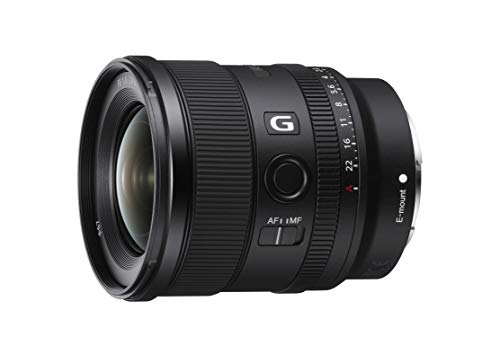
- Bright f/1.8 ultra-wide prime
- Compact 13.2-ounce design
- Fast XD autofocus motors
Best For: Sony E-mount landscapes, interiors, travel, and low-light photography
Versatile Zoom Pick

- Flexible 14-35mm focal range
- Constant f/4 aperture with stabilization
- Close focusing to 7.9 inches
Best For: Canon RF landscapes, architecture, travel, and close-up wide-angle work
Extreme Perspective Pick

- Expansive 130.4-degree view
- Close-to-zero distortion design
- Autofocus and 12cm close focusing
Best For: Sony FE landscapes, architecture, interiors, and dramatic wide-angle compositions
APS-C DSLR Value Pick

- Flexible 10-22mm wide-angle range
- Fast USM autofocus with manual override
- Close focusing to 9.5 inches
Best For: Compatible Canon EOS digital SLR landscapes, interiors, travel, and near-subject shots
Best Budget Ultra-Wide Zoom

- Flexible 10-18mm ultra-wide zoom range
- Optical image stabilization for handheld shooting
- Quiet STM autofocus for video
Best For: Canon EOS landscape, travel, and video shooters
Best Weather-Resistant Full-Frame Zoom

- 17-40mm range for ultra-wide to wide perspectives
- Weather-resistant L-series construction
- Fast, silent ring-type USM autofocus
Best For: Canon SLR landscape, wedding, and nature photographers
Compact Full-Frame Ultra-Wide

- 16mm fixed ultra-wide perspective
- Bright f/2.8 aperture
- Compact 163 g design with quiet STM AF
Best For: Canon RF users shooting travel, landscapes, vlogs, and interiors
Manual-Focus Ultra-Wide Value
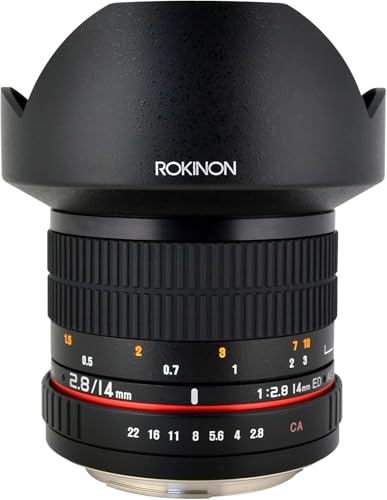
- 14mm focal length and 115.7° view
- Fast f/2.8 aperture
- Manual focus with built-in petal hood
Best For: Canon EF landscape, real estate, interior, and astrophotography work
Flexible APS-C Vlogging Zoom
Canon RF-S10-18mm F4.5-6.3 IS STM

- 10-18mm zoom range, 16-29mm equivalent
- Optical image stabilization
- Lightweight design with close-up capability
Best For: Canon APS-C vlogging, selfies, travel, and landscape shooting
Compact Prime Pick – Sony FE 20mm F1.8 G
The Sony FE 20mm F1.8 G is a strong choice among wide-angle camera lenses for photographers who want a compact full-frame prime with a bright aperture. Its 20mm view, f/1.8 maximum aperture, and 94-degree angle of view suit landscapes, architecture, interiors, and low-light shooting.
Best For: Sony E-mount photographers seeking a lightweight ultra-wide prime for landscapes, interiors, travel, and low-light work.
Pros:
- Bright f/1.8 aperture supports exposure and depth-of-field control.
- Compact 13.2-ounce design works with full-frame and APS-C cameras.
- XD linear motors provide fast, precise autofocus.
- Aspheric elements and Nano AR coating support high-resolution imaging.
Cons:
- Fixed 20mm focal length offers no zoom flexibility.
- No image stabilization is listed.
- Not water resistant.
This lens is a practical fit when portability and low-light capability matter more than zoom versatility. It is especially appealing for Sony shooters who prefer a bright, dedicated ultra-wide prime.
Versatile Zoom Pick – Canon RF14-35mm F4 L IS USM
The Canon RF14-35mm F4 L IS USM offers flexible coverage for photographers comparing wide-angle camera lenses for photographers using EOS R-series mirrorless cameras. Its 14mm ultra-wide starting point expands to 35mm, while constant f/4 brightness, optical stabilization, and close focusing add everyday versatility.
Best For: Canon RF users who need one weather-resistant wide-angle zoom for landscapes, architecture, travel, and close perspectives.
Pros:
- 14-35mm range covers dramatic ultra-wide through moderate wide-angle views.
- Constant f/4 aperture and optical image stabilization support consistent shooting.
- Close focuses to 7.9 inches at all focal lengths.
- L-series construction includes SWC and ASC coating technologies.
Cons:
- f/4 is less bright than a fast prime aperture.
- Designed for Canon RF/EOS R-series systems, limiting mount compatibility.
- Heavier than the Sony prime in this roundup at approximately 544 g.
Choose this lens when framing flexibility is more valuable than a fixed focal length. The 14mm view, 35mm reach, stabilization, and close-focus capability make it a well-rounded option for Canon RF kits.
Extreme Perspective Pick – Laowa 10mm f/2.8 Zero-D
Laowa 10mm f/2.8 Zero-D Full-Frame Lens with Ultra Wide-Angle View with Auto Focus (for Sony FE)
Check Price On AmazonThe Laowa 10mm f/2.8 Zero-D is built for photographers who want an especially dramatic option among wide-angle camera lenses for photographers. Its 130.4-degree angle of view captures expansive scenes, while the close-to-zero distortion design helps preserve straight horizontal and vertical lines.
Best For: Sony FE photographers creating dramatic landscapes, architecture, interiors, travel images, and wide-angle macro-style compositions.
Pros:
- 130.4-degree angle of view delivers an exceptionally expansive perspective.
- Zero-D optical design suppresses distortion to a close-to-zero level.
- 12cm minimum focusing distance enables close, dramatic compositions.
- Compact 7cm length and 0.93-pound weight suit travel use.
Cons:
- Fixed 10mm focal length requires careful composition.
- No image stabilization is listed.
- Not water resistant.
This lens stands out when maximum width and controlled distortion are the priorities. Its compact build and close-focusing ability add creative flexibility, though photographers should be comfortable working with an extreme fixed perspective.
APS-C DSLR Value Pick – Canon EF-S 10-22mm
The Canon EF-S 10-22mm f/3.5-4.5 USM is a practical option for photographers looking at wide-angle camera lenses for photographers using compatible Canon EOS digital SLRs. Its 10-22mm zoom range provides broad framing flexibility, with close focusing, fast autofocus, and full-time manual focus for landscapes, interiors, and travel.
Best For: Canon EOS digital SLR users who want a flexible 10-22mm wide-angle zoom with close-focus capability.
Pros:
- 10-22mm range supports expansive landscapes and interior scenes.
- USM autofocus offers speed, with full-time manual focus available.
- Focuses as close as 9.5 inches for near-subject compositions.
- Circular aperture design produces natural-looking highlights.
Cons:
- Designed for Canon EF-S-compatible digital SLR systems.
- Variable f/3.5-4.5 aperture is less consistent than a constant-aperture zoom.
- Not water resistant and lacks listed optical image stabilization.
This lens makes sense for compatible Canon DSLR owners who value an established ultra-wide zoom and close focusing over a brighter or stabilized design. Its 10-22mm range is the main attraction for broad compositions.
Best Compact APS-C Prime – Sony E 11mm F1.8
For photographers seeking wide-angle camera lenses for photographers, the Sony E 11mm F1.8 is a compact APS-C prime built for expansive views, low-light shooting, and fast autofocus. Its 11mm focal length and bright f/1.8 aperture also make it a practical option for vlogging and video creation.
Best For: APS-C Sony E-mount photographers, vloggers, and creators who want an ultra-wide prime with a bright aperture.
Pros:
- Ultra-wide 11mm perspective with a bright f/1.8 aperture.
- Compact, lightweight design suited to APS-C and Super35 cameras.
- Fast, precise, quiet autofocus from two linear motors.
- Internal focusing keeps the lens length constant and helps reduce focus breathing.
Cons:
- Designed for Sony APS-C E-mount cameras rather than a broad range of mounts.
- Fixed 11mm focal length offers no zoom flexibility.
- Not water resistant.
This lens is a strong fit when portability, a wide field of view, and low-light capability matter more than zoom range. Its fixed focal length is especially useful for immersive landscapes, interiors, and arm’s-length video.
Best Budget Ultra-Wide Zoom – Canon EF-S 10-18mm STM
The Canon EF-S 10-18mm f/4.5-5.6 IS STM is a versatile choice among wide-angle camera lenses for photographers who want an ultra-wide zoom for landscapes and video. Its 10-18mm range provides framing flexibility, while optical image stabilization and STM autofocus support handheld and quiet shooting.
Best For: Canon EOS users looking for an ultra-wide zoom for landscape photography, travel, and stabilized video.
Pros:
- Useful 10-18mm ultra-wide zoom range.
- Optical image stabilization helps with handheld shooting.
- Stepping-motor autofocus is designed for quiet video operation.
- Focuses as close as 0.72 feet.
Cons:
- Maximum aperture ranges from f/4.5 to f/5.6, limiting low-light brightness compared with faster lenses.
- EF-S compatibility is intended for Canon EOS EF/EF-S-compatible systems.
- Not water resistant.
Choose this lens when flexibility and stabilization are priorities. The zoom range is convenient for landscapes and architectural scenes, while STM focusing makes it a practical fit for quieter video capture.
Best Weather-Resistant Full-Frame Zoom – Canon EF 17-40mm f/4L
The Canon EF 17-40mm f/4L USM is a full-frame EF-mount option for photographers comparing wide-angle camera lenses for photographers who need both an ultra-wide view and a more flexible normal-wide range. Its L-series construction, weather-resistant design, and ring-type USM autofocus suit demanding wedding, nature, and landscape work.
Best For: Canon SLR photographers who want a weather-resistant wide zoom for landscapes, weddings, and nature photography.
Pros:
- 17-40mm zoom range covers ultra-wide through wider standard perspectives.
- 104° to 57° diagonal angle-of-view range supports expansive compositions.
- Fast, silent autofocus from a ring-type ultrasonic motor.
- Weather-resistant construction and support for 77mm filters.
Cons:
- Constant f/4 maximum aperture is less bright than faster wide-angle primes.
- Designed for Canon EF-mount SLR systems.
- No optical image stabilization is specified in the supplied details.
This lens makes sense for photographers who value build protection and zoom versatility. Its constant f/4 aperture, close-focusing capability, and broad field of view make it well suited to outdoor and event-oriented shooting.
Compact Full-Frame Ultra-Wide – Canon RF16mm F2.8 STM
For photographers seeking wide-angle camera lenses for photographers using Canon EOS R-series mirrorless cameras, the Canon RF16mm F2.8 STM offers a compact fixed focal length, bright f/2.8 aperture, and a 108-degree angle of view. Its lightweight design makes it practical for travel, landscapes, interiors, and video.
Best For: Canon RF users who want a small, bright ultra-wide prime for landscapes, vlogging, and tight spaces.
Pros:
- Bright fixed f/2.8 aperture for wide-angle shooting and low-light flexibility.
- Very compact and lightweight at 163 g.
- Smooth, quiet STM autofocus supports continuous video recording.
- Focuses as close as 5.11 inches with 0.26x magnification.
Cons:
- Fixed 16mm focal length offers no zoom flexibility.
- Compatible with Canon RF-mount EOS R-series mirrorless cameras, not Canon EF systems.
- Not water resistant.
The RF16mm F2.8 STM is a practical choice when portability and a wide perspective matter more than zoom versatility. Its bright aperture and quiet focusing also make it appealing for creators who combine still photography with video.
Manual-Focus Ultra-Wide Value – Rokinon 14mm F2.8 for Canon
The Rokinon 14mm F2.8 is one of the wide-angle camera lenses for photographers who want an expansive perspective on a Canon EF camera and are comfortable focusing manually. Its 115.7-degree angle of view and f/2.8 aperture suit landscapes, real estate, interiors, and astrophotography.
Best For: Canon EF photographers prioritizing maximum width, low-light performance, and hands-on manual focus control.
Pros:
- Very wide 14mm focal length with a 115.7-degree angle of view.
- Fast f/2.8 maximum aperture for challenging light and astrophotography.
- Optical design with 14 elements in 10 groups and aspherical elements.
- Built-in petal-type lens hood is included.
Cons:
- Manual focus only, which may be slower for moving subjects.
- No image stabilization.
- At 900 g, it is substantially heavier than compact mirrorless alternatives.
This lens emphasizes width and optical control rather than convenience. It is a strong fit for deliberate compositions where manual focusing is acceptable, but photographers wanting autofocus or a lighter setup should consider another option.
Flexible APS-C Vlogging Zoom – Canon RF-S10-18mm F4.5-6.3 IS STM
For Canon APS-C mirrorless users comparing wide-angle camera lenses for photographers, the RF-S10-18mm F4.5-6.3 IS STM provides a flexible ultra-wide zoom equivalent to 16-29mm. Its broad view helps fit subjects and backgrounds into tight spaces, while optical stabilization and quiet autofocus support video and stills.
Best For: Canon RF-S users shooting vlogs, selfies, travel, landscapes, and close-up wide-angle video.
Pros:
- 10-18mm zoom range provides a useful 16-29mm equivalent perspective.
- Optical image stabilization helps support handheld shooting.
- Compact, lightweight design weighs 5.28 ounces.
- Up to 0.5x magnification in manual focus mode for close-up subjects.
Cons:
- Variable f/4.5-6.3 aperture is less bright than f/2.8 alternatives.
- Designed for Canon RF-mount mirrorless cameras and APS-C use.
- Not water resistant.
The RF-S10-18mm prioritizes versatility and portability over a bright aperture. Its zoom range, stabilization, and selfie-friendly field of view make it especially well suited to handheld video and travel photography with Canon APS-C bodies.
How We Picked These Wide-Angle Camera Lenses for Photographers
We focused on lenses that offer genuinely wide perspectives while covering a useful range of shooting needs. The lineup includes full-frame and APS-C options, so photographers can choose based on their camera system rather than comparing focal lengths in isolation. We also considered maximum aperture, autofocus availability, distortion control, portability, zoom range, and suitability for landscapes, architecture, interiors, travel, astrophotography, and video.
Compatibility is essential: an RF lens fits Canon RF cameras, RF-S lenses are designed for Canon APS-C mirrorless bodies, EF-S lenses are for Canon APS-C DSLRs, and Sony E-mount lenses require the appropriate Sony mirrorless system. Full-frame lenses can often be used on APS-C bodies, but the effective field of view becomes narrower.
Quick Comparison
| Best For | Lens Type | What to Prioritize |
|---|---|---|
| Landscapes and travel | Ultra-wide prime or zoom | Corner sharpness, weight, and flare resistance |
| Architecture and interiors | Wide zoom | Low distortion and flexible framing |
| Astrophotography | Fast wide prime | Wide aperture and coma control |
| Vlogging and video | Compact autofocus lens | Quiet focusing, stabilization compatibility, and size |
| Budget APS-C systems | APS-C wide zoom | Useful range, autofocus, and value |
Key Buying Factors
Focal Length and Sensor Format
On full-frame cameras, 14mm to 24mm provides an expansive ultra-wide view, while 28mm to 35mm offers a more natural wide-angle perspective. APS-C cameras need shorter focal lengths to achieve a similar composition. Check the equivalent focal length before buying, especially when comparing full-frame and crop-sensor models.
Aperture and Low-Light Performance
A wider aperture, represented by a smaller f-number, helps with handheld interiors, night scenes, and star photography. It can also create more subject separation, although wide-angle lenses naturally produce less background blur than longer lenses. Slower zooms may still be excellent for daylight landscapes and tripod-based work.
Distortion, Sharpness, and Autofocus
Ultra-wide lenses can stretch objects near the frame edges, so distortion correction and careful composition matter for architecture and interiors. Look for consistent sharpness across the frame if you print landscapes. Autofocus is valuable for moving subjects, video, and convenience, while manual-focus lenses can offer strong value for deliberate landscape or astrophotography work.
Size, Filters, and Weather Protection
Compact lenses are easier to carry, but larger front elements may limit standard screw-in filters. If you shoot outdoors, consider sealing, hood design, flare resistance, and whether the lens accepts the filter system you already own.
Who Should Buy Which Wide-Angle Camera Lenses for Photographers?
Choose a fast prime if you prioritize low-light shooting, astrophotography, or maximum portability. Choose a wide zoom if you photograph architecture, interiors, landscapes, or travel and want to change framing without switching lenses. APS-C camera owners should select a lens made for their mount when size and cost matter, while full-frame photographers may prefer a full-frame lens for broader coverage and future system flexibility.
Before ordering, verify the exact mount, sensor compatibility, autofocus support, filter requirements, and whether the listed focal length meets your intended field of view. Those checks will narrow this selection quickly and help ensure your new lens complements the camera body and subjects you shoot most often.