
Shaky footage can undermine an otherwise well-planned production. The right gimbal helps you create smoother camera moves, cleaner walking shots, and more polished studio or location video without requiring a large crew.
This roundup compares 10 options across mirrorless cameras, smartphones, action cameras, and compact integrated systems. We focus on payload support, stabilization, tracking, controls, portability, and the accessories that matter in real-world shooting.
Best 10 Studio Camera Gimbals Picks for 2026
Best Compact Camera Gimbal

- Automatic axis locks speed up setup.
- Supports camera or phone payloads up to 2 kg.
- Includes intelligent tracking and a briefcase handle.
Best For: Creators needing fast setup and flexible camera or smartphone stabilization
Best Pocket Gimbal Camera

- Combines a 1-inch sensor with three-axis stabilization.
- Records 4K/120fps and supports D-Log M.
- Compact 179 g design includes a rotating touchscreen.
Best For: Travelers and vloggers wanting an all-in-one stabilized camera
Best Versatile Tracking Gimbal

- Works with mirrorless, compact, action, and smartphone cameras.
- AI tracking reaches an advertised 18-meter distance.
- Detachable handle doubles as a remote control.
Best For: Solo creators using multiple camera types and remote shooting setups
Best Creator Gimbal Camera Kit
DJI Osmo Pocket 3 Creator Combo
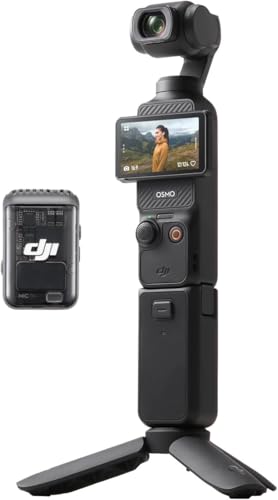
- Includes a DJI Mic 2 transmitter, battery handle, and mini tripod.
- Records 4K/120fps with a 1-inch sensor.
- Provides three-axis stabilization and ActiveTrack 6.0.
Best For: Vloggers wanting a ready-to-use stabilized camera and audio kit
Best Lightweight Pick
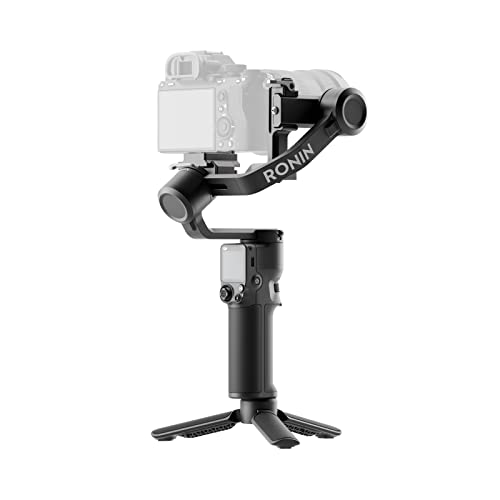
- 795g portable design
- Supports up to 2 kg
- Native vertical shooting
Best For: Travel-focused mirrorless camera users
Best All-in-One Camera
Xtra Muse 1-Inch Gimbal Camera

- 1-inch CMOS sensor
- 4K at up to 120fps
- Built-in subject tracking
Best For: Vloggers seeking an integrated camera-gimbal setup
Best Feature-Rich Pick
- 795g lightweight design
- 1.4-inch color touchscreen
- 2 kg tested payload
Best For: Mirrorless users wanting onboard controls and vertical shooting
Best Versatile Pick

- Works with phones, GoPro cameras, and select compact cameras
- AI face or body tracking with forward/rear-facing module
- Built-in fill light and extensive included accessories
Best For: Vloggers using multiple camera types
Best for Phone Creators

- 3-axis phone stabilization with native subject tracking
- Built-in extension rod, tripod, lighting, and audio support
- Up to 10-hour battery with phone charging while filming
Best For: Smartphone vlogging and livestreaming
Best Compact Camera Gimbal – DJI RS 4 Mini Combo
The DJI RS 4 Mini Combo is a practical choice for creators seeking studio camera gimbals that can also handle fast-moving, mobile shoots. Its 2 kg payload, automatic axis locks, responsive follow mode, and included tracking module make setup and subject framing more efficient with compatible cameras or smartphones.
Best For: Videographers who want intelligent tracking, quick vertical switching, and support for mirrorless cameras, vlog cameras, and phones.
Pros:
- Automatic axis locks help make setup ready in about one second.
- Supports camera and smartphone setups up to 2 kg/4.4 lb.
- Includes an RS Intelligent Tracking Module and briefcase handle.
- Switches from horizontal to vertical shooting in about 10 seconds.
Cons:
- It is not water resistant.
- The DJI Ronin app must be downloaded from DJI’s website on Google Play-incompatible devices.
Choose this model if quick balancing, subject tracking, and flexible shooting angles matter more than a fully enclosed or weather-ready design. It is a capable all-around stabilizer for creators using compatible cameras and phones.
Best Pocket Gimbal Camera – DJI Osmo Pocket 3
The DJI Osmo Pocket 3 is a pocket-sized alternative to larger studio camera gimbals, combining a 1-inch CMOS sensor with integrated three-axis mechanical stabilization. Its rotating 2-inch screen, ActiveTrack 6.0, and 4K/120fps recording suit travel, vlogging, and spontaneous handheld filming.
Best For: Travelers, vloggers, and solo creators who want a compact stabilized camera with strong video features and subject tracking.
Pros:
- Records 4K video at up to 120fps with a 1-inch sensor.
- Rotating 2-inch touchscreen supports horizontal and vertical shooting.
- ActiveTrack 6.0 helps keep moving subjects centered.
- Supports D-Log M and 10-bit color for advanced grading.
Cons:
- It is not water resistant.
- Its integrated design does not provide the interchangeable-camera flexibility of a traditional gimbal.
For creators who prioritize portability, this Pocket 3 offers a streamlined shooting setup with stabilization, tracking, and high-resolution recording built in. Its 179 g body is especially convenient for travel and everyday content.
Best Versatile Tracking Gimbal – FeiyuTech SCORP Mini 3 Pro
The FeiyuTech SCORP Mini 3 Pro is a flexible option among studio camera gimbals, supporting mirrorless, compact, action-camera, and smartphone setups. Its 2 kg payload, AI tracking, detachable handle, and modular quick-release system are useful for solo creators working across different shooting styles.
Best For: Content creators who use multiple camera types and want long-distance tracking plus remote-control flexibility.
Pros:
- Four-in-one compatibility covers cameras, smartphones, compact cameras, and action cameras.
- AI Tracking 4.0 offers an advertised maximum tracking distance of 18 meters.
- Detachable handle can function as a remote control.
- Supports payloads up to 2 kg/4.4 lb and includes a GoPro adapter.
Cons:
- It is not water resistant.
- The approximately 1 kg body is heavier than a pocket-sized integrated camera.
This gimbal is a strong fit when equipment flexibility is a priority. The modular design and remote-capable handle give solo shooters more placement options, while the stabilization system is intended for smooth footage during fast movement.
Best Creator Gimbal Camera Kit – DJI Osmo Pocket 3 Creator Combo
The DJI Osmo Pocket 3 Creator Combo packages a stabilized 1-inch camera with accessories aimed at more complete vlogging setups. Like other compact studio camera gimbals, it provides three-axis mechanical stabilization, while the included DJI Mic 2 transmitter, battery handle, and mini tripod expand its audio and shooting capabilities.
Best For: Vloggers and content creators who want an all-in-one package with improved audio options, extra battery capacity, and hands-free shooting accessories.
Pros:
- Captures 4K/120fps video using a 1-inch CMOS sensor.
- Includes a DJI Mic 2 transmitter for upgraded wireless audio workflows.
- Battery handle and mini tripod support longer or hands-free shooting.
- ActiveTrack 6.0 and a rotating 2-inch touchscreen simplify solo filming.
Cons:
- It is not water resistant.
- The integrated camera design is less suitable for users who need interchangeable lenses.
The Creator Combo is the more complete choice for vloggers who would otherwise need to purchase audio, power, and tripod accessories separately. Its compact body and built-in stabilization keep the overall setup easy to carry while preserving advanced recording options.
Best Lightweight Pick – DJI RS 3 Mini Renewed
For creators building a portable studio camera gimbals kit, the renewed DJI RS 3 Mini is a compact stabilizer for compatible mirrorless cameras. It weighs 795g, supports tested payloads up to 2 kg, and adds native vertical shooting for social content.
Best For: Travel-focused mirrorless camera users who want a lightweight gimbal with broad camera compatibility.
Pros:
- Lightweight 795g design is easier to hold during extended shoots.
- Supports camera and lens combinations weighing up to 2 kg.
- Offers Bluetooth shutter control and native vertical shooting.
- Includes a quick-release plate and RS Mini tripod.
Cons:
- As a renewed product, it includes a 90-day limited warranty.
- It is not water resistant.
The RS 3 Mini is a practical choice when portability matters more than handling larger camera setups. Verify your camera-and-lens combination stays within the 2 kg payload limit before buying.
Best All-in-One Camera – Xtra Muse 1-Inch Gimbal Camera
The Xtra Muse takes a different approach to studio camera gimbals by combining a 1-inch CMOS camera, 3-axis optical stabilization, and a pocket-friendly body. It records 4K video at up to 120fps and includes tracking features for solo creators.
Best For: Vloggers and mobile creators who want an integrated camera-and-gimbal setup instead of a separate stabilizer.
Pros:
- 1-inch sensor records 4K video at up to 120fps.
- Built-in 3-axis gimbal helps smooth handheld movement.
- Master Follow keeps the subject centered while moving.
- Supports 10-bit X-Log color modes for post-production flexibility.
Cons:
- It is a standalone camera rather than a stabilizer for interchangeable-lens cameras.
- It is not water resistant.
- Digital zoom is listed rather than optical zoom.
Choose the Xtra Muse if convenience and quick setup are priorities. Its 281g handheld design, 2-inch touchscreen, and 161-minute stated battery life suit on-the-go video, while the integrated format limits it to the included camera system.
Best Feature-Rich Pick – DJI RS 3 Mini
For a compact studio camera gimbals setup, the DJI RS 3 Mini pairs a 795g build with 3-axis stabilization and a 2 kg tested payload. This standard version also includes a 1.4-inch full-color touchscreen for accessing settings directly on the gimbal.
Best For: Mirrorless camera users who want lightweight stabilization, vertical shooting, and onboard controls.
Pros:
- Supports payloads up to 2 kg for a range of camera and lens combinations.
- Provides native vertical shooting for social media workflows.
- Includes Bluetooth shutter control after initial pairing.
- 1.4-inch touchscreen provides access to frequently used settings.
Cons:
- DJI Ronin app installation is required for activation and full functionality.
- The app is unavailable through Google Play and must be downloaded from DJI’s official website.
- It is not water resistant.
This RS 3 Mini is a strong fit for creators who value direct controls and flexible shooting orientations in a small package. Check app compatibility and confirm your camera is supported before committing to the setup.
Best Versatile Pick – GoPro Fluid Pro AI Gimbal
For creators comparing studio camera gimbals that can move between phones, GoPro cameras, and select compact cameras, the GoPro Fluid Pro offers broad compatibility. Its 3-axis stabilization, AI subject tracking, and integrated fill light make it a flexible choice for vlogging and presenter-style shooting.
Best For: Vloggers and creators who use both smartphones and GoPro cameras.
Pros:
- Interchangeable mounts support mobile phones, GoPro cameras, and select compact point-and-shoot cameras.
- Forward- or rear-facing AI tracking can follow a person’s face or body.
- Integrated fill light helps balance lighting in recorded shots.
- Includes a tripod base, multiple adapters, charging cables, and a zippered case.
Cons:
- It is not water resistant.
- Bluetooth camera control is limited to specified GoPro HERO models.
- At 551 g, it is heavier than the listed DJI and Hohem options.
The Fluid Pro is the most adaptable option here, especially if your setup includes more than one camera type. Choose it when AI tracking and built-in lighting matter as much as stabilization.
Best for Phone Creators – DJI Osmo Mobile 8
The DJI Osmo Mobile 8 is a phone-focused option for shoppers seeking studio camera gimbals with built-in shooting flexibility. It combines 3-axis stabilization with native tracking, audio and lighting support, a 360-degree pan rotation, and an integrated extension rod and tripod.
Best For: Smartphone vloggers, livestreamers, travelers, and family-video creators.
Pros:
- 3-axis stabilization helps produce smoother phone footage.
- Native tracking works alongside integrated audio reception and lighting features.
- Built-in extension rod and tripod support low-angle shots, group footage, and hands-free recording.
- Provides up to 10 hours of battery life and can charge a phone while filming.
Cons:
- Compatibility is listed for cellphones rather than action cameras or compact cameras.
- The DJI Mimo app is unavailable through Google Play and requires downloading from DJI’s official website.
- Its feature set depends on the included multifunctional module and compatible phone setup.
For phone-first production, the Osmo Mobile 8 offers the most complete shooting package of the three. Its built-in tripod, extension rod, tracking, audio, and lighting features reduce the need for extra accessories.
Best Outdoor Action-Cam Pick – Hohem iSteady Pro 4
Among studio camera gimbals, the Hohem iSteady Pro 4 stands out for action-camera users who need outdoor durability and long runtime. Its 3-axis stabilization, IPX4 splash resistance, broad GoPro compatibility, and 14-hour battery make it suited to mobile shooting in changing conditions.
Best For: GoPro and action-camera users filming outdoors or during active movement.
Pros:
- Compatible with many GoPro HERO generations, DJI OSMO Action, Insta360 ONE R, and similarly sized action cameras.
- IPX4 splash resistance helps protect against water splashes from any direction.
- 14-hour battery life supports extended shooting, and the gimbal can charge an action camera while recording.
- Brushless motors and the iSteady 5.0 algorithm support smooth footage during dynamic movement.
Cons:
- It has a 160 g maximum weight recommendation.
- DJI OSMO Action and Insta360 ONE R cameras can be stabilized but not controlled for recording or photos.
- It does not work with GoPro HERO7 White and Silver models.
The iSteady Pro 4 is the practical choice for action-camera owners who prioritize splash resistance, battery endurance, and straightforward controls. Verify your exact camera model before buying, especially if you need wireless camera control.
How We Picked These Studio Camera Gimbals
We selected models that cover the main workflows creators use today: mirrorless-camera production, smartphone content, action-camera footage, and compact vlogging. Our comparison emphasizes three-axis stabilization, supported camera weight, balancing and setup, tracking features, battery practicality, control options, and portability.
We also considered whether each model is best suited to a controlled studio, mobile production, travel, or fast-changing shooting conditions. A gimbal that works well with a lightweight phone is not automatically suitable for a lens-equipped mirrorless camera, so matching the stabilizer to your equipment is essential.
Quick Comparison
| Best For | What to Prioritize |
|---|---|
| Mirrorless cameras | Payload capacity, camera compatibility, balance range, and lens clearance |
| Phones | Fast setup, app features, tracking, battery life, and ergonomic controls |
| Action cameras | Mount compatibility, splash resistance, compact size, and wireless control |
| Vlogging | Low weight, face tracking, built-in camera features, and simple operation |
| Studio production | Reliable motors, smooth control, repeatable setup, and accessory support |
Key Buying Factors for Studio Camera Gimbals
Payload and Compatibility
Check the complete camera-and-lens weight, not just the camera body. The gimbal should support that load with room for accessories such as a microphone, filter, or small monitor. Confirm compatibility with your exact camera model, lens, mounting plate, and control cable before buying.
Stabilization and Movement
Three-axis stabilization is the standard for smoothing pan, tilt, and roll. Look for adjustable follow modes, smooth response, and useful locking options. For studio work, consistent movement and repeatability can matter more than a long list of automated modes.
Tracking and Control
AI or subject tracking can help solo creators keep faces or subjects framed, while joystick and trigger controls are valuable for deliberate camera moves. Smartphone and compact systems may offer more automated shooting features, whereas camera gimbals often prioritize direct control.
Size, Battery, and Setup
A heavier gimbal may handle a larger camera but become tiring during long takes. Consider folded size, operating time, charging, balancing complexity, and whether you can quickly switch between portrait and landscape orientations.
Who Should Buy Which Studio Camera Gimbals?
- Mirrorless-camera users: Choose a DJI RS model or another camera-focused stabilizer with enough payload capacity for your body and lens combination.
- Solo vloggers: A Pocket-style integrated camera or phone gimbal with tracking can simplify filming and reduce setup time.
- Action-camera creators: Look for splashproof construction, secure mounts, and compatibility with your GoPro, DJI, or Insta360 camera.
- Travel and everyday creators: Prioritize a compact design, low weight, quick balancing, and dependable battery life.
- Studio teams: Favor a model with smooth manual controls, repeatable balancing, reliable motors, and support for the accessories used in your production.
The best studio camera gimbal is the one that comfortably supports your actual camera setup and shooting style. Verify payload limits and compatibility first, then compare tracking, controls, portability, and price.