
Beginner-friendly thermal imaging cameras make it much easier to spot hot and cold anomalies without guesswork. They’re useful for home inspection, HVAC checks, electrical troubleshooting, and finding hidden heat loss.
In this roundup, we focus on models that are simple to use, practical for first-time buyers, and capable enough for real-world everyday diagnostics.
Best 10 Beginner-Friendly Thermal Imaging Cameras Picks for 2026
Simple Close-Range Scans

- Easy controls with rugged grip
- 320 x 240 display, 32x32 sensor
- Best for 1 to 3 feet scanning
Best For: DIY troubleshooting on a budget
Portable Home Inspection
Flagfront YXI96 Thermal Camera

- 240x240 super-resolution imaging
- Built-in high/low temperature alarms
- Drop-resistant with IP54 protection
Best For: Portable home and vehicle inspection
Android Plug-and-Play
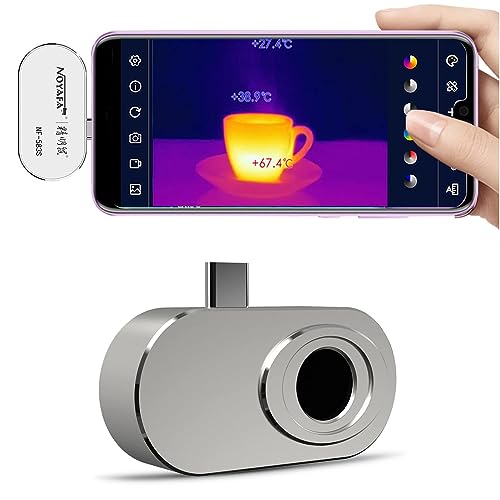
- Works with Android and Windows
- 160x120 sensor with 720x1080 output
- Video recording and auto tracking
Best For: Phone and laptop-based thermal inspections
Workshop-Ready Detail for Beginners
Teslong TTM120S Thermal Camera

- 240 x 180 enhanced thermal image output
- 25Hz refresh with 8 color palettes
- 6-hour battery and 8GB built-in storage
Best For: New users needing a practical inspection camera for home, HVAC, and electrical work
Lightweight Dual-Mode Pick

- Thermal imaging plus thermometer mode
- Ultra-light 240g body with easy controls
- Up to 14 hours of battery life
Best For: Beginners who want a simple, lightweight camera for home and vehicle inspections
Pocket-Sized Smart Inspector
TOPDON TC004 Mini Thermal Camera

- 240 x 240 enhanced thermal resolution
- Auto alerts and photo capture for quick diagnostics
- 15-hour battery life in a pocket-size body
Best For: First-time buyers who want a compact camera for easy home and electrical troubleshooting
Compact Dual-Mode Inspector
GT14S Thermal Imaging Camera with Edge Enhancement
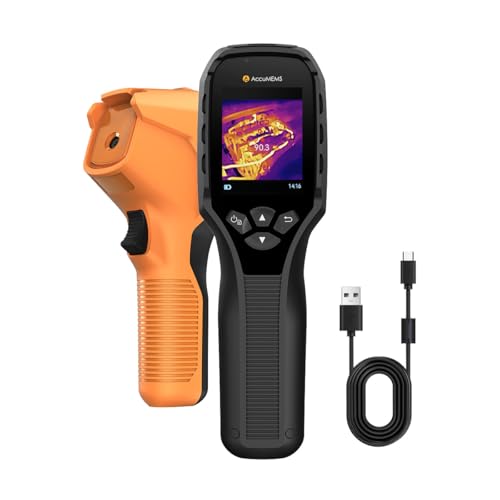
- Dual thermal and thermometer modes
- 240g compact body with easy controls
- 50° FOV and custom alerts
Best For: New users needing a portable general-purpose inspection camera
Pocket Home Inspector

- Pocket-sized and easy to use one-handed
- 120x90 IR resolution with 2.8" display
- USB charging plus LED spotlight
Best For: DIY users needing a simple thermal camera for home inspections
Guided Analysis Pick
FOXWELL RT280 Thermal Imaging Camera

- TISR enhances detail to 240x180 effective resolution
- Windows software adds 2D/3D analysis and reports
- 8GB storage and rugged IP54 build
Best For: Beginners who want basic scanning plus deeper PC analysis
AI Scene Detection – HF96 Thermal Camera with AI Scene Detection
If you want beginner-friendly thermal imaging cameras that do more than show a heatmap, the HF96 is built to simplify the learning curve. Its IntellFault scene recognition can help automatically identify issues like water leaks and insulation gaps, while the 3-in-1 design keeps temperature readings, thermal viewing, and laser pointing in one easy handheld tool.
Best For: Beginners who want guided thermal inspections for home, HVAC, and basic fault finding.
Pros:
- IntellFault scene detection helps automate common inspection targets.
- Live super resolution boosts thermal images to 240×240 clarity.
- 50Hz field of view and automatic hot/cold spot tracking reduce guesswork.
- Includes laser pointer, tripod hole, Windows software, and 7 color palettes.
Cons:
- No moisture readings, so leak findings are limited to thermal clues.
- Some advanced features require firmware updates and menu setup.
- Bulkier than a simple smartphone add-on thermal tool.
Overall, the HF96 is a strong choice if you want a beginner-friendly thermal imaging camera with more automation and more inspection tools than a basic budget model.
Simple Close-Range Scans – Innova 3360 Thermal Camera
For beginner-friendly thermal imaging cameras that focus on straightforward checks, the Innova 3360 keeps things simple. It is designed for close-range use, giving you a clear way to spot hot and cold areas on vents, wiring, appliances, and other components without trying to be a high-end diagnostic tool.
Best For: DIY users who want an affordable, no-frills thermal camera for close-up troubleshooting.
Pros:
- Easy-to-use controls and a rugged rubber grip.
- 320 x 240 LCD display with a 32×32 infrared sensor.
- USB snapshot export helps with documentation and review.
- IP54 rating adds some durability for everyday use.
Cons:
- Best used at 1 to 3 feet, so it is not for long-range scanning.
- About 1 frame per second, so updates are slow.
- Basic resolution means it is for simple checks, not detailed imaging.
If you mainly want an inexpensive thermal imager for quick spot checks and methodical close-up scans, the Innova 3360 is a practical entry-level option.
Portable Home Inspection – Flagfront YXI96 Thermal Camera
This beginner-friendly thermal imaging camera is aimed at home inspection tasks where clear visuals and simple alerts matter. The Flagfront YXI96 uses 240×240 super-resolution imaging, a 25Hz refresh rate, and built-in temperature alarms to help you track hot and cold areas with less effort.
Best For: Home users who want a portable thermal camera for leak checks, car checks, and electrical inspections.
Pros:
- 240×240 super-resolution imaging provides clearer thermal detail.
- Temperature alarms highlight abnormal high and low readings.
- 50-degree FOV covers a wider area while scanning.
- 6.6-foot drop protection and IP54 resistance improve durability.
Cons:
- Accuracy is listed as within 2%, so fine work still needs care.
- Fewer imaging modes than some higher-featured alternatives.
- Focused on practical inspection rather than advanced analysis tools.
The YXI96 is a good fit if you want a simple handheld thermal camera for everyday inspection jobs and prefer a balance of portability, resolution, and alerts.
Android Plug-and-Play – NOYAFA NF-583S Thermal Camera
If you are comparing beginner-friendly thermal imaging cameras that work through a phone or laptop, the NOYAFA NF-583S stands out for its plug-and-play setup. It connects through Type-C to compatible Android devices and Windows laptops, and it adds video recording, area temperature readings, and automatic tracking for easier on-site use.
Best For: Android and Windows users who want a connected thermal camera with recording and tracking features.
Pros:
- Plug-and-play use with compatible Android phones, tablets, and Windows laptops.
- 160×120 thermal sensor with 720x1080p output resolution.
- Quick Track and Heat Track help lock onto targets or hot spots.
- Video recording and temperature alarm features support reporting.
Cons:
- Not compatible with iOS.
- Requires Android devices with OTG support for direct use.
- Best when you are comfortable using an app-based workflow.
For users who want a compact, connected thermal camera they can plug into an existing device, the NF-583S offers a practical mix of convenience and inspection tools.
Workshop-Ready Detail for Beginners – Teslong TTM120S Thermal Camera
If you want beginner-friendly thermal imaging cameras that still offer useful detail, the Teslong TTM120S is a practical starting point. It pairs a 3.2-inch screen with super-resolution enhancement, a wide temperature range, and simple alerting features that make it easier to spot hot or cold anomalies during home, HVAC, or electrical checks.
Best For: New users who want a straightforward handheld thermal camera for maintenance, inspections, and basic diagnostics.
Pros:
- Super-resolution boosts the native 120 x 90 image to 240 x 180 for clearer thermal views.
- 25Hz refresh rate helps keep images smooth during scanning.
- Shows highest, lowest, and center point temperatures, plus over-temp alarms for faster checks.
- Includes 8 color palettes, 3 thermal AGCs, emissivity adjustment, and free PC software.
Cons:
- Native resolution is still 120 x 90 before enhancement.
- Internal memory is 8GB, which may feel limited for heavy recording use.
- Battery life is about 6 hours, which is less than some competing models.
Overall, the TTM120S is a solid entry-level option if you want an approachable thermal imager with helpful measurement tools and recording features. It is geared more toward practical inspection use than advanced imaging workflows.
Lightweight Dual-Mode Pick – GT14S Thermal Imaging Camera
For beginners comparing thermal imaging cameras, the GT14S stands out for its simple dual-mode approach. It combines full thermal imaging with a thermometer mode, so you can move between broad visual checks and quick point-and-shoot temperature readings without a complicated learning curve.
Best For: Users who want a lightweight, easy-to-handle camera for everyday household, kitchen, HVAC, and automotive checks.
Pros:
- Dual-mode operation lets you use thermal imaging or thermometer mode depending on the task.
- Very light at 240g with a non-slip grip, which is helpful for extended use.
- Seven color palettes, adjustable emissivity, and distance settings support different materials and scenarios.
- Up to 14 hours of battery life plus custom high/low alarms for long inspection sessions.
Cons:
- Thermal resolution is not listed in the supplied notes.
- It focuses on practical inspection features rather than advanced imaging controls.
- Best results will still depend on correct emissivity and distance setup.
The GT14S is a good fit if comfort and simplicity matter most. Its lightweight build, dual measurement modes, and long runtime make it easy to recommend for first-time thermal camera buyers.
Pocket-Sized Smart Inspector – TOPDON TC004 Mini Thermal Camera
If you are shopping for beginner-friendly thermal imaging cameras and want something compact, the TOPDON TC004 Mini is an appealing choice. It uses TISR enhancement to move from 128 x 128 to 240 x 240 resolution, adds automatic alerts and photo capture, and keeps the workflow simple for household and electrical troubleshooting.
Best For: Beginners who want a portable thermal camera with stronger detail and easy automatic documentation.
Pros:
- 240 x 240 enhanced resolution helps improve thermal detail for inspections.
- Automatic warnings and photo capture simplify diagnosing temperature issues.
- Pocket-friendly design is lightweight, ergonomic, and rated to survive 2-meter drops.
- Long 15-hour runtime and IP54 water resistance support regular daily use.
Cons:
- Supplied storage is 512MB eMMC, so photo capacity is limited compared with larger-storage models.
- The package includes a charging cable but no charging head.
- Only 5 color palettes are available.
For first-time buyers who want a compact camera with stronger clarity and low-effort operation, the TC004 Mini is a well-rounded option. Its auto-capture alerts and long battery life make it especially convenient for routine troubleshooting.
Compact Dual-Mode Inspector – GT14S Thermal Imaging Camera with Edge Enhancement
If you want beginner-friendly thermal imaging cameras that still offer useful inspection depth, the GT14S is a practical pick. It combines thermal imaging with Center/Hot/Cold spot modes and a thermometer mode, so you can scan a scene and still get fast point readings when you need them.
Best For: New users who want a lightweight, easy-to-handle thermal camera for general inspections and quick temperature checks.
Pros:
- Compact 240g design with a non-slip grip for comfortable handheld use.
- Dual inspection modes plus thermometer mode for flexible day-to-day checks.
- 50° wide field of view helps cover larger areas faster.
- Custom high/low alarms and level/span adjustment help flag anomalies quickly.
Cons:
- Designed more for practical inspections than advanced analysis workflows.
- Best suited to users who are fine with button-based controls rather than a more feature-heavy interface.
The GT14S stands out as an approachable thermal imager for people who want portability, simple operation, and useful alert features in one tool. Its long battery life and adjustable settings make it a strong fit for routine inspections without adding complexity.
Pocket Home Inspector – HT-03 Mini IR Thermal Imager
The HT-03 is a straightforward option for beginners looking at thermal imaging cameras for home and light trade use. Its pocket-sized, one-hand design, real-time thermal display, and easy temperature measurement make it a sensible choice for quick checks around the house or job site.
Best For: Homeowners and DIY users who want a compact, easy-to-carry thermal camera for basic inspections.
Pros:
- Handheld, lightweight design is easy to operate with one hand.
- 120×90 IR resolution with a 2.8″ TFT display for simple viewing.
- Adjustable emissivity and a wide temperature range support common inspection tasks.
- USB charging, LED spotlight, and included storage bag add convenience.
Cons:
- Resolution is modest compared with higher-end thermal cameras.
- Feature set is best suited to basic inspection needs rather than advanced imaging.
For beginners, the HT-03 keeps the learning curve low while still covering common tasks like heat loss checks, insulation issues, plumbing, wiring, and HVAC work. It is a practical pocket thermal imager when you want usability and portability first.
Guided Analysis Pick – FOXWELL RT280 Thermal Imaging Camera
For beginners who want thermal imaging cameras with more room to grow, the RT280 adds helpful analysis tools without losing practicality. It gives you a clear 2.8-inch display, TISR-enhanced thermal detail, and PC software for point, line, and area analysis when you want to dig deeper into what the camera sees.
Best For: Users who want an easy handheld thermal camera now and more detailed PC-based analysis later.
Pros:
- TISR boosts effective thermal resolution from 120×90 to 240×180.
- PC software supports 2D/3D analysis and automatic report generation.
- 8GB eMMC storage can hold over 20,000 images.
- Laser pointer, LED light, and IP54/dropped-tested build improve field usability.
Cons:
- PC analysis is Windows-only and not compatible with Mac.
- More advanced than a basic starter model, so some users may not need all the included tools.
The RT280 is a strong beginner-friendly thermal imaging camera if you expect to document inspections and review data more seriously over time. Its balance of portability, storage, and software analysis makes it especially appealing for users who want a clearer path from simple scans to more structured reporting.
How We Picked These Beginner-Friendly Thermal Imaging Cameras
We focused on models that balance simplicity, image clarity, and useful temperature coverage. For first-time buyers, the best options are the ones that turn quickly, read clearly, and make it easy to identify problem areas without a steep learning curve.
We also favored devices with practical features such as temperature measurement, decent screen size, pocketable designs, and resolution levels that help reveal edges, leaks, and hot spots more confidently.
Quick Comparison: What Matters Most
Not all Beginner-Friendly Thermal Imaging Cameras are built for the same job. Some are better for home energy checks and wall scanning, while others are more suitable for electrical panels, appliance troubleshooting, or portable field use. Higher resolution generally helps, but ease of use and display quality matter just as much for new users.
Resolution and Image Clarity
Look for a sharp enough thermal image to distinguish shapes and patterns. Higher native resolution or upscaling can improve confidence when tracing heat signatures, but beginners should also prioritize a display that is easy to interpret.
Temperature Range and Measurement Tools
Make sure the camera covers the temperatures you expect to measure. A good temperature range, plus spot readings or thermometer mode, helps with safer and more useful diagnostics.
Size, Screen, and Handling
Lightweight, pocket-sized cameras are ideal for casual use and quick inspections. Larger screens can make it easier to see detail at a glance, especially when you are learning how thermal contrast works.
Key Buying Factors for Beginner-Friendly Thermal Imaging Cameras
First, think about the type of tasks you will do most often. For home inspection and insulation checks, image detail and field of view matter more. For automotive or electrical work, fast readings and a durable, easy-grip design may be more important.
Next, consider whether you want extra features like AI scene detection, edge enhancement, laser pointing, video recording, or thermometer mode. These can make Beginner-Friendly Thermal Imaging Cameras easier to use, but only if the interface stays simple.
Finally, pay attention to refresh experience and usability. A camera that is easy to power on, navigate, and interpret will usually be more valuable than one packed with features you will not use.
Who Should Buy Which Beginner-Friendly Thermal Imaging Cameras?
Homeowners and DIY users should choose a model that is straightforward, portable, and accurate enough for finding drafts, insulation gaps, or overheated outlets. If you are new to thermal imaging, a clean interface and clear display are worth prioritizing over advanced controls.
Contractors, inspectors, and technicians may want a step up in resolution, recording support, or enhanced image processing for more reliable documentation. If you need a travel-friendly option, compact Beginner-Friendly Thermal Imaging Cameras are the easiest to carry and the quickest to deploy on the job.
For the best results, match the camera to your main use case rather than chasing the highest specs alone. The right thermal imager is the one that helps you see problems quickly and confidently.

