
Choosing among the best 360-degree cameras for photographers means looking beyond headline resolution. Lens design, stitching quality, stabilization, low-light performance, and editing support all influence whether a camera produces polished panoramas or difficult-to-fix footage.
This roundup includes compact action cameras, creator-focused bundles, rotating-lens pocket cameras, and an established Samsung model. Use the buying guide below to match the camera’s strengths, accessories, and workflow to the way you shoot.
Best 10 360-Degree Cameras for Photographers Picks for 2026
Best Value 360 Camera
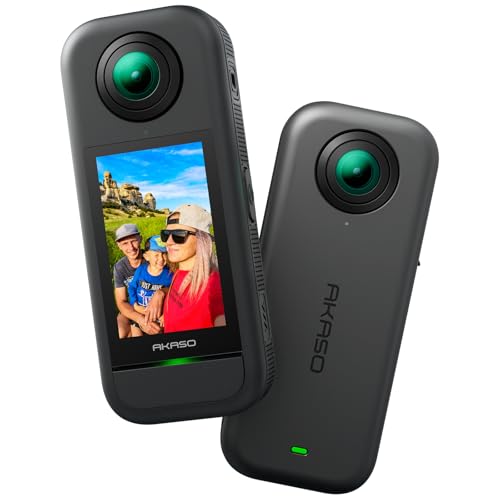
- 5.7K 360 video and 72MP 360 photos
- DNG8 RAW mode with dual 48MP sensors
- Stabilization and AI subject tracking
Best For: Photographers seeking high-resolution 360 capture in a compact action camera
Best Pocket Vlogging Alternative

- 330° rotating lens for solo framing
- 4K/30fps video and listed 75MP photos
- Face tracking, Wi-Fi, and 3-hour battery
Best For: Beginners creating portable vlogs rather than true 360-degree images
Best Creator Kit

- 5.7K 360 video and 72MP 360 photos
- RAW capture, stabilization, and subject tracking
- Includes invisible selfie stick and charging case
Best For: Creators wanting a ready-to-shoot 360 action-camera package
Best Beginner Vlogging Kit
4K Pocket Rotating-Lens Camera

- 4K video and listed 75MP photos
- 330° rotating lens for solo vlogging
- Includes 16GB card, tripod, and carrying bag
Best For: Beginners needing an affordable, portable non-360 content camera
Compact Legacy Option

- 4K 360-degree video and 15MP photos
- Lightweight 4.6-ounce body
- IP53 water resistance and app sharing
Best For: Casual users and compatible Samsung owners
Motorcycle Motion Pick
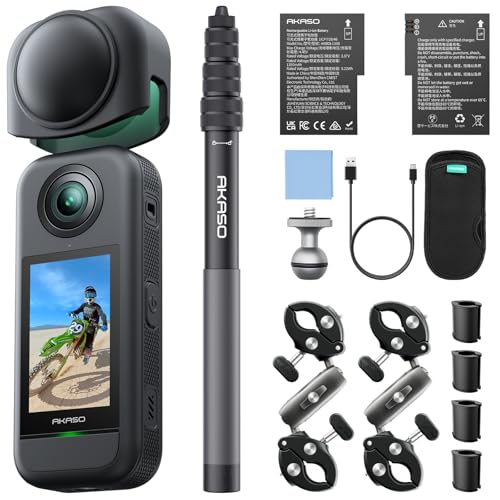
- 5.7K video and 72MP 360-degree photos
- SuperSmooth stabilization and Horizon Lock
- AI tracking and DNG8 RAW support
Best For: Motorcycle riders and outdoor photographers
Compact Starter Pick

- 200° dual-lens capture with a 2-inch IPS screen
- Includes 32GB storage and useful mounting accessories
- 1080p video with multiple creative shooting modes
Best For: Beginners, travel vloggers, and casual outdoor shooting
Standard High-Resolution Pick
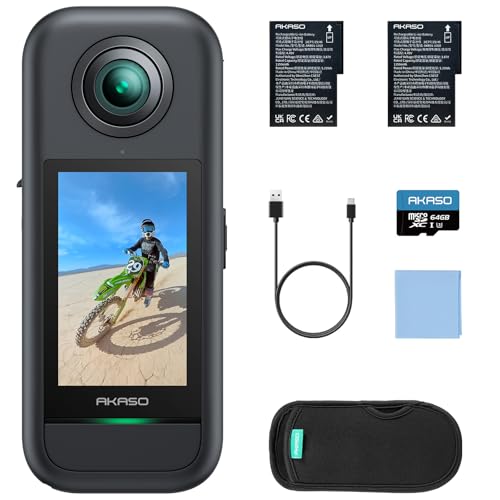
- 5.7K video and 72MP 360° photos
- RAW capture, AI tracking, and Horizon Steady
- Includes a 64GB microSD card but not the invisible selfie stick
Best For: Action photographers and solo creators who prioritize detail
Creator Bundle Pick

- 5.7K video and 72MP photos with RAW support
- Includes invisible selfie stick and charging case
- Bundled 256GB microSD card for extended recording
Best For: Solo creators building a complete action-photography kit
Best Value 360 Camera – AKASO 360 Standard Combo
For photographers looking at 360-degree cameras for photographers, the AKASO 360 Standard Combo offers high-resolution capture, strong stabilization, and RAW photo support in a compact action-camera design. Its standard package is worth considering if you want flexible reframing without needing a gimbal.
Best For: Photographers and creators who want high-resolution 360 photos, stabilized adventure footage, and editing flexibility.
Pros:
- Captures 5.7K 360-degree video and 72MP 360-degree photos.
- Dual 1/2-inch 48MP sensors and DNG8 RAW mode support detailed, editable images.
- 360-SuperSmooth stabilization, Horizon Steady, and AI subject tracking simplify handheld shooting.
- Compact, water-resistant body with a 2.29-inch screen.
Cons:
- HDR is not supported.
- Video quality may be limited in low-light conditions.
- The invisible selfie stick effect is supported, but the selfie stick is not included.
The Standard Combo has the core imaging features needed for reframing and action capture, though photographers who want the accessory included will need to consider the Creator Combo instead.
Best Pocket Vlogging Alternative – 4K 330° Rotating Lens Camera
Although it is not a 360-degree camera, this compact model may appeal to photographers comparing 360-degree cameras for photographers with portable content-creation tools. Its rotating lens, face tracking, 4K recording, and close-focus capability target solo vlogging rather than immersive panoramic photography.
Best For: Beginners and vloggers who prioritize a rotating lens, face tracking, close-ups, and easy wireless sharing.
Pros:
- 330-degree horizontal lens rotation and 180-degree manual vertical adjustment help with flexible framing.
- Records 4K video at 30fps and lists 75MP photo resolution.
- Smart face tracking and fast autofocus support solo recording and close-up subjects.
- Built-in Wi-Fi, a 1.72-inch touchscreen, and up to three hours of battery life suit mobile content creation.
Cons:
- It does not provide 360-degree capture.
- It is not water resistant.
- Face tracking is available only in video mode.
This is better viewed as a pocket vlogging camera than a panoramic photography tool. Choose it when rotating framing and straightforward social-video creation matter more than true 360 capture.
Best Creator Kit – AKASO 360 Creator Combo
The AKASO 360 Creator Combo is a strong option for photographers evaluating 360-degree cameras for photographers who want a more complete shooting package. It combines 5.7K 360 video, high-resolution stills, RAW capture, stabilization, and an included invisible selfie stick for reframed action footage.
Best For: 360 photographers and action creators who want advanced capture features plus included creator accessories.
Pros:
- Records 5.7K 360-degree video and captures 72MP 360-degree photos.
- Dual 1/2-inch 48MP sensors and DNG8 RAW mode offer detail and editing flexibility.
- 360-SuperSmooth, Horizon Steady, AI subject tracking, and shoot-first, frame-later workflows support dynamic shooting.
- Includes an invisible selfie stick, charging case, USB-C cable, and camera.
Cons:
- The package does not include a MicroSD card.
- Its listed weight is 0.54 kg, making it heavier than the Standard Combo.
- As an action camera, it uses fixed-focus lenses rather than interchangeable photography lenses.
The Creator Combo is the more convenient AKASO package for third-person perspectives and mobile production. Its included accessories add value for creators who plan to shoot immediately, while the missing MicroSD card remains an extra purchase.
Best Beginner Vlogging Kit – 4K Pocket Rotating-Lens Camera
This pocket camera is another non-360 alternative for shoppers researching 360-degree cameras for photographers but mainly needing a simple solo-vlogging setup. It combines 4K video, listed 75MP photos, a 330-degree rotating lens, Wi-Fi, and several included accessories.
Best For: First-time content creators who want a compact camera kit for travel, social video, and everyday recording.
Pros:
- Supports 4K video and lists 75MP still-photo resolution.
- The 330-degree rotating lens helps users film themselves with less camera adjustment.
- Wi-Fi enables wireless transfers to smartphones for editing and sharing.
- Includes a 16GB TF card, mini tripod, charging cable, wrist strap, and carrying bag.
Cons:
- It is not a true 360-degree camera.
- It is not water resistant.
- Battery life is listed at approximately 1.5 hours.
This kit favors convenience over immersive photography. It makes sense for beginners who want accessories and straightforward vlogging features, but photographers seeking full panoramic coverage should choose a dedicated 360 model.
Adventure Detail Pick – AKASO 360 Cycling Combo
For photographers seeking 360-degree cameras for photographers, the AKASO 360 Cycling Combo combines high-resolution capture with tools designed for moving subjects. It records 5.7K 360-degree video, captures 72MP 360-degree photos, and offers RAW support for added editing flexibility.
Best For: Cyclists and action photographers who want high-resolution 360-degree photos, stabilized video, and reframing flexibility.
Pros:
- Captures 72MP 360-degree photos and 5.7K video using dual 1/2-inch 48MP sensors.
- DNG8 RAW mode can provide greater dynamic range and editing flexibility, including in low light.
- 360-degree Horizon Lock, digital stabilization, and an invisible selfie stick support smoother action footage.
- AI subject tracking and shoot-first, frame-later workflows simplify subject-focused shooting.
Cons:
- This cycling combo does not include a microSD card.
- Fixed-focus fisheye lenses and digital stabilization may be less suited to conventional still photography.
The AKASO 360 is a strong option when action coverage and post-capture reframing matter most. Its RAW photo mode and high-resolution sensors also make it more flexible for photographers than a basic 360 action camera.
Compact Legacy Option – Samsung Gear 360 (2017)
Among 360-degree cameras for photographers, the Samsung Gear 360 (2017) is a compact, straightforward option for capturing 4K spherical video and 15MP photos. Its lightweight body, IP53 water resistance, and app-based editing make it practical for travel, events, and everyday use.
Best For: Casual photographers and Samsung-compatible users who prioritize portability, simple operation, and quick sharing.
Pros:
- Captures 360-degree video in 4K and still images at 15MP with dual 180-degree lenses.
- Lightweight 4.6-ounce design is easy to carry and hold.
- IP53 water-resistant rating adds protection for suitable outdoor use.
- Supports app-based preview, editing, and sharing, plus Samsung VR uploads.
Cons:
- Its 15MP still-photo resolution is lower than the newer AKASO alternatives in this roundup.
- Compatibility is centered on listed older Galaxy phones, selected iPhones, and Windows or Mac software.
- The supplied details describe a 2017 model, so it lacks the newer RAW and AI-focused features found on some current cameras.
The Gear 360 remains appealing for buyers who want a small, uncomplicated camera for immersive snapshots and 4K video. Check device compatibility carefully before choosing it, especially if you plan to edit from a newer phone.
Motorcycle Motion Pick – AKASO 360 Motorcycle Combo
The AKASO 360 Motorcycle Combo is one of the more action-oriented 360-degree cameras for photographers who want to record rides and reframe footage later. It combines 5.7K video, 72MP 360-degree photos, AI subject tracking, and stabilization features suited to fast-moving scenes.
Best For: Motorcycle riders and outdoor photographers who need stabilized immersive footage and flexible angle selection after capture.
Pros:
- Dual 1/2-inch 48MP sensors support 72MP 360-degree photos and 5.7K video.
- 360-degree SuperSmooth stabilization and Horizon Lock help reduce shake and keep footage level.
- AI subject tracking can help keep a moving subject centered.
- DNG8 RAW photos and shoot-first, frame-later capture offer useful post-production flexibility.
Cons:
- This motorcycle combo does not include a microSD card.
- The fixed-focus fisheye lenses and compact action-camera design may not replace a dedicated interchangeable-lens camera.
Choose this version when motorcycle-focused accessories and riding footage are more important than a general-purpose camera setup. Its resolution, RAW mode, and reframing workflow make it especially useful for documenting motion from multiple viewing angles.
Compact Starter Pick – X5 Pro 360° Action Camera
For photographers exploring 360-degree cameras for photographers on a budget, the X5 Pro offers a lightweight way to capture immersive travel, group, and action footage. Its 200° view, dual-lens design, built-in 32GB card, and 2-inch IPS display make it straightforward for casual shooting.
Best For: Travelers, vloggers, and beginners who want a compact 360° camera with included accessories.
Pros:
- Switchable dual lenses and a 200° view help capture people and scenery without aggressive cropping.
- Includes a pre-installed 32GB TF card, Type-C transfer, selfie stick, lanyard, and magnetic lens covers.
- Supports slow motion, time-lapse, burst, and loop recording modes.
- Lightweight 0.293-pound design with a claimed four-hour continuous recording time.
Cons:
- Video resolution is limited to 1080p, which provides less detail than higher-resolution alternatives.
- The included selfie stick does not automatically disappear from footage and may appear when the angle changes.
- Fixed focus and automatic exposure offer less manual control for advanced photography.
The X5 Pro is best viewed as an accessible entry-level option rather than a high-resolution stills camera. Choose it for portability, simple controls, and included essentials, but consider a more advanced model if reframing flexibility and image detail are priorities.
Standard High-Resolution Pick – AKASO 360 Standard Combo
The AKASO 360 Standard Combo is a strong fit for photographers seeking 360-degree cameras for photographers who want more detail and smoother action footage. It combines 5.7K video, 72MP 360° photos, RAW capture, digital stabilization, and AI subject tracking in a water-resistant handheld body.
Best For: Action shooters and creators who want high-resolution reframing, stabilized video, and RAW photo flexibility.
Pros:
- 5.7K 360° video and 72MP 360° photos provide substantially more detail for reframing and sharing.
- Dual 1/2-inch 48MP sensors and DNG8 RAW photo mode support sharper images and greater editing flexibility.
- 360° SuperSmooth stabilization and Horizon Steady help reduce shake and keep footage level.
- AI subject tracking and the invisible selfie-stick effect support solo filming and tracking shots.
Cons:
- The listed battery life averages 60 minutes, so extended shoots may require careful power planning.
- The Standard Combo does not include the invisible selfie stick.
- At 0.36 kg, it is less lightweight than the compact X5 Pro.
This package offers a useful balance of resolution, stabilization, and editing options for creators who want to shoot first and choose the angle later. Its main limitation is the shorter listed battery life and the need to purchase the invisible selfie stick separately.
Creator Bundle Pick – AKASO 360 Creator Combo
For photographers comparing 360-degree cameras for photographers with a focus on complete solo-shooting setups, the AKASO 360 Creator Combo adds practical accessories to the same high-resolution imaging platform. It offers 5.7K video, 72MP photos, RAW support, stabilization, tracking, and a bundled invisible selfie stick.
Best For: Creators who want a ready-to-use kit for stabilized action footage, reframing, and third-person shots.
Pros:
- 5.7K 360° video and 72MP photos provide detailed footage for selecting angles after recording.
- Dual 1/2-inch 48MP sensors, DNG8 RAW, and night and landscape modes support creative photography.
- SuperSmooth stabilization, Horizon Steady, and AI subject tracking help simplify moving shots.
- Includes a 256GB microSD card, charging case, USB-C cable, and invisible selfie stick.
Cons:
- The 0.54 kg package is heavier than the Standard Combo.
- The supplied information does not list a battery-life figure for this Creator Combo.
- Digital stabilization and fixed focus may provide less control than a more traditional interchangeable-lens setup.
The Creator Combo is the most complete choice of the three for solo creators who want the invisible-selfie-stick effect without adding another accessory. Its larger bundle and 256GB storage suit longer or more elaborate shoots, while the camera’s RAW and high-resolution modes give photographers room to refine results later.
How We Picked These 360-Degree Cameras for Photographers
We focused on cameras that offer a practical way to capture spherical photos or reframable video, while considering resolution, lens coverage, stabilization, portability, controls, included accessories, and likely editing workflow. The selection spans dedicated dual-lens 360 cameras, rotating-lens designs, and action-oriented bundles for cycling, motorcycling, and creator use.
Because specifications and bundled accessories can vary by seller, confirm the exact package contents, app compatibility, storage requirements, and return policy before buying.
Quick Comparison
| Camera type | Best suited to | What to check |
|---|---|---|
| Dual-lens 360 action camera | Action footage, reframing, travel | Stitching, stabilization, battery life, mounting kit |
| Rotating-lens pocket camera | Vlogging and occasional wide-angle shooting | Whether it captures true 360-degree stills or primarily rotating views |
| Older spherical camera | Basic 360 experiments and casual use | App support, battery condition, image quality, and compatibility |
| Creator or activity bundle | Hands-free shooting and frequent outdoor use | Included mounts, grips, protective gear, and spare batteries |
Key Buying Factors for 360-Degree Cameras for Photographers
Image Quality and Stitching
Higher resolution gives you more detail after reframing, but effective stitching is just as important. Look for clean seams, consistent exposure between lenses, and minimal ghosting around nearby subjects. A camera that handles exposure transitions well can outperform one with a larger headline number.
Lens Design and Shooting Perspective
True 360 cameras generally use multiple lenses to record the entire sphere at once. Rotating-lens cameras may be more compact, but their coverage and workflow can differ substantially. Check sample images to understand distortion, close-focus behavior, and the position of the stitching line.
Stabilization, Battery, and Durability
For walking, cycling, or motorcycle footage, electronic stabilization and a reliable horizon are essential. Also consider recording time, charging options, removable batteries, waterproofing, lens protection, and the cost of replacement lens covers.
Editing and File Compatibility
Confirm that the camera’s mobile and desktop software supports your phone, computer, operating system, and preferred export format. RAW still support, manual controls, interval shooting, and direct reframing can matter more to photographers than simple point-and-shoot operation.
Who Should Buy Which 360-Degree Cameras for Photographers?
Choose an action-focused AKASO bundle if you want stabilization, mounting flexibility, and an activity-specific accessory kit. Standard packages are generally the simplest starting point, while creator, cycling, or motorcycle bundles make more sense when their included mounts match your use.
A compact rotating-lens model may suit casual vloggers who prioritize portability and straightforward framing, but verify its coverage before treating it as a full spherical camera. The Samsung Gear 360 can appeal to shoppers seeking a familiar, budget-friendly entry point, provided its age and software compatibility fit your devices.
Finally, consider an X5 Pro-style dual-lens camera if you want a simple display and action-camera format. Whichever model you choose, prioritize sample image quality, current app support, replaceable lens protection, and the accessories you will actually use over resolution alone.