
The best wide-angle camera lenses for home studios help you fit more of a room, desk, backdrop, or product setup into the frame without moving the camera too far back. The right choice depends on your camera mount, sensor size, available light, and how much perspective distortion you can accept.
We’ve gathered 10 options spanning Sony APS-C, Canon EF, Canon RF-S, Canon EOS M, full-frame, and budget adapter-style lenses. Use the guide below to narrow the list by coverage, autofocus, aperture, and shooting style.
Best 10 Wide-Angle Camera Lenses for Home Studios Picks for 2026
Best Flexible Canon Wide Zoom

- Versatile 10-22mm focal range
- Fast AF with full-time manual focus
- Focuses as close as 9.5 inches
Best For: Canon EOS DSLR users needing adjustable framing
Best Budget Canon Studio Zoom

- Ultra-wide 10-18mm zoom range
- Optical image stabilization
- Quiet STM autofocus for video
Best For: Canon EOS creators recording stabilized studio video
Best Full-Frame Canon Prime

- Ultra-wide 14mm full-frame perspective
- Bright f/2.8 maximum aperture
- Autofocus for Canon EF DSLRs
Best For: Canon DSLR users wanting a fixed ultra-wide prime
Best Compact Zoom
Canon RF-S10-18mm F4.5-6.3 IS STM

- 10-18mm ultra-wide zoom for tight spaces
- Optical stabilization and STM autofocus
- Lightweight design for vlogging
Best For: Canon RF-S APS-C home studios and video creators
Best Low-Light Prime
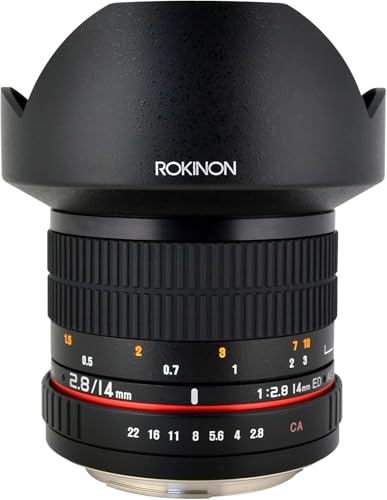
- Bright f/2.8 aperture for low light
- 115.7-degree view for expansive framing
- Manual-focus Canon EF prime lens
Best For: Canon EF studio users who want a bright ultra-wide perspective
Best Creative Fisheye
Altura Photo 8mm F/3.0 Fisheye
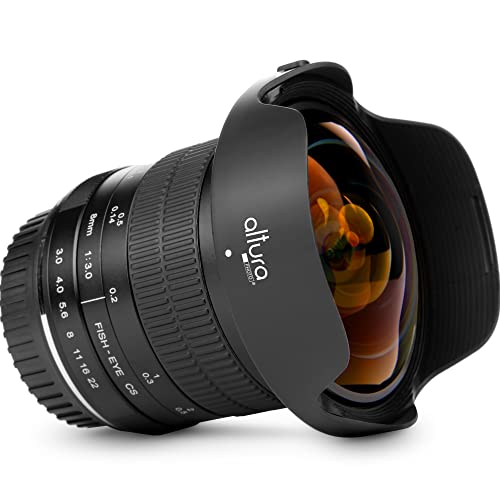
- 180-degree fisheye perspective
- Manual-focus Canon EF/EF-S mount
- Includes hood and protective case
Best For: Canon DSLR creators making dramatic or experimental studio content
Full-Frame Ultra-Wide Pick

- 14mm ultra-wide prime
- Built-in AE chip for Canon DSLR metering
- Manual focus; full-frame and APS-C compatible
Best For: Canon DSLR users needing expansive studio coverage
Flexible Add-On Choice

- 0.43x screw-on wide-angle conversion
- Detachable macro element
- Requires a compatible 49mm front thread
Best For: Users wanting wider views and macro from one accessory
Accessory Value Pick
SSE 58mm Wide Angle with Macro

- 0.43x wide-angle conversion
- Detachable macro lens for close-ups
- Includes cleaning accessories; needs 58mm compatibility
Best For: Canon DSLR users seeking an affordable wide-angle and macro add-on
Best APS-C Vlogging Lens – Sony E 11mm F1.8
For creators choosing wide-angle camera lenses for home studios, the Sony E 11mm F1.8 is a compact prime designed for APS-C Sony E-mount cameras. Its 104-degree angle of view, bright f/1.8 aperture, and quiet autofocus suit both talking-head video and still photography in tighter spaces.
Best For: Sony APS-C creators who want an ultra-wide lens for vlogging, studio video, and low-light shooting.
Pros:
- Bright f/1.8 aperture helps create background separation and supports shooting in lower light.
- Compact, lightweight design pairs well with APS-C and Super35 E-mount cameras.
- Fast, precise, quiet autofocus and reduced focus breathing benefit video work.
- Fixed-length focusing maintains balance while recording or shooting close subjects.
Cons:
- Compatible with Sony APS-C E-mount cameras rather than a broad range of mounts.
- As a fixed 11mm prime, it offers no focal-length flexibility.
- It is not water resistant.
This is a particularly strong home-studio choice when you need a wide perspective without adding much weight. Choose it over a zoom when the bright aperture, compact build, and consistent ultra-wide framing matter most.
Best Flexible Canon Wide Zoom – Canon EF-S 10-22mm
The Canon EF-S 10-22mm gives home-studio users a flexible wide-angle zoom for EOS digital SLR cameras. Its 10-22mm range lets you adjust framing without moving the camera, while close focusing and full-time manual focus add practical control for set-based shooting.
Best For: Canon EOS DSLR owners who need adjustable wide framing for studio scenes, landscapes, or close creative work.
Pros:
- 10-22mm zoom range covers both very wide and moderately wide compositions.
- Ultrasonic autofocus provides fast AF, with full-time manual focus available.
- Close-focusing distance of 9.5 inches supports detailed near-subject shots.
- Circular aperture design produces natural-looking highlights.
Cons:
- Designed for Canon EF-S systems and is not presented as a universal mount lens.
- The maximum aperture varies from f/3.5 to f/4.5, less bright than a fast prime.
- It is not water resistant.
For a home studio where framing needs change between wide room views and tighter compositions, this zoom is more adaptable than a fixed lens. It is a practical fit for Canon users who value range and close focusing over a brighter aperture.
Best Budget Canon Studio Zoom – Canon EF-S 10-18mm IS STM
The Canon EF-S 10-18mm f/4.5-5.6 IS STM is a practical option among wide-angle camera lenses for home studios, especially for Canon EOS users recording video. Its ultra-wide range, optical image stabilization, and stepping-motor autofocus are suited to stationary or handheld content creation.
Best For: Canon EOS users who want an affordable-feeling ultra-wide zoom with stabilized video and quiet focusing.
Pros:
- 10-18mm range helps fit more of a room or set into the frame.
- Optical image stabilization can help with handheld shooting.
- STM autofocus is designed for quiet video operation.
- Close focusing reaches 0.72 feet for near-subject compositions.
Cons:
- Its f/4.5-5.6 maximum aperture is relatively modest for low-light work.
- The supplied details list Canon EF/EF-S compatibility, so mount matching is important.
- It is not water resistant.
This lens makes sense when smooth, quiet video autofocus and stabilization are more important than a bright aperture. Its zoom range is useful for home setups where the camera position is fixed but the desired framing changes.
Best Full-Frame Canon Prime – Rokinon AF 14mm F2.8
The Rokinon AF 14mm F2.8 is a full-frame wide-angle prime for Canon EF-mount DSLRs. For home studios, its 14mm perspective can capture a broad set or room, while the f/2.8 aperture and autofocus provide a useful balance for stills and video-oriented setups.
Best For: Canon DSLR owners seeking a fixed ultra-wide prime for full-frame interiors, studio scenes, and broad compositions.
Pros:
- Fixed 14mm focal length delivers an expansive 83.6-degree angle of view.
- f/2.8 maximum aperture suits wide-angle shooting in less-bright conditions.
- Autofocus supports automatic operation while manual exposure modes are available.
- Ultra Multi-Coating is included for the optical design.
Cons:
- Fixed focal length provides less framing flexibility than a zoom.
- At 1.1 pounds, it is heavier than the compact Sony prime in this roundup.
- The supplied details identify it for Canon DSLRs with an EF mount.
This is a focused choice for Canon users who know they want a 14mm perspective and do not need to change focal lengths. It offers a wider full-frame view than many general-purpose lenses while retaining autofocus and a useful f/2.8 aperture.
Best Compact Zoom – Canon RF-S10-18mm F4.5-6.3 IS STM
For Canon EOS APS-C mirrorless users building a home studio, this ultra-wide zoom makes it easier to frame both presenter and background in tight spaces. Its 10-18mm range, optical stabilization, and autofocus make it a practical choice among wide-angle camera lenses for home studios, especially for vlogging and video.
Best For: Canon RF-mount APS-C creators who need a compact lens for vlogging, selfies, and confined studio setups.
Pros:
- 10-18mm range provides a broad 16-29mm-equivalent perspective for tight rooms.
- Optical image stabilization and STM autofocus support video shooting.
- Compact 5.28-ounce design is easy to handle and carry.
- Offers up to 0.5x magnification in manual-focus mode for close-up shots.
Cons:
- F/4.5-6.3 aperture is less suited to very low-light setups than a faster lens.
- Designed for Canon RF-S/compatible RF-mount mirrorless cameras, limiting compatibility.
- Not water resistant.
Choose this lens when flexibility, autofocus, stabilization, and a lightweight build matter more than a bright maximum aperture. It is particularly convenient for creators working close to their camera in a small room.
Best Low-Light Prime – Rokinon 14mm F2.8 Ultra Wide
The Rokinon 14mm F2.8 is a strong option for Canon EF users who want a bright, fixed ultra-wide perspective. Its 115.7-degree angle of view can capture a presenter and plenty of room context, while the f/2.8 aperture is useful for low-light home studios and video setups.
Best For: Canon EF photographers and videographers who prioritize a wide perspective, manual focus control, and low-light performance.
Pros:
- Fast f/2.8 maximum aperture supports brighter images in challenging light.
- 14mm focal length and 115.7-degree view suit expansive studio framing.
- 14-element, 10-group optical design is built for detailed images across the frame.
- Includes a built-in petal-type lens hood.
Cons:
- Manual focus requires more setup and control than an autofocus lens.
- No image stabilization.
- At 31.7 ounces, it is considerably heavier than a compact studio zoom.
This lens is a sensible fit when your Canon EF setup needs a wide, bright prime and you are comfortable focusing manually. Its substantial build favors deliberate studio work over lightweight, constantly changing setups.
Best Creative Fisheye – Altura Photo 8mm F/3.0 Fisheye
For creators seeking a distinctive look, the Altura Photo 8mm fisheye delivers an extremely broad 180-degree view. It can add dramatic perspective to a home studio, but its fisheye rendering is a creative effect rather than a conventional wide-angle view, making it best for specialized shots.
Best For: Canon EF and EF-S DSLR users who want dramatic fisheye perspectives, immersive views, or experimental studio footage.
Pros:
- 180-degree field of view creates an unusually expansive perspective.
- F/3.0 maximum aperture suits general studio shooting.
- Metal construction, an aspherical element, and multi-layer coating support durability and image definition.
- Includes a removable hood and protective lens case.
Cons:
- Manual focus requires hands-on focusing.
- Fisheye distortion may not suit natural-looking presenter or product shots.
- Not compatible with Canon mirrorless R and M cameras.
This is the most specialized option in the group. Select it when the goal is an exaggerated, immersive look; choose a rectilinear ultra-wide lens instead if you need straight lines and a more natural studio perspective.
Full-Frame Ultra-Wide Pick – Rokinon 14mm f/2.8 Canon EF
Rokinon AE14M-C 14mm f/2.8-22 Ultra Wide Angle Lens with Built-in AE Chip for Canon EF Digital SLR
Check Price On AmazonFor photographers building a home studio around a Canon EF DSLR, the Rokinon AE14M-C is a dedicated 14mm prime that can capture a broad scene. Its f/2.8 maximum aperture and full-frame and APS-C compatibility make it a practical option for wide-angle camera lenses for home studios, though focusing is manual.
Best For: Canon DSLR users who want a dedicated ultra-wide prime for expansive studio views.
Pros:
- Ultra-wide 14mm focal length for broad compositions.
- f/2.8 maximum aperture with an f/22 minimum aperture.
- Built-in AE chip supports automatic metering with Canon DSLR cameras.
- Works with both full-frame and APS-C cameras.
Cons:
- Manual focus only.
- Not water resistant.
- Fixed 14mm focal length provides no zoom flexibility.
This lens is a strong fit when maximum coverage matters more than autofocus or zoom convenience. Its 10.8-inch minimum focusing distance also gives some flexibility for closer studio compositions.
Flexible Add-On Choice – Altura Photo 49mm Wide Angle
The Altura Photo 0.43x lens is a screw-on accessory rather than a standalone lens, making it a convenient way to widen a compatible setup. For creators comparing wide-angle camera lenses for home studios, its detachable macro element adds close-up capability, but compatibility depends on having a 49mm front filter thread.
Best For: Canon or Sony mirrorless users with a compatible 49mm-thread lens who want one accessory for wider views and macro close-ups.
Pros:
- 0.43x design expands the view of a compatible lens.
- Detachable macro lens supports detailed close-ups of small objects.
- Compatible with numerous listed Canon, Sony, Fujifilm, and Sigma lenses.
- Screw-on design is simple to attach to a 49mm front thread.
Cons:
- Only fits lenses with a 49mm front filter thread.
- It is an add-on lens, so results depend on the host lens.
- Manual focus.
Check the diameter symbol and thread size on your existing lens before ordering. If it matches 49mm, this accessory offers a versatile, budget-conscious way to add wider framing and macro work to a home studio kit.
Accessory Value Pick – SSE 58mm Wide Angle with Macro
The SSE 58mm 0.43x lens is a screw-on wide-angle and macro accessory for compatible 58mm lenses. It can help expand framing in a home studio while also supporting close-up shots, making it a straightforward alternative among wide-angle camera lenses for home studios.
Best For: Canon DSLR owners with a compatible 58mm lens thread who want a wide-angle conversion kit with macro capability.
Pros:
- 0.43x conversion provides a wider view.
- Detachable macro lens supports close-up photography.
- Includes a lens cap keeper, cleaning pen, and cleaning kit.
- Compatible with the listed Canon EOS Rebel models and other 58mm lenses.
Cons:
- Requires a compatible 58mm lens thread.
- No image stabilization.
- Not zoomable.
Its included cleaning accessories add practical value for a small studio setup, but verify your lens diameter first. This is best viewed as a flexible add-on rather than a replacement for a dedicated wide-angle prime.
How We Picked the Best Wide-Angle Camera Lenses for Home Studios
We focused on lenses that can solve common home-studio problems: limited room, short camera-to-subject distances, indoor video, portraits, livestreams, product photography, and small backdrops. The selection includes native-mount lenses as well as third-party and accessory-style options, so compatibility deserves careful attention before purchase.
We compared focal length, maximum aperture, autofocus availability, sensor coverage, distortion characteristics, minimum focusing distance, and overall practicality. A very wide lens is not automatically better: it may exaggerate facial features or make straight lines bow near the edges.
Quick Comparison
| Best For | Look For | Main Trade-Off |
|---|---|---|
| Small rooms and talking-head video | 10–14mm equivalent coverage and autofocus | More edge distortion |
| Low-light home studios | Bright aperture such as f/1.8 or f/2.8 | Prime lenses do not zoom |
| Flexible framing | Wide-angle zoom | Often slower maximum aperture |
| Creative effects | Fisheye or ultra-wide design | Strong distortion |
| Budget expansion of a kit lens | Front-mounted wide-angle converter | Potential softness and vignetting |
Key Buying Factors for Wide-Angle Camera Lenses for Home Studios
Mount and Sensor Compatibility
Check the exact camera mount first. Canon EF, Canon EF-S, Canon RF-S, Sony E, Canon EOS M, and full-frame coverage are not interchangeable categories. EF-S lenses are designed for Canon APS-C DSLRs, while RF-S lenses are for Canon’s RF-mount APS-C mirrorless cameras. An adapter may solve physical mounting, but it does not guarantee autofocus, exposure control, or full image coverage.
Focal Length and Perspective
For a cramped studio, 10mm to 14mm on APS-C or full-frame ultra-wide coverage can make setup easier. Keep the camera level when possible, and avoid placing faces or products too close to the edges. A moderate wide angle is usually more flattering than the widest available setting.
Aperture, Autofocus, and Video Handling
A wider aperture helps in dim rooms and can provide more subject separation. Autofocus and quiet focusing are especially valuable for video, livestreams, and solo shooting. Manual-focus lenses can work well for locked-off product scenes, but they require more setup.
Distortion and Close Focusing
Look for lens-correction support if you photograph architecture, desks, shelves, or straight-edged products. Macro capability can be useful for close product details, but accessory converters and fisheye lenses may produce less consistent sharpness across the frame.
Who Should Buy Which Wide-Angle Camera Lenses for Home Studios?
Choose a bright APS-C prime if you film yourself in a small room and want dependable low-light performance. Pick a wide-angle zoom if your studio layout changes or you need to switch quickly between a person, desk, and full backdrop. Full-frame Canon users should prioritize EF lenses with confirmed autofocus or exposure compatibility for their body.
Fisheye lenses suit experimental videos, immersive effects, and creative room shots rather than natural-looking portraits. Front-mounted wide-angle macro accessories are best for buyers who want an inexpensive coverage boost with an existing compatible lens and understand that image quality may be more limited. Before ordering, confirm the camera model, mount, filter or front-thread size, and whether the lens provides the electronic functions you need.