
Choosing among camera drone systems for professional studios means balancing image quality, flight reliability, stabilization, control range, and production workflow—not simply selecting the highest advertised resolution.
We assembled this 10-product roundup to help studios compare compact DJI platforms, AI-assisted obstacle-avoidance drones, and feature-rich GPS quadcopters for commercial footage, location scouting, real-estate work, and creative production.
Best 10 Camera Drone Systems for Professional Studios Picks for 2026
Compact Pro Pick
DJI Mini 5 Pro Fly More Combo Plus

- 1-inch sensor with 4K/60fps HDR video
- 225° gimbal rotation and vertical filming
- Three batteries, ND filters, and DJI RC 2 included
Best For: Mobile studios wanting premium capture in a compact package
Feature-Heavy Utility Pick

- 4K camera with 3-axis gimbal and bottom camera
- Tablet-style controller with Google Play access
- Payload release and 360° laser obstacle avoidance
Best For: Field teams seeking versatile utility and long flight sessions
AI Flight Pick

- 4K camera with 3-axis gimbal and EIS
- LiDAR-powered 360° obstacle detection
- Built-in-screen controller and up to 47-minute flight time
Best For: Teams wanting assisted flight and simplified 4K aerial capture
Long-Session Imaging Pick
Bwine F7GIM 4K/6K Camera Drone

- 6K photos and 4K/30fps video
- 3-axis brushless gimbal with GPS smart modes
- Up to 70 minutes total flight time with two batteries
Best For: Outdoor crews planning extended photography or inspection sessions
Compact GPS Value Pick

- Three batteries provide up to 90 minutes of stated flight time
- 4K camera with adjustable 100° wide-angle lens
- GPS automation includes return-to-home and Follow Me
Best For: Budget-conscious creators needing long flight sessions and simple automated capture
Feature-Packed Production Alternative
Bingchat Professional 4K Drone

- 3-axis gimbal and EIS support stabilized 4K capture
- Tablet controller includes Android and Google support
- Laser obstacle avoidance and payload release add field flexibility
Best For: Feature-focused operators needing tablet control and specialized flight functions
Polished Lightweight Studio Pick

- 3-axis gimbal delivers stabilized 4K video
- 10 km maximum HD video transmission
- Two-battery combo supports up to 62 minutes of stated flight time
Best For: Creators wanting compact, stabilized 4K capture with straightforward operation
Screen-Controlled Starter
GPS 4K Drone with Built-In Display

- 4.5-inch controller screen for phone-free flying
- Adjustable 4K camera with FPV transmission
- Two batteries provide about 60 minutes total flight
Best For: Beginners and casual aerial creators
Extended-Flight Creator
GPS 4K Drone with 90-Minute Runtime
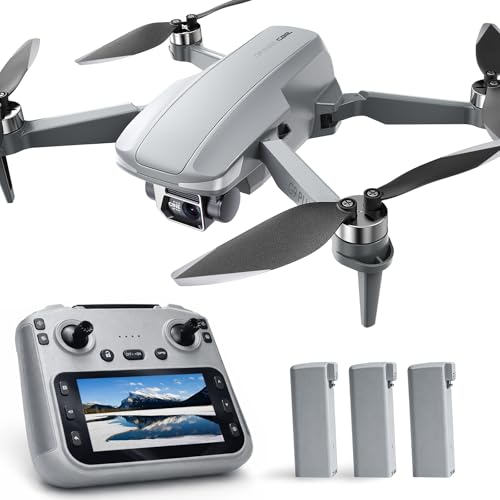
- Three batteries provide up to 90 minutes total flight
- 4.5-inch controller display and EIS
- GPS Follow Me, Circle Fly, and return-to-home modes
Best For: Long outdoor shoots and beginner creators
Phone-Free Travel Flyer

- 4.5-inch built-in display removes phone dependence
- Adjustable 4K camera and real-time FPV viewing
- Two batteries offer up to 60 minutes combined flight
Best For: Portable travel filming and beginner-friendly flights
Compact Pro Pick – DJI Mini 5 Pro Fly More Combo Plus
For studios seeking camera drone systems for professional studios that can travel easily, the DJI Mini 5 Pro combines a 1-inch CMOS sensor, 4K/60fps HDR video, a compact sub-250 g design, and extensive included accessories. Its flexible gimbal and subject tracking add versatility for polished aerial production.
Best For: Mobile creators and studio teams prioritizing image quality, portability, and extended shooting sessions.
Pros:
- 1-inch CMOS sensor supports 4K/60fps HDR video and 50MP stills.
- 225° gimbal rotation enables true vertical filming and unusual camera angles.
- ActiveTrack 360° and omnidirectional obstacle sensing support safer, more controlled flights.
- Combo includes three batteries, ND filters, charging hub, DJI RC 2, and 42GB internal storage.
Cons:
- The DJI Fly app must be downloaded from DJI rather than Google Play.
- Night flying may require permits depending on local regulations.
This is the strongest fit when a professional studio needs a compact system without giving up advanced capture features. The included Fly More accessories also reduce the need for immediate add-on purchases.
Feature-Heavy Utility Pick – Bingchat AE86 Pro Max Drone
The Bingchat AE86 Pro Max takes a feature-heavy approach to camera drone systems for professional studios, pairing a 4K camera and 3-axis gimbal with a large tablet-style controller. Its payload-release function, obstacle avoidance, long transmission range, and extended batteries suit varied field workflows.
Best For: Outdoor teams needing long flights, a large-screen controller, and utility-oriented features such as payload release.
Pros:
- 4K camera with 3-axis gimbal, EIS, 20x digital zoom, and a bottom camera.
- Tablet controller includes Google services and can run apps through Google Play.
- Built-in liftable 360° laser obstacle avoidance and multiple flight modes expand flexibility.
- Two extended batteries are advertised for up to 90 minutes of total flight time.
Cons:
- Its larger feature set may be more than a studio needs for straightforward filming.
- The notes emphasize keeping away from trees, so obstacle avoidance should not replace careful flight planning.
- Some advertised capabilities depend on suitable signal conditions and open space.
Choose this system when operational versatility matters as much as footage. The tablet controller and payload feature distinguish it from simpler camera drones, though teams should verify local requirements and operating conditions before deployment.
AI Flight Pick – DCX Volo X EZ AI Drone
For studios looking for camera drone systems for professional studios with simplified flight assistance, the DCX Volo X EZ AI pairs AI-assisted controls with a 4K camera, 3-axis gimbal, EIS, and a built-in-screen remote. LiDAR-based obstacle detection and automated return-to-home add practical support during shoots.
Best For: Small production teams and experienced beginners who want assisted flight with stabilized 4K capture.
Pros:
- 4K camera, 3-axis gimbal, and EIS are designed for stable aerial footage.
- AI-assisted Follow Me, obstacle avoidance, and precision Return-to-Home simplify operation.
- Built-in touchscreen controller avoids the need to rely on a separate phone screen.
- Advertised flight time reaches up to 47 minutes with the upgraded battery.
Cons:
- The supplied details list a 6000mAh upgraded battery but also cite 5000mAh in the specifications.
- Users must remove the foam padding under the camera before first use to avoid restricting the gimbal.
- Smart features do not eliminate the need for careful flight planning and supervision.
The Volo X EZ AI is a practical middle ground for teams that value assisted operation and a self-contained controller. Its stabilized 4K system is compelling for repeatable shots, while the battery specification should be confirmed before purchase.
Long-Session Imaging Pick – Bwine F7GIM 4K/6K Camera Drone
The Bwine F7GIM is aimed at camera drone systems for professional studios that need stabilized footage and extended field time. It combines 6K photo capture, 4K/30fps video, a 3-axis brushless gimbal, GPS flight modes, and a stated 70-minute total flight time across two batteries.
Best For: Outdoor photography, inspections, and studio crews planning longer shoots away from charging facilities.
Pros:
- 18MP camera captures 6K photos and 4K/30fps video.
- 3-axis brushless gimbal is designed to improve stability in wind and during faster flight.
- GPS modes include follow, orbit, cruise control, waypoint planning, and automatic return.
- Two batteries provide up to 70 minutes total flight time, with up to 35 minutes per flight.
Cons:
- Real-time transmission uses wired digital transmission, so setup requires the correct data cable.
- A MicroSD card is recommended, and Mac users may need to format it as MS-DOS (FAT).
- Its 4K video capture is specified at 30fps rather than 60fps.
The F7GIM stands out for long outdoor sessions and a broad set of GPS-assisted shooting modes. It is a capable value-oriented option for field production, provided the crew is comfortable with its wired transmission setup and storage requirements.
Compact GPS Value Pick – N11 Pro 4K GPS Drone
For buyers comparing camera drone systems for professional studios on a budget, the N11 Pro emphasizes long airborne sessions and automated flight features in a compact package. Its 4K camera, GPS positioning, optical-flow support, and three-battery setup make it useful for casual production scouting and mobile shoots, though its specifications are more entry-level than studio-grade.
Best For: Budget-conscious creators who prioritize flight time, GPS assistance, and portability.
Pros:
- Includes three batteries for up to 90 minutes of stated flight time.
- 4K camera with a remotely adjustable 100° wide-angle lens.
- GPS return-to-home, Follow Me, Tap Fly, and Point of Interest modes.
- Brushless motors and a stated control range of up to 3,328 feet.
Cons:
- Its 4K video specification is less detailed than the higher-end gimbal-equipped options here.
- No charger is listed among the included components.
- At under 0.55 lb, it is lightweight but may be less robust in demanding professional workflows.
The N11 Pro is best viewed as a low-cost aerial capture tool rather than a full professional studio platform. Its extended battery bundle and GPS automation are appealing for simple outdoor footage, while serious production teams may want stronger stabilization and imaging controls.
Feature-Packed Production Alternative – Bingchat Professional 4K Drone
Among camera drone systems for professional studios, the Bingchat Professional Drone stands out for its integrated tablet controller, 3-axis gimbal, obstacle avoidance, and payload-release feature. It offers a broad set of field-oriented functions, but buyers should confirm workflow compatibility and local operating requirements before using it for commercial production.
Best For: Operators who want a feature-rich control station and specialized functions such as waypoint flight or payload release.
Pros:
- Touchscreen Android controller can also function as a tablet with Google support.
- 4K camera combines a 3-axis gimbal with EIS anti-shake stabilization.
- 360° laser obstacle avoidance, GPS return-to-home, and waypoint flight are included.
- Two batteries are rated for up to 84 minutes of flight time in no-wind conditions.
Cons:
- The listing’s 50x zoom is digital, so it should not be treated as optical zoom.
- Long stated flight time depends on conditions and charging with the supplied cables.
- The extensive feature set may require more setup and testing than a simpler beginner drone.
This model has the broadest feature list of the three, especially for specialized field work and tablet-based operation. Its gimbal, safety functions, and payload capability are notable, but professional teams should validate image quality, app stability, and regulatory fit for their specific studio projects.
Polished Lightweight Studio Pick – DJI Mini 4K Combo
The DJI Mini 4K is a strong fit for buyers seeking camera drone systems for professional studios without moving to a larger aircraft. Its under-249-gram design, 3-axis gimbal, 10 km video transmission, and QuickShots make it a practical choice for lightweight production kits and repeatable aerial sequences.
Best For: Creators who want a compact, beginner-friendly drone with stabilized 4K video and long-range transmission.
Pros:
- 3-axis gimbal supports smooth, cinematic-looking 4K footage.
- 10 km maximum HD video transmission is useful for broad outdoor locations.
- Two-battery combo provides up to 62 minutes of stated flight time.
- GPS return-to-home, stable hovering, and QuickShots simplify operation.
Cons:
- The 12 MP still-image resolution is more modest than the Bingchat listing’s stated figure.
- The DJI Fly app must be downloaded from DJI’s official website for Google Play users.
- Under-249-gram regulatory advantages depend on how and where the drone is flown.
The Mini 4K offers the most balanced blend of portability, stabilization, transmission range, and ease of use in this group. It is a sensible entry point for professional-style aerial content, although studios needing advanced imaging, larger sensors, or production-specific accessories may require a higher-tier platform.
Screen-Controlled Starter – GPS 4K Drone with Built-In Display
For shoppers comparing camera drone systems for professional studios, this foldable GPS model offers a straightforward setup with a dedicated 4.5-inch screen controller. Its adjustable 4K camera, dual-battery runtime, and return-to-home features make it a practical option for basic aerial photography, inspections, and learning advanced flight modes.
Best For: Beginners and casual creators who want phone-free flight control, portable storage, and extended flying time.
Pros:
- Built-in 4.5-inch controller screen eliminates the need for a smartphone or app.
- Adjustable 90-degree 4K camera supports flexible framing and live FPV viewing.
- Two batteries provide approximately 60 minutes of total flight time.
- GPS return modes, optical-flow indoor positioning, and brushless motors support easier operation.
Cons:
- The supplied information does not indicate professional-grade recording formats or advanced stabilization.
- Its beginner-oriented design may be limiting for demanding studio production workflows.
At 220 g, the drone is compact and travel-friendly, while its integrated display simplifies operation in the field. It is better suited to entry-level content, property checks, and everyday aerial use than to high-end commercial cinematography.
Extended-Flight Creator – GPS 4K Drone with 90-Minute Runtime
For camera drone systems for professional studios that need longer sessions without frequent battery swaps, this foldable GPS drone stands out for its three-battery package and advertised 90-minute total flight time. The built-in HD controller display, EIS, intelligent flight modes, and 3,280-foot control range add flexibility for outdoor content capture.
Best For: Outdoor creators and beginners who prioritize extended flight sessions, follow modes, and an integrated viewing screen.
Pros:
- Three batteries are rated for up to 90 minutes of combined flight time.
- Built-in 4.5-inch HD display provides live FPV viewing without a phone.
- GPS supports return-to-home, Circle Fly, and Follow Me modes.
- Foldable under-249g design includes a protective carrying case and lists a 3,280-foot maximum range.
Cons:
- The listing states that no charger is included.
- Supplied specifications list 2K video capture despite the product title’s 4K camera claim, so buyers should verify output details.
- The feature set may not meet advanced professional production requirements.
This is the strongest option in the group for maximizing time in the air and experimenting with automated flight paths. Its portability and screen controller are useful for field work, although output specifications should be confirmed before using it for studio deliverables.
Phone-Free Travel Flyer – Foldable GPS 4K Camera Drone
For buyers evaluating camera drone systems for professional studios on a portable budget, this model combines a built-in 4.5-inch controller screen with a foldable under-249g body. Its 4K camera, GPS safety features, and two-battery setup make it a convenient choice for travel footage, inspections, and straightforward aerial shooting.
Best For: Travelers and first-time pilots who want a compact drone with phone-free viewing and practical GPS flight assistance.
Pros:
- Dedicated 4.5-inch screen controller displays live footage without requiring a phone.
- Adjustable 90-degree 4K camera supports different aerial perspectives.
- Two batteries provide up to 60 minutes of combined flight time.
- GPS return modes, Follow Me, Waypoint Flight, and Point of Interest add useful flight options.
Cons:
- The supplied notes do not specify advanced video stabilization or professional recording formats.
- Its beginner-focused controls and Wi-Fi connectivity may be less suitable for demanding studio capture.
The HC019 emphasizes ease of use and portability, with optical-flow positioning for indoor hovering and brushless motors for quieter operation. It is a sensible everyday aerial camera, but professional studios should compare its output and transmission capabilities with higher-end systems.
How We Picked These Camera Drone Systems for Professional Studios
We focused on the features that most affect real-world aerial production: camera sensor and video specifications, gimbal or electronic stabilization, flight time, transmission range, obstacle sensing, GPS functions, controller design, portability, and included accessories. We also considered whether each drone’s feature set appears practical for repeatable shoots rather than evaluating headline resolution alone.
Because the selection includes both established DJI models and less familiar alternatives, buyers should verify current specifications, app compatibility, firmware support, spare-part availability, and local flight regulations before ordering. Advertised flight times and transmission distances are typically measured in ideal conditions and may be lower during professional use.
Quick Comparison
| Priority | Look for | Best fit |
|---|---|---|
| Image quality | Larger sensor, stable 4K capture, and a reliable gimbal | Commercial video and polished client deliverables |
| Operational reliability | GPS positioning, return-to-home, obstacle sensing, and dependable controls | Repeatable outdoor shoots |
| Long sessions | Multiple batteries, efficient charging, and realistic flight endurance | Events, surveys, and location coverage |
| Mobility | Foldable design, compact case, and a lightweight controller | Traveling crews and fast setup |
Key Buying Factors for Camera Drone Systems for Professional Studios
Camera and Stabilization
Prioritize sensor size, dynamic range, frame-rate options, and consistent color over the 4K label alone. A three-axis mechanical gimbal generally delivers smoother footage than electronic stabilization, especially during pans and windy flights. Confirm whether the workflow supports the file formats and frame rates your editors use.
Flight Safety and Control
GPS hold, automatic return-to-home, adjustable obstacle sensing, and a clear live feed can reduce risk on production days. A dedicated controller may be more dependable than a phone-only setup, while an integrated display can speed up deployment but may limit upgrade flexibility.
Endurance and Logistics
Compare included batteries, charging arrangements, replacement costs, and realistic flight time. A multi-battery bundle can be more valuable than a small difference in maximum range. Check wind resistance, operating temperature, storage, and whether batteries are permitted for your travel plans.
Compliance and Support
Professional studios should confirm registration, pilot-qualification, airspace, privacy, and insurance requirements in every location. Evaluate manufacturer support, firmware updates, repair options, and the availability of propellers and batteries before committing to an unfamiliar platform.
Who Should Buy Which Camera Drone Systems for Professional Studios?
Choose a compact DJI system if portability, mature software, dependable stabilization, and a streamlined production workflow matter most. These models are especially appealing to small crews, traveling filmmakers, and studios that value predictable operation.
Consider an AI or obstacle-avoidance-focused drone when autonomous tracking and collision awareness are central to the shoot, but test detection performance in the specific environments where you work. GPS drones with multiple batteries and large-screen controllers can suit buyers prioritizing endurance, straightforward monitoring, and value for occasional commercial projects.
For demanding client work, treat any advertised specification as a starting point: review sample footage, test transmission stability, confirm regulatory compatibility, and maintain a preflight checklist. The best choice is the system that consistently produces usable footage while fitting your crew, locations, budget, and post-production pipeline.