
Compact portable home generators give you a practical way to keep essential devices running during outages without committing to a permanently installed standby system. This roundup includes quiet gas-powered inverters and portable power stations for different backup, camping, and RV needs.
Compare output, fuel or charging options, battery chemistry, noise, portability, and outlet selection before choosing. The right model depends on whether you need short-term device charging or enough power for larger household essentials.
Best 10 Compact Portable Home Generators Picks for 2026
Best Compact Gas Option
2800W Quiet Inverter Generator

- 2,800 peak and 2,000 running watts
- Under 58 dBA with less than 3% THD
- About 40 pounds with multiple charging ports
Best For: Quiet camping and small-load home backup
Best Lightweight Power Station
Jackery Explorer 300 Portable Power Station

- 292Wh capacity at about 7.1 pounds
- 300W rated output and 600W peak
- Solar-compatible with six device connections
Best For: Portable charging for electronics and CPAP use
Best Higher-Output Gas Option

- 4,400 peak and 3,400 running watts
- 30A RV outlet and 14-hour low-load runtime
- Overload protection and low-oil shutdown
Best For: RV use and higher-demand portable backup
Best Fast-Charging Battery Backup
BLUETTI Elite 30 V2 Power Station

- 600W continuous and 1,500W lifting mode
- 0–80% wall charging in about 45 minutes
- 10ms UPS with 288Wh LFP battery capacity
Best For: Quiet blackout backup and fast device charging
Quiet High-Capacity Pick
PowerSmart 4000W Inverter Generator

- 3,200 running watts with under 3% THD
- Below 59 dBA from 23 feet
- Parallel-ready with multiple outlet types
Best For: Home backup and camping with higher power needs
Lightest Battery Option
ALLWEI 300W Portable Power Station
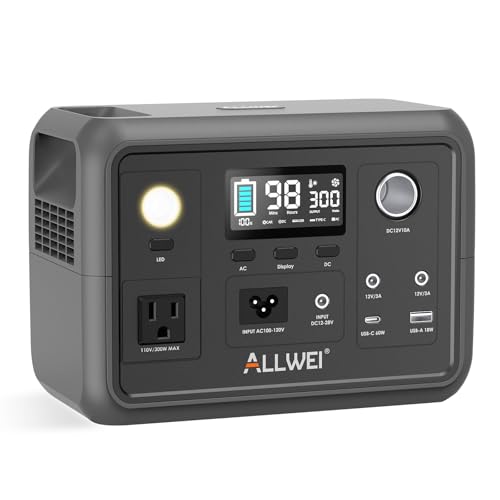
- 6.4-pound LiFePO4 battery power station
- 300W continuous, 600W peak output
- AC, car, solar, and dual charging options
Best For: Small electronics, short outages, and travel
Ultra-Light Gas Pick
GENMAX GM1200i Inverter Generator

- 1,000 running watts with under 3% THD
- Only 25.3 pounds with a carry handle
- CO shutdown and up to 6.5-hour runtime
Best For: Camping and light emergency home backup
Best Lightweight Solar Pick
Yewpiny EM300 300W Power Station
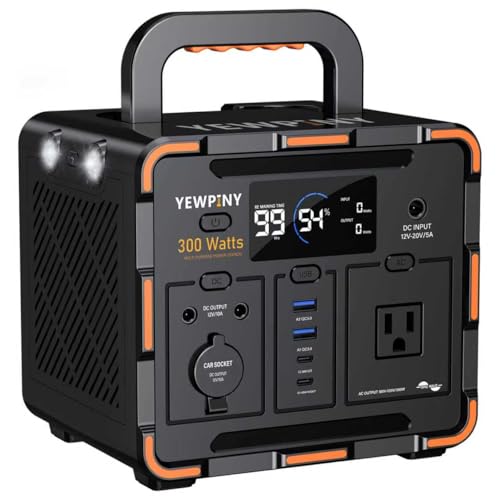
- 259Wh LiFePO4 battery
- 300W pure sine wave output
- Solar, wall, and car charging
Best For: Camping, small electronics, and limited emergency backup
Best High-Output Gas Pick
ERAYAK 4500P Inverter Generator

- 3,500W running output
- 60.5 dB(A) rated operation
- RV outlet and parallel capability
Best For: Home backup, RVs, and larger electrical loads
Best Compact Gas Option – 2800W Quiet Inverter Generator
This 2800-watt inverter generator is a practical choice among compact portable home generators when you need gasoline-powered backup for camping, RV use, or selected household essentials. Its 2,000 running watts, compact body, built-in handle, and under-58-dBA operation balance portability with useful output.
Best For: Campers and homeowners who want quiet, portable gasoline backup for electronics and small essential loads.
Pros:
- Provides 2,800 peak watts and 2,000 running watts with a 9-hour runtime at 25% load.
- Inverter output has less than 3% THD for phones, laptops, cameras, and other sensitive electronics.
- Includes AC, DC, USB, and USB-C ports, plus ECO mode and parallel capability.
- Weighs about 40 pounds and operates under 58 dBA from 23 feet.
Cons:
- Runs on gasoline, so it requires fuel storage and outdoor operation.
- The listed one-year warranty is shorter than some competing options.
- A high-altitude kit may be needed for frequent use above 4,000 feet.
Choose this model if quiet operation and clean inverter power matter more than maximum whole-home capacity. It is compact enough for transport while still offering useful emergency and campsite output.
Best Lightweight Power Station – Jackery Explorer 300 Portable Power Station
The Jackery Explorer 300 is one of the easiest compact portable home generators to carry, weighing about 7.1 pounds and using a 292Wh battery. Because it produces no fuel exhaust, it suits indoor emergency charging as well as camping, travel, and other low-power needs.
Best For: Travelers, campers, and households needing lightweight battery backup for phones, laptops, cameras, or a CPAP machine.
Pros:
- Lightweight design provides 292Wh of capacity in a compact form.
- Offers 300 watts of rated output and 600 watts of peak power.
- Supports up to six devices through AC, USB-C, USB-A, and car-port connections.
- Can recharge from compatible solar panels, including approximately 80% in 2.8 hours with a 100W panel.
Cons:
- Its 300-watt output is not intended for high-demand appliances.
- Solar panels are optional rather than included.
- Battery runtime varies by device and load, with the listed runtime at five hours.
This is a better fit for electronics and personal devices than for running refrigerators, heaters, or other large appliances. Its low weight and solar compatibility make it especially convenient for mobile backup.
Best Higher-Output Gas Option – 4400W RV Inverter Generator
For shoppers comparing compact portable home generators that can also support an RV, this 4,400-watt open-frame inverter model offers more output than small entry-level units. It combines 3,400 running watts, a 30A RV outlet, and a claimed 14-hour runtime at 25% load.
Best For: RV owners and households seeking higher-output gasoline backup in a portable package.
Pros:
- Delivers 4,400 peak watts and 3,400 running watts.
- Includes a 30A RV-ready outlet alongside two 120V AC ports and a 12V DC port.
- Two-gallon tank supports up to 14 hours of runtime at 25% load.
- Features inverter technology, ECO mode, overload protection, and low-oil shutdown.
Cons:
- At about 57 pounds, it is heavier than the smaller inverter and battery models here.
- Its open-frame design may be less convenient for quiet residential settings.
- Gasoline operation requires outdoor placement, fueling, and maintenance.
This model makes sense when RV compatibility and longer low-load runtime are priorities. Its higher capacity improves flexibility, but the added weight and open-frame format reduce portability compared with smaller options.
Best Fast-Charging Battery Backup – BLUETTI Elite 30 V2 Power Station
The BLUETTI Elite 30 V2 is a compact battery power station for shoppers who want clean, quiet emergency energy without gasoline. Its 288Wh capacity, 600-watt continuous output, and 9.5-pound weight make it useful for electronics, small devices, camping, and short-term blackout backup.
Best For: Home users and campers who value fast recharging, UPS protection, and portable battery power.
Pros:
- Provides 600 watts continuously and up to 1,500 watts in Power Lifting Mode.
- Reaches 80% charge in about 45 minutes from a compatible wall charger.
- Offers a 10ms UPS switch for devices such as laptops, routers, and CPAP machines.
- Supports AC, solar, car, and other charging methods with eight charging modes.
Cons:
- The 288Wh capacity limits runtime for high-wattage appliances.
- Solar charging requires a compatible panel, which is not listed among the included components.
- Power Lifting Mode does not change the unit’s 600-watt continuous rating.
This is a strong fit for quiet indoor backup and quick turnaround between uses. Consider it for essential electronics and selected small appliances rather than extended whole-home power.
Quiet High-Capacity Pick – PowerSmart 4000W Inverter Generator
For shoppers comparing compact portable home generators, the PowerSmart 4000W model offers substantial output in a relatively manageable package. Its inverter system produces clean power with under 3% THD, while Eco Mode, a 1.3-gallon tank, and noise output below 59 dBA support practical home backup and camping use.
Best For: Home backup users and campers who need enough capacity for several sensitive electronics or moderate loads.
Pros:
- Provides 4,000 starting watts and 3,200 running watts of clean inverter power.
- Offers versatile connections, including 120V outlets, a 30A twist-lock outlet, DC output, and dual USB ports.
- Runs below 59 dBA from 23 feet away and supports parallel operation with a second compatible generator.
- Includes a two-year limited warranty and lifetime technical support.
Cons:
- At 50.7 pounds, it is less convenient to carry than smaller generators.
- The parallel kit is sold separately.
- It requires gasoline and manual recoil starting.
This is a strong choice when power capacity matters more than minimum size. Its clean output and broad outlet selection make it flexible, while the quiet operation helps it fit camping or residential settings.
Lightest Battery Option – ALLWEI 300W Portable Power Station
The ALLWEI 300W is a compact portable home generator alternative for low-power emergencies, travel, and outdoor use. Its 256Wh LiFePO4 battery delivers 300W continuously, weighs just 6.4 pounds, and can recharge from an outlet, car, or compatible solar panel.
Best For: Users who need quiet battery backup for phones, laptops, CPAP machines, small electronics, or other modest loads.
Pros:
- Lightweight 6.4-pound design measures 9.25 by 5 by 6.8 inches.
- Provides pure-sine-wave 300W output with up to 600W peak power.
- Offers six output options, including AC, USB-A, USB-C, DC, and a car port.
- Supports AC, vehicle, solar, and dual AC-plus-solar recharging.
Cons:
- Its 300W continuous output cannot handle larger home appliances.
- Solar panels are sold separately.
- Listed runtime is approximately 45 minutes.
Choose this power station when portability and silent operation are more important than high wattage. The LiFePO4 battery, multiple charging methods, and built-in emergency light make it especially useful for short outages and mobile use.
Ultra-Light Gas Pick – GENMAX GM1200i Inverter Generator
The GENMAX GM1200i is a practical entry point among compact portable home generators, combining 1,000 running watts with a 25.3-pound frame. Its inverter output stays below 3% THD, and the gas engine includes Eco Mode, CO detection shutdown, and up to 6.5 hours of runtime at 50% load.
Best For: Campers and homeowners who need portable gasoline power for lights, fans, TVs, small tools, and sensitive electronics.
Pros:
- Produces 1,200 starting watts and 1,000 running watts of clean inverter power.
- At 25.3 pounds, it is easy to transport using the built-in handle.
- Operates as low as 58 dBA at 25% load and offers an Eco Mode for fuel efficiency.
- Includes CO Detect shutdown, overload and low-oil alerts, and a three-year warranty.
Cons:
- Its 1,000 running watts are insufficient for larger appliances or heavy home loads.
- It has a smaller 0.66-gallon fuel tank than higher-output models.
- It uses gasoline and is listed with electric-start capability, so operating details should be checked before use.
The GM1200i is well suited to buyers who prioritize low weight and straightforward emergency or camping power. It offers useful safety features and clean output without the bulk of a larger generator.
Best Lightweight Solar Pick – Yewpiny EM300 300W Power Station
For shoppers comparing compact portable home generators, the Yewpiny EM300 is a lightweight battery-powered option for small electronics, camping gear, and limited emergency backup. Its 259Wh LiFePO4 battery, 300W pure sine wave AC output, and multiple USB and DC ports provide flexible power without gasoline or engine noise.
Best For: Camping, road trips, CPAP backup, and powering small devices during short outages.
Pros:
- Lightweight 7.17-pound design with a built-in carry handle.
- LiFePO4 battery is rated for 3,000-plus charge cycles.
- Supports wall, car, and solar charging, plus pass-through charging.
- Offers 65W USB-C PD and 300W pure sine wave AC output.
Cons:
- 300W output is not intended for large appliances or high-demand tools.
- Solar panel is sold separately.
The EM300 is a practical compact portable home generator when portability and quiet, rechargeable power matter more than extended high-wattage operation. Its small capacity limits whole-home use, but it is well suited to essential electronics and modest emergency loads.
Best High-Output Gas Pick – ERAYAK 4500P Inverter Generator
The ERAYAK 4500P stands out among compact portable home generators for buyers who need substantially more output than a battery station provides. This gasoline inverter generator delivers 3,500W running power and 4,500W peak power, while its 60.5 dB(A) operating rating and ECO mode help make it more suitable for campgrounds and residential backup use.
Best For: Home backup, RV power, camping, tools, and larger loads that require sustained wattage.
Pros:
- Provides 3,500W running and 4,500W peak output.
- Inverter technology offers low THD for sensitive electronics.
- Includes an RV-compatible outlet, AC outlets, USB ports, and a 12V port.
- Parallel-ready design can reach 7,000W rated output with a second unit.
Cons:
- At 54 to 55 pounds, it is less convenient to carry than a battery power station.
- Requires gasoline and engine oil before first use.
- Manual start and fuel-powered operation add maintenance and noise.
Choose the ERAYAK when dependable, higher-wattage output is the priority. Its compact footprint and optional wheel kit support transport, but fuel management and routine engine care make it a less maintenance-free choice than solar battery models.
Best Simple Battery Backup – DYNESS PPS300 300W Power Station
The DYNESS PPS300 is a straightforward choice for shoppers seeking compact portable home generators for travel, camping, and basic outage protection. Its 256Wh LiFePO4 battery supplies 300W of continuous power through a pure sine wave AC outlet, with USB, DC, and car outputs for charging several small devices.
Best For: Campers, van travelers, and households needing backup for routers, laptops, cameras, or other small appliances.
Pros:
- Compact 9.3-by-5-by-6.8-inch design for easy storage and transport.
- LiFePO4 battery supports stable, long-life energy storage.
- Can recharge from an AC outlet, compatible solar panel, car charger, or dual input.
- Includes six output connections, including AC, USB, DC, and car ports.
Cons:
- 300W continuous output limits it to small appliances and electronics.
- Solar panel is optional rather than included.
The DYNESS PPS300 offers a compact, uncomplicated way to keep essential electronics running away from an outlet. It is not a substitute for a high-output generator, but its small size and flexible recharge options make it useful for mobile power and short emergency interruptions.
How We Picked the Best Compact Portable Home Generators
We compared these Compact Portable Home Generators by looking at usable output, portability, operating convenience, power-source flexibility, and likely use cases. The selection includes gasoline inverter generators for longer runtimes and higher loads, as well as battery power stations for quiet indoor-friendly operation and quick device charging.
We also considered practical details such as inverter power quality, available AC and USB ports, RV compatibility, solar-charging support, battery chemistry, fuel shutoff features, eco modes, and noise-oriented design claims. Always verify the manufacturer’s continuous and peak wattage ratings before connecting appliances.
Quick Comparison
| Type | Best For | Main Advantage | Important Limitation |
|---|---|---|---|
| Gas inverter generator | Longer outages and higher loads | Refueling can extend runtime | Requires outdoor operation and fuel |
| Open-frame generator | RV use and demanding equipment | Higher output for the price | Usually louder and less compact |
| Portable power station | Electronics, lights, and indoor backup | Quiet, exhaust-free operation | Finite battery capacity and recharge time |
| Solar generator | Off-grid or fuel-free charging | Can recharge from compatible panels | Solar input and weather affect charging speed |
Key Buying Factors for Compact Portable Home Generators
Wattage and Load Planning
List the devices you expect to run and add their running watts. Then account for startup surges from refrigerators, pumps, compressors, and power tools. A 300W-class power station suits phones, routers, lights, laptops, and similar electronics; larger appliances may require a high-output gas generator.
Fuel, Battery, and Recharge Options
Gas models are useful when you need extended operation, provided you can store fuel safely and run the generator outdoors. Battery stations are simpler for short outages and sensitive electronics. LiFePO4 batteries generally offer long cycle life, while solar charging is a useful supplement rather than a guaranteed rapid replacement for grid power.
Noise, Safety, and Portability
Inverter generators and battery stations are typically better suited to campsites, neighborhoods, and quiet environments. Gas generators must never be used indoors, in garages, or near doors and windows because of carbon monoxide risk. Check weight, handles, wheel design, ventilation, grounding guidance, and included cables before purchase.
Connections and Convenience Features
Match the outlets to your equipment. Look for pure sine wave AC output for sensitive electronics, USB-C Power Delivery for newer devices, a 30A RV outlet when needed, fuel shutoff for storage, and eco mode for lighter loads and reduced fuel use.
Who Should Buy Which Compact Portable Home Generators?
Choose a small portable power station if your priority is silent backup for communications, lighting, laptops, and medical or networking equipment. Select a compact gas inverter generator when you need longer runtime, more output, or the ability to refuel during an extended outage. An open-frame or higher-wattage inverter model is better for RVs, refrigerators, tools, and other demanding loads, while a solar-capable LiFePO4 station fits buyers who want quiet, reusable off-grid power with minimal maintenance.