
Power interruptions can stop a craft business mid-project, disrupt online orders, and put temperature-sensitive materials or tools at risk. The right generator helps keep essential equipment running without overspending on capacity you rarely need.
This roundup compares ten portable options across inverter and conventional designs, fuel types, wattage, portability, noise, and transfer-switch readiness. Use the buying guide below to match your workshop’s actual loads with a practical backup-power plan.
Best 10 Portable Home Generators for Craft Businesses Picks for 2026
Heavy-Duty Tri-Fuel Backup
Westinghouse 13500 Peak Watt Generator

- 10,500 running watts on gasoline
- Runs on gasoline, propane, or natural gas
- Remote start and up to 19-hour runtime
Best For: High-demand home workshops needing flexible backup power
Quiet Battery Backup
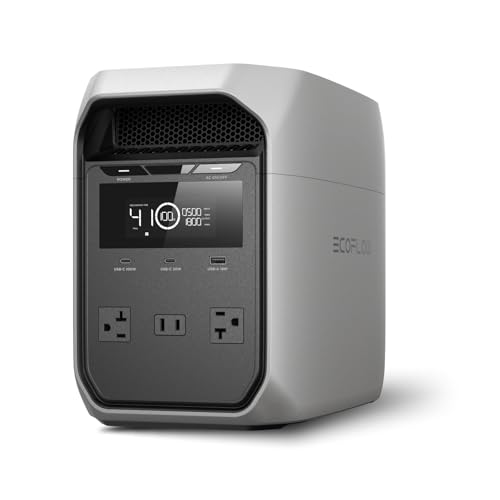
- 1,800W output with 3,600W surge
- 45-minute 0–80% AC charging
- Under-10ms UPS for sensitive electronics
Best For: Computers, digital craft tools, and quiet indoor-friendly backup
Compact Quiet Power
Honda EU2200i Inverter Generator

- 2,200W inverter output
- 48–57 dB(A) operating range
- Weighs just over 47 pounds
Best For: Small, quiet workshops with light electrical loads
Large Dual-Fuel Workhorse
Westinghouse 12500 Watt Generator

- 9,500 running watts on gasoline
- Runs on gasoline or propane
- Up to 12-hour runtime
Best For: Larger home studios needing high-output outage coverage
Quiet Clean Power
PowerSmart 4000W Inverter Generator

- 4,000 starting and 3,200 running watts
- Under 3% THD for sensitive electronics
- Under 59 dBA with USB and Eco Mode
Best For: Craft businesses powering electronics and light equipment in quieter settings
Flexible Backup Fuel
WEN DF475T Dual-Fuel Generator

- 4,750 surge and 3,800 running watts
- Gasoline or propane operation
- Electric start and 120V/240V output
Best For: Workshops needing flexible fuel and higher-capacity backup power
Long-Run Portable Output
4400W Open-Frame Inverter Generator

- 4,400 peak and 3,400 running watts
- Up to 14 hours at 25% load
- 56 pounds with fuel gauge and RV port
Best For: Mobile craft work requiring extended runtime and easy repositioning
Balanced Workshop Backup
Westinghouse 6500W Dual Fuel Generator
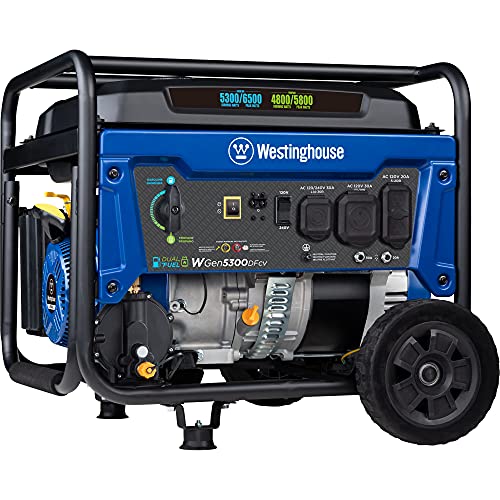
- 5,300 running watts on gasoline
- Up to 14.5 hours of runtime
- 30A transfer-switch-ready outlet
Best For: Home craft studios needing flexible, mid-range backup power
High-Capacity Studio Power
DuroMax XP13000EH Dual Fuel Generator

- 10,500 running watts
- 50A transfer-switch-ready outlet
- Electric start with dual-fuel operation
Best For: Large craft studios with multiple high-draw tools
Long-Run Workshop Backup
Westinghouse 13500W Dual Fuel Generator

- 10,500 running watts
- Up to 19 hours at 25% load
- Remote electric start and 50A outlet
Best For: Large workshops needing extended, high-output backup power
Heavy-Duty Tri-Fuel Backup – Westinghouse 13500 Peak Watt Generator
For craft businesses that run substantial equipment from a home workshop, this Westinghouse model offers the flexible, high-output power that portable home generators for craft businesses often require. It delivers up to 10,500 running watts on gasoline, supports propane and natural gas, and includes remote electric starting.
Best For: Home-based craft businesses needing high wattage and multiple fuel options during outages.
Pros:
- Tri-fuel operation supports gasoline, propane, or natural gas.
- 10,500 running watts and 13,500 peak watts on gasoline.
- Runs up to 19 hours at 25% load and includes remote start.
- 50A and 30A outlets support transfer-switch setups.
Cons:
- At 230 pounds, it is less convenient to move than smaller generators.
- Transfer switch is sold separately.
- Open-frame operation may be less suitable where low noise is important.
This is the strongest choice here for powering several demanding workshop loads, especially when fuel flexibility and extended runtime matter more than compact portability.
Quiet Battery Backup – EcoFlow DELTA 3 Classic
The EcoFlow DELTA 3 Classic is a clean, compact option for craft businesses that need uninterrupted power for computers, printers, lighting, and selected appliances. Among portable home generators for craft businesses, its battery-based design avoids fuel storage and provides a sub-10ms UPS response for sensitive electronics.
Best For: Home crafters protecting computers, digital tools, and electronics from brief outages or power interruptions.
Pros:
- Provides 1,800W output with 3,600W surge capacity.
- Charges from 0% to 80% in about 45 minutes.
- LiFePO4 battery is rated for more than 10 years of daily use.
- App control and under-10ms UPS switching support convenient monitoring.
Cons:
- Its 1,800W output is not intended for multiple high-draw workshop machines.
- Solar panels are optional rather than included.
- It is not compatible with the listed DELTA 2 Smart or Delta 3 Series Smart Extra Batteries.
Choose this model when quiet, low-maintenance backup is more valuable than the long-duration output of a conventional fuel generator.
Compact Quiet Power – Honda EU2200i Inverter Generator
The Honda EU2200i is a practical fit for small craft businesses that need dependable power without bringing a large open-frame unit into the workspace. Its inverter output is suitable for computers, while its 48–57 dB(A) operating range keeps noise more manageable during work sessions.
Best For: Small workshops powering computers, lights, small appliances, or limited equipment.
Pros:
- Quiet operation from 48 to 57 dB(A).
- Lightweight design weighs just over 47 pounds.
- Inverter technology provides power suitable for computers.
- My Generator app supports monitoring and remote stop functions.
Cons:
- Its 2,200W maximum output limits the number of tools used at once.
- Gasoline runtime is 3.2 to 8.1 hours depending on load.
- The supplied notes state that this model is unavailable in California.
This is a strong portability-first choice for light-duty creative work, particularly when workspace noise and electronics protection are priorities.
Large Dual-Fuel Workhorse – Westinghouse 12500 Watt Generator
This Westinghouse generator gives craft businesses a substantial power reserve for a home workshop, with 9,500 running watts on gasoline and 8,500 on propane. It is transfer-switch ready, includes remote electric start, and offers a useful mix of household, 30A, and 50A outlets.
Best For: Craft businesses needing high-output outage coverage with gasoline and propane flexibility.
Pros:
- Delivers up to 9,500 running watts and 12,500 peak watts on gasoline.
- Dual-fuel operation provides gasoline or propane flexibility.
- Runs up to 12 hours on its 6.6-gallon tank.
- Includes remote, electric, and recoil starting plus a digital status display.
Cons:
- Its large open-frame design is less portable than compact inverter models.
- It is louder and more equipment-oriented than battery power stations.
- High-output backup may be more capacity than a small craft workspace needs.
For a larger studio with several simultaneous loads, this model balances strong output, dual-fuel convenience, and long runtime without requiring natural-gas access.
Quiet Clean Power – PowerSmart 4000W Inverter Generator
For craft businesses that need portable home generators for craft businesses, the PowerSmart 4000W model offers clean, quiet power for electronics and smaller equipment. Its inverter output is rated below 3% THD, while Eco Mode and a 1.3-gallon tank support efficient operation for portable workspaces or backup use.
Best For: Craft businesses powering laptops, phones, tablets, lights, and compatible tools where low noise matters.
Pros:
- Provides 4,000 starting watts and 3,200 running watts with under 3% THD.
- Runs at under 59 dBA from 23 feet away.
- Includes USB ports, 120V outlets, a 30A twist-lock outlet, and Eco Mode.
- Supports parallel connection with a second compatible 4,000W generator.
Cons:
- Parallel kit is sold separately.
- Uses gasoline only and has recoil start.
- Its 3,200-watt running output may not suit several high-draw tools at once.
With clean inverter power, a relatively quiet operating profile, and useful USB connectivity, this is a practical choice for mobile craft work and sensitive electronics. The 50.7-pound weight also makes it easier to reposition than heavier conventional generators.
Flexible Backup Fuel – WEN DF475T Dual-Fuel Generator
WEN 4,750-Watt 120V/240V Dual Fuel Portable Generator with Wheel Kit and Electric Start (DF475T)
Check Price On AmazonThe WEN DF475T is a versatile option among portable home generators for craft businesses, especially when fuel flexibility and higher-capacity backup power are priorities. It runs on either gasoline or propane, offers electric start, and can switch between 120V and 240V output for compatible backup applications.
Best For: Established craft businesses that want dual-fuel flexibility, longer runtime, and 120V/240V capability.
Pros:
- Produces up to 4,750 surge watts and 3,800 running watts on gasoline.
- Switches between gasoline and propane with a selection dial.
- Electric start simplifies starting the 224cc four-stroke engine.
- Runs up to 11 hours at half load with its 4-gallon tank.
Cons:
- At 105.8 pounds, it is substantially heavier than the inverter models here.
- The supplied notes do not specify an inverter design or low-THD output.
- Its three-outlet configuration is less extensive than some portable generators.
This WEN model is best suited to a stationary or semi-stationary workshop setup where output capacity, fuel choice, and electric starting matter more than low weight. Its 120V/240V capability can also support compatible transfer-switch installations.
Long-Run Portable Output – 4400W Open-Frame Inverter Generator
For craft businesses seeking portable home generators for craft businesses, this 4,400W gasoline generator balances useful output with portability and extended low-load runtime. Its Eco Mode can provide up to 14 hours at 25% load, while the fuel gauge and 56-pound weight help with planning and transport.
Best For: Mobile craft operations, RV-based workspaces, and home backup users who value runtime and manageable carrying weight.
Pros:
- Offers 4,400 peak watts and 3,400 running watts.
- Runs up to 14 hours at 25% load with Eco Mode.
- Weighs 56 pounds and includes a fuel gauge.
- Provides two 120V AC ports, a 12V DC port, and an RV port.
Cons:
- Its under-72-dBA rating is louder than the PowerSmart model.
- Uses gasoline only.
- Includes a one-year manufacturer warranty.
The combination of 3,400 running watts, long low-load runtime, and relatively low weight makes this a useful middle ground for craft sellers and makers. It is especially practical when equipment must be transported regularly, though its open-frame design may be less appealing for quiet indoor-adjacent locations.
Balanced Workshop Backup – Westinghouse 6500W Dual Fuel Generator
For craft businesses seeking portable home generators for craft businesses, the Westinghouse WGen5300DFcv offers a practical balance of output, fuel flexibility, and portability. It provides up to 5,300 running watts on gasoline or 4,800 on propane, with 120/240V capability and a transfer-switch-ready 30A outlet.
Best For: Home-based craft studios running essential tools, lighting, and smaller equipment during outages or mobile work.
Pros:
- Dual-fuel operation provides gasoline or propane flexibility.
- Up to 14.5 hours of runtime and a 4.7-gallon tank with fuel gauge.
- Includes RV-ready and transfer-switch-ready 30A outlets.
- CO and automatic low-oil shutdown add useful safety protection.
Cons:
- At 135.6 pounds, it may require help to reposition.
- Its 5,300 running watts may not cover a full studio with multiple high-draw tools.
This is a sensible middle-ground option when your craft business needs dependable backup power without moving up to a substantially larger generator. Check the startup and running wattage of your equipment before choosing it.
High-Capacity Studio Power – DuroMax XP13000EH Dual Fuel Generator
The DuroMax XP13000EH is built for craft businesses that need substantial backup capacity from portable home generators for craft businesses. Its 10,500 running watts, 50A transfer-switch-ready outlet, and dual-fuel design can support a broader combination of household and workshop loads.
Best For: Larger home studios or craft operations using several power-hungry tools and needing whole-home backup potential.
Pros:
- Provides up to 13,000 starting watts and 10,500 running watts.
- Dual-fuel gasoline/propane operation adds fuel flexibility.
- Electric start and front-facing fuel-type controls simplify operation.
- Heavy-duty all-metal construction, copper windings, and no-flat tires support frequent use.
Cons:
- At 234 pounds, it is considerably less convenient to move than smaller models.
- The supplied details list a short three-hour runtime, so fuel planning matters.
This model makes the most sense when your studio’s combined electrical demand justifies its size and weight. Its high output is useful for larger setups, but verify compatibility with your transfer equipment and calculate actual tool loads first.
Long-Run Workshop Backup – Westinghouse 13500W Dual Fuel Generator
For craft businesses that cannot afford frequent refueling, this Westinghouse generator combines 10,500 running watts on gasoline with a large 9.5-gallon tank and up to 19 hours of runtime at 25% load. Remote electric start and dual-fuel capability add convenience to its portable home generators for craft businesses role.
Best For: Established home workshops needing extended outage coverage, high output, and compatibility with manual or automatic transfer equipment.
Pros:
- Runs up to 19 hours at 25% load on gasoline.
- Offers 10,500 running watts and 13,500 peak watts.
- Remote key-fob and push-button starting provide convenient operation.
- Supports 50A and 30A connections and can pair with the WATS200 ATS, sold separately.
Cons:
- At 230 pounds, it is heavy for routine repositioning.
- The automatic transfer switch is not included.
- Large fuel capacity and output may be more than a small craft studio requires.
This is the strongest fit of the three for longer outages and power-intensive workshop setups. Its extended runtime and remote start are appealing, but the generator’s weight and the separate transfer equipment should be included in the overall budget.
How We Picked the Best Portable Home Generators for Craft Businesses
We focused on the requirements that matter in a working craft space: usable starting and running wattage, outlet configuration, fuel flexibility, portability, noise, runtime potential, and safety features. The lineup includes compact battery power stations and inverter generators for sensitive electronics, as well as larger dual-fuel and tri-fuel models for tools, heating or cooling equipment, and broader home backup.
We also considered practical installation details. Transfer-switch readiness, 120V/240V output, electric starting, wheel kits, CO protection, and RV-style outlets can make a major difference when a generator is used regularly rather than only during emergencies.
Quick Comparison
| Best for | Recommended type | What to prioritize |
|---|---|---|
| Small electronics and lighting | Battery power station or compact inverter | Clean power, quiet operation, USB and AC outlets |
| Portable tools and moderate loads | 2,200- to 4,750-watt inverter or generator | Running wattage, surge capacity, portability |
| Large workshops | 6,500- to 13,500-watt dual-fuel model | 240V output, transfer-switch readiness, runtime |
| Flexible emergency fuel supply | Dual-fuel or tri-fuel generator | Gas, propane, or natural-gas compatibility |
Key Buying Factors for Portable Home Generators for Craft Businesses
Calculate Running and Starting Wattage
List every device you may use at the same time, including sewing machines, laser or 3D printers, compressors, dust collectors, heat presses, refrigerators, lights, and networking equipment. Add their running watts, then allow extra capacity for motors and heating elements that draw more power when starting. Avoid sizing only by the generator’s peak-watt figure.
Choose Clean, Appropriate Power
Inverter generators and battery power stations generally provide steadier output for computers, printers, chargers, and control electronics. Conventional open-frame models can be a better value for demanding tools and whole-home loads, but confirm that their output suits your most sensitive equipment.
Match Fuel and Connection Options
Dual-fuel models offer useful flexibility when gasoline is scarce or long-term storage is important. Tri-fuel capability adds another option where an appropriate natural-gas connection is available. For hardwired circuits, verify transfer-switch compatibility and have installation handled according to local electrical requirements.
Consider Noise, Ventilation, and Operating Location
Quiet operation matters in shared homes, studios, and customer-facing spaces. Every fuel-burning generator must run outdoors, away from doors, windows, and vents, with proper clearance and CO protection. A wheel kit and electric start are worthwhile for heavier machines.
Who Should Buy Which Portable Home Generators for Craft Businesses?
Choose a compact battery power station or small inverter if your priority is quiet backup for laptops, lights, routers, chargers, and low-wattage craft equipment. Pick a midrange inverter or portable generator for occasional tool use and a balance of mobility, efficiency, and output.
For a workshop with compressors, larger tools, heating or cooling loads, or selected home circuits, a 6,500-watt-or-higher dual-fuel model is usually more suitable. Choose a high-output 12,500- to 13,500-watt dual- or tri-fuel generator when you need substantial surge capacity or broader emergency coverage. Before buying, confirm your equipment’s voltage, outlet requirements, fuel storage plan, and local rules.