
Whole-home battery backup systems can keep essential circuits—or an entire property—running when the grid fails. The right choice depends on more than storage capacity: inverter output, transfer equipment, installation requirements, and recharge options all matter.
This roundup compares portable power stations, modular home batteries, and a conventional standby generator so you can match backup performance to your home, budget, and outage priorities.
Best 10 Whole Home Battery Backup Systems Picks for 2026
Best Premium Whole-Home System
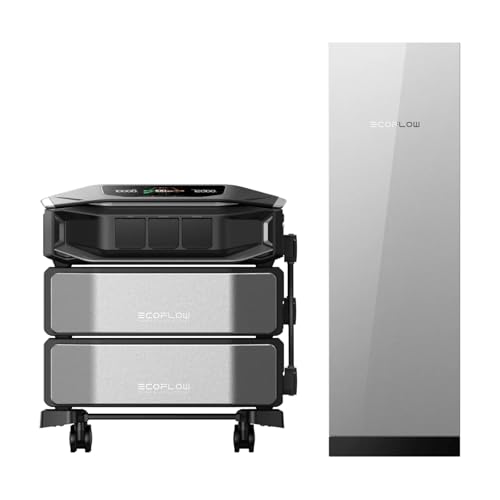
- 12,000W output with 240V support
- Expandable from 12kWh to 180kWh
- Under-20ms backup with Smart Home Panel 3
Best For: Large homes needing scalable backup and smart circuit management
Best Portable Home Backup

- 3,600W output with 7,200W parallel capability
- Expandable capacity up to 21kWh per unit
- Wheeled design and four charging options
Best For: Portable essential-load backup with flexible recharging
Best Fast-Switching Whole-Home Backup

- 7.6kW continuous output
- 200A whole-panel Power Dock
- 20ms-or-less automatic switchover
Best For: Whole-panel backup with rapid transfer and outdoor installation
Best High-Capacity Off-Grid Setup
ECO-WORTHY Powermega 48V System
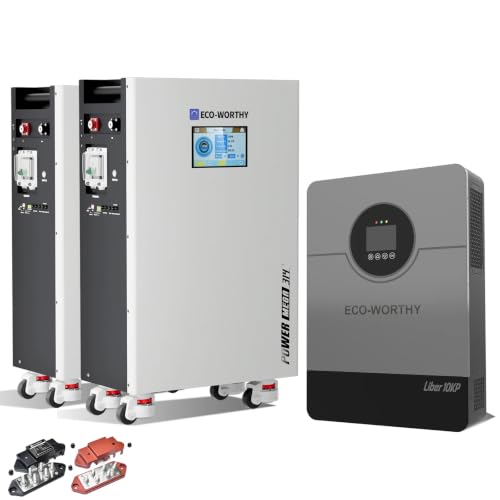
- 30kWh-plus storage with a 10kW inverter
- 240V split-phase and 120V output
- Wi-Fi, Bluetooth, and active BMS monitoring
Best For: Off-grid homes needing substantial solar storage and monitoring
Best Portable Whole-Home Option

- 3,600W output with parallel expansion
- 3,584Wh capacity expandable to 21kWh per unit
- Solar, AC, hybrid, and generator charging
Best For: Portable outage backup with expandable storage
Best Whole-Panel Battery System
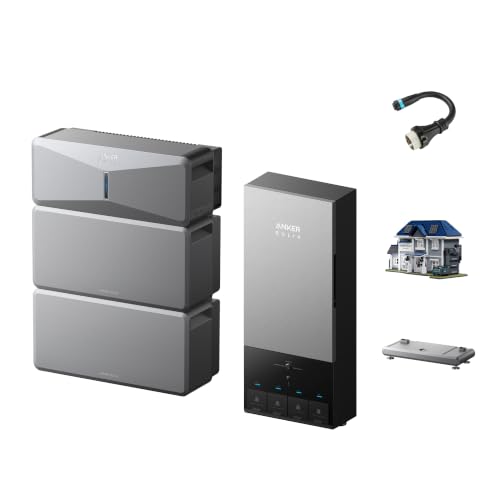
- 200A Power Dock for whole-panel backup
- 12kWh expandable storage up to 90kWh
- 20ms-or-less automatic switchover
Best For: Scalable residential backup across the entire electrical panel
Best Automatic Fuel-Powered Backup
Generac 22kW Home Standby Generator

- 22kW whole-house output
- Automatic 200A transfer switch
- Natural gas or liquid propane operation
Best For: Permanent automatic backup for full-home outage protection
Best Fridge-Focused Backup

- Includes a 2,016Wh unit and BC200 expansion battery
- 10ms UPS switching for refrigerator protection
- 1,800W output with a slim 75mm design
Best For: Refrigerator and essential-appliance backup
Best High-Capacity Battery Bank
ECO-WORTHY Powermega 48V 314Ah

- Two batteries provide 16.07kWh of stated storage
- UL 1973 certified with a 10-year warranty
- Supports monitoring, active balancing, and expansion
Best For: Large 48V home or off-grid battery installations
Best Complete High-Output Kit

- Includes 10,000W inverter and two 51.2V batteries
- Supports 120V/240V split-phase output
- Expandable with parallel inverters and batteries
Best For: Scalable high-output home and off-grid backup
Best Premium Whole-Home System – EcoFlow DELTA Pro Ultra X
The EcoFlow DELTA Pro Ultra X is a high-capacity option for shoppers comparing whole home battery backup systems. With 12,000W output, 240V support, and the included Smart Home Panel 3, it is designed to back up major household loads while automatically switching between solar, battery, and grid power.
Best For: Large homes that need expandable capacity, whole-home circuit management, and fast automatic backup.
Pros:
- Provides 12–36kW output and expandable capacity from 12kWh to 180kWh.
- Offers under-20ms backup response for connected essentials such as refrigerators, Wi-Fi, and medical equipment.
- Smart Home Panel 3 supports automatic switchover, circuit control, storm preparation, and professional installation.
- Can use solar, battery, and off-peak grid power to help manage energy use.
Cons:
- Smart Home Panel 3 requires professional installation before operation.
- The inverter, battery, and panel ship in separate packages.
- Its high-capacity design may be more system than smaller homes require.
Choose this model if you want a scalable, intelligent backup platform rather than a basic portable power station. Its expansion potential and whole-home controls are strong, but installation planning is essential.
Best Portable Home Backup – Jackery HomePower 3600 Plus
The Jackery HomePower 3600 Plus is a practical choice among whole home battery backup systems for buyers who value portability and simpler setup. It supplies 3,600W, supports 120V and 240V operation when units are paralleled, and includes a 3,584Wh power station, extra battery, and solar panels in this configuration.
Best For: Households wanting movable backup power for essential appliances, with multiple charging options and plug-and-play operation.
Pros:
- Delivers 3,600W output, with up to 7,200W available in parallel.
- Capacity can expand to 21kWh per unit or 43kWh with multiple units.
- Supports AC, hybrid AC+DC, solar, and gas-generator charging.
- Wheeled luggage-style construction makes the 77.2-pound unit easier to move.
Cons:
- The base 3,584Wh capacity is smaller than the capacity of dedicated high-end whole-home systems.
- 240V operation requires parallel units.
- Its three listed outlets may limit direct connections without additional home-transfer equipment.
This Jackery stands out when portability and easy charging matter more than maximum system capacity. Confirm how it will connect to household circuits and whether parallel units are needed for your appliances.
Best Fast-Switching Whole-Home Backup – Anker SOLIX E10
The Anker SOLIX E10 is built for buyers who want whole-panel coverage and rapid outage response. Its 200A Power Dock is designed to cover every circuit, while the E10 provides 7.6kW continuous output, 6kWh of storage, and 9kW solar input per unit.
Best For: Homes seeking automatic whole-panel backup, fast switchover, outdoor installation flexibility, and expandable storage.
Pros:
- The 200A Power Dock supports whole-home coverage rather than limiting backup to selected circuits.
- Automatic switchover is rated at 20ms or less.
- Storage expands from 6kWh to 90kWh, and output can scale to 22.8kW with three units.
- NEMA 4 and 3R ratings support outdoor use across a stated range of -4°F to 131°F.
Cons:
- The included 6kWh capacity may provide limited runtime for large loads without expansion.
- Installation support is available, but the system still requires household power integration.
- The listed warranty is five years for the E10, while the Power Dock has a separate 10-year warranty.
The E10 is compelling when seamless transfer and full-panel coverage are priorities. Its expandable architecture also lets homeowners start with moderate storage and add capacity later.
Best High-Capacity Off-Grid Setup – ECO-WORTHY Powermega 48V System
The ECO-WORTHY Powermega combines two 48V 314Ah LiFePO4 batteries with a 10kW hybrid inverter for buyers evaluating whole home battery backup systems with substantial storage. It is designed for home backup, solar storage, and off-grid use, with split-phase 240V and single-phase 120V output.
Best For: Off-grid homes and homeowners seeking around 30kWh of storage, solar integration, and detailed battery monitoring.
Pros:
- Provides a stated 30kWh-plus home backup solution with a 10kW hybrid inverter.
- Supports 240V split-phase and 120V single-phase output.
- Includes Bluetooth, Wi-Fi, LCD status information, and RS485/CAN/RS232 communication.
- Uses active-balancing BMS protection, circuit breakers, alarms, and aerosol fire suppression modules.
Cons:
- The batteries and inverter form a substantial multi-component installation.
- Two inverter versions may ship randomly based on inventory.
- The stated lower temperature rating is 32°F, which may require climate-controlled placement in cold regions.
This system favors capacity, monitoring, and off-grid capability over compact portability. It is a strong fit for buyers comfortable planning a larger solar-storage installation and verifying compatibility with their electrical setup.
Best Portable Whole-Home Option – Jackery HomePower 3600 Plus
The Jackery HomePower 3600 Plus is a portable approach to whole home battery backup systems, combining a 3,584Wh capacity with 3,600W of output. Its dual-voltage capability when units are used in parallel, expandable storage, and multiple charging methods make it practical for outage coverage where portability matters.
Best For: Households that want movable backup power for essential appliances, with the option to expand capacity over time.
Pros:
- 3,600W output, with up to 7,200W available in parallel, for demanding loads such as pumps, heaters, and dryers.
- Expandable capacity up to 21kWh per unit or 43kWh with multiple units.
- LFP battery cells rated for 6,000 cycles and a 10-year lifespan, according to the supplied specifications.
- Recharge options include hybrid AC+DC, AC, solar, and a gas generator; hybrid charging can reach full capacity in 2 hours.
Cons:
- At 77.2 pounds, it is portable but not lightweight for frequent lifting.
- Whole-home operation relies on pairing the unit with an MTS and appropriate setup.
- The base capacity is smaller than that of dedicated high-capacity home battery systems.
The HomePower 3600 Plus stands out when flexibility and transportability are priorities. It offers substantial output and expandable storage without committing to a permanently installed system, but buyers should confirm transfer-switch requirements and capacity needs before relying on it for an entire home.
Best Whole-Panel Battery System – Anker SOLIX E10
The Anker SOLIX E10 is designed for buyers comparing whole home battery backup systems that can cover an entire electrical panel. Its 200A Power Dock, 7.6kW continuous output, and expandable 12kWh-to-90kWh storage target seamless, scalable residential backup.
Best For: Homeowners seeking automatic whole-panel coverage, fast transfer, and substantial storage expansion.
Pros:
- The 200A Power Dock is designed to back up the entire panel rather than a limited selection of circuits.
- Provides 7.6kW continuous output and 10kW turbo output, with higher output available by combining units.
- Storage starts at 12kWh and can expand to 90kWh, while each unit supports up to 9kW of solar input.
- Automatic switchover is rated at 20ms or less, and the system is weatherproof for outdoor use.
Cons:
- The system is more installation-oriented than a simple portable power station.
- Its 5-year E10 warranty is shorter than the listed 10-year Power Dock warranty.
- Professional installation may still be appropriate despite the stack-and-plug setup.
The SOLIX E10 is a strong fit for whole-panel backup and future expansion. Its fast transfer and large storage ceiling are useful for extended outages, though buyers should plan for electrical integration and verify installation details for their home.
Best Automatic Fuel-Powered Backup – Generac 22kW Home Standby Generator
The Generac 22kW Home Standby Generator is an alternative to battery-based whole home battery backup systems for households that prioritize automatic, long-duration outage protection. Running on natural gas or liquid propane, it includes a 200A transfer switch and starts automatically when it detects a power failure.
Best For: Homeowners who want permanent, automatic whole-house backup for refrigeration, heating or cooling, lighting, and connectivity.
Pros:
- 22kW of rated output is designed for whole-house residential backup.
- The automatic 200A transfer switch detects outages and transfers the home to generator power.
- Natural gas and liquid propane fuel options support extended operation without relying on stored battery capacity.
- Built-in cellular connectivity supports remote monitoring and control through the Mobile Link app.
Cons:
- At 451 pounds, it is a permanent installation rather than a portable backup option.
- It requires an available natural gas or liquid propane supply and suitable outdoor installation.
- Some Mobile Link functionality requires a premium subscription.
For buyers who want automatic whole-house coverage and do not want to manage battery charging, the Generac offers a conventional standby solution with strong output and remote monitoring. It does, however, require fuel infrastructure and professional installation planning, making it less flexible than battery systems.
Best Fridge-Focused Backup – BLUETTI FridgePower 2016Wh
If you want whole home battery backup systems for essential appliances rather than every circuit, the BLUETTI FridgePower is a compact, purpose-built option. Its 2,016Wh battery, included BC200 expansion battery, and 1,800W output are designed to keep a refrigerator running while also supporting selected household loads.
Best For: Homeowners prioritizing refrigerator, sump pump, freezer, fish tank, or other key-load protection during outages.
Pros:
- Includes the main unit and one expansion battery, with claimed refrigerator runtime of 2–3 days out of the box.
- DualGuard UPS switches to battery in 10ms and can automatically return to grid power if the unit fails.
- Compact 75mm design, 4W standby draw, storm-alert charging, and voice-control features reduce daily upkeep.
- Supports 1,800W continuous output and 3,600W surge output for several essential appliances.
Cons:
- It is intended for key-load backup, not comprehensive whole-house electrical coverage.
- The supplied runtime details are appliance-specific, so actual performance will vary with load.
- At 41.9 pounds, it is not a lightweight portable power station.
FridgePower makes the most sense when uninterrupted refrigeration is the priority and you want a simpler, install-once backup setup. Its output can cover additional essentials, but larger homes or central-panel backup needs will require a more capable system.
Best High-Capacity Battery Bank – ECO-WORTHY Powermega 48V 314Ah
For whole home battery backup systems built around a compatible inverter, the ECO-WORTHY Powermega supplies substantial storage in a two-battery package. The 48V, 314Ah LiFePO4 batteries provide 16.07kWh of stated capacity and are aimed at home energy storage, outages, and off-grid use.
Best For: Buyers building or expanding a high-capacity 48V solar, off-grid, or home backup system.
Pros:
- Two batteries provide 16.07kWh of stated energy storage, with support for expansion up to 15 units in parallel.
- UL 1973 certification and a 10-year warranty add useful long-term safety and ownership reassurance.
- A 200A smart BMS with active balancing helps manage cell performance and charging efficiency.
- Includes aerosol fire suppression, a touchscreen, Wi-Fi and Bluetooth monitoring, and RS485/CAN ports.
Cons:
- This is a battery bank, not a complete backup system with an included inverter or transfer equipment.
- Large, heavy pallet delivery may require truck-accessible delivery arrangements.
- Installation depends on inverter compatibility and appropriate high-current electrical equipment.
The Powermega is a strong storage foundation for a professionally planned or experienced DIY backup installation. Its monitoring and safety features are useful, but buyers must still select a compatible inverter and complete the system safely.
Best Complete High-Output Kit – ECO-WORTHY Liber 10KP 10KW
Among whole home battery backup systems, the ECO-WORTHY Liber 10KP stands out as a more complete high-output package. It combines two 51.2V 100Ah LiFePO4 batteries with a 10,000W inverter, delivering 10.24kWh of stated storage and support for 120V or 240V split-phase output.
Best For: Homeowners seeking a scalable off-grid or outage-backup platform for multiple household circuits and higher-demand loads.
Pros:
- Combines two batteries with a 10,000W pure-sine inverter, dual MPPT controllers, and a 200A charger.
- Supports 120V/240V split-phase output, with up to 20,000W peak power listed.
- Battery communication, Bluetooth, Wi-Fi, and app monitoring support more informed system management.
- Can scale to six parallel inverters and up to 32 batteries, according to the supplied specifications.
Cons:
- The complete package weighs 265.5 pounds and is shipped as separate items.
- Its off-grid inverter setup may require careful installation and system planning.
- The included 10.24kWh storage is substantial, but high loads can reduce runtime quickly.
The Liber 10KP is a practical choice when output flexibility matters as much as battery capacity. Its split-phase capability and expansion options give it room to grow, while the substantial weight and installation requirements make professional help worth considering.
How We Picked the Best Whole Home Battery Backup Systems
We selected systems across several backup strategies, including expandable portable units, permanently installed battery storage, and a propane or natural-gas generator alternative. We focused on usable energy capacity, continuous and peak output, solar or fuel-recharge potential, transfer equipment, expandability, battery chemistry, monitoring, and the practical demands of installation.
Product specifications can vary by configuration, accessories, and regional electrical requirements. Confirm the exact bundle, warranty, certifications, and installation instructions before purchase.
Quick Comparison
| System type | Best for | What to check |
|---|---|---|
| Portable power station | Flexible backup and temporary use | Transfer switch, circuit limits, recharge time |
| Modular home battery | Scalable, integrated household backup | Professional installation, load management, permitting |
| Battery and hybrid inverter kit | Custom solar-storage projects | Compatibility, wiring, certifications, installer support |
| Standby generator | Long outages and high sustained loads | Fuel supply, noise, maintenance, emissions |
Key Buying Factors for Whole-Home Battery Backup Systems
Capacity and Runtime
Battery capacity, measured in watt-hours or kilowatt-hours, indicates how much energy is stored. Estimate the daily energy use of refrigerators, internet equipment, medical devices, pumps, heating controls, and other essential loads. Larger batteries last longer, but usable capacity, reserve settings, temperature, and inverter losses reduce real-world runtime.
Output and Load Management
Continuous output determines which appliances can run together; surge capacity helps start motors in refrigerators, pumps, and HVAC equipment. A system may advertise whole-home capability while still requiring selected circuits, load shedding, or a managed electrical panel. Check both 120-volt and 240-volt requirements before buying.
Installation and Transfer Equipment
A home battery connected to a main panel generally needs a qualified electrician, permits, and an approved transfer or energy-management system. Portable units can be simpler, but they should connect through properly rated equipment rather than improvised backfeeding. Confirm whether the advertised price includes the panel, wiring, batteries, and labor.
Recharge, Expansion, and Resilience
Solar input can extend outage coverage, while grid charging is useful before a predicted storm. Compare solar-input limits, recharge speed, extra-battery compatibility, cold-weather operation, and outdoor ratings. LiFePO4 batteries are commonly chosen for cycle life, while generators offer longer runtime when fuel is available.
Who Should Buy Which Whole Home Battery Backup Systems?
- Choose a portable power station if you want flexible backup for essential circuits, occasional outages, camping, or a future system that can move with you.
- Choose a modular home battery if you want quieter automatic backup, solar integration, expandable capacity, and a professionally installed solution.
- Choose a battery-and-inverter package if you have an installer and want to design a larger custom storage system around your home’s electrical loads.
- Choose a standby generator if outages may last for days, your home has heavy 240-volt loads, or rapid refueling matters more than silent, emissions-free operation.
Before ordering, list the circuits you want backed up, calculate their starting and running wattage, verify local code requirements, and obtain an installation quote. That process prevents paying for capacity you cannot use—or choosing a system that cannot safely support your essential loads.