
Keeping essential appliances running during an outage does not always require a costly permanently installed battery system. Today’s portable power stations and expandable LiFePO₄ setups can provide practical backup power with flexible charging and storage options.
We compared 10 budget whole-home battery backup systems across capacity, inverter output, expandability, portability, solar compatibility, and transfer performance so you can match the system to your home’s most important loads.
Best 10 Budget Whole Home Battery Backup Systems Picks for 2026
Whole-Home Power Value
HumsiENK 16.1kWh Battery Backup

- 16.1kWh LiFePO4 storage
- 8,000W split-phase inverter
- Built-in wheels and solar MPPT
Best For: High-load home backup and off-grid use
Portable Whole-Home Flexibility

- 12kWh bundle capacity
- 120/240V, 4,000W output
- Multiple charging methods
Best For: Moveable residential backup and flexible charging
Compact Backup Value

- 3,072Wh LiFePO4 capacity
- 3,600W pure-sine output
- Fast 1,800W AC charging
Best For: Essential loads, apartments, RVs, and shorter outages
Advanced Whole-Home Control
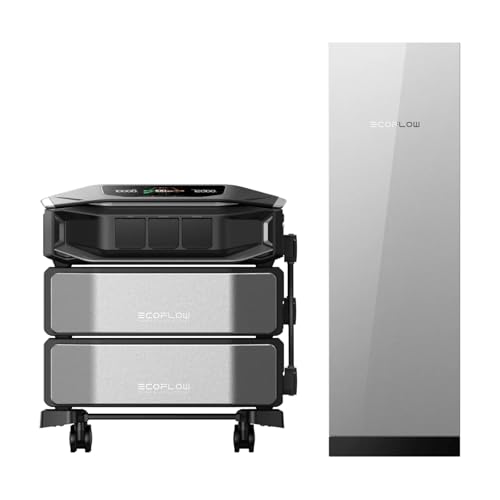
- 12,288Wh expandable storage
- 12,000W 120/240V output
- Smart Home Panel 3 included
Best For: Large homes needing scalable, automated backup
Versatile Dual-Voltage Backup

- 7,884.8Wh listed capacity with 3,840W output
- 120V/240V simultaneous power
- 6,000+ LiFePO4 cycles to 80% capacity
Best For: Homes, cabins, RVs, and users needing dual-voltage backup
Quiet Apartment-Friendly Backup

- 3,072Wh capacity and 3,600W continuous output
- Under-10ms UPS switching
- Approximately 25dB under load
Best For: Apartments, RVs, and quiet essential-load backup
High-Output Expandable Value

- 3,840Wh capacity with 4,200W AC output
- Expandable up to 53.76kWh
- 3,000W solar and fast 30A AC charging
Best For: Home backup, RVs, camping, and expandable high-output power
Expandable Home Backup

- 3,600Wh LFP starting capacity
- Expandable up to 25kWh
- Supports up to six selected circuits
Best For: Modular home backup with solar charging
Compact UPS Backup Value

- 3,072Wh included capacity
- Expandable to 5,120Wh
- Under-10ms UPS switching
Best For: Essential electronics and moderate home backup
High-Output Emergency Power
ABOK Ark3600 Portable Power Station

- 3,600W rated output
- 3,840Wh expandable to 11,520Wh
- LiFePO4 battery rated for 4,000+ cycles
Best For: Demanding appliances and expandable emergency backup
Whole-Home Power Value – HumsiENK 16.1kWh Battery Backup
For shoppers comparing budget whole home battery backup systems, the HumsiENK stands out for combining substantial storage with a true 120/240V split-phase inverter. Its 16.1kWh LiFePO4 battery, 8,000W inverter, and built-in solar charging are designed for extended outages and larger household loads.
Best For: Homeowners who need high-capacity, off-grid-capable backup for appliances such as refrigerators, well pumps, central AC, and workshop equipment.
Pros:
- 16.1kWh battery capacity with 8,000W continuous inverter output and 10,000W surge capability.
- Native 120/240V split-phase output supports many whole-home and high-voltage loads.
- Built-in 10,000W MPPT controller, 200A BMS, active balancing, and multiple monitoring connections.
- Built-in wheels and a narrow footprint improve mobility despite the 294-pound weight.
Cons:
- Freight delivery requires an address that can accommodate a pallet and truck delivery.
- Its size and weight make it less convenient to move than a smaller portable power station.
- Whole-home wiring and expansion may require additional planning or professional expertise.
This is one of the more capable options in the budget whole home battery backup systems category, particularly if you want substantial storage and split-phase power in one package. Verify delivery access, installation requirements, and compatibility with your planned solar setup before ordering.
Portable Whole-Home Flexibility – EcoFlow DELTA Pro 3 Bundle
The EcoFlow DELTA Pro 3 bundle offers a relatively approachable way to build budget whole home battery backup systems without a traditional fixed battery installation. With two extra batteries, the package provides 12kWh of stated storage, 120/240V output, app control, and several charging options.
Best For: Homeowners and renters who want expandable emergency power that can be moved, recharged in multiple ways, and used for both residential backup and portable applications.
Pros:
- 12kWh bundle capacity with 4,000W output, 6,000W starting capability, and scalability up to 12,000W.
- Supports 120/240V power and can run demanding loads such as a 3-ton central AC or 1 HP water pump.
- Multiple charging methods include AC, solar, generators, EV charging piles, and a compatible Smart Home Panel 2.
- 10ms transfer time, app monitoring, quiet operation as low as 30dB, and a five-year warranty.
Cons:
- The 260-pound bundle is portable in design but not lightweight to relocate.
- Whole-home integration with a smart panel may add installation complexity and cost.
- Its base output is lower than the largest fixed whole-home inverter systems.
Choose this bundle if flexibility and simple setup matter more than maximum fixed-installation output. Its expandable design and broad charging support make it a practical middle ground for outage protection, though buyers should confirm panel compatibility and load requirements.
Compact Backup Value – PECRON F3000LFP Power Station
For buyers seeking budget whole home battery backup systems for essential circuits rather than every household load, the PECRON F3000LFP offers a compact alternative. It combines a 3,072Wh LiFePO4 battery with 3,600W pure-sine output, fast AC charging, solar input, and UPS functionality.
Best For: Smaller homes, apartments, RVs, and households prioritizing refrigerators, electronics, CPAP machines, and selected appliances during shorter outages.
Pros:
- 3,600W output and 3,072Wh capacity can support refrigerators, air conditioners, tools, and up to 13 devices.
- 1800W AC charging can recharge the unit from empty in about two hours under stated conditions.
- Supports AC, solar up to 1,600W, and car charging.
- 8–20ms UPS switching, app monitoring, 13 ports, and a stated two-plus-three-year warranty.
Cons:
- Its 3,072Wh capacity is substantially smaller than dedicated whole-home battery systems.
- Adding the compatible extra battery requires a separately sold XT120-M cascade cable.
- The listed 120V output is not a native 120/240V whole-home solution.
The F3000LFP is best viewed as an essential-load backup unit rather than a complete whole-home replacement. Its lower weight, fast charging, and UPS mode make it attractive when portability and straightforward emergency power are more important than long runtimes or split-phase integration.
Advanced Whole-Home Control – EcoFlow DELTA Pro Ultra X
The EcoFlow DELTA Pro Ultra X is aimed at buyers who want a scalable, intelligent whole-home energy system rather than a basic portable generator. Included with the Smart Home Panel 3, it provides 12,288Wh of stated storage, 12,000W output, automatic energy management, and expansion potential up to 180kWh.
Best For: Larger households seeking high-output 120/240V backup, solar and off-peak energy management, and a system that can grow with future power needs.
Pros:
- 12,000W output with 120/240V capability supports lights, air conditioning, EV chargers, and other major loads.
- 12,288Wh capacity can expand dramatically, with stated system capacity up to 180kWh.
- Smart Home Panel 3 enables automatic switchover, circuit control, storm preparation, and energy management.
- Under-20ms response time helps keep refrigerators, Wi-Fi, and medical equipment operating through outages.
Cons:
- Professional installation is required for the Smart Home Panel 3.
- The inverter, battery, and panel ship in separate packages.
- Its advanced features and high output may exceed the needs of shoppers seeking the simplest low-cost backup.
This system is a strong fit when whole-home coverage, expandability, and automated energy savings justify a more involved installation. It is less suited to buyers who need a lightweight plug-and-play station or the lowest upfront complexity.
Versatile Dual-Voltage Backup – BLUETTI Apex 300 + B500K
For shoppers comparing budget whole home battery backup systems, the BLUETTI Apex 300 paired with the B500K stands out for high output and dual-voltage flexibility. Its 7,884.8Wh listed capacity, 3,840W running output, and 7,680W surge rating can support household essentials, RV equipment, and heavier appliances without relying on fuel.
Best For: Homes, cabins, RVs, and emergency users who need 120V/240V output and substantial expandable battery capacity.
Pros:
- 120V/240V simultaneous output can support refrigerators, air conditioners, and EV chargers.
- Large 7,884.8Wh combined capacity with LiFePO4 batteries rated for 6,000+ cycles to 80% capacity.
- Supports solar, AC, car, lead-acid, and generator charging, with up to 2,400W built-in solar input.
- Under-10ms UPS backup and 22dB silent operation are useful for sensitive electronics and overnight use.
Cons:
- The power station weighs 83.8 pounds, so it is not especially easy to move.
- The B500K expansion battery ships separately.
The Apex 300 package is a strong choice when output versatility matters more than portability. Its dual-voltage capability and long-cycle LiFePO4 design make it particularly suitable for outage preparation, though buyers should plan for its substantial weight and separate battery shipment.
Quiet Apartment-Friendly Backup – EF ECOFLOW DELTA 3 Ultra
The EF ECOFLOW DELTA 3 Ultra is a practical option among budget whole home battery backup systems for essential loads. Its 3,072Wh battery and 3,600W continuous AC output can handle appliances such as refrigerators, microwaves, heaters, and power tools, while its compact portable design suits homes, apartments, and RVs.
Best For: Apartment residents, RV users, and households prioritizing quiet operation, fast UPS switching, and portable emergency power.
Pros:
- 3,600W continuous output with a 7,200W surge rating supports many high-demand appliances.
- Under-10ms UPS switching helps keep computers, routers, and medical equipment running during an outage.
- Operates at about 25dB under load, making it suitable for overnight use and smaller living spaces.
- Can charge from wall power, solar panels, a vehicle, or an EcoFlow Smart Generator.
Cons:
- Its 3,072Wh capacity is lower than the larger-capacity systems in this roundup.
- Only three outlets are listed in the supplied specifications.
Choose the DELTA 3 Ultra when quiet performance and fast automatic switchover are priorities. It offers capable appliance support in a portable package, but its smaller battery and limited listed outlet count may make it less suitable for powering many circuits at once.
High-Output Expandable Value – PECRON E3800 LFP
The PECRON E3800 LFP is worth considering for shoppers seeking budget whole home battery backup systems with strong output and future expansion. It combines a 3,840Wh battery with 4,200W AC output, multiple charging options, and a stated expansion potential of up to 53.76kWh for longer outages or off-grid use.
Best For: Home backup, RV owners, campers, and users who want high AC output, many ports, and substantial future capacity expansion.
Pros:
- 4,200W output and a 30A RV-ready outlet can support refrigerators, microwaves, power tools, CPAP machines, and RV appliances.
- Expandable capacity is listed up to 53.76kWh.
- Fast AC charging can reach full charge in about 1.4 hours with the 30A cable.
- Includes 3,000W solar input, pass-through charging, app control, and an 8–20ms UPS function.
Cons:
- At 87.3 pounds, the unit is heavy for frequent carrying.
- Its UPS switching time is listed as 8–20ms, which is a wider range than some competing systems.
- The supplied notes do not specify the exact expansion-battery package included.
The E3800 LFP is a compelling fit when high output and expansion matter more than minimal weight. Its extensive port selection and rapid charging improve everyday practicality, while the large expansion ceiling gives it room to grow into a more substantial backup setup.
Expandable Home Backup – EF ECOFLOW DELTA Pro
For shoppers comparing budget whole home battery backup systems, the EF ECOFLOW DELTA Pro offers a substantial 3,600Wh starting capacity and a straightforward way to support selected household circuits during an outage. With the compatible Smart Home Panel, it can be integrated into a home backup setup for essentials such as a refrigerator, garage door, outlets, and lights.
Best For: Homeowners who want expandable battery storage with solar charging and selected-circuit backup.
Pros:
- 3,600Wh LFP battery capacity with expansion potential up to 25kWh using extra batteries or Smart Generators.
- Can support up to six selected home circuits through the EcoFlow Smart Home Panel.
- Includes two 220W solar panels and offers app-based energy monitoring and control.
- Backed by a five-year manufacturer warranty.
Cons:
- Smart Home Panel integration is needed for the described selected-circuit home backup setup.
- The power station and solar panels ship in separate packages.
- Its 120V output is intended for compatible circuits and appliances rather than every household load.
The DELTA Pro is a strong choice when capacity and expandability matter more than a minimal setup. It is especially practical for building a modular backup system around essential circuits while using solar panels to replenish the battery.
Compact UPS Backup Value – AFERIY Nomad1800 Pro Bundle
Among budget whole home battery backup systems, this AFERIY bundle focuses on affordable expansion and seamless protection for essential electronics. It includes a 1,024Wh power station and 2,048Wh expansion battery for 3,072Wh total capacity, with UPS switching under 10ms for devices such as routers, computers, and security systems.
Best For: Households needing expandable backup for electronics, essential appliances, RV use, or short-duration outages.
Pros:
- Provides 3,072Wh out of the box and can expand to 5,120Wh.
- Delivers 1,800W continuous output with a 3,600W peak.
- Under-10ms UPS switching helps keep sensitive electronics running during an outage.
- LiFePO4 battery is rated for more than 4,000 cycles and includes 14 versatile ports.
Cons:
- Its 1,800W output is lower than the higher-output options in this roundup.
- Reaching the maximum 5,120Wh capacity requires additional expansion.
- The supplied capacity is better suited to essential loads than broad high-demand whole-home operation.
The AFERIY bundle is a sensible entry point for buyers who value UPS performance and manageable expansion. Its included battery gives it useful runtime immediately, while the 1,800W inverter keeps the system focused on essential household and electronic loads.
High-Output Emergency Power – ABOK Ark3600 Portable Power Station
For buyers seeking budget whole home battery backup systems with more inverter headroom, the ABOK Ark3600 combines a 3,840Wh LiFePO4 battery with 3,600W rated output. Its capacity can expand to 11,520Wh, making it suitable for emergency backup, RV use, and powering many household appliances from a portable platform.
Best For: Users who need high output, long-term capacity expansion, and portable backup for demanding appliances.
Pros:
- 3,600W rated output and 7,200W peak power support a broad range of appliances.
- 3,840Wh capacity expands up to 11,520Wh.
- LiFePO4 battery is rated for more than 4,000 cycles and up to a 10-year lifespan.
- Supports AC, solar, and car charging, with combined AC and PV charging as fast as 1.29 hours according to the supplied notes.
Cons:
- At 92 pounds, it is substantially heavier than the compact AFERIY option.
- It is a portable power station; a dedicated home-transfer or selected-circuit integration is not specified in the supplied details.
- Its large capacity and output may be more than needed for light electronics-only backup.
The Ark3600 stands out when appliance compatibility and expansion matter most. Wheels and a telescoping handle improve portability, while the high output and multiple charging methods make it a capable emergency-power centerpiece.
How We Picked the Best Budget Whole Home Battery Backup Systems
We focused on systems that offer useful emergency capacity without moving into the highest-priced professionally installed category. The lineup includes portable power stations, expandable battery platforms, and larger 48V systems. We considered usable battery capacity, continuous and peak output, LiFePO₄ battery chemistry, expansion options, charging flexibility, portability, UPS or transfer performance, and the ability to support essential household circuits.
Because “whole-home” can mean different things, check each product’s actual output and connection requirements before purchase. A portable unit may be ideal for refrigerators, internet equipment, lights, medical devices, and selected appliances, but it may not power an entire central HVAC system, electric range, or water heater.
Quick Comparison
- Best for maximum capacity: Larger expandable systems such as the EcoFlow DELTA Pro Ultra X, BLUETTI Apex 300 with expansion, and HumsiENK 16.1kWh system.
- Best for portable emergency power: Compact options such as the EcoFlow DELTA 3 Ultra, PECRON F3000LFP, and AFERIY system.
- Best for higher-output appliances: Systems rated around 3,600W to 4,200W, including several PECRON, EcoFlow, and ABOK models.
- Best for future expansion: Models with dedicated extra-battery support or modular battery ecosystems.
Key Buying Factors for Budget Whole Home Battery Backup Systems
Capacity and Runtime
Capacity is measured in watt-hours or kilowatt-hours. A 3kWh unit can cover modest loads for several hours, while 7kWh to 16kWh systems provide more endurance for refrigeration, networking, lighting, and other essentials. Estimate your load in watts and multiply it by the expected runtime, then allow for inverter losses.
Continuous Output and Surge Power
Continuous wattage determines what the system can run at once. Refrigerators, pumps, compressors, and power tools can briefly demand more power when starting, so compare both the continuous and surge ratings. A high battery capacity does not compensate for an inverter that cannot start your appliance.
Battery Chemistry, Charging, and Expansion
LiFePO₄ batteries are commonly preferred for their long cycle life and stable chemistry. Look for multiple charging methods, including wall, solar, and vehicle charging, plus a practical expansion path if your needs may grow. Also check solar input limits rather than assuming every panel configuration will work.
Home Integration and Safety
Portable systems generally power devices through outlets or a transfer setup, while split-phase or smart-panel systems may support selected home circuits more directly. Professional installation may be required for panel integration. Confirm grounding, transfer-switch compatibility, ventilation, operating temperature, warranty coverage, and local electrical-code requirements.
Who Should Buy Which Budget Whole Home Battery Backup Systems?
Choose a compact 2kWh-to-3kWh model if you mainly need backup for communications, lighting, refrigeration, and small appliances. Move to a 3.8kWh-to-7.9kWh expandable system if outages last longer or you need several higher-draw devices. For larger households, frequent outages, or selected whole-home circuits, prioritize the highest-capacity systems with strong inverter output, expandable batteries, and a compatible transfer or smart-panel solution.