
The right camera slider system can add smooth tracking shots, repeatable time-lapse movement, and professional production value without requiring a full motion-control rig.
We selected 10 options ranging from compact carbon-fiber rails to long motorized sliders, so you can match travel length, payload, control features, and portability to your camera setup.
Best 10 Camera Slider Systems Picks for 2026
Smart Motion Pick
NEEWER ER1 Motorized Camera Slider

- App, manual, video, and time-lapse control
- 31.5-inch carbon-fiber rail with 11-pound horizontal load
- Supports tilt, tracking, and panoramic shots
Best For: Creators who want programmable camera movement
Heavy-Duty Track Pick

- 50-pound maximum payload
- Three 23-inch aluminum rails create a four-foot track
- 28 mounting holes for flexible accessory placement
Best For: Filmmakers using heavier camera configurations
Long-Track Motorized Pick
GVM 48-Inch Motorized Camera Slider
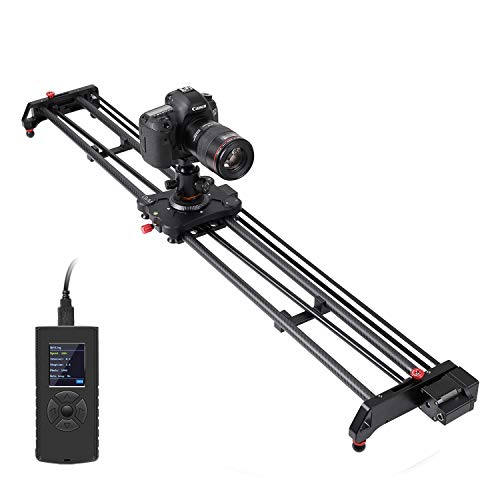
- 48-inch carbon-fiber rail for extended movement
- Automatic round trips, time-lapse, and panorama modes
- Includes battery, charger, cables, controller, and bag
Best For: Long automated tracking and time-lapse shots
Portable Manual Pick
Zecti 24-Inch Carbon-Fiber Slider

- Lightweight 1.4-pound manual design
- Adjustable legs, nonskid feet, and bubble level
- Compatible with cameras, phones, and action cameras
Best For: Travelers needing a compact manual slider
Best Compact Pick
IFOOTAGE Shark Slider Pico Pro

- Motorized 15.7-inch slider
- Supports up to 2.4 pounds
- Works with phones and compact cameras
Best For: Portable smartphone and action-camera filmmaking
Best Heavy-Duty Manual Pick

- 39-inch sliding travel
- Ball-bearing horizontal or vertical movement
- Adjustable legs and carrying case included
Best For: DSLR users needing long, stable manual moves
Best Motorized Long-Track Pick
GVM 48-Inch Carbon Fiber Slider
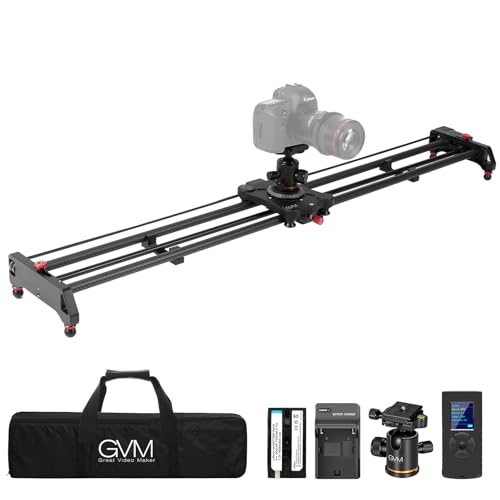
- Remote-controlled motorized movement
- Tracking, time-lapse, and panorama modes
- 120-centimeter rail with tripod ports
Best For: Programmable video and time-lapse shooting
Best Portable Manual Slider
Zecti 16-Inch Carbon Fiber Slider

- Lightweight 16-inch design with carrying bag
- Adjustable legs and bubble level for flexible setup
- Manual slider with multiple mounting points
Best For: Travel creators and compact camera setups
Best Long-Track Motorized Slider
GVM 48-Inch App-Controlled Slider

- 48-inch carbon-fiber rail for extended camera moves
- App control with six programmable shooting modes
- Includes six shutter cables and an extension cable
Best For: Filmmakers and studio setups needing automated long-travel shots
Best Wireless Mid-Size Slider
GVM 32-Inch App-Controlled Slider

- Wireless Bluetooth app control for programmable movement
- Six modes for tracking, panoramic, time-lapse, and video
- Carbon-fiber rail with adjustable legs and tripod ports
Best For: YouTube, film, and studio creators wanting flexible motorized control
Smart Motion Pick – NEEWER ER1 Motorized Camera Slider
For creators seeking versatile camera slider systems, the NEEWER ER1 combines automated movement with app control in a portable carbon-fiber design. Its 31.5-inch rail supports horizontal loads up to 11 pounds and offers manual, video, and time-lapse modes.
Best For: Content creators, product videos, time-lapse photography, and controlled tracking shots.
Pros:
- App-controlled motorized movement with manual, video, and time-lapse modes.
- Quiet stepper motor and included 4400mAh NP-F750 battery.
- Supports horizontal, 45-degree tilt, tracking, and 120-degree panoramic shots.
- Carbon-fiber construction with 1/4-inch and 3/8-inch tripod threads.
Cons:
- 2.4G remote control and Type-C charger are not included.
- Maximum load drops to 5.5 pounds when tilted 45 degrees.
- Minor shaking may occur during macro photography.
The ER1 is a strong all-around choice when programmable motion and multiple shooting angles matter. Its motorized controls add creative flexibility, while the compact folded size helps with transport.
Heavy-Duty Track Pick – Glide Gear DEV 4 Dolly
The Glide Gear DEV 4 is one of the more substantial camera slider systems for filmmakers who need a high payload. Its three 23-inch aluminum rails create a four-foot track with a frictionless wheel platform designed for smooth, quiet movement.
Best For: Professional-style cinematography, heavier camera setups, and demanding tracking shots.
Pros:
- Supports up to 50 pounds for robust camera and accessory setups.
- Three aircraft-grade aluminum rails provide a long shooting path.
- Base plate includes 28 mounting holes with 1/4-inch-20 and 3/8-inch-16 taps.
- Includes a carry bag, and the sled lifts off the rails for transport.
Cons:
- At 12 pounds, it is heavier than compact slider options.
- Tripod or speaker-stand mounting adapter is not included.
- Its nearly four-foot track requires more setup and storage space.
Choose the DEV 4 when payload capacity and a long, stable track take priority over minimal weight. The removable sled and carry bag improve portability, but this system is best suited to planned shoots rather than ultralight travel.
Long-Track Motorized Pick – GVM 48-Inch Motorized Camera Slider
The GVM 48-inch motorized slider gives camera slider systems shoppers an extended rail for automatic round trips, time-lapse work, and panoramic movement. Its carbon-fiber construction includes adjustable feet, multiple mounting ports, and both manual and electric operation.
Best For: Long tracking shots, automated time-lapse sequences, panoramic shooting, and studio video work.
Pros:
- 48-inch/120cm rail supports automatic round trips and adjustable start and end points.
- Offers tracking, time-lapse, and panoramic shooting modes.
- Adjustable speed, interval, stop time, photo count, torque, and looping.
- Includes a battery, charger, controller, shutter cables, extension cable, and carrying bag.
Cons:
- Its 11.8-pound weight and 48-inch length are less travel-friendly.
- Maximum recommended load is 5 kg, lower than the DEV 4.
- Requires more room to set up than shorter slider systems.
The GVM is a practical fit when a long motorized travel range is more important than compact storage. Its extensive timing controls and included accessories make it well suited to repeatable motion sequences.
Portable Manual Pick – Zecti 24-Inch Carbon-Fiber Slider
The Zecti 24-inch slider is a lightweight option among camera slider systems, using a manual carriage, four precision bearings, and a double carbon-fiber rail. Adjustable legs, nonskid feet, and a bubble level help with positioning on different surfaces.
Best For: Travel photography, smartphones and action cameras, and compact manual tracking setups.
Pros:
- Lightweight 1.4-pound design with a scratch-resistant carrying bag.
- Adjustable legs, nonskid feet, and bubble level support flexible placement.
- Multiple 1/4-inch and 3/8-inch screw holes allow horizontal, vertical, diagonal, and sideways use.
- Compatible with cameras, camcorders, phones, monitors, and action cameras.
Cons:
- Manual operation does not provide automated motion or time-lapse control.
- Maximum recommended load is 4.4 pounds.
- Supplied notes caution that overtightened screws can cause noise or rough movement.
The Zecti makes sense for buyers who value low weight and broad device compatibility. It is best treated as a portable manual slider, with careful adjustment of the screws important for smooth operation.
Best Compact Pick – IFOOTAGE Shark Slider Pico Pro
For creators who want portable camera slider systems, the IFOOTAGE Shark Slider PICO Pro offers a compact 15.7-inch motorized setup for smartphones, action cameras, DJI Osmo Pocket 3/4, and cameras up to 2.4 pounds. It is designed to make short tracking shots smoother without the complexity of a larger rail system.
Best For: Smartphone, action-camera, and compact-camera creators who prioritize portability and smooth cinematic movement.
Pros:
- Motorized operation helps produce smooth, consistent camera movement.
- Compatible with smartphones, action cameras, DJI Osmo Pocket 3/4, and cameras.
- Compact 15.7-inch format is practical for small shooting setups.
- Supports payloads up to 2.4 pounds.
Cons:
- Its 15.7-inch track provides less travel than longer professional sliders.
- The 2.4-pound payload limit restricts use with heavier camera systems.
This is a strong choice when portability matters more than maximum travel or payload capacity. Its motorized design and broad compatibility make it especially appealing for mobile video creators.
Best Heavy-Duty Manual Pick – Fotodiox Pro SlideCam 1000
The Fotodiox Pro SlideCam 1000 is a 39-inch manual option among camera slider systems, built for DSLR and heavier camera setups. Its ball-bearing mechanism, adjustable legs, and multiple mounting points make it suitable for controlled horizontal or vertical moves in studio or location work.
Best For: DSLR users and filmmakers who want long travel, sturdy support, and flexible mounting options without motorized operation.
Pros:
- 39-inch rail provides substantial travel for larger camera moves.
- Ball-bearing slide mechanism supports smooth horizontal or vertical movement.
- Adjustable, removable legs with non-skid feet allow flat-surface use.
- Multiple 1/4-20 and 3/8-inch screw holes support varied mounting configurations.
Cons:
- At 5.5 pounds, it is less portable than compact sliders.
- Manual operation does not provide the programmed movement offered by motorized models.
- The folded size extends to about 43 inches, which may require larger transport space.
The SlideCam 1000 favors stability, travel distance, and mounting flexibility over compactness. It is a practical fit for users with heavier cameras who prefer a straightforward manual slider and included carrying case.
Best Motorized Long-Track Pick – GVM 48-Inch Carbon Fiber Slider
The GVM 48-inch carbon fiber slider adds programmable movement to camera slider systems, with remote control, tracking, horizontal, time-lapse, and 120-degree panoramic modes. Its long 120-centimeter rail and multiple tripod ports suit filmmakers who need repeatable motion for video and time-lapse work.
Best For: Video creators and time-lapse photographers who need remote-controlled, repeatable movements over a longer rail.
Pros:
- Supports tracking, horizontal, time-lapse, and 120-degree panoramic shooting modes.
- Remote control can set speed, endpoints, dwell time, pauses, shot count, and looping.
- 120-centimeter length provides extended camera travel.
- Multiple 1/4-inch and 3/8-inch ports support tripod mounting.
Cons:
- At 5.42 kilograms, it is a substantial system to transport.
- It is not water resistant, so outdoor use requires weather awareness.
- The system is more involved than a basic manual slider.
This GVM model is aimed at users who value automation and repeatability. The remote-controlled settings and dedicated time-lapse functions make it particularly capable for programmed camera moves, while the 48-inch rail adds useful framing range.
Best Portable Manual Slider – Zecti 16-Inch Carbon Fiber Slider
For creators who want straightforward camera slider systems without batteries or app setup, the Zecti 16-inch manual slider offers a compact carbon-fiber design, adjustable legs, and several mounting options. Its portable size suits travel, tabletop work, and smaller camera setups.
Best For: Travel photographers, vloggers, and creators needing a lightweight manual slider for horizontal, vertical, or angled shots.
Pros:
- Compact 16-inch size and 600g weight include a carrying bag.
- Carbon-fiber rails and four precision bearings support stable movement.
- Adjustable legs, rubber feet, and a bubble level help with setup on varied surfaces.
- Multiple 1/4-inch and 3/8-inch mounting holes support flexible positioning.
Cons:
- Manual operation does not provide programmable motion or automated time-lapse control.
- The listed maximum weight recommendation is 4.4 pounds.
- Some users may need to loosen the screws slightly if the slider feels noisy or rough.
This is a practical entry-level option for portable manual camera slider systems. It is especially appealing when low weight and flexible mounting matter more than long travel or motorized control.
Best Long-Track Motorized Slider – GVM 48-Inch App-Controlled Slider
The GVM 48-inch motorized slider is built for longer, repeatable camera moves and advanced production work. Among camera slider systems, it stands out for app control, programmable start and end points, and support for tracking, panoramic, time-lapse, and video modes.
Best For: Filmmakers, studio teams, and creators who need long travel, automated movement, and programmable time-lapse or tracking shots.
Pros:
- 48-inch carbon-fiber rail provides extended travel for wider camera moves.
- iOS and Android app control supports programmable motion and multiple shooting modes.
- Includes six shutter-release cables plus an extension cable for broad camera compatibility.
- Multiple 1/4-inch and 3/8-inch ports allow horizontal, vertical, and 45-degree setups.
Cons:
- At 4kg, it is substantially less portable than compact manual sliders.
- Battery average life is listed as approximately two hours.
- Its motorized features and 48-inch length may be more equipment than simple tabletop shoots require.
Choose this GVM when automated control and long rail travel are priorities. Its size and weight favor studio or planned location work, while the app and cable selection add useful flexibility for repeatable shots.
Best Wireless Mid-Size Slider – GVM 32-Inch App-Controlled Slider
The GVM 32-inch wireless slider balances automated camera movement with a more manageable footprint than a 48-inch rail. Its Bluetooth app control, carbon-fiber construction, and programmable shooting modes make it a versatile choice among camera slider systems for studio, YouTube, and film work.
Best For: YouTubers, filmmakers, and photographers who want wireless programmable motion without moving up to a full 48-inch slider.
Pros:
- Bluetooth app control lets you set start and end points, speed, dwell time, and intervals.
- Six shooting modes include tracking, panoramic, time-lapse, and video options.
- Eight-layer carbon fiber is designed for stability while keeping the unit relatively portable.
- Adjustable legs and multiple 1/4-inch and 3/8-inch ports support varied angles and tripod setups.
Cons:
- App-based operation depends on a compatible iOS or Android device.
- The 32-inch rail offers less travel than the 48-inch GVM model.
- The supplied notes do not specify a maximum supported camera weight.
This model is a strong middle ground for creators who want repeatable motorized movement in a less imposing package. It offers more control than a manual slider while remaining suited to studio and location production.
How We Picked These Camera Slider Systems
We focused on the factors that most affect real-world shooting: travel length, load capacity, movement consistency, control options, setup time, portability, and construction. The lineup includes manual and motorized models, compact mini sliders, modular track systems, and longer rails designed for cinematic or time-lapse work.
Because listed specifications can vary by configuration, verify the current payload rating, power requirements, included accessories, and camera-mount compatibility before purchasing. A slider that performs well with a mirrorless camera may not be suitable for a cinema camera, matte box, follow-focus system, or heavy tripod head.
Quick Comparison
| Best For | Recommended Type | What to Prioritize |
|---|---|---|
| Compact travel shooting | 16- or 24-inch carbon-fiber slider | Low weight, quick setup, stable feet |
| Repeatable motion and time-lapse | Motorized slider with app or remote control | Speed adjustment, programmable movement, battery life |
| Long tracking shots | 32- to 48-inch motorized slider | Rail stiffness, payload capacity, support points |
| Modular studio or field work | Track-based dolly system | Expandable rails, portability, locking controls |
| Heavy camera packages | Reinforced rail or modular slider | Verified payload, mounting stability, vibration control |
Key Buying Factors for Camera Slider Systems
Travel Length and Shot Style
Short sliders are easier to pack and work well for product shots, interviews, and subtle parallax. Longer models create more noticeable lateral movement but need greater clearance, stronger support, and a more stable shooting surface.
Manual Versus Motorized Operation
Manual sliders are straightforward, quiet, and often lighter. Motorized systems are better when you need consistent speed, repeatable takes, automatic round trips, or time-lapse programming. App control can add convenience, while a physical remote may be preferable in bright outdoor conditions or when minimizing phone dependence.
Payload, Stiffness, and Support
Check the complete camera package weight, not just the camera body. Lens, cage, monitor, battery, head, and accessories all count. A slider should remain smooth without rail flex or carriage wobble. Longer systems often benefit from multiple tripod supports or a dedicated stand.
Power, Noise, and Portability
Motorized sliders may use batteries, USB power, or an external supply. Review expected runtime and charging options before location work. Also consider motor noise if you record dialogue nearby, plus the packed length, carry bag, and time needed for leveling.
Who Should Buy Which Camera Slider Systems?
Choose a compact carbon-fiber slider if you prioritize travel, fast setup, and lightweight camera kits. Pick a longer 32- or 48-inch motorized model for cinematic reveals, product demonstrations, and programmable time-lapse sequences. A mini two-axis slider suits creators who need controlled movement in a small studio or tabletop environment.
For professional crews or heavier rigs, favor a modular or reinforced system with a clearly stated payload rating and multiple mounting options. If you mainly want simple, dependable movement and do not need automated repeats, a manual dolly-style slider can provide excellent value with fewer power and control concerns.